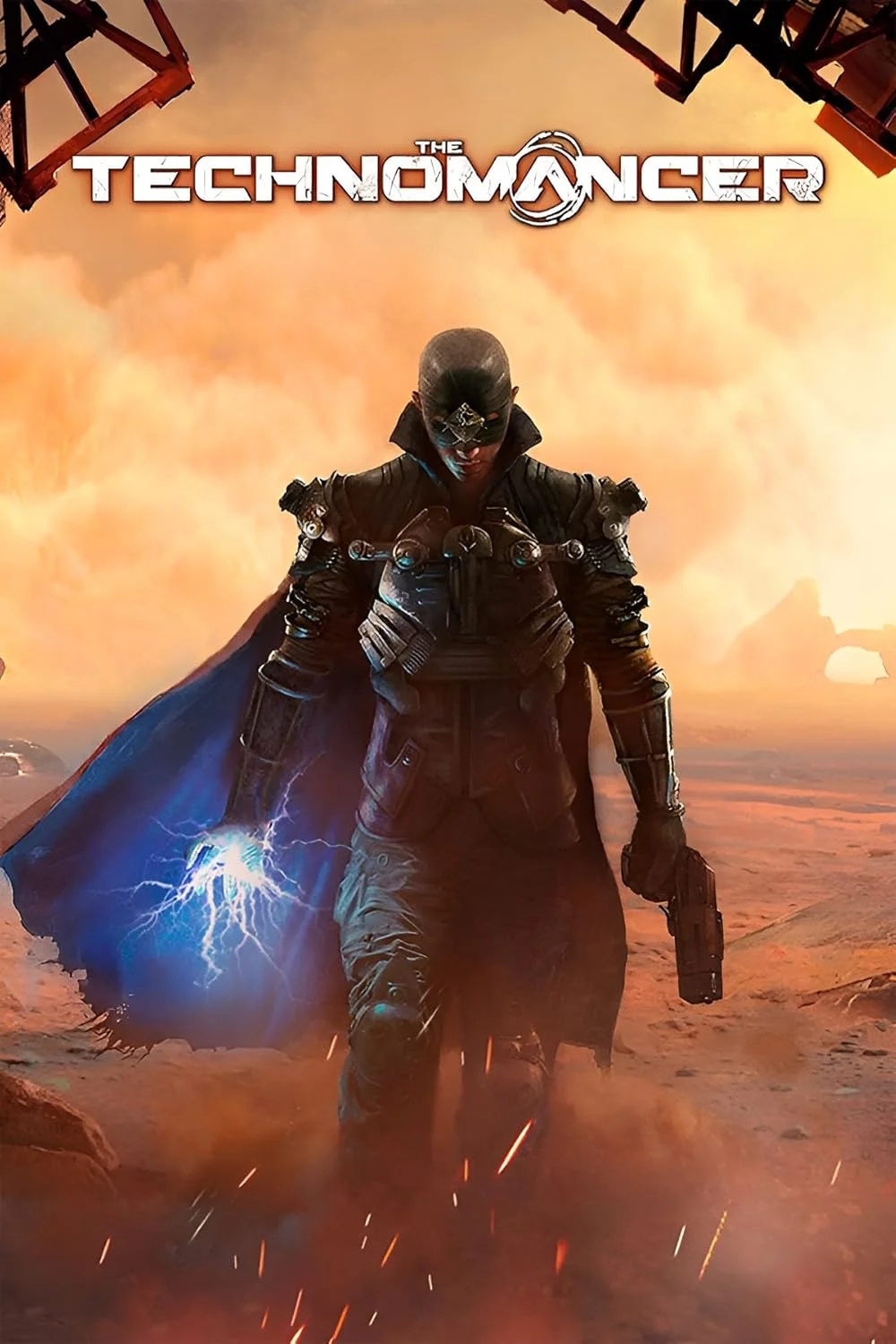
The Technomancer
This combination provides smooth gameplay with an average of 106 FPS, suitable for most gaming scenarios.
Average FPS: resolution vs quality settings
| Ultra | High | Medium | Low | |
|---|---|---|---|---|
| 4K Ultra HD | 39 | 50 | 63 | 80 |
| 1440p QHD | 75 | 96 | 113 | 145 |
| 1080p Full HD | 117 | 150 | 169 | 180 |
Cell color: green is 120+ FPS, teal is 60+, amber is 30+, red is below 30.
The Technomancer with Intel Core i5-10400F + NVIDIA GeForce RTX 3080, In-Depth Analysis
The Technomancer, a 2016 Action RPG, presents an interesting test for the Intel Core i5-10400F paired with the NVIDIA GeForce RTX 3080. The benchmark data reveals a configuration that scales predictably with resolution, but with a distinct bottleneck profile that shifts depending on the settings chosen. This analysis breaks down the measured frame rates, the combination's standing among other tested hardware, and the role each component plays in delivering the final image.
Resolution Scaling
The measured frame rates show a classic resolution scaling curve, with the most dramatic performance drop occurring between 1440p and 4K. At High settings, the average frame rate falls from 96.4 FPS at 2560x1440 to 50 FPS at 3840x2160, representing a significant 48% reduction in performance. This steep decline indicates that at 4K, the RTX 3080 is being pushed to its absolute limits, with the GPU becoming the primary limiting factor.
The gap between 1080p and 1440p is less severe but still substantial. Moving from 1920x1080 to 2560x1440 at High settings drops the average from 149.7 FPS to 96.4 FPS, a 35.6% reduction. This suggests that at 1080p, the system has enough headroom that the CPU begins to play a more significant role, though the GPU is still the dominant constraint. The data at 1080p Ultra shows 117.1 FPS, which is higher than the 4K High result but still far from the 179.9 FPS achievable at 1080p Low.
At 4K, the scaling between settings is particularly revealing. The jump from Low (79.5 FPS) to Medium (63.2 FPS) is a 20.5% drop, while moving from Medium to High (50 FPS) costs another 20.9%. The leap from High to Ultra (38.7 FPS) is the most punishing, a 22.6% reduction. This pattern indicates that the game's Ultra preset introduces effects that are disproportionately expensive at higher resolutions, likely taxing the GPU's shading and memory subsystems heavily. The 4K Low result of 79.5 FPS shows that even the most demanding resolution can be playable when the graphical load is reduced, but the overall trend confirms that this combination is best suited for 1440p gaming where it can maintain high frame rates across all settings.
How This Combo Ranks
Within the database of tested hardware combinations, this pairing of the Intel Core i5-10400F and NVIDIA GeForce RTX 3080 holds a rank of 583 out of 1656 combinations for The Technomancer. This places the setup in the upper third of all tested systems, indicating that it delivers solid performance for this title. The percentile placement suggests that while this is not a top-tier combination, it outperforms the majority of alternatives.
The CPU's individual benchmark scores provide context for this ranking. With an average benchmark score of 14168, the i5-10400F sits in the 73rd percentile among all CPUs. Its nearest rivals include the AMD EPYC 7552, which scores 14115 (a delta of 0.4%), and the AMD Ryzen 3 7320C, which scores 14277 (a delta of -0.8%). This close grouping shows that the i5-10400F is competitively positioned in synthetic tests, though its real-world gaming performance will depend on the specific workload.
The GPU, meanwhile, achieves an average benchmark score of 35787, placing it in the 80th percentile among all GPUs. Its nearest rival, the AMD Radeon Pro Duo, scores 35860 (a delta of -0.2%), while the AMD Radeon RX 7900 GRE scores 36101 (a delta of -0.9%). The RTX 3080's strong synthetic showing aligns with its high measured frame rates, but the combo's overall rank of 583 suggests that the CPU may be holding back the GPU in certain scenarios, particularly at lower resolutions where the processor's single-threaded performance becomes more relevant.
GPU Role
The NVIDIA GeForce RTX 3080 is built on the Ampere architecture using an 8 nm process at Samsung, featuring 28,300 million transistors on a 628 mm² die. Its memory configuration consists of 10 GB of GDDR6X on a 320-bit bus, delivering a bandwidth of 760.3 GB/s. The GPU operates with a base clock of 1440 MHz and a boost clock of 1710 MHz, with memory running at 1188 MHz (effectively 19 Gbps). These specifications translate to a texture rate of 465.1 GTexel/s and a pixel rate of 164.2 GPixel/s, with FP32 performance rated at 29.77 TFLOPS.
In The Technomancer, the GPU's role is clearly dominant, especially at higher resolutions. The 4K Ultra result of 38.7 FPS highlights the strain placed on the 10 GB VRAM buffer and the 320-bit memory interface. The difference between 4K High (50 FPS) and 4K Ultra (38.7 FPS) suggests that the Ultra preset likely increases texture detail and shadow quality, consuming additional memory bandwidth and pushing the GPU closer to its limits. The 4K Low result of 79.5 FPS demonstrates that when the GPU is not as heavily tasked, it can still deliver respectable frame rates, but the overall performance ceiling at 4K is clearly constrained by the GPU's raw compute and memory throughput.
The GPU's passmark DirectX 12 score of 100 (relative to a baseline) is notably lower than its DirectX 11 score of 207, which might indicate that this older game is not fully optimized for modern API paths. However, the G3D score of 25086 and GPU compute score of 14397 confirm that the RTX 3080 is a capable performer across a range of workloads. The GPU's 8704 shading units and 272 TMUs provide ample parallel processing power, which is reflected in the strong 1440p results where the GPU can stretch its legs without being bottlenecked by the CPU.
FAQ
Q: What is the average frame rate at 1440p High settings?
A: The measured average FPS at 2560x1440 with High settings is 96.4 FPS, which provides a smooth experience for most players.
Q: How does the 4K Ultra preset compare to 4K High in terms of performance?
A: The 4K Ultra preset averages 38.7 FPS, while 4K High averages 50 FPS. The Ultra setting is 22.6% slower, making it less suitable for maintaining high frame rates at this resolution.
Q: Is the CPU or GPU the main bottleneck at 1080p?
A: At 1080p, the data suggests the GPU remains the primary constraint, as even the lowest settings (179.9 FPS) do not exceed what a high-end GPU can deliver. The CPU's single-thread score of 688 in 3DMark indicates it can keep up with the GPU at this resolution.
Q: What is the best resolution for this combination in The Technomancer?
A: The 1440p resolution offers the best balance, with High settings delivering 96.4 FPS and even Ultra achieving 74.8 FPS, both of which are playable while providing better visual quality than 1080p.
Q: How does the RTX 3080's memory bandwidth affect 4K performance?
A: The 760.3 GB/s bandwidth is substantial, but at 4K Ultra the frame rate drops to 38.7 FPS, indicating that the 10 GB VRAM and 320-bit bus are taxed heavily by the game's high-resolution textures and effects.
Q: What is the combo's ranking among all tested configurations?
A: This combination ranks 583 out of 1656 tested combos for The Technomancer, placing it in the upper third of all systems tested.
Settings Recommendations
For the best experience with this hardware, the data points to 1440p as the optimal resolution. At 2560x1440, the High preset delivers an average of 96.4 FPS, which is well above the threshold for smooth gameplay. The Medium preset at this resolution achieves 113 FPS, offering a slight performance boost with a minor visual trade-off. Ultra at 1440p still provides a respectable 74.8 FPS, making it viable for players who prioritize image quality over raw frame rates.
At 1080p, the system has more than enough power for any setting. The High preset hits 149.7 FPS, while Ultra achieves 117.1 FPS. For competitive play or high-refresh-rate displays, the Low preset at 179.9 FPS is the fastest option, though the visual compromise may not be worth it for most users. The 1080p Medium setting at 168.5 FPS offers a strong middle ground.
At 4K, the settings need to be chosen carefully. The Low preset at 79.5 FPS is the only option that consistently exceeds 60 FPS, making it the recommended choice for 4K gaming. Medium at 63.2 FPS is playable but close to the edge, while High at 50 FPS and Ultra at 38.7 FPS are better suited for slower-paced exploration rather than action-heavy combat. Given the large performance gaps between presets at this resolution, players targeting 4K should stick with Low or Medium to maintain a stable frame rate. Overall, the sweet spot for this combination is 1440p with High settings, offering a 96.4 FPS average that balances visual fidelity and performance without making significant compromises.
Hardware Specifications
Intel Core i5-10400F
NVIDIA GeForce RTX 3080
FPS Benchmarks by Resolution & Settings
Performance data for Intel Core i5-10400F + NVIDIA GeForce RTX 3080 in The Technomancer
| Resolution | Settings | Avg FPS |
|---|---|---|
| 3840x2160 | Low | 79.5 |
| 3840x2160 | Medium | 63.2 |
| 3840x2160 | High | 50.0 |
| 3840x2160 | Ultra | 38.7 |
| 2560x1440 | Low | 145.4 |
| 2560x1440 | Medium | 113.0 |
| 2560x1440 | High | 96.4 |
| 2560x1440 | Ultra | 74.8 |
| 1920x1080 | Low | 179.9 |
| 1920x1080 | Medium | 168.5 |
| 1920x1080 | High | 149.7 |
| 1920x1080 | Ultra | 117.1 |
The Technomancer with ii5-10400F + Other GPUs
See how The Technomancer performs with the same CPU but different graphics cards.
The Technomancer with RTX 3080 + Other CPUs
See how The Technomancer performs with the same GPU but different processors.
Other Games with ii5-10400F + RTX 3080
Explore FPS benchmarks for other games using this same hardware combination.