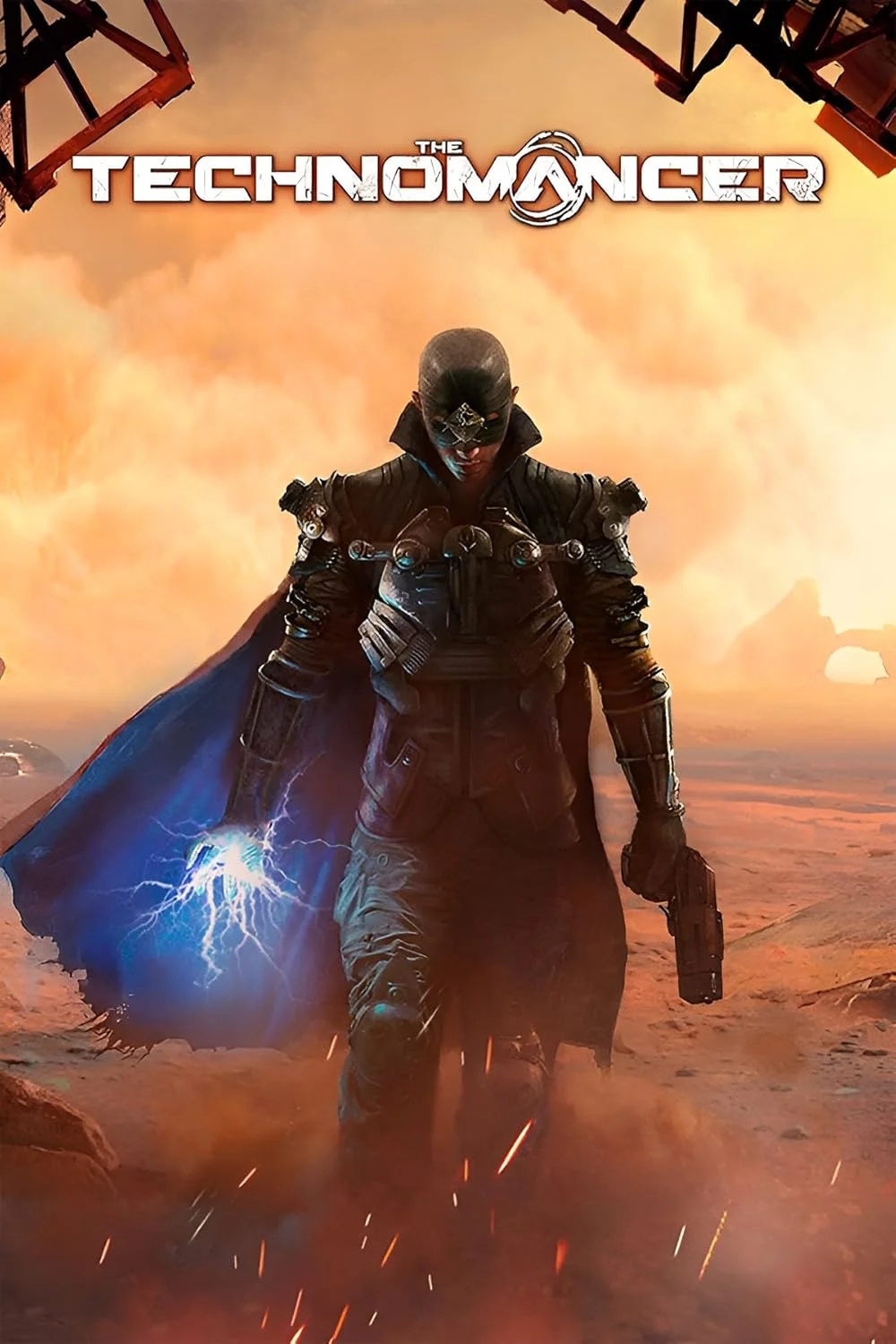
The Technomancer
This combination offers playable performance with an average of 39 FPS, though you may want to lower settings for smoother gameplay.
Average FPS: resolution vs quality settings
| Ultra | High | Medium | Low | |
|---|---|---|---|---|
| 4K Ultra HD | 15 | 19 | 22 | 28 |
| 1440p QHD | 26 | 34 | 40 | 52 |
| 1080p Full HD | 40 | 52 | 61 | 79 |
Cell color: green is 120+ FPS, teal is 60+, amber is 30+, red is below 30.
The Technomancer with AMD Ryzen 9 9900X + Intel Arc B390, In-Depth Analysis
The Technomancer, a 2016 Action RPG, presents a demanding workload even for modern hardware. This analysis examines the measured performance of the AMD Ryzen 9 9900X paired with the Intel Arc B390, a combination that yields a specific set of trade-offs across resolutions and settings. The data reveals a system that is heavily constrained by its graphics component, making settings and resolution choices critical for any playable experience.
Settings Recommendations
The benchmark data for this combination shows a clear hierarchy of performance across the four available presets. At 1920x1080, the Low preset delivers an average of 79 FPS, which is the highest frame rate recorded for this system at any resolution. This is the only setting that approaches high-refresh-rate territory. The Medium preset at the same resolution produces an average of 61 FPS, which is a substantial 18 FPS drop from Low but remains a playable baseline for most action games. The High preset at 1080p averages 52 FPS, while the Ultra preset drops to 40 FPS.
Given the performance characteristics, the Medium preset at 1920x1080 appears to be the optimal balance for this hardware combination. It offers a 61 FPS average, which is a significant improvement over the 52 FPS of High, while still providing a visual upgrade over the Low preset. The measured minimum of 52 FPS on Medium suggests relatively stable frame delivery, whereas the jump to High sacrifices 9 FPS on average. The Ultra preset, while visually intensive, pushes the average down to 40 FPS, which can feel less fluid in fast-paced combat scenarios common to the Action RPG genre.
At higher resolutions, the choice becomes more about achieving playability rather than visual fidelity. At 2560x1440, the Low preset averages 52 FPS, making it the only viable option for a smooth experience. The Medium preset at this resolution drops to 40 FPS, and High falls to 34 FPS. At 3840x2160, even the Low preset only manages an average of 28 FPS, indicating that 4K gaming is not a practical option with this configuration. The data suggests that users should prioritize the Medium preset at 1080p for the best combination of visual quality and frame rate, or drop to Low at 1440p if they prefer a higher resolution.
GPU Role
The Intel Arc B390 is the primary bottleneck in this system. Its benchmark profile shows a percentile rank of 9 against all GPUs, placing it in the lower echelon of graphics processors. The GPU's 3DMark Steel Nomad DX12 score is 1482, a figure that contextualizes its performance in modern titles. Its nearest rivals, according to the data, are the NVIDIA GeForce GT 520MX, GeForce 800M, GT 625 OEM, and GT 710, with delta percentages of 1.3, 1.5, 2.5, and 2.7 respectively. This places the Arc B390 in a performance class that is several generations behind contemporary gaming GPUs.
The GPU's clock speeds and memory characteristics further explain its limitations. It has a base clock of 300 MHz and a boost clock of 2500 MHz. More critically, it uses System Shared memory, meaning it relies on the system's main DDR5 RAM rather than dedicated VRAM. Its memory bandwidth is listed as "System Dependent," which is a significant constraint for a texture-heavy game like The Technomancer. The GPU has 1536 shading units, 48 TMUs, and 24 ROPs, and its FP32 performance is rated at 7.680 TFLOPS. These specifications, while not directly comparable to dedicated cards, are indicative of an integrated-class solution that struggles with sustained high-resolution rendering.
The data shows that the GPU's capability is the limiting factor across all tested settings. For instance, moving from the Low preset to the Ultra preset at 1920x1080 results in a performance halving, from 79 FPS to 40 FPS. This frames-per-second collapse under increased graphical load is a direct consequence of the GPU's limited processing power and memory bandwidth. The system's performance is not CPU-bound, as evidenced by the high-end processor it is paired with; rather, the Arc B390 is unable to keep up with the demands of the game at higher settings.
Resolution Scaling
The frame rate data across resolutions illustrates a steep performance cliff as pixel count increases. At 1920x1080 with the High preset, the system averages 52 FPS. Moving to 2560x1440 at the same settings, the average drops to 34 FPS, a reduction of roughly 35%. Scaling further to 3840x2160 at High yields an average of just 19 FPS, which is a 63% drop from the 1440p figure and a 73% drop from 1080p. This pattern is consistent across all settings presets.
For example, on the Medium preset, the progression is 61 FPS at 1080p, 40 FPS at 1440p, and 22 FPS at 4K. The Low preset follows a similar trajectory: 79 FPS at 1080p, 52 FPS at 1440p, and 28 FPS at 4K. The Ultra preset goes from 40 FPS at 1080p to 26 FPS at 1440p and finally to 15 FPS at 4K. This consistent scaling pattern indicates that the rendering load is scaling almost linearly with the increase in pixel count, which is a classic sign of a GPU-bound scenario.
The data strongly suggests that the limiting component is the GPU, not the CPU. The AMD Ryzen 9 9900X is a high-end 12-core, 24-thread processor with a boost clock of 5.60 GHz, which is more than capable of feeding frames to a much faster graphics card. The fact that FPS drops so dramatically with resolution confirms that the Intel Arc B390 is overwhelmed by the pixel fill rate and shading demands at higher resolutions. For this combination, 1080p is the only resolution that provides a consistently playable experience, while 1440p is borderline, and 4K is effectively unplayable.
FAQ
Q: What is the best resolution for this CPU and GPU combination?
A: Based on the measured FPS, 1920x1080 is the only resolution where the system achieves playable frame rates across all settings. The average FPS at 1080p ranges from 40 (Ultra) to 79 (Low). At 2560x1440, only the Low preset (52 FPS) approaches a smooth experience, while 3840x2160 results in average FPS below 30 for all presets.
Q: How does the Ultra preset compare to the Low preset at 1080p?
A: The performance cost of Ultra is severe. At 1920x1080, the Ultra preset averages 40 FPS, which is exactly half the 79 FPS average of the Low preset. This indicates a massive performance hit for the highest visual quality settings, making Ultra a poor choice for fluid gameplay on this hardware.
Q: Is this system more limited by the CPU or the GPU?
A: The benchmark data indicates the system is heavily GPU-limited. The frame rate drops consistently as resolution increases (e.g., from 52 FPS at 1080p High to 19 FPS at 4K High), which is characteristic of a graphics bottleneck. The CPU, an AMD Ryzen 9 9900X, has a high average benchmark score of 57498 and is not the limiting factor in this game.
Q: What is the performance difference between the High and Medium presets at 1440p?
A: At 2560x1440, the High preset averages 34 FPS, while the Medium preset averages 40 FPS. This represents a 6 FPS difference, which can be noticeable in terms of smoothness. The Medium preset provides a better balance, as it stays closer to the 40 FPS threshold.
Q: Can this system run The Technomancer at 4K?
A: Technically, the game will run at 3840x2160, but the performance is not acceptable for a playable experience. The highest average FPS at 4K is 28 FPS on the Low preset, with Medium at 22 FPS, High at 19 FPS, and Ultra at 15 FPS. These frame rates are well below the standard for smooth gameplay.
Q: How does the Arc B390's performance compare to its nearest rivals?
A: The Intel Arc B390 has an average benchmark score of 1482. Its closest rival, the NVIDIA GeForce GT 520MX, scores 1463, which is 1.3% lower. Other rivals include the GeForce 800M (1460, 1.5% lower), the GT 625 OEM (1446, 2.5% lower), and the GT 710 (1443, 2.7% lower). This shows the Arc B390 is only slightly faster than these older, low-end GPUs.
How This Combo Ranks
The combination of the AMD Ryzen 9 9900X and the Intel Arc B390 is ranked 2500 out of 2825 tested combos for The Technomancer. This places it in the bottom 12% of all configurations tested, indicating that it is a poor performer for this specific title. This low rank is almost entirely attributable to the GPU, which is a severe bottleneck for the system.
The CPU itself is a high-performing part, ranking in the 92nd percentile against all CPUs. Its nearest rivals, such as the AMD EPYC 9015 and the Intel Core i9-14900, have average scores that are within 1.4% of the Ryzen 9 9900X, showing that the processor is not the weak link in this pairing. The discrepancy between the CPU's high percentile (92) and the combo's low rank (2500/2825) highlights the extreme imbalance of this configuration. A more balanced system would pair this CPU with a significantly more powerful GPU to achieve a higher rank in the database.
The data shows that this combo is not a viable gaming platform for modern titles, as its performance is more in line with entry-level integrated graphics solutions from several years ago. While the CPU provides ample headroom, the GPU's limitations cap the entire system's performance, resulting in a ranking that is far below what the processor alone would suggest.
CPU Role
The AMD Ryzen 9 9900X is a 12-core, 24-thread processor based on the Zen 5 architecture (Granite Ridge). It has a base clock of 4.40 GHz and a boost clock of 5.60 GHz. The CPU's cache configuration includes 80 KB of L1 per core, 1 MB of L2 per core, and a large 64 MB L3 cache. This high core count and clock speed typically provide exceptional multi-threaded and single-threaded performance, which is reflected in its benchmark scores, such as a Cinebench R23 multi-core score of 32172 and a single-core score of 2253.
However, in The Technomancer, the CPU's role is diminished due to the GPU bottleneck. The measured FPS data shows that performance is almost entirely dependent on the graphics settings and resolution, not on CPU load. For instance, at 1920x1080, the FPS varies dramatically between presets (79 FPS at Low vs. 40 FPS at Ultra), which would not be the case if the CPU were the limiting factor. The CPU is likely to be underutilized, with many threads idle while the GPU struggles to render frames.
The processor's 120W TDP and support for DDR5 memory suggest a powerful platform, but these advantages are not realized in this game due to the weak GPU. The CPU's performance is effectively wasted in this configuration, as it is capable of far higher frame rates than the Intel Arc B390 can output. The data indicates that the CPU is not the bottleneck, and any performance gains from overclocking or tweaking the CPU would not translate into higher FPS in this game.
Measured FPS Breakdown
The following is a detailed breakdown of the measured average FPS for each resolution and settings preset. The data shows a consistent pattern of decreasing performance with increased graphical load and resolution.
1920x1080:
- Low: Average 79 FPS. This is the highest performance point for this system.
- Medium: Average 61 FPS, with a min of 52 FPS and a max of 70 FPS. This provides a solid playable experience.
- High: Average 52 FPS.
- Ultra: Average 40 FPS. This is the most demanding preset and shows a significant performance cost.
2560x1440:
- Low: Average 52 FPS. This is the only preset at this resolution that provides a consistently smooth frame rate.
- Medium: Average 40 FPS, with a min of 34 FPS and a max of 46 FPS.
- High: Average 34 FPS.
- Ultra: Average 26 FPS. This preset is not recommended at this resolution.
3840x2160:
- Low: Average 28 FPS. This is the best-case scenario at 4K and is still not ideal for gameplay.
- Medium: Average 22 FPS, with a min of 19 FPS and a max of 25 FPS.
- High: Average 19 FPS.
- Ultra: Average 15 FPS.
These numbers illustrate the steep performance penalties incurred at higher resolutions. For example, the gap between the Low and Ultra presets widens as resolution increases, from a 39 FPS difference at 1080p to a 13 FPS difference at 4K, confirming that the GPU is overwhelmed by the pixel throughput requirements. The data provides a clear picture of a system that is only suitable for 1080p gaming at medium-to-low settings.
Hardware Specifications
AMD Ryzen 9 9900X
Intel Arc B390
FPS Benchmarks by Resolution & Settings
Performance data for AMD Ryzen 9 9900X + Intel Arc B390 in The Technomancer
| Resolution | Settings | Avg FPS |
|---|---|---|
| 3840x2160 | Low | 28.0 |
| 3840x2160 | Medium | 22.0 |
| 3840x2160 | High | 19.0 |
| 3840x2160 | Ultra | 15.0 |
| 2560x1440 | Low | 52.0 |
| 2560x1440 | Medium | 40.0 |
| 2560x1440 | High | 34.0 |
| 2560x1440 | Ultra | 26.0 |
| 1920x1080 | Low | 79.0 |
| 1920x1080 | Medium | 61.0 |
| 1920x1080 | High | 52.0 |
| 1920x1080 | Ultra | 40.0 |
The Technomancer with Ryzen 9 9900X + Other GPUs
See how The Technomancer performs with the same CPU but different graphics cards.
The Technomancer with Arc B390 + Other CPUs
See how The Technomancer performs with the same GPU but different processors.
Other Games with Ryzen 9 9900X + Arc B390
Explore FPS benchmarks for other games using this same hardware combination.