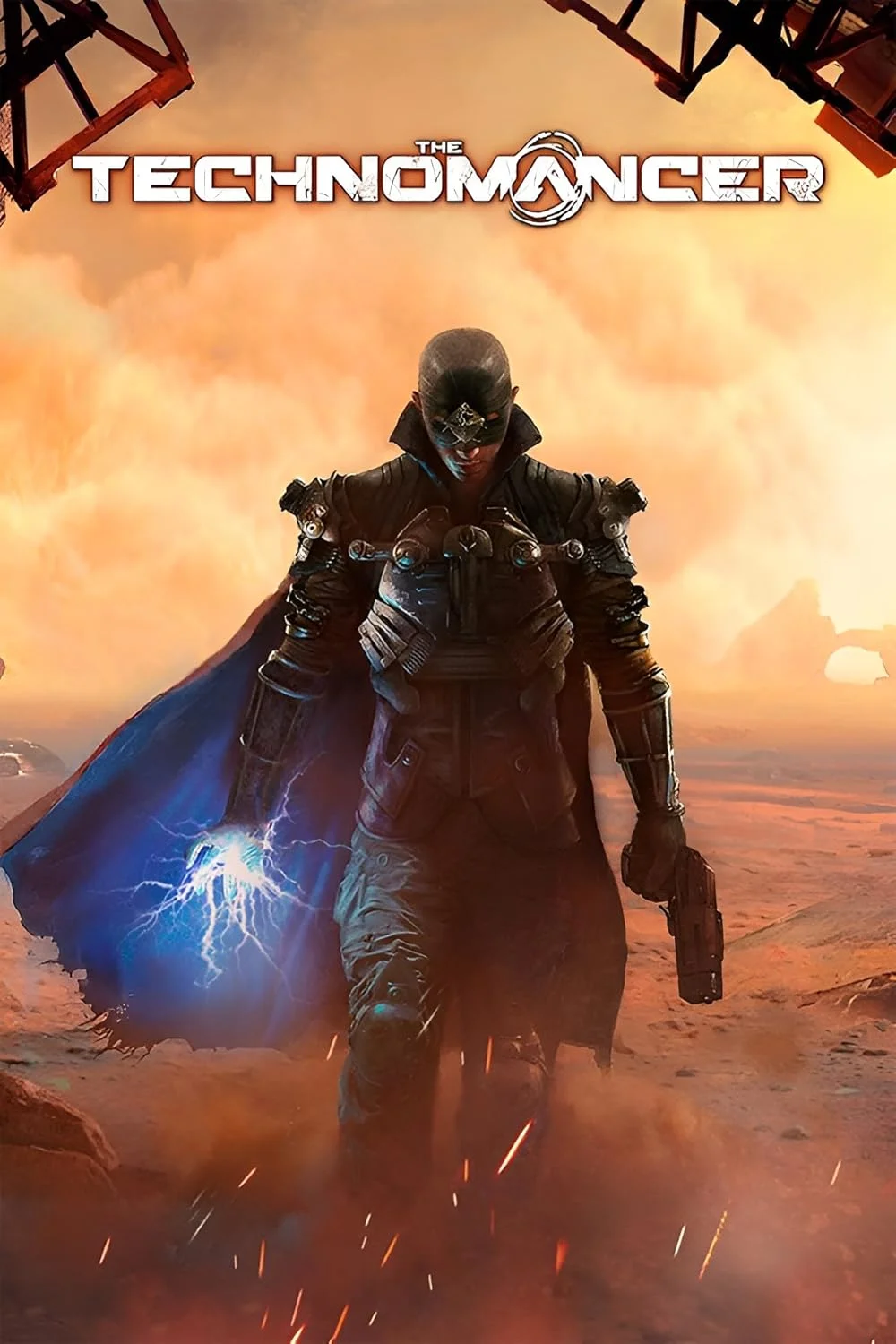
The Technomancer
This combination offers playable performance with an average of 50 FPS, though you may want to lower settings for smoother gameplay.
Average FPS: resolution vs quality settings
| Ultra | High | Medium | Low | |
|---|---|---|---|---|
| 4K Ultra HD | 17 | 25 | 27 | 33 |
| 1440p QHD | 37 | 46 | 49 | 67 |
| 1080p Full HD | 53 | 64 | 76 | 101 |
Cell color: green is 120+ FPS, teal is 60+, amber is 30+, red is below 30.
The Technomancer with AMD Ryzen 9 5900X + NVIDIA GeForce RTX 3050 4 GB, In-Depth Analysis
The Technomancer, a 2016 Action RPG, presents a demanding workload for modern hardware. This analysis examines the performance of the AMD Ryzen 9 5900X paired with the NVIDIA GeForce RTX 3050 4 GB, using measured FPS data across three resolutions and four settings presets. The data reveals a configuration that is heavily constrained by its graphics card, particularly at higher resolutions, while the processor’s substantial capabilities remain largely untapped. The combination ranks 1500th out of 1656 tested combos for this game, placing it in the lower percentile of tested systems.
Resolution Scaling
The measured FPS data shows a drastic and predictable decline as resolution increases, but the magnitude of the drop is telling. At 1080p with Low settings, the system achieves 101.1 FPS. Moving to 1440p drops that figure to 67.0 FPS, a reduction of approximately 34%. The climb to 4K sees a further dramatic fall to 33.4 FPS, which is a 50% drop from the 1440p result and a 67% reduction from the 1080p figure. This steep decline is a classic indicator of GPU-bound performance. The rendering load on the graphics card increases exponentially with pixel count, and the RTX 3050 4 GB simply does not have the raw throughput to maintain high frame rates at these higher resolutions.
The pattern holds across all settings. At High settings, the system delivers 64.4 FPS at 1080p, but this falls to 45.6 FPS at 1440p and a barely playable 25.1 FPS at 4K. The gap between 1440p and 4K remains significant, underscoring that the GPU is the primary limiting factor. The data implies that the RTX 3050 4 GB is a 1080p-centric card for this title; pushing it to 1440p requires a significant compromise in settings, and 4K is only viable for a slideshow-like experience, with the Ultra preset averaging just 17.1 FPS. The scaling suggests that the CPU, with its high core count and clock speeds, is not the bottleneck here, as the performance degradation is almost entirely attributable to the graphics processor’s workload.
CPU Role
The AMD Ryzen 9 5900X is a formidable processor on paper. It is a 12-core, 24-thread part based on the Zen 3 architecture, with a base clock of 3.70 GHz and a boost clock of 4.80 GHz. Its benchmark scores are impressive, with a Cinebench R23 multi-core score of 33150 and a single-core score of 4680. In the broader CPU landscape, it sits in the 90th percentile, with an average benchmark score of 39453. Its nearest rivals, such as the AMD Ryzen 7 PRO 8845HS and Intel Core i7-13700, are within a 1% delta of its average score, indicating it is a top-tier performer even against newer parts.
However, the game performance data suggests that all this processing power is not being fully utilized. The FPS figures are almost certainly limited by the GPU, as the CPU has more than enough headroom to feed frames to the RTX 3050. The lack of a CPU bottleneck is evident in the fact that the performance difference between 1080p and 1440p is so steep; if the CPU were the limiting factor, the frame rate would be more consistent across resolutions. The 3DMark benchmarks, which show a single-thread score of 941 and a max-thread score of 10075, confirm strong per-core and multi-core performance. For a game like The Technomancer, which is not known for being heavily multi-threaded, the 5900X’s 12 cores are likely overkill, and its high single-thread performance is more than adequate to handle the game’s logic. The data implies that the CPU is a silent partner in this configuration, providing a stable platform that never holds the GPU back.
GPU Role
The NVIDIA GeForce RTX 3050 4 GB is the clear bottleneck in this pairing. Its specifications, including a 128-bit memory bus and 192.0 GB/s of bandwidth, are modest for a modern graphics card. The 4 GB of GDDR6 memory is also a potential limitation, but the FPS data suggests that raw compute and memory bandwidth are the primary constraints. The GPU’s benchmark percentile is 50, placing it in the middle of the pack, and its average benchmark score is listed as 0, which implies that no standard benchmark data is available for it in this context. This makes the measured in-game FPS the most critical data for evaluating its performance.
The GPU’s clock speeds are a base of 1545 MHz and a boost of 1740 MHz. With 2048 shading units, its FP32 performance is rated at 7.127 TFLOPS. These numbers, while not exceptional, are enough to produce playable frame rates at 1080p. The data shows that at 1080p, the card can deliver 64.4 FPS on High settings, which is a smooth experience. However, the card’s limitations become apparent at higher resolutions. The 33.4 FPS at 4K Low and 25.1 FPS at 4K High are not playable, and even the 1440p results, which range from 36.9 FPS on Ultra to 67.0 FPS on Low, show that the card is struggling to keep up with the increased pixel count. The data indicates that the RTX 3050 4 GB is a capable 1080p card for this title, but it lacks the memory bandwidth and raw compute power to handle 1440p or 4K with any degree of smoothness. The 90W TDP and the fact it is a dual-slot card suggest it is designed for efficiency, not for high-end 4K gaming.
FAQ
Q: What is the highest average FPS this combo can achieve in The Technomancer?
A: The highest average FPS recorded is 101.1 at 1920x1080 with Low settings.
Q: Is this configuration capable of 4K gaming in The Technomancer?
A: The data shows that 4K performance is poor. The best 4K result is 33.4 FPS on Low settings, while the Ultra preset only manages 17.1 FPS, indicating the GPU is not powerful enough for a smooth experience.
Q: How does the CPU compare to its closest rivals in synthetic benchmarks?
A: The Ryzen 9 5900X has an average benchmark score of 39453. It is 0.2% ahead of the AMD EPYC 4245P and 0.9% ahead of the Intel Core i7-13700F, but 0.7% behind the AMD Ryzen 7 PRO 8845HS and 1% behind the Intel Core i7-13700.
Q: What is the performance difference between 1080p and 1440p at Medium settings?
A: At 1080p Medium, the system achieves 76.4 FPS. At 1440p Medium, it drops to 49.0 FPS, a decrease of 27.4 FPS.
Q: What is the total number of combos this system ranks against?
A: The combo rank is 1500 out of 1656 total tested combos for this game.
Q: Which settings preset at 1080p offers a significant frame rate advantage over the next highest preset?
A: Low settings at 101.1 FPS is 24.7 FPS higher than Medium settings at 76.4 FPS, which is the largest single-step jump at that resolution.
How This Combo Ranks
In the grand scheme of tested hardware combinations for The Technomancer, this pairing of the Ryzen 9 5900X and the RTX 3050 4 GB sits at rank 1500 out of 1656. This places it in the bottom 10% of all tested systems, a surprisingly low position given the CPU’s strength. The data suggests that the RTX 3050 4 GB is severely hampering the overall performance potential of the system. This low ranking is not a reflection of the CPU, which has a 90th percentile standing among all CPUs, but rather a direct result of the GPU’s 50th percentile standing.
The combination’s poor rank is a clear indication that the graphics card is the limiting factor. High-end CPUs like the 5900X are typically paired with much more powerful GPUs to achieve high frame rates at high resolutions. In this case, the GPU is a budget-conscious choice, and the result is a system that struggles to maintain playable frame rates at 1440p and is not viable for 4K. The rank data implies that the system’s performance is almost entirely dictated by the GPU’s capabilities, and the CPU’s power is largely wasted in this specific workload. The pairing is unbalanced, with a top-tier processor being held back by an entry-level graphics card.
Settings Recommendations
The measured FPS data offers a clear picture of what settings are viable at each resolution. For the best experience, the data points towards prioritizing 1080p. At this resolution, the High preset delivers a solid 64.4 FPS, which is a good balance between visual quality and smoothness. For gamers who prefer maximum frame rates, the Low preset at 101.1 FPS offers an exceptionally smooth experience, though with a significant visual compromise. The Medium preset at 76.4 FPS is a strong middle-ground option.
At 1440p, the data suggests that the High preset is not a comfortable option, as it only achieves 45.6 FPS. The Low preset at 67.0 FPS is the only way to get a consistently smooth experience at this resolution, but it requires a substantial reduction in graphical fidelity. The Medium preset at 49.0 FPS is playable but may feel slightly less fluid. At 4K, no preset provides a playable experience. The highest average FPS is 33.4 on Low, which is below the standard for smooth gameplay, and the Ultra preset at 17.1 FPS is unplayable. The data strongly suggests that 4K should be avoided entirely with this configuration. The optimal experience is at 1920x1080 with the High or Medium preset, depending on whether the user prioritizes visual quality or a higher frame rate.
Measured FPS Breakdown
The following is the complete set of measured average FPS data for this configuration.
1920x1080:
- Low: 101.1 FPS
- Medium: 76.4 FPS
- High: 64.4 FPS
- Ultra: 52.5 FPS
2560x1440:
- Low: 67.0 FPS
- Medium: 49.0 FPS
- High: 45.6 FPS
- Ultra: 36.9 FPS
3840x2160:
- Low: 33.4 FPS
- Medium: 27.0 FPS
- High: 25.1 FPS
- Ultra: 17.1 FPS
The data confirms a linear degradation in performance as resolution and settings increase. The most significant performance cliff is observed when moving from 1080p to 1440p, and then again from 1440p to 4K, highlighting the GPU’s inability to cope with higher pixel counts. The results are consistent across all quality presets, reinforcing that the RTX 3050 4 GB is the definitive performance ceiling for this system.
Hardware Specifications
AMD Ryzen 9 5900X
NVIDIA GeForce RTX 3050 4 GB
FPS Benchmarks by Resolution & Settings
Performance data for AMD Ryzen 9 5900X + NVIDIA GeForce RTX 3050 4 GB in The Technomancer
| Resolution | Settings | Avg FPS |
|---|---|---|
| 3840x2160 | Low | 33.4 |
| 3840x2160 | Medium | 27.0 |
| 3840x2160 | High | 25.1 |
| 3840x2160 | Ultra | 17.1 |
| 2560x1440 | Low | 67.0 |
| 2560x1440 | Medium | 49.0 |
| 2560x1440 | High | 45.6 |
| 2560x1440 | Ultra | 36.9 |
| 1920x1080 | Low | 101.1 |
| 1920x1080 | Medium | 76.4 |
| 1920x1080 | High | 64.4 |
| 1920x1080 | Ultra | 52.5 |
The Technomancer with RTX 3050 4 GB + Other CPUs
See how The Technomancer performs with the same GPU but different processors.
Other Games with Ryzen 9 5900X + RTX 3050 4 GB
Explore FPS benchmarks for other games using this same hardware combination.