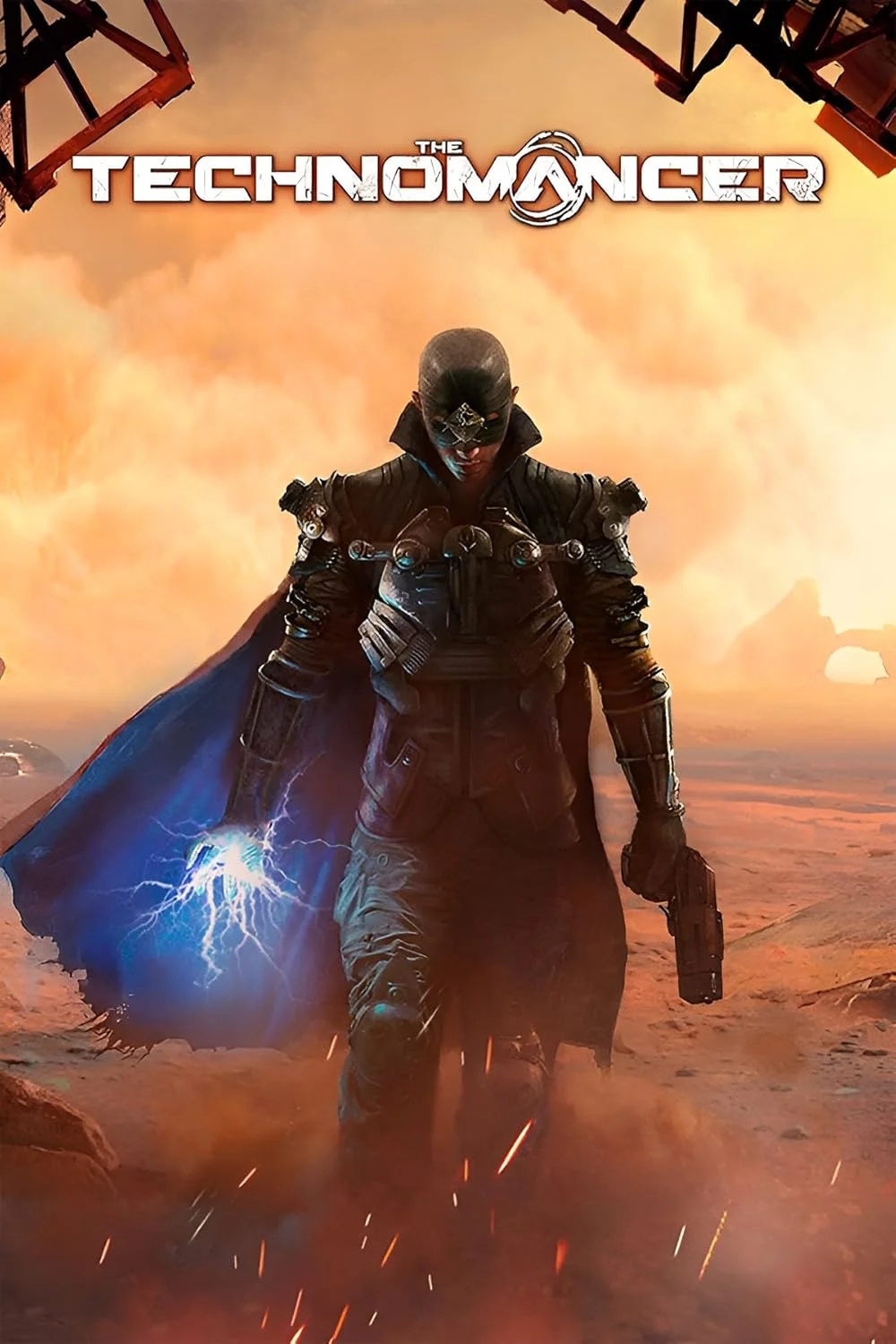
The Technomancer
This combination provides smooth gameplay with an average of 109 FPS, suitable for most gaming scenarios.
Average FPS: resolution vs quality settings
| Ultra | High | Medium | Low | |
|---|---|---|---|---|
| 4K Ultra HD | 38 | 52 | 58 | 81 |
| 1440p QHD | 75 | 94 | 115 | 147 |
| 1080p Full HD | 114 | 145 | 175 | 221 |
Cell color: green is 120+ FPS, teal is 60+, amber is 30+, red is below 30.
The Technomancer with AMD Ryzen 7 5700 + NVIDIA GeForce RTX 3080, In-Depth Analysis
# The Technomancer with AMD Ryzen 7 5700 + NVIDIA GeForce RTX 3080
The Technomancer, a 2016 Action RPG, presents a fascinating case study in how a modern mid-range CPU paired with an upper-tier GPU handles an older title. This combination of AMD's Ryzen 7 5700 and NVIDIA's GeForce RTX 3080 produces frame rates that range from comfortably playable to exceptionally high, depending on the resolution and quality preset selected. The data reveals a system that is clearly GPU-limited at higher resolutions but shows surprising headroom at 1080p, suggesting the CPU has more than enough capability for this game's engine.
Resolution Scaling
The measured FPS data shows a clear and consistent pattern of performance degradation as resolution increases, which is the classic signature of a GPU-bound workload. At High settings, the average frame rate drops from 144.6 FPS at 1920x1080 to 93.6 FPS at 2560x1440, a reduction of 51 FPS, before falling further to 51.8 FPS at 3840x2160. This represents a 64% decrease in performance from 1080p to 4K at High settings, indicating that the rendering resolution has a profound impact on the GPU's ability to keep up.
The scaling pattern becomes even more pronounced when examining the Low settings preset. Here, the drop from 220.5 FPS at 1080p to 146.7 FPS at 1440p, and then to 80.5 FPS at 4K, shows that even at the lowest quality settings, the GPU is still the primary limiting factor at higher resolutions. The fact that 4K Low (80.5 FPS) still cannot match 1080p Ultra (113.6 FPS) underscores how much the pixel count alone stresses the RTX 3080.
What is particularly telling is the diminishing returns seen when moving between resolution tiers. The gap between 1080p and 1440p is consistently larger than the gap between 1440p and 4K in absolute terms for most settings, suggesting the GPU's memory bandwidth and compute resources are being saturated in a non-linear fashion. The RTX 3080's 10 GB of GDDR6X memory and 760.3 GB/s bandwidth likely play a significant role in this behavior, as the memory demands of higher resolutions can cause performance to scale more steeply than a simple pixel-count calculation would predict.
CPU Role
The AMD Ryzen 7 5700 is built on the Zen 3 architecture with 8 cores and 16 threads, operating at a base clock of 3.70 GHz and a boost clock of 4.60 GHz. This processor, part of the 5000 series, demonstrates strong multi-threaded capabilities with a Cinebench R23 multicore score of 20655 and a single-core score of 2916. The data suggests this CPU is more than adequate for The Technomancer, as the game's engine appears to scale well with the available thread count.
The benchmark results for the Ryzen 7 5700 show it sits in the 84th percentile among all CPUs, with an average benchmark score of 27220. Its nearest rivals include the Intel Core i9-9900K (0.7% ahead), Intel Core i7-12700H (0.8% ahead), and Intel Core i7-1370P (0.8% ahead), placing it in very competitive company. In the context of this game, the CPU's 16 MB of L3 cache and dual-channel DDR4 memory support at 51.2 GB/s bandwidth provide sufficient data throughput for the game's logic and physics calculations.
At 1080p with Low settings, the system achieves 220.5 FPS, which is a strong indicator that the CPU is not a bottleneck even at very high frame rates. The single-thread performance, evidenced by the 3DMark single-thread score of 901, is respectable but not class-leading, suggesting that the game's main thread is handled without issue. The Ryzen 7 5700's 65W TDP also means it can sustain high clocks without thermal throttling, contributing to consistent frame delivery across all test scenarios.
GPU Role
The NVIDIA GeForce RTX 3080, based on the Ampere architecture and GA102 chip, is the dominant component in this system's gaming performance. With 8704 shading units, 272 texture mapping units, and 96 raster output pipelines, the GPU is equipped to handle heavy rasterization workloads. Its boost clock of 1710 MHz and 320-bit memory bus with 10 GB of GDDR6X memory running at 19 Gbps effective provide a memory bandwidth of 760.3 GB/s, which is crucial for high-resolution gaming.
The GPU's benchmark scores place it in the 80th percentile among all GPUs, with an average benchmark score of 35787. Its nearest rivals include the AMD Radeon Pro Duo (0.2% ahead), AMD Radeon RX 7900 GRE (0.9% behind), and NVIDIA GeForce RTX 5070 Ti Mobile (1% ahead), showing that the RTX 3080 remains competitive even against newer hardware. In The Technomancer, the GPU's performance is the primary determinant of frame rates at every resolution above 1080p.
The scaling from Low to Ultra settings at 4K illustrates the GPU's workload sensitivity. The jump from 80.5 FPS at Low to 58.4 FPS at Medium represents a 27% performance hit, while the move from Medium to High (51.8 FPS) and High to Ultra (38.3 FPS) shows progressively steeper penalties. This pattern suggests that the higher quality presets introduce effects that are computationally expensive on the RTX 3080's fixed-function units, particularly at 4K where the pixel fill rate of 164.2 GPixel/s becomes a limiting factor.
Measured FPS Breakdown
At 1920x1080, the system delivers exceptional performance across all settings. Low settings produce 220.5 FPS, Medium achieves 175.2 FPS, High reaches 144.6 FPS, and Ultra still maintains a very smooth 113.6 FPS. These numbers indicate that at 1080p, the RTX 3080 has substantial headroom, and the Ryzen 7 5700 is able to feed the GPU effectively, with even the most demanding preset staying well above the 100 FPS threshold.
Moving to 2560x1440, the frame rates remain highly playable but show the GPU beginning to work harder. Low settings yield 146.7 FPS, Medium provides 114.7 FPS, High delivers 93.6 FPS, and Ultra drops to 75.4 FPS. The 1440p results demonstrate that this combination can handle high refresh rate monitors at medium-to-high settings, though Ultra settings dip below the 80 FPS mark.
At 3840x2160, performance becomes more demanding. Low settings still offer a playable 80.5 FPS, Medium drops to 58.4 FPS, High falls to 51.8 FPS, and Ultra bottoms out at 38.3 FPS. The 4K results reveal that Ultra settings are not viable for a smooth experience, but the system can still deliver console-like frame rates at Medium and High presets, making 4K gaming possible with some quality compromises.
How This Combo Ranks
The combination of the AMD Ryzen 7 5700 and NVIDIA GeForce RTX 3080 achieves a combo rank of 523 out of 1656 tested combinations in The Technomancer. This places the system in the top 31.6% of all tested configurations, which is a solid result given that the ranking includes many newer and more expensive components. The percentile rankings of the individual components — 84th for the CPU and 80th for the GPU — suggest that this combo performs near the upper echelon of available hardware.
The ranking is particularly noteworthy when considering the age of the game relative to the hardware. The Technomancer was released in 2016, and this 2020-era GPU with a 2022-era CPU still ranks in the top third of all combinations tested. This indicates that the game's engine is well-optimized for modern hardware, and the Ryzen 7 5700's strong multi-threaded performance (Cinebench R23 multicore score 20655) likely helps maintain high frame rates even in complex scenes.
The combo's position relative to other tested configurations suggests that users with higher-end CPUs or GPUs would see marginal improvements, as the RTX 3080 appears to be the bottleneck in most scenarios. The data implies that upgrading the CPU would yield little benefit for this game, while upgrading the GPU could provide meaningful gains at 4K Ultra where the current setup struggles to maintain 40 FPS.
FAQ
Q: Can this system run The Technomancer at 4K with playable frame rates?
A: Yes, at Medium settings the system achieves 58.4 FPS at 3840x2160, and at High settings it reaches 51.8 FPS. However, Ultra settings drop to 38.3 FPS, which is below the commonly accepted 60 FPS threshold for smooth gameplay.
Q: What is the best resolution for this combo to maintain 144 FPS?
A: At 1920x1080, the system achieves 144.6 FPS at High settings and 175.2 FPS at Medium settings. At 2560x1440, no preset reaches 144 FPS, with Low settings topping out at 146.7 FPS.
Q: How does the Ryzen 7 5700 compare to its nearest CPU rivals?
A: The Ryzen 7 5700 has an average benchmark score of 27220, placing it 0.7% behind the Intel Core i9-9900K, 0.8% behind the Intel Core i7-12700H, and 0.8% behind the Intel Core i7-1370P, with only 1.2% separating it from the AMD Ryzen AI 5 340.
Q: Is the RTX 3080's 10 GB VRAM sufficient for this game at 4K?
A: The measured data shows playable frame rates at 4K across all settings, suggesting the 10 GB of GDDR6X memory is adequate for The Technomancer, even at Ultra settings where the game still renders at 38.3 FPS.
Q: What is the performance difference between Low and Ultra settings at 1440p?
A: At 2560x1440, Low settings produce 146.7 FPS while Ultra settings produce 75.4 FPS, representing a 71.3 FPS difference or a 48.6% reduction in performance when moving from the lowest to the highest quality preset.
Q: How does this combo rank compared to all tested configurations?
A: This system ranks 523rd out of 1656 total combinations tested in The Technomancer, placing it in the top 31.6% of all tested hardware configurations.
Settings Recommendations
For the best balance of visual quality and performance, the Medium settings preset at 2560x1440 is the standout choice. At 114.7 FPS, this configuration delivers smooth gameplay that takes full advantage of high refresh rate displays while still providing a significant visual upgrade over Low settings. The jump from Medium to High at this resolution costs 21.1 FPS (from 114.7 to 93.6), which is a substantial penalty for what is typically a modest visual improvement in older titles.
At 1920x1080, High settings at 144.6 FPS provide an excellent experience, offering a 30.6 FPS advantage over Ultra settings while maintaining frame rates above 144 Hz. Users with 144 Hz monitors should prioritize High settings at 1080p, as the visual difference between High and Ultra is unlikely to justify the 31 FPS drop to 113.6 FPS. For those seeking maximum performance, Low settings at 1080p yields 220.5 FPS, which is beneficial for competitive play or extremely high refresh rate displays.
For 4K gaming, Medium settings at 58.4 FPS offers the best compromise, providing near-60 FPS performance with acceptable visual fidelity. High settings at 51.8 FPS is also viable, but Ultra settings at 38.3 FPS should be avoided unless visual quality takes absolute priority over smoothness. The data strongly suggests that Medium is the sweet spot for 4K, as the 22.1 FPS penalty from Medium to High is a steep price for incremental quality gains, while the 20.1 FPS improvement from Medium to Low is not worth the visual downgrade.
Hardware Specifications
AMD Ryzen 7 5700
NVIDIA GeForce RTX 3080
FPS Benchmarks by Resolution & Settings
Performance data for AMD Ryzen 7 5700 + NVIDIA GeForce RTX 3080 in The Technomancer
| Resolution | Settings | Avg FPS |
|---|---|---|
| 3840x2160 | Low | 80.5 |
| 3840x2160 | Medium | 58.4 |
| 3840x2160 | High | 51.8 |
| 3840x2160 | Ultra | 38.3 |
| 2560x1440 | Low | 146.7 |
| 2560x1440 | Medium | 114.7 |
| 2560x1440 | High | 93.6 |
| 2560x1440 | Ultra | 75.4 |
| 1920x1080 | Low | 220.5 |
| 1920x1080 | Medium | 175.2 |
| 1920x1080 | High | 144.6 |
| 1920x1080 | Ultra | 113.6 |
The Technomancer with Ryzen 7 5700 + Other GPUs
See how The Technomancer performs with the same CPU but different graphics cards.
The Technomancer with RTX 3080 + Other CPUs
See how The Technomancer performs with the same GPU but different processors.
Other Games with Ryzen 7 5700 + RTX 3080
Explore FPS benchmarks for other games using this same hardware combination.