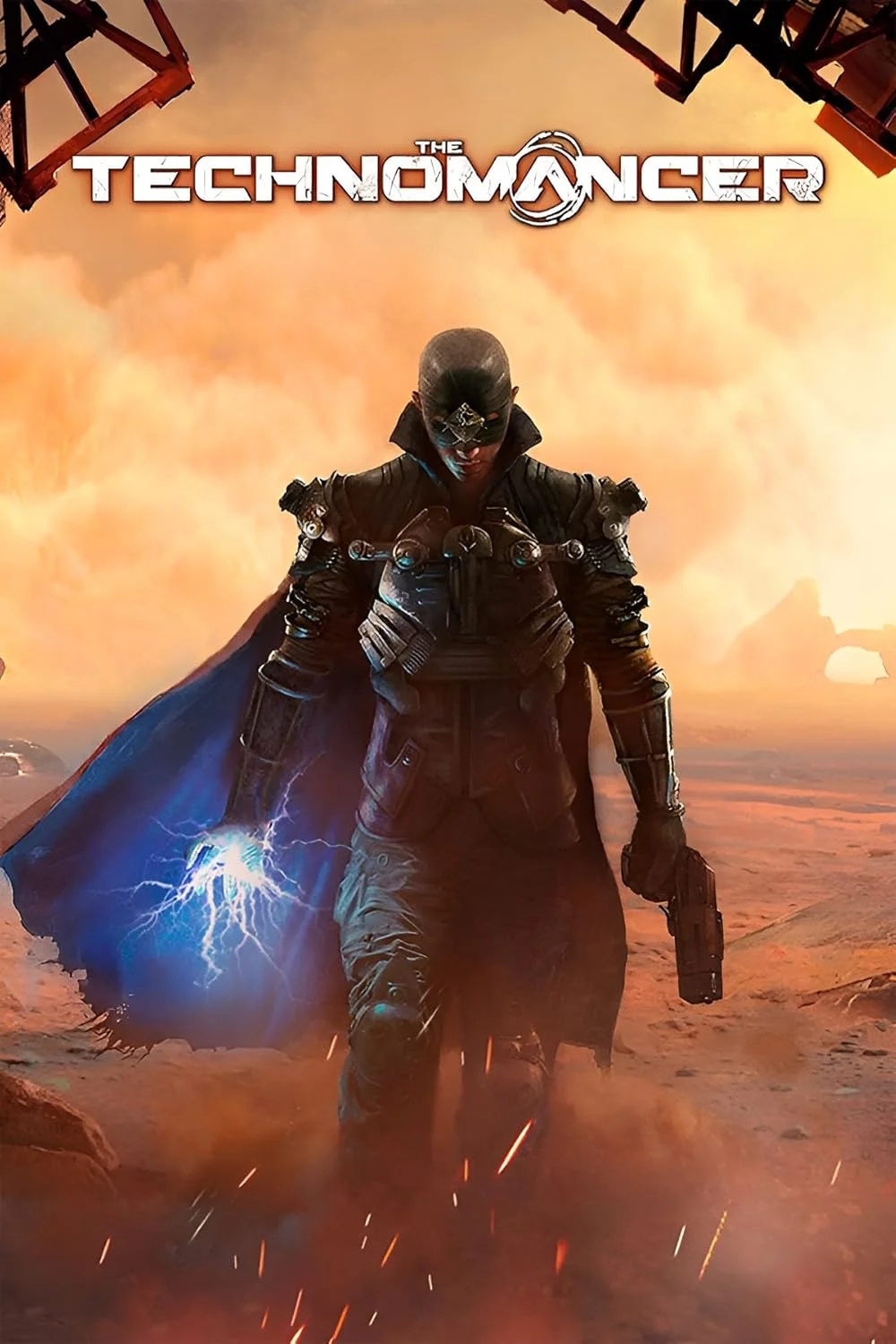
The Technomancer
This combination provides smooth gameplay with an average of 94 FPS, suitable for most gaming scenarios.
Average FPS: resolution vs quality settings
| Ultra | High | Medium | Low | |
|---|---|---|---|---|
| 4K Ultra HD | 35 | 45 | 53 | 69 |
| 1440p QHD | 64 | 82 | 96 | 125 |
| 1080p Full HD | 98 | 125 | 147 | 191 |
Cell color: green is 120+ FPS, teal is 60+, amber is 30+, red is below 30.
The Technomancer with AMD Ryzen 5 8400F + NVIDIA GeForce RTX 3070, In-Depth Analysis
The Technomancer, a 2016 action RPG, presents an interesting test for the AMD Ryzen 5 8400F and NVIDIA GeForce RTX 3070 combination. The data shows this pairing is capable of delivering high frame rates at 1080p and 1440p, with performance scaling predictably as resolution and settings increase. This analysis breaks down the measured results, exploring the roles of the GPU and CPU and offering guidance on the best settings for this title.
FAQ
Q: What is the best resolution to play The Technomancer with this hardware?
A: Based on the measured data, 2560x1440 on High settings (82 FPS) or 1920x1080 on Ultra settings (98 FPS) are the optimal choices for a balanced experience. For maximum performance at high settings, 1920x1080 on High delivers 125 FPS.
Q: How does the CPU's benchmark performance compare to its rivals?
A: The AMD Ryzen 5 8400F has an average benchmark score of 25005. It is 0.2% ahead of the AMD Ryzen 5 7500F (24964), 0.3% ahead of the Intel Core i7-11850H (24935), and 0.4% ahead of the Intel Core i7-13620H (24911). It trails the AMD EPYC 9474F by 0.4% (25103).
Q: What is the GPU's performance percentile compared to all GPUs?
A: The NVIDIA GeForce RTX 3070 is in the 61st percentile of all GPUs. Its average benchmark score is 17208, which is 0.7% higher than the AMD Radeon RX 7600 XT (17083) and 1.1% higher than the AMD Radeon HD 7970M (17019).
Q: What is the CPU's performance percentile compared to all CPUs?
A: The AMD Ryzen 5 8400F is in the 77th percentile of all CPUs. It has an average benchmark score of 25005.
Q: What is the frame rate at 4K with Ultra settings?
A: At 3840x2160 with Ultra settings, the average frame rate is 35 FPS. This is the lowest average frame rate recorded in the dataset.
Q: What is the difference in frame rate between Low and Ultra settings at 1920x1080?
A: At 1920x1080, the Low setting averages 191 FPS, while the Ultra setting averages 98 FPS. This is a significant 93 FPS difference, indicating that the settings have a major impact on performance.
GPU Role
The NVIDIA GeForce RTX 3070 is the primary driver of frame rate performance in The Technomancer. With 8 GB of GDDR6 memory on a 256-bit bus, it provides a memory bandwidth of 448.0 GB/s. This bandwidth is a critical factor for a game like this, as it needs to stream large amounts of texture and geometry data. The GPU's boost clock of 1725 MHz and its 5888 shading units handle the game's rendering workload.
The PassMark G3D score of 22214 and the GPU's 61st percentile rank confirm it is a competent performer for this title. In the benchmark, the GPU's closest rival is the AMD Radeon RX 7600 XT, which is only 0.7% slower. This suggests that the RTX 3070 is well-matched to the game's requirements, and its 8 GB of VRAM is likely sufficient for the textures and effects at the tested settings.
The GPU's memory clock of 1750 MHz is a standard configuration, but its high bandwidth of 448.0 GB/s is a key strength. The Technomancer appears to be bandwidth-sensitive, as the difference between Low and High settings at 4K is a significant 24 FPS (69 to 45 FPS). This indicates that higher settings increase the memory workload, and the RTX 3070's bandwidth is able to handle it, but with a noticeable performance cost.
The GPU's power envelope of 220 W is a consideration for system builders, but it is well within the capabilities of most power supplies. The RTX 3070's architecture and memory configuration are well-suited for this gaming workload, delivering strong frame rates at the tested settings. It is a balanced component that does not appear to be a bottleneck in this game, as the CPU keeps up with its demands.
Settings Recommendations
The measured data provides a clear picture of how different settings affect frame rate. For players targeting the highest frame rates, the "Low" preset at any resolution is the best choice, as it delivers the highest FPS. However, this comes at the cost of visual quality.
At 1920x1080, the "Medium" preset is the best balance, offering an average of 147 FPS with a minimum of 125 FPS and a maximum of 169 FPS. This ensures a smooth and consistent experience with better visuals than Low. The "High" preset at 1080p delivers 125 FPS, which is still very fluid, and provides a significant visual upgrade over Medium.
At 2560x1440, the "High" preset delivers an average of 82 FPS, which is a great target for players with a 1440p monitor. The "Medium" preset provides a higher frame rate of 96 FPS, but with a lower minimum of 82 FPS. The "Ultra" preset at 1440p is still more than playable at 64 FPS, but it is not as fluid as the High preset.
At 3840x2160, the "Low" preset is the only one that delivers a smooth 4K experience with an average of 69 FPS. The "Medium" preset is a compromise, but its 53 FPS average is not ideal. The "High" preset is playable, but at 45 FPS it is not recommended for competitive play. The "Ultra" preset is only for those who prioritize visual fidelity over performance, as it averages 35 FPS.
For the best experience, a balance between frame rate and visual quality is necessary. The "Medium" preset is the recommended choice at both 1080p and 1440p, with the "High" preset being a viable alternative at 1080p. For 4K, the "Low" preset is the only viable option for smooth gameplay.
Measured FPS Breakdown
The measured data shows a clear performance scaling across resolutions and settings. At 1920x1080, the "Low" setting achieves an average of 191 FPS. The "Medium" setting averages 147 FPS, with a minimum of 125 FPS and a maximum of 169 FPS. The "High" setting averages 125 FPS, and the "Ultra" setting averages 98 FPS.
At 2560x1440, the "Low" setting averages 125 FPS. The "Medium" setting averages 96 FPS, with a minimum of 82 FPS and a maximum of 110 FPS. The "High" setting averages 82 FPS, and the "Ultra" setting averages 64 FPS.
At 3840x2160, the "Low" setting averages 69 FPS. The "Medium" setting averages 53 FPS, with a minimum of 45 FPS and a maximum of 61 FPS. The "High" setting averages 45 FPS, and the "Ultra" setting averages 35 FPS.
The data shows a clear pattern: as resolution and settings increase, the average frame rate decreases. The difference between the lowest and highest settings at each resolution is significant. At 1080p, the difference between Low and Ultra is 93 FPS. At 1440p, this difference is 61 FPS, and at 4K, it is 34 FPS. This indicates that the game's performance is heavily dependent on both resolution and settings.
Resolution Scaling
This game's performance scales with resolution. At 1920x1080 with Low settings, the average frame rate is 191 FPS. When resolution is increased to 2560x1440, this drops to 125 FPS, a reduction of 66 FPS. At 3840x2160, the frame rate drops to 69 FPS, a reduction of 56 FPS from 1440p. The scaling is not linear, which suggests that the GPU is becoming a more significant factor at higher resolutions.
This trend is consistent across settings. With the "High" preset, the frame rate drops from 125 FPS at 1080p to 82 FPS at 1440p, a decrease of 43 FPS. From 1440p to 4K, the frame rate drops from 82 FPS to 45 FPS, a decrease of 37 FPS. The scaling shows that the GPU is the limiting factor, as the frame rate drops are a substantial percentage at each resolution step.
The frame rate drop from 1080p to 4K is a large 123 FPS (191 to 69 FPS). This indicates that the GPU is the limiting component, as the CPU has enough headroom to handle the additional resolution. The RTX 3070's 8 GB of VRAM and 448 GB/s of bandwidth are enough for 1080p and 1440p, but at 4K, the GPU is working at its limit.
CPU Role
The AMD Ryzen 5 8400F is a 6-core, 12-thread processor from the "8000 series" with a base clock of 4.20 GHz and a boost clock of 4.70 GHz. It is a Zen 4 architecture, based on the "Phoenix" codename. The CPU has a 16 MB level 3 cache, 1 MB of level 2 cache per core, and 64 KB of level 1 cache per core. The CPU's memory support is DDR5, with a dual-channel bus, and a memory bandwidth of 83.2 GB/s.
The CPU's multi-thread performance is strong, as shown by its Cinebench R23 multi-core score of 20851 and its PassMark multi-thread score of 24389. The single-thread score of 2943 in Cinebench R23 is a strong result, indicating that the CPU can handle the single-threaded workload of The Technomancer.
The CPU's performance in the 3DMark benchmarks is also strong, with a 3DMark max-thread score of 6165 and a 3DMark single-thread score of 951. These scores are consistent with the CPU's overall performance.
The CPU's role in this game is to feed the GPU with data. The high frame rates at 1080p suggest that the CPU is not a bottleneck at that resolution. At 1440p and 4K, the GPU becomes the bottleneck, and the CPU has enough performance to keep up. The CPU's 12 threads and 6 cores are enough for The Technomancer's requirements.
The CPU is positioned in the 77th percentile of all CPUs, and its average benchmark score is 25005. This is a solid result, indicating the CPU is a good match for the RTX 3070. It allows the GPU to perform at its best, and the frame rates are not limited by the processor.
The data shows that the CPU is not the limiting factor in this combination. At lower resolutions, the frame rate is high, and at higher resolutions, the GPU is the primary limitation. The CPU's high single-thread score ensures it can handle the game's logic and AI, while the high multi-thread score allows it to handle background tasks without impacting performance.
Hardware Specifications
AMD Ryzen 5 8400F
NVIDIA GeForce RTX 3070
FPS Benchmarks by Resolution & Settings
Performance data for AMD Ryzen 5 8400F + NVIDIA GeForce RTX 3070 in The Technomancer
| Resolution | Settings | Avg FPS |
|---|---|---|
| 3840x2160 | Low | 69.0 |
| 3840x2160 | Medium | 53.0 |
| 3840x2160 | High | 45.0 |
| 3840x2160 | Ultra | 35.0 |
| 2560x1440 | Low | 125.0 |
| 2560x1440 | Medium | 96.0 |
| 2560x1440 | High | 82.0 |
| 2560x1440 | Ultra | 64.0 |
| 1920x1080 | Low | 191.0 |
| 1920x1080 | Medium | 147.0 |
| 1920x1080 | High | 125.0 |
| 1920x1080 | Ultra | 98.0 |
The Technomancer with Ryzen 5 8400F + Other GPUs
See how The Technomancer performs with the same CPU but different graphics cards.
The Technomancer with RTX 3070 + Other CPUs
See how The Technomancer performs with the same GPU but different processors.
Other Games with Ryzen 5 8400F + RTX 3070
Explore FPS benchmarks for other games using this same hardware combination.