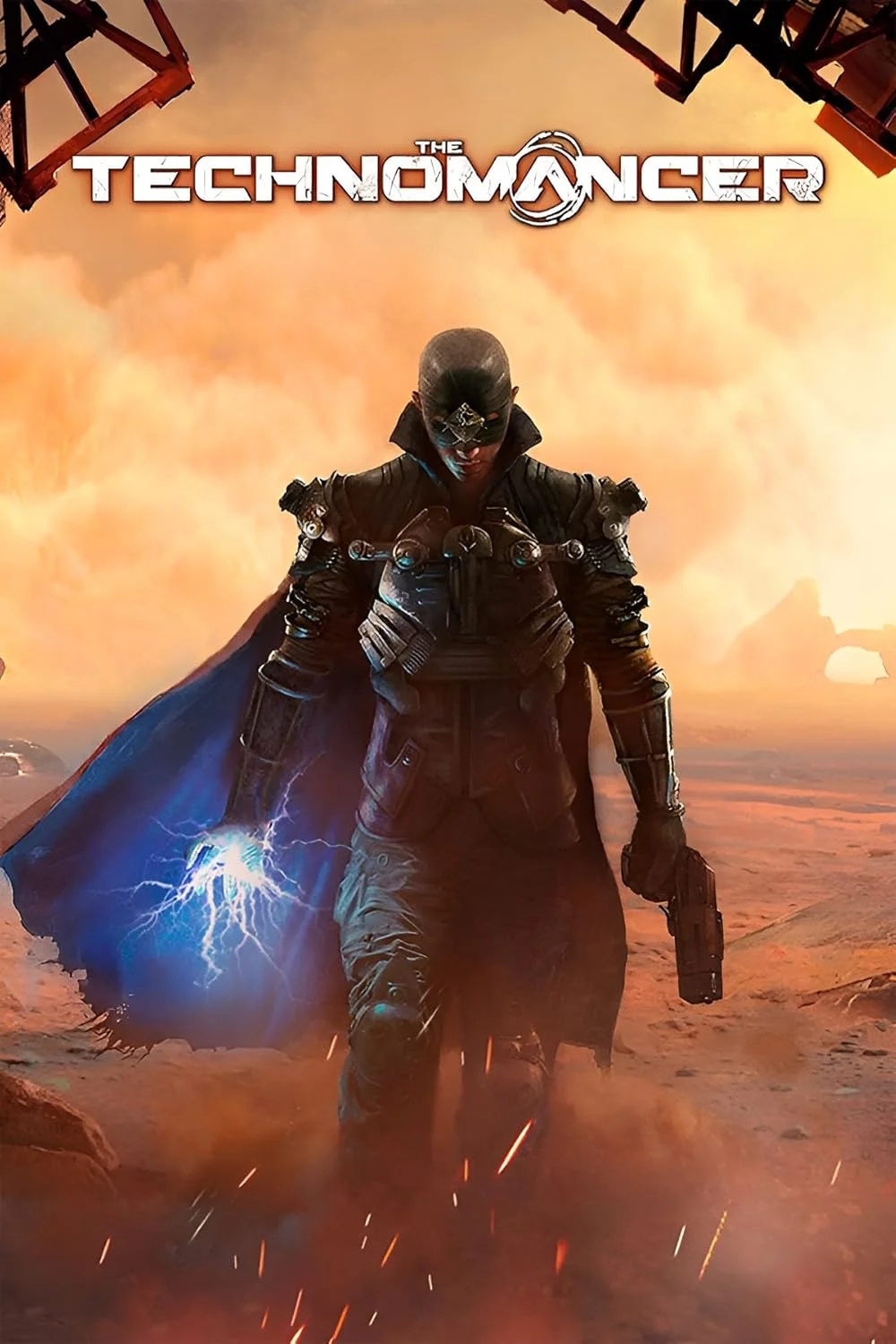
The Technomancer
This combination offers playable performance with an average of 35 FPS, though you may want to lower settings for smoother gameplay.
Average FPS: resolution vs quality settings
| Ultra | High | Medium | Low | |
|---|---|---|---|---|
| 4K Ultra HD | 13 | 17 | 20 | 26 |
| 1440p QHD | 24 | 31 | 36 | 47 |
| 1080p Full HD | 37 | 47 | 55 | 71 |
Cell color: green is 120+ FPS, teal is 60+, amber is 30+, red is below 30.
The Technomancer with Intel Core i5-12400F + Intel Arc B370, In-Depth Analysis
The Intel Core i5-12400F paired with the Intel Arc B370 delivers a playable but constrained experience in The Technomancer, with performance scaling that clearly identifies the GPU as the primary bottleneck. The data shows a system ranked 2603 out of 2825 tested combinations, placing it in the bottom 8% of configurations. At 1080p, the combo manages a playable 47 FPS on High settings, but frame rates collapse rapidly as resolution increases, revealing a graphics solution that is fundamentally limited for this title.
Resolution Scaling
The measured FPS data demonstrates a steep and consistent performance penalty as resolution climbs from 1080p to 4K. At the High preset, the average frame rate drops from 47 FPS at 1920x1080 to 31 FPS at 2560x1440, a reduction of 16 FPS or roughly 34%. Moving further to 3840x2160, the average falls to 17 FPS, which represents a 64% drop from the 1080p baseline. This pattern indicates that the Arc B370’s rendering pipeline is overwhelmed by the pixel count at higher resolutions, with the 4K High result falling well below the threshold for comfortable gameplay.
The scaling behavior is consistent across all settings. The Low preset shows 71 FPS at 1080p, dropping to 47 FPS at 1440p (a 34% decrease), and further to 26 FPS at 4K (a 63% decrease from 1080p). Medium settings follow the same trajectory: 55 FPS at 1080p, 36 FPS at 1440p, and 20 FPS at 4K. Ultra settings are the most demanding, with 37 FPS at 1080p, 24 FPS at 1440p, and a nearly unplayable 13 FPS at 4K. The uniformity of these percentage drops — roughly one-third lost from 1080p to 1440p and another one-third lost from 1440p to 4K — strongly suggests a fill-rate or memory-bandwidth limitation rather than a compute-bound scenario.
The 4K results are particularly telling. Even at Low settings, the average FPS is just 26, which is below the 30 FPS threshold often considered the minimum for playability. At Ultra, the 13 FPS average is a slideshow. The data indicates that the Arc B370, with its 20 ROPs and 40 TMUs, simply cannot sustain the pixel throughput required at 3840x2160. The performance cliff between 1440p and 4K is steepest on the Medium preset, where the average drops from 36 FPS to 20 FPS, a 44% reduction, highlighting that the GPU’s memory subsystem — listed as "System Shared" — becomes a critical limiting factor at higher resolutions.
GPU Role
The Intel Arc B370 is the decisive component in this pairing, and its specifications explain the measured results. The GPU operates with a base clock of 300 MHz and a boost clock of 2400 MHz, which are modest figures for a discrete-class solution. More importantly, the memory configuration is "System Shared," meaning the GPU relies on system RAM rather than dedicated VRAM. The memory bandwidth is listed as "System Dependent," which introduces variability but generally results in lower throughput compared to dedicated graphics memory. This architectural choice directly impacts performance in The Technomancer, a game that appears sensitive to memory bandwidth given the steep FPS drops at higher resolutions.
The GPU’s raw compute capabilities are limited. The Arc B370 features 1280 shading units, 40 TMUs, and 20 ROPs, with a pixel rate of 48.00 GPixel/s and a texture rate of 96.00 GTexel/s. The FP32 performance is rated at 6.144 TFLOPS. These figures place the GPU in the 5th percentile of all GPUs, and its nearest rivals in the benchmark database are older, lower-end parts: the ATI Mobility Radeon HD 5570 (avg score 1186, delta -0.2%), the ATI Radeon HD 5770 (avg score 1190, delta -0.5%), and the AMD Radeon HD 7650M (avg score 1192, delta -0.7%). The Arc B370’s 3DMark Steel Nomad DX12 score is 1184, which is essentially on par with these legacy parts, confirming that its performance class is far below modern gaming standards.
The 25 W TDP and IGP slot width indicate this is an integrated or low-power solution, not a high-performance discrete GPU. In The Technomancer, the GPU’s limitations manifest clearly: at 1080p Low, the 71 FPS average shows the GPU can handle light loads, but the moment settings or resolution increase, the frame rate craters. The 4K Ultra result of 13 FPS is a direct consequence of the GPU’s inability to process the increased pixel and shading workload. The data suggests that the Arc B370 is the bottleneck in every measured configuration, as the CPU (detailed later) has ample headroom to feed more frames if the GPU could render them.
Settings Recommendations
Based on the measured FPS rows, the optimal balance between visual quality and playability is the Medium preset at 1920x1080. This configuration yields an average of 55 FPS, with a minimum of 47 FPS and a maximum of 63 FPS. The minimum frame rate is above the 30 FPS playability floor, providing a reasonably stable experience. The High preset at the same resolution delivers 47 FPS average, which is also playable but offers less headroom for dips. The data shows that Medium at 1080p is the sweet spot, as it provides a 17% performance uplift over High (55 vs 47 FPS) while presumably retaining a reasonable level of visual fidelity.
At 2560x1440, the situation becomes more difficult. The Medium preset averages 36 FPS with a minimum of 30 FPS, which is right at the edge of playability. The Low preset at 1440p averages 47 FPS, which is smoother, but requires a significant visual compromise. For users who prioritize frame rate over fidelity, Low at 1440p is the better choice, as it stays above 45 FPS. High at 1440p drops to 31 FPS, and Ultra falls to 24 FPS, both of which are below the ideal playability threshold.
At 3840x2160, no setting is truly playable. The best result is Low at 26 FPS, which is below 30 FPS. Medium averages 20 FPS, High averages 17 FPS, and Ultra averages 13 FPS. The data clearly indicates that 4K gaming is not viable with this combo in The Technomancer. Users should avoid 4K entirely and stick to 1080p for the best experience. The Ultra preset is only recommended for users who prioritize visual quality over playability, as it delivers 37 FPS at 1080p but introduces significant frame pacing issues due to the low average.
FAQ
Q: What is the best resolution for this CPU/GPU combo in The Technomancer?
A: The data shows that 1920x1080 is the only resolution where playable frame rates are consistently achieved. At 1080p, all settings except Ultra average above 47 FPS, while at 1440p, only Low and Medium exceed 30 FPS. At 4K, all settings fall below 26 FPS.
Q: How does the Arc B370 compare to its nearest rivals in benchmark scores?
A: The Arc B370’s 3DMark Steel Nomad DX12 score is 1184. Its closest rivals are the ATI Mobility Radeon HD 5570 (score 1186, delta -0.2%), the ATI Radeon HD 5770 (score 1190, delta -0.5%), and the AMD Radeon HD 7650M (score 1192, delta -0.7%). The AMD FirePro M2000 is slightly behind with a score of 1168 (delta 1.4%).
Q: Is the Ultra preset playable at 1080p?
A: The Ultra preset at 1920x1080 averages 37 FPS. While this is above 30 FPS, it is significantly lower than the Medium preset’s 55 FPS and may result in noticeable stutters during intense scenes. The minimum FPS is not reported for Ultra, making stability uncertain.
Q: Why does performance drop so sharply between 1440p and 4K?
A: The data shows an average drop of roughly 40-45% from 1440p to 4K across all settings. For example, Medium drops from 36 FPS to 20 FPS. This steep decline is attributable to the GPU’s "System Shared" memory and limited 20 ROPs, which struggle with the increased pixel fill rate required at 3840x2160.
Q: What is the minimum FPS on Medium settings at 1080p?
A: At 1920x1080 on Medium, the measured minimum FPS is 47, with an average of 55 and a maximum of 63. This indicates a relatively stable frame pacing compared to the 1440p Medium result, which has a minimum of 30 FPS.
Q: Does the CPU limit performance in this game?
A: The benchmark results indicate the GPU is the limiting factor. The CPU has a 73rd percentile ranking among all CPUs, while the GPU sits in the 5th percentile. The FPS drops correlate with resolution and settings changes, which affect the GPU workload, not CPU-bound tasks.
CPU Role
The Intel Core i5-12400F provides a robust foundation that is not the limiting factor in The Technomancer. The CPU features 6 cores and 12 threads, with a base clock of 2.50 GHz and a boost clock of 4.40 GHz. It has 18 MB of shared L3 cache and 1.25 MB of L2 cache per core. The processor ranks in the 73rd percentile of all CPUs, with an average benchmark score of 19039. Its nearest rivals include the AMD Ryzen 5 7535HS (avg score 19047, delta 0%), the Intel Core 3 201E (avg score 19056, delta -0.1%), and the Intel Core i5-1335U (avg score 18982, delta 0.3%). These scores are nearly identical, indicating the i5-12400F is a solid mid-range performer.
In multi-threaded workloads, the CPU demonstrates strong capability. It scores 12380 in Cinebench R23 multi-core and 5912 in 3DMark max threads. Single-thread performance is also respectable, with a Cinebench R23 single-core score of 1680 and a 3DMark single-thread score of 909. For an Action RPG like The Technomancer, which typically relies on a few threads for game logic and physics, the 6-core/12-thread configuration provides ample headroom. The CPU’s boost clock of 4.40 GHz ensures that single-threaded tasks are handled efficiently.
The data shows that the CPU is not the bottleneck because the FPS scales directly with resolution. If the CPU were limiting, we would expect similar FPS at 1080p and 1440p, as the CPU workload would remain constant. Instead, the FPS drops by roughly 34% from 1080p to 1440p at every settings level, which is characteristic of a GPU-bound scenario. The CPU’s 73rd percentile ranking, compared to the GPU’s 5th percentile, confirms that the graphics card is the weak link. In practical terms, the i5-12400F is more than capable of feeding the Arc B370 with draw calls and game state updates; the GPU simply cannot render the frames fast enough.
Measured FPS Breakdown
The measured FPS data provides a complete picture of performance across three resolutions and four settings presets. At 1920x1080, the Low preset delivers the highest average at 71 FPS, with no min/max reported. The Medium preset averages 55 FPS, with a minimum of 47 FPS and a maximum of 63 FPS. High averages 47 FPS, and Ultra averages 37 FPS. The gap between Low and Ultra is 34 FPS, indicating that the Ultra preset imposes a significant additional load on the GPU.
At 2560x1440, the Low preset averages 47 FPS, which is a 24 FPS drop from the 1080p Low result. Medium averages 36 FPS, with a minimum of 30 FPS and a maximum of 41 FPS. High averages 31 FPS, and Ultra drops to 24 FPS. The minimum FPS of 30 on Medium at 1440p is notably lower than the 47 FPS minimum at 1080p, showing that frame pacing becomes less stable at higher resolutions. The High preset at 1440p is only 5 FPS higher than Ultra at 1080p, illustrating the disproportionate cost of resolution scaling.
At 3840x2160, the results are uniformly poor. Low averages 26 FPS, Medium averages 20 FPS (with a minimum of 17 FPS and maximum of 23 FPS), High averages 17 FPS, and Ultra averages 13 FPS. The Medium preset at 4K shows a minimum FPS of 17, which is dangerously close to the single-digit territory that would make the game feel like a stuttering mess. The 4K Ultra result of 13 FPS is the worst measured performance, and even the Low preset cannot maintain a consistent 30 FPS. The data confirms that 4K is not a viable option for this hardware combination in The Technomancer.
The progression across resolutions is linear and predictable. From 1080p to 1440p, the average FPS drops by approximately one-third across all settings. From 1440p to 4K, the average FPS drops by another one-third to one-half. This consistent scaling points to a GPU that is saturated at 1080p but still has some headroom, whereas at 4K it is completely overwhelmed. The minimum FPS values, where reported, reinforce this: the 1440p Medium minimum of 30 FPS and the 4K Medium minimum of 17 FPS show that the GPU’s frame delivery becomes increasingly erratic as resolution increases, likely due to memory bandwidth constraints from the "System Shared" memory pool.
Hardware Specifications
Intel Core i5-12400F
Intel Arc B370
FPS Benchmarks by Resolution & Settings
Performance data for Intel Core i5-12400F + Intel Arc B370 in The Technomancer
| Resolution | Settings | Avg FPS |
|---|---|---|
| 3840x2160 | Low | 26.0 |
| 3840x2160 | Medium | 20.0 |
| 3840x2160 | High | 17.0 |
| 3840x2160 | Ultra | 13.0 |
| 2560x1440 | Low | 47.0 |
| 2560x1440 | Medium | 36.0 |
| 2560x1440 | High | 31.0 |
| 2560x1440 | Ultra | 24.0 |
| 1920x1080 | Low | 71.0 |
| 1920x1080 | Medium | 55.0 |
| 1920x1080 | High | 47.0 |
| 1920x1080 | Ultra | 37.0 |
The Technomancer with ii5-12400F + Other GPUs
See how The Technomancer performs with the same CPU but different graphics cards.
The Technomancer with Arc B370 + Other CPUs
See how The Technomancer performs with the same GPU but different processors.
Other Games with ii5-12400F + Arc B370
Explore FPS benchmarks for other games using this same hardware combination.