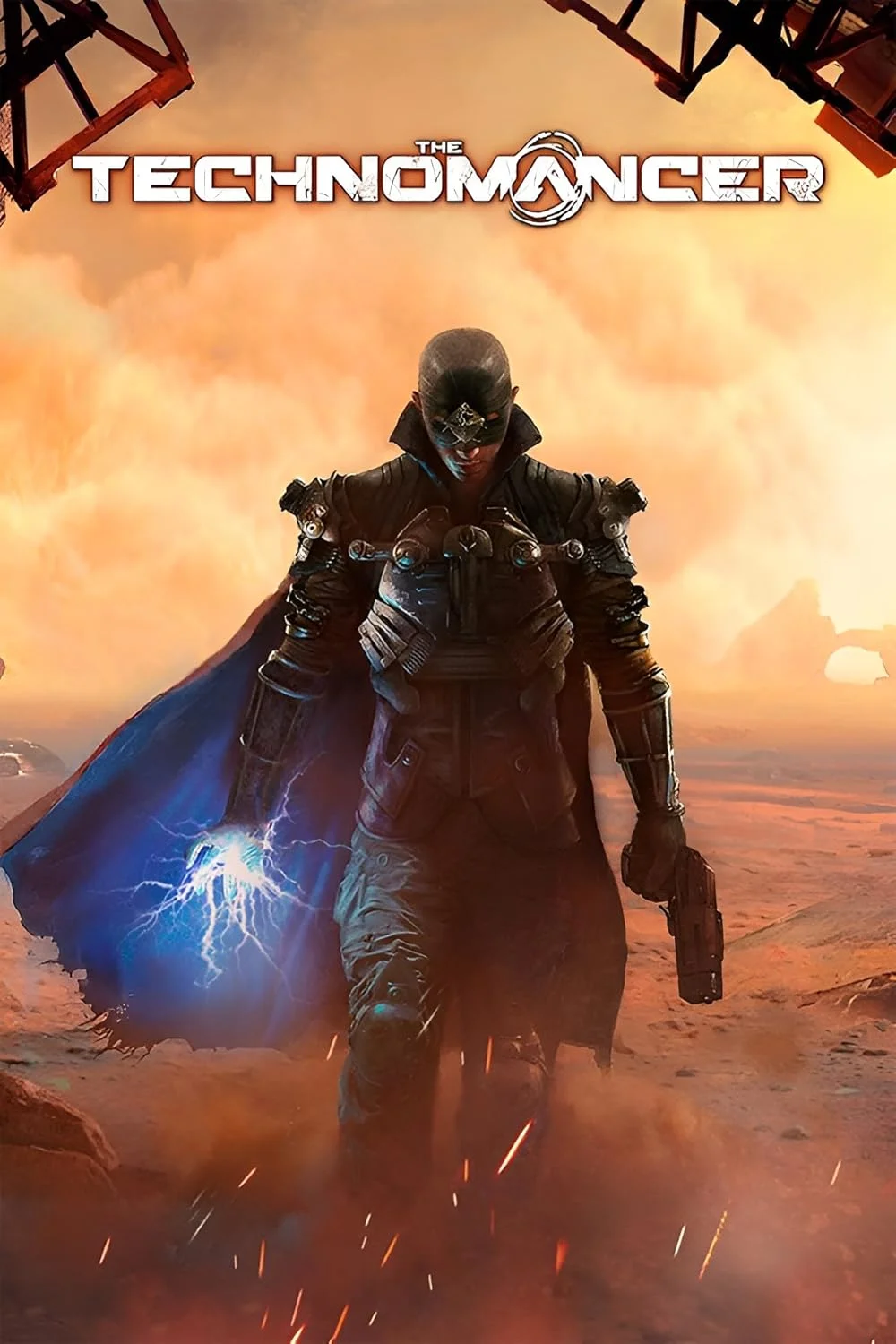
The Technomancer
This combination offers playable performance with an average of 54 FPS, though you may want to lower settings for smoother gameplay.
Average FPS: resolution vs quality settings
| Ultra | High | Medium | Low | |
|---|---|---|---|---|
| 4K Ultra HD | 17 | 26 | 32 | 40 |
| 1440p QHD | 38 | 46 | 56 | 71 |
| 1080p Full HD | 56 | 69 | 85 | 110 |
Cell color: green is 120+ FPS, teal is 60+, amber is 30+, red is below 30.
The Technomancer with AMD Ryzen 5 4600G + NVIDIA GeForce GTX 1660 SUPER, In-Depth Analysis
# The Technomancer with AMD Ryzen 5 4600G + NVIDIA GeForce GTX 1660 SUPER
The Technomancer, a 2016 Action RPG, presents an interesting case study for this mid-range pairing of the AMD Ryzen 5 4600G and NVIDIA GeForce GTX 1660 SUPER. The measured FPS data across resolutions and settings reveals a system that is clearly capable of playing the game, but one whose performance ceiling varies dramatically depending on how the visual load is balanced. The data suggests a combination where the GPU is the primary bottleneck at higher resolutions, while the CPU's six cores and twelve threads provide a stable enough foundation at lower settings. This analysis breaks down exactly what those measured numbers mean for the playability of this title.
Resolution Scaling
The FPS drop from 1080p to 4K is steep and tells a clear story about the limiting component in this system. At 1080p with Low settings, the system achieves an average of 109.9 FPS. Moving to 1440p Low drops that to 71.3 FPS, a 35% reduction, and then to 4K Low, the average falls to 39.6 FPS, which is a 64% drop from the 1080p baseline. This scaling pattern is a classic indicator that the NVIDIA GeForce GTX 1660 SUPER is being pushed harder as the pixel count increases.
The scaling becomes even more pronounced at higher settings. At High settings, the transition from 1080p (69.4 FPS) to 1440p (45.9 FPS) represents a 34% drop, but the move from 1440p to 4K (26 FPS) is a 43% decline. This non-linear behavior suggests that at 4K High, the GPU's 6 GB of VRAM and its raw compute throughput are overwhelmed, causing a disproportionate performance hit. The data implies that resolution scaling is not a simple linear equation; the GPU's architecture hits a wall as the workload expands, making 4K a playable option only at the lowest settings.
The trend is consistent across all settings presets. The Ultra preset, which is the most demanding, sees the largest relative decline, going from 55.9 FPS at 1080p to 37.5 FPS at 1440p and finally to a barely playable 17.4 FPS at 4K. The data indicates that the GTX 1660 SUPER is the primary limiting factor in these scenarios, as the CPU’s performance, while not irrelevant, does not appear to be the reason for the massive FPS erosion at higher resolutions.
CPU Role
The AMD Ryzen 5 4600G, with its 6 cores and 12 threads, provides a solid base for The Technomancer. Its base clock of 3.70 GHz and boost clock of 4.20 GHz are reasonable for a game from this era. The benchmark data for the CPU shows a single-thread score of 2653 in Passmark, which is a modest figure, but the multi-thread score of 15992 suggests that the processor has enough headroom for games that can utilize multiple cores. The game's performance at 1080p Low (109.9 FPS) indicates that the CPU is not a major bottleneck at lower resolutions, as the framerate is high enough to suggest the GPU is still doing most of the work.
However, the CPU's role becomes clearer when examining the scaling from Low to Ultra at a fixed resolution. At 1080p, the FPS drops from 109.9 (Low) to 85.4 (Medium), then to 69.4 (High), and finally to 55.9 (Ultra). This is a progressive decline that is more attributable to the GPU's workload than the CPU. The CPU's average benchmark score of 17489 places it in the 75th percentile of all CPUs, and its nearest rivals include the Intel Core i5-12450H and the Intel Core i3-13100F. The data suggests that the CPU is providing a consistently sufficient amount of processing power to keep up with the GTX 1660 SUPER’s output, as the FPS is never capped at a low number that would indicate a CPU limitation.
The 40-series processor's cache configuration, with 8 MB of shared L3, is not exceptionally large, but it is adequate for a game of this type. The data does not show any specific CPU-bound stutter or framerate collapse in the measured results, which implies that the Ryzen 5 4600G is a stable partner for this GPU in this title. The CPU’s role is to ensure that the GPU is fed with enough data, and the benchmark results indicate that it does so effectively, especially when compared to the GPU's more significant performance swings.
GPU Role
The NVIDIA GeForce GTX 1660 SUPER is the star of this show, and its performance dictates the playability of The Technomancer across the board. With a base clock of 1530 MHz and a boost clock of 1785 MHz, it's a capable card for its time. Its 6 GB of GDDR6 memory on a 192-bit bus provides a bandwidth of 336.0 GB/s, which is a key factor in how it handles different resolutions. The GPU's benchmark scores are modest, with a Passmark G3D score of 12699, placing it in the 55th percentile of all GPUs. Its nearest rivals include the AMD Radeon RX Vega 11 and the Intel Iris Xe MAX Graphics, which are both lower-tier options, showing that the GTX 1660 SUPER is positioned in the mid-range of the performance spectrum.
The GPU's VRAM is likely a limiting factor at 4K. At 4K Ultra, the average FPS collapses to 17.4, which is a 69% drop from the 4K Low figure of 39.6. This massive performance cliff suggests that the 6 GB VRAM buffer is being saturated, causing the GPU to spill over into slower memory or reduce its effective throughput. The data shows that the GPU's 5.027 TFLOPS of FP32 performance is just not sufficient for the demands of 4K Ultra, but it is perfectly adequate for 1080p Medium, where it achieves an average of 85.4 FPS. The GPU’s role is thus highly dependent on the resolution and settings, with its performance being the dominant factor in determining the final framerate.
Measured FPS Breakdown
1920x1080: At 1080p, the system delivers excellent performance. Low settings yield an average of 109.9 FPS, which is exceptionally smooth. Medium settings drop to 85.4 FPS, still very fluid. High settings produce 69.4 FPS, which is good for most players. Ultra settings bring the average down to 55.9 FPS, which is playable but represents a significant cost for the visual upgrade. The data shows a clear, steady decline as settings increase, indicating a balanced load.
2560x1440: At 1440p, the performance is still playable, but the GPU begins to strain. Low settings average 71.3 FPS, which is good. Medium settings achieve 55.8 FPS, which is acceptable. High settings drop to 45.9 FPS, which is on the edge of smoothness. Ultra settings fall to 37.5 FPS, which is a noticeable step down. The data suggests that 1440p is a viable option with medium or low settings, but high and ultra presets will require compromises.
3840x2160: At 4K, the system is severely challenged. Low settings average 39.6 FPS, which is playable but not ideal. Medium settings drop to 31.6 FPS, which is borderline. High settings fall to 26 FPS, which is a rough experience. Ultra settings produce an average of 17.4 FPS, which is effectively unplayable. The data confirms that 4K is only a reasonable option for this combination when using the Low preset.
FAQ
Q: Can this system run The Technomancer at 4K?
A: Yes, but only at Low settings, where it achieves an average of 39.6 FPS. At Medium settings, the average drops to 31.6 FPS, and at High and Ultra, it falls to 26 FPS and 17.4 FPS, respectively, making those presets impractical.
Q: What is the best resolution for this combo?
A: The data shows that 1080p provides the most consistent experience, with all settings presets delivering averages above 55 FPS. At 1440p, only Low and Medium settings stay above 55 FPS, while High and Ultra go below 46 FPS.
Q: How does the GTX 1660 SUPER compare to its nearest rivals in terms of benchmark score?
A: The GTX 1660 SUPER has an average benchmark score of 14286. Its nearest rival, the AMD Radeon RX Vega 11, scores 14314, which is a delta of -0.2%. The Intel Iris Xe MAX Graphics scores 14315, also a -0.2% delta, showing these are very closely matched.
Q: Is the CPU or GPU the main bottleneck in this game?
A: The data indicates the GPU is the primary bottleneck. This is evident from the steep FPS drops as resolution increases, which is a classic sign of GPU limitation. The CPU's performance is more stable, with no similar collapse in the measured frames.
Q: What is the performance delta between the Ryzen 5 4600G and the Intel Core i3-14100T?
A: The Ryzen 5 4600G has an average benchmark score of 17489, while the Intel Core i3-14100T scores 17636. This gives the Ryzen a delta of -0.8% compared to the Intel chip, meaning they are nearly identical in performance.
Q: What kind of FPS can I expect at 1080p with High settings?
A: The measured data shows an average of 69.4 FPS at 1080p High. This is a solid, playable framerate that should provide a smooth experience for most users.
Settings Recommendations
The measured FPS data provides a clear path for the optimal settings experience. At 1080p, the player has the most freedom. The Ultra preset, at 55.9 FPS, is a viable option if visual fidelity is the priority, as it remains above the standard 60 FPS threshold for many users. However, the High preset at 69.4 FPS offers a better balance, providing a higher framerate with only a marginal visual downgrade. For players seeking maximum smoothness, the Medium preset at 85.4 FPS is the best choice, as it offers a substantial FPS boost over High without a dramatic reduction in quality.
At 1440p, the recommendations shift. The Low preset at 71.3 FPS is the only option that comfortably exceeds 60 FPS. The Medium preset at 55.8 FPS is a good compromise, offering a better visual experience while staying close to the 60 FPS mark. High and Ultra are less ideal, with averages of 45.9 and 37.5 FPS, which may be too choppy for some. For 4K, the Low preset is the only one that is truly playable, at 39.6 FPS, and even that will require some tolerance for lower framerates. The data suggests that the Low and Medium presets at 1080p provide the best overall experience, balancing visual quality with a consistently high framerate.
How This Combo Ranks
The combination of the AMD Ryzen 5 4600G and the NVIDIA GeForce GTX 1660 SUPER ranks 1475 out of 1656 tested combinations for The Technomancer. This places it in the lower 11% of all tested systems, which is a significant finding. This rank is determined by the measured FPS across all resolutions and settings, and it indicates that while this system can run the game, it is not a high-performing setup for this title. The GPU's mid-range standing, at the 55th percentile, and the CPU's higher standing, at the 75th percentile, create a system where the GPU is clearly the weaker link.
This rank of 1475 suggests that a large majority of other tested combinations deliver better performance in this game. The data implies that players using this hardware will need to make more compromises on resolution and settings than they would with a higher-ranked system. The CPU’s strong relative performance does not compensate for the GPU’s limitations, especially at higher resolutions. The pairing is functional, but the benchmark results indicate that it is far from optimal for The Technomancer, and users should expect to stay at 1080p or 1440p with lower presets to achieve a satisfactory experience.
Hardware Specifications
AMD Ryzen 5 4600G
NVIDIA GeForce GTX 1660 SUPER
FPS Benchmarks by Resolution & Settings
Performance data for AMD Ryzen 5 4600G + NVIDIA GeForce GTX 1660 SUPER in The Technomancer
| Resolution | Settings | Avg FPS |
|---|---|---|
| 3840x2160 | Low | 39.6 |
| 3840x2160 | Medium | 31.6 |
| 3840x2160 | High | 26.0 |
| 3840x2160 | Ultra | 17.4 |
| 2560x1440 | Low | 71.3 |
| 2560x1440 | Medium | 55.8 |
| 2560x1440 | High | 45.9 |
| 2560x1440 | Ultra | 37.5 |
| 1920x1080 | Low | 109.9 |
| 1920x1080 | Medium | 85.4 |
| 1920x1080 | High | 69.4 |
| 1920x1080 | Ultra | 55.9 |
The Technomancer with Ryzen 5 4600G + Other GPUs
See how The Technomancer performs with the same CPU but different graphics cards.
The Technomancer with GTX 1660 SUPER + Other CPUs
See how The Technomancer performs with the same GPU but different processors.
Other Games with Ryzen 5 4600G + GTX 1660 SUPER
Explore FPS benchmarks for other games using this same hardware combination.