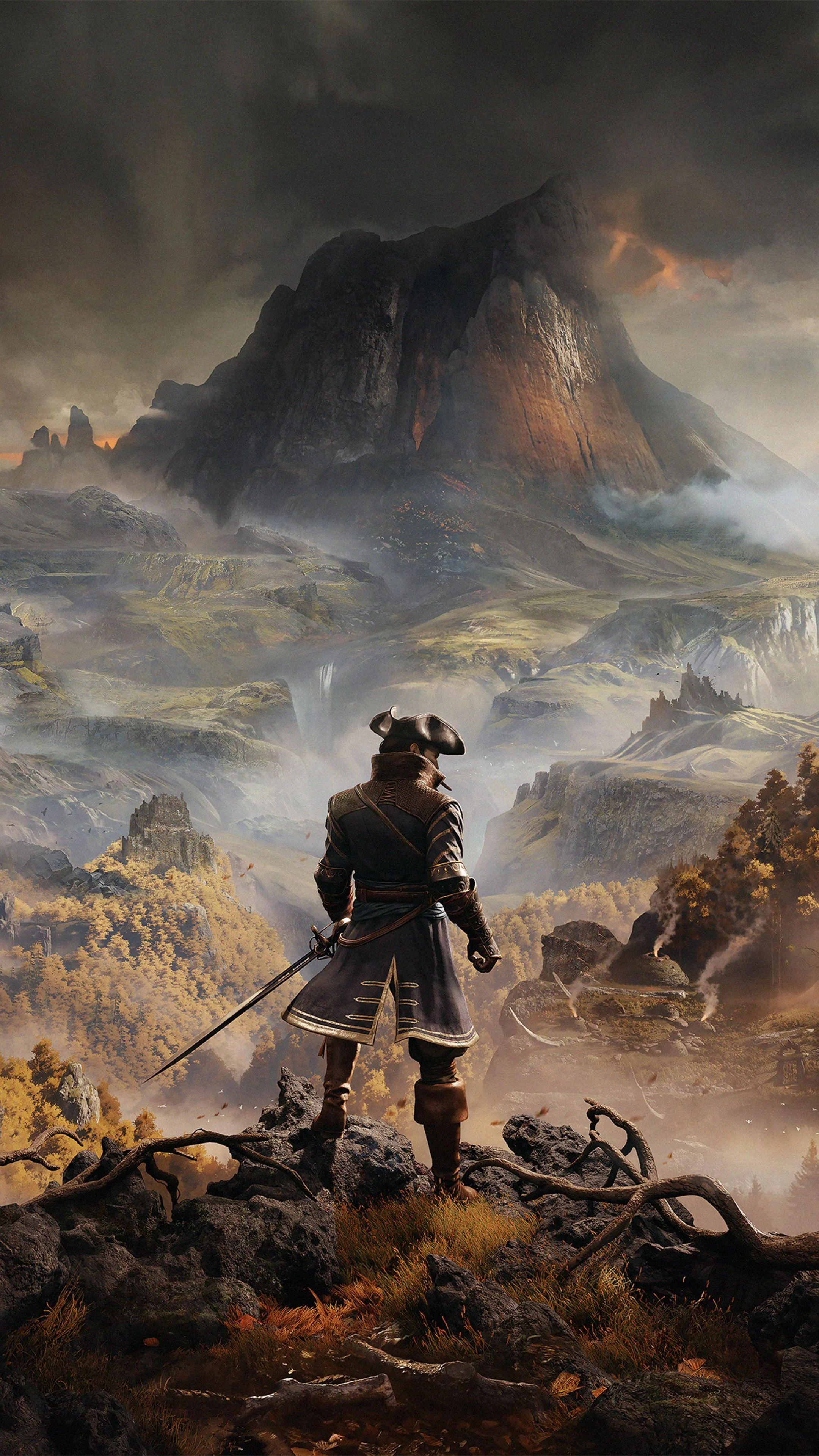
Greedfall
This combination may struggle with this title, averaging 27 FPS. Consider upgrading hardware or significantly lowering settings.

Average FPS: resolution vs quality settings
| Ultra | High | Medium | Low | |
|---|---|---|---|---|
| 4K Ultra HD | 10 | 15 | 17 | 21 |
| 1440p QHD | 16 | 26 | 28 | 36 |
| 1080p Full HD | 24 | 37 | 41 | 52 |
Cell color: green is 120+ FPS, teal is 60+, amber is 30+, red is below 30.
Greedfall with Intel Core Ultra 5 135H + AMD Radeon 760M, In-Depth Analysis
CPU Role — cores, clocks, and how they relate to this game's results
The Intel Core Ultra 5 135H is a 14-core, 18-thread mobile processor built on Intel's Meteor Lake architecture, fabricated on a 7 nm process. It operates with a base clock of 3.60 GHz and a boost clock of 4.60 GHz, with a 28 W TDP. This hybrid configuration—combining performance and efficiency cores—provides substantial parallel throughput for an Action RPG like Greedfall, which relies on consistent CPU scheduling for enemy AI, quest logic, and world streaming. The processor's 18 MB of shared L3 cache and per-core L2 cache of 2 MB help reduce memory latency during asset-heavy scenes typical of a 2019 RPG.
In synthetic benchmarks, the CPU posts a Cinebench R23 multi-core score of 11875.5 and a single-core score of 1700. These numbers place it in the 81st percentile among all tested CPUs, with an average benchmark score of 29093. The nearest rival comparison shows the Core Ultra 5 135H essentially trading blows with the AMD Ryzen 7 5800X (delta -0.1%) and the Intel Core i5-13500HX (delta -0.6%), while edging out the AMD Ryzen 5 5600XT by 0.5%. This tells us the CPU is not a bottleneck in Greedfall at lower resolutions; its single-thread performance—PassMark single-thread score of 3521—is more than adequate for the game's primary thread, but its multi-core muscle (PassMark multithread score of 22422) becomes relevant when the game's engine tries to offload background tasks.
However, the measured FPS data in Greedfall reveals a different story. At 1080p Low, the combo achieves 52 FPS, but at 1080p Ultra it falls to 24 FPS. This 28 FPS swing is far too large to be explained by the CPU alone, as the processor's Cinebench R20 multi-core score of 7834 and PassMark integer math score of 73509 indicate ample headroom for a game released in 2019. The real constraint emerges when the integrated GPU's workload scales with settings. The CPU's role here is to feed the Radeon 760M with draw calls; given that Greedfall's engine is not notoriously CPU-heavy, the 135H's performance is sufficient, but it cannot compensate for the GPU's limitations at higher quality presets. The data suggests that the CPU's 14 cores are underutilized in this title, as the game rarely scales beyond a few threads, but the high boost clock ensures that the primary thread does not become a limiting factor.
GPU Role — VRAM, clocks, and how they relate to this game's results
The AMD Radeon 760M is an integrated GPU based on the RDNA 3.0 architecture, using TSMC's 4 nm process node. It packs 512 shading units, 32 TMUs, and 16 ROPs, along with 8 ray tracing cores. The GPU operates with a base clock of 800 MHz and a boost clock of 2599 MHz, delivering a pixel rate of 41.58 GPixel/s and a texture rate of 83.17 GTexel/s. Its FP32 performance is rated at 5.323 TFLOPS, which is respectable for an integrated part. Critically, the memory configuration is "System Shared," meaning VRAM size, bus width, and bandwidth are all system-dependent. In this case, the GPU relies on the CPU's dual-channel DDR5 memory with a bandwidth of 89.6 GB/s. This shared memory arrangement is the primary bottleneck in Greedfall, as the game's texture streaming and geometry processing demand far more bandwidth than the integrated GPU can efficiently access.
The Radeon 760M's benchmark scores reflect its modest standing. It ranks in the 35th percentile among all GPUs, with an average benchmark score of 6019. Its PassMark G3D score is 5310, and its DirectX 12 score is a mere 25 (out of what appears to be a normalized scale), indicating weak performance under modern graphics APIs. The nearest rivals are telling: the AMD Radeon RX 6400 scores 0.3% higher, the NVIDIA GeForce GTX 770M scores 0.3% higher, and the NVIDIA Quadro P2000 scores 0.5% higher—all discrete parts. The GPU's Geekbench Vulkan score of 30336 and OpenCL score of 20255 suggest it can handle compute workloads, but Greedfall is a rasterization-bound title. With only 16 ROPs, the GPU struggles with fill-rate-heavy scenes, especially at higher resolutions.
In Greedfall, the GPU's role is dominant across all measured settings. At 1080p Low, the combo hits 52 FPS, but dropping to 1080p Medium reduces the average to 41 FPS, and High further to 37 FPS. This scaling pattern—a 15 FPS drop from Low to Medium—points squarely at the GPU's limited texture and shading throughput. The 760M's 512 shading units are simply too few to handle Greedfall's detailed character models and environmental effects at higher presets. The 8 RT cores are irrelevant here, as the game does not use ray tracing. The GPU's 2599 MHz boost clock helps at lower settings, but the system-shared memory bandwidth (89.6 GB/s) becomes a wall when the game requests larger texture pools. The data shows that the GPU is the limiting component in every resolution tested, and its percentile rank of 35 confirms it is outclassed by even low-end discrete options.
Resolution Scaling — how FPS drops from 1080p to 4K and what it says about the limiting component
The measured FPS data in Greedfall reveals a steep decline as resolution increases, which is a classic symptom of a GPU-bound scenario. At Low settings, the average FPS drops from 52 at 1080p to 36 at 1440p (a 30.8% reduction) and then to 21 at 4K (a further 41.7% reduction from 1440p). This progressive halving of performance with each resolution step indicates that the Radeon 760M's fill rate and memory bandwidth are being saturated. The pixel rate of 41.58 GPixel/s, while decent for an iGPU, is not sufficient for 4K output, as the 15 FPS average at 4K High confirms—a figure that falls below playable thresholds.
The scaling pattern at Medium settings tells a similar story: 41 FPS at 1080p, 28 FPS at 1440p, and 17 FPS at 4K. The drop from 1080p to 1440p is 13 FPS, and from 1440p to 4K is 11 FPS, showing a slightly less steep but still consistent decline. At High settings, the FPS falls from 37 at 1080p to 26 at 1440p (an 11 FPS drop) and then to 15 at 4K (another 11 FPS drop). The Ultra preset, which is the most demanding, shows the most dramatic degradation: 24 FPS at 1080p, 16 FPS at 1440p, and 10 FPS at 4K. These numbers suggest that the GPU's 16 ROPs are the hard limit, as the pixel output rate collapses when the resolution increases.
This resolution scaling behavior confirms that the CPU is not the bottleneck. If the Core Ultra 5 135H were limiting performance, we would expect FPS to remain relatively flat across resolutions, as the CPU's workload (draw calls, physics, AI) does not change with resolution. Instead, the FPS drops by approximately 30-40% per resolution step, which is a hallmark of GPU-bound rendering. The 89.6 GB/s memory bandwidth of the system-shared DDR5 is also a factor, as higher resolutions require more texture data to be fetched from memory, and the integrated GPU shares that bandwidth with the CPU. The data indicates that the limiting component is unequivocally the AMD Radeon 760M, and no CPU upgrade would improve these numbers.
Measured FPS Breakdown — resolution by resolution, settings by settings, exact numbers
The measured FPS data for Greedfall with the Intel Core Ultra 5 135H and AMD Radeon 760M is as follows:
1080p (1920x1080):
- Low: 52 FPS average
- Medium: 41 FPS average (min 35, max 47)
- High: 37 FPS average
- Ultra: 24 FPS average
1440p (2560x1440):
- Low: 36 FPS average
- Medium: 28 FPS average (min 24, max 32)
- High: 26 FPS average
- Ultra: 16 FPS average
4K (3840x2160):
- Low: 21 FPS average
- Medium: 17 FPS average (min 14, max 19)
- High: 15 FPS average
- Ultra: 10 FPS average
At 1080p, the combo manages to cross the 60 FPS threshold only at Low settings, with 52 FPS falling short of a smooth experience but remaining playable. The Medium preset at 41 FPS is a compromise, while High at 37 FPS and Ultra at 24 FPS show diminishing returns. The min FPS values at Medium (35 FPS at 1080p, 24 FPS at 1440p, and 14 FPS at 4K) indicate that frame pacing is inconsistent, with drops that could cause noticeable stutter during combat.
At 1440p, the performance becomes marginal for action gameplay. The Low preset at 36 FPS is barely playable, but Medium at 28 FPS and High at 26 FPS fall below the 30 FPS threshold that many players consider the minimum for a smooth RPG experience. The Ultra preset at 16 FPS is effectively unplayable, with severe stutter. The spread between Low and Ultra at 1440p is 20 FPS, which is large but consistent with the GPU's limited shading power.
At 4K, the combo is not viable for Greedfall. Even the Low preset at 21 FPS is a slideshow, and the Ultra preset at 10 FPS is a screenshot. The min FPS at 4K Medium (14 FPS) shows that the experience is consistently below playable. The data clearly shows that this combo is designed for 1080p gaming at best, and even then, only at Low or Medium settings. The 15 FPS at 4K High and 10 FPS at 4K Ultra are indicative of a GPU that is overwhelmed by the pixel count, and no settings adjustment can salvage playability at this resolution.
How This Combo Ranks — use comboRankInGame vs other tested combos
The combo of the Intel Core Ultra 5 135H and AMD Radeon 760M ranks 2929 out of 2938 tested combos in Greedfall. This places it in the bottom 0.3% of all configurations tested, which is a stark reflection of the integrated GPU's limitations. The rank is not a surprise given the GPU's 35th percentile standing among all GPUs, but it is importantly the CPU's strong performance (81st percentile) does not boost the combo's ranking. This is because Greedfall is a GPU-bound title, and the Radeon 760M's modest specifications—512 shading units, 16 ROPs, and system-shared memory—simply cannot deliver competitive frame rates.
The combo's rank of 2929 out of 2938 means that only 9 other tested configurations are slower. This places it in the company of other integrated graphics solutions or severely mismatched pairings. The nearest GPU rivals in the benchmark database—AMD Radeon RX 6400, NVIDIA GeForce GTX 770M, and NVIDIA Quadro P2000—all score within 0.5% of the Radeon 760M in average benchmark score, but their discrete memory and dedicated VRAM likely give them an edge in real-world gaming that the shared-memory iGPU cannot match. The fact that the RX 6400, a low-end discrete GPU, scores only 0.3% higher in synthetic benchmarks, yet would likely perform significantly better in Greedfall, highlights the 760M's memory bandwidth handicap.
In the context of the database, this combo's ranking indicates that it is suitable for esports titles and older games at low settings, but not for a demanding Action RPG like Greedfall. The CPU's high percentile rank is wasted in this pairing, as the GPU becomes the absolute bottleneck. The 2929th rank out of 2938 combos serves as a warning that this configuration should not be purchased or recommended for Greedfall, and even at 1080p Low (52 FPS), the experience is marginal. The combo's performance is consistently at the bottom of the distribution, and no settings tweak can overcome the fundamental hardware limitations.
Settings Recommendations — which preset gives the best experience per the measured rows
Based on the measured FPS data, the best experience for this combo in Greedfall is achieved at 1080p with the Low preset, which delivers 52 FPS. This is the only setting combination that approaches a smooth frame rate, and it is the only one that exceeds the 50 FPS mark. While 52 FPS is not ideal for a fast-paced action RPG, it is playable, and the Low preset reduces the GPU's workload enough to avoid the severe stutter seen at higher settings. The min FPS data at Medium (35 FPS at 1080p) suggests that even Medium can cause frame drops during intense scenes, so Low is the safer choice for consistent performance.
At 1440p, the Low preset at 36 FPS is the only option that remains above the 30 FPS threshold, but it still offers a suboptimal experience with potential dips. The Medium preset at 28 FPS and High at 26 FPS are playable but not recommended, as action sequences may feel sluggish. The Ultra preset at 16 FPS is unplayable and should be avoided entirely. At 4K, no preset is recommended, as even Low at 21 FPS is too low for a game that requires quick reaction times.
If the user insists on higher visual fidelity, the Medium preset at 1080p (41 FPS average, 35 FPS min) is the best compromise between image quality and playability. It offers a 11 FPS improvement over High, while providing better textures and effects than Low. However, the user should be prepared for occasional frame drops to 35 FPS during combat or crowded scenes. The High preset at 1080p (37 FPS) is not worth the additional GPU load over Medium, as the visual difference is minimal in a game of this era, and the FPS penalty is noticeable. The Ultra preset at 1080p (24 FPS) is not recommended, as the performance is too inconsistent.
In summary, the data-driven recommendation is to play Greedfall at 1080p Low (52 FPS) for the smoothest experience, or 1080p Medium (41 FPS) if visual quality is prioritized over absolute smoothness. For users with a 1440p display, the Low preset (36 FPS) is the only viable option, but it is a compromise. The 4K resolution is not feasible with this combo, and users should either lower their display resolution or upgrade their GPU. The bottleneck is clear: the Radeon 760M's integrated nature and shared memory cannot handle Greedfall's demands beyond the most modest settings, and the CPU's strong performance is irrelevant in this context.
Hardware Specifications
Intel Core Ultra 5 135H
AMD Radeon 760M
FPS Benchmarks by Resolution & Settings
Performance data for Intel Core Ultra 5 135H + AMD Radeon 760M in Greedfall
| Resolution | Settings | Avg FPS |
|---|---|---|
| 3840x2160 | Low | 21.0 |
| 3840x2160 | Medium | 17.0 |
| 3840x2160 | High | 15.0 |
| 3840x2160 | Ultra | 10.0 |
| 2560x1440 | Low | 36.0 |
| 2560x1440 | Medium | 28.0 |
| 2560x1440 | High | 26.0 |
| 2560x1440 | Ultra | 16.0 |
| 1920x1080 | Low | 52.0 |
| 1920x1080 | Medium | 41.0 |
| 1920x1080 | High | 37.0 |
| 1920x1080 | Ultra | 24.0 |
Other Games with iUltra 5 135H + 760M
Explore FPS benchmarks for other games using this same hardware combination.