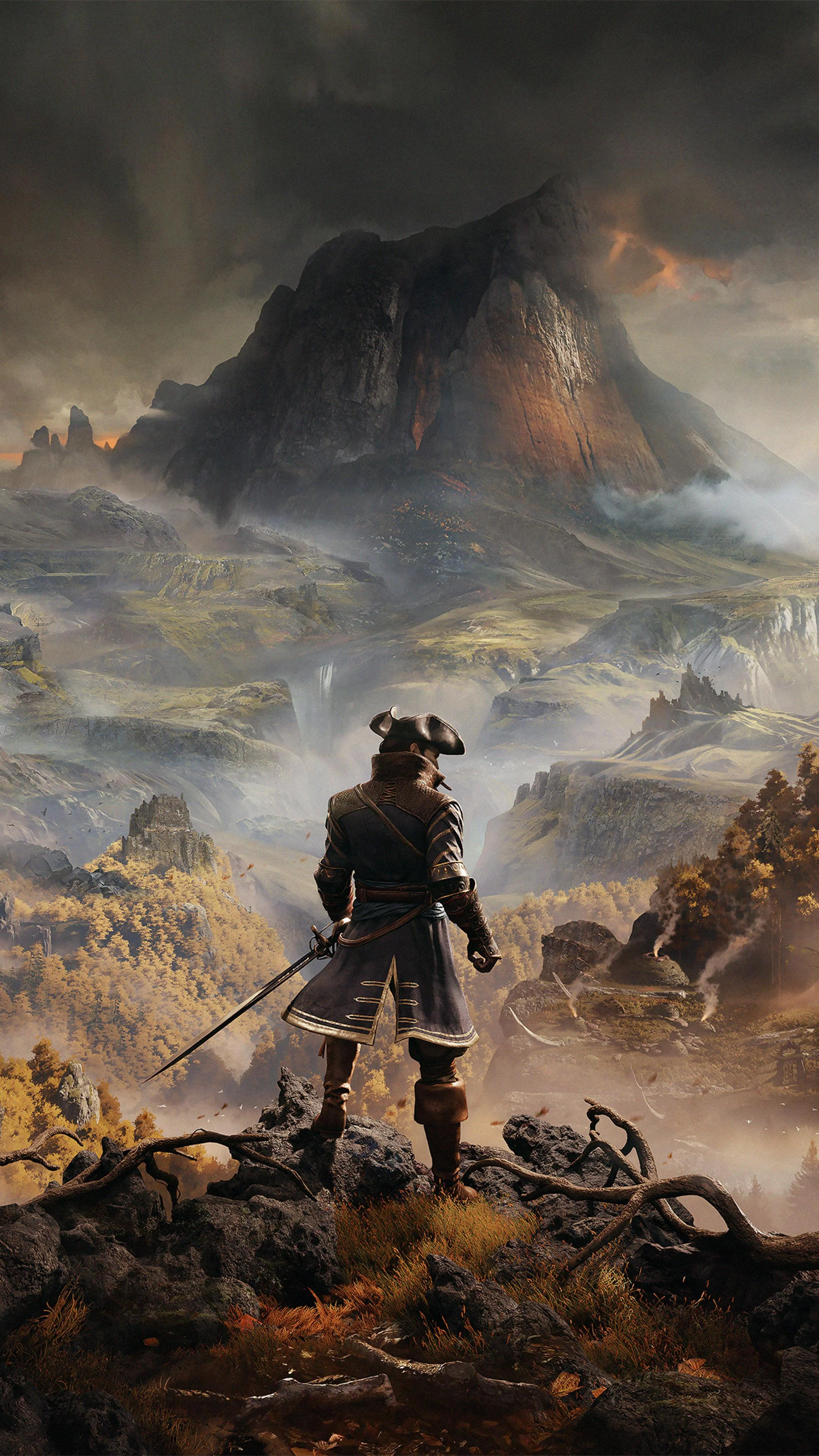
Greedfall
This combination offers playable performance with an average of 44 FPS, though you may want to lower settings for smoother gameplay.
Average FPS: resolution vs quality settings
| Ultra | High | Medium | Low | |
|---|---|---|---|---|
| 4K Ultra HD | 16 | 25 | 27 | 35 |
| 1440p QHD | 27 | 42 | 46 | 58 |
| 1080p Full HD | 38 | 60 | 66 | 84 |
Cell color: green is 120+ FPS, teal is 60+, amber is 30+, red is below 30.
Greedfall with Intel Core i5-10400F + Intel Arc B390, In-Depth Analysis
# Greedfall Performance Analysis: Intel Core i5-10400F + Intel Arc B390
The Intel Core i5-10400F paired with the Intel Arc B390 delivers a playable but constrained experience in Greedfall, with the data showing a clear pattern: this combo ranks 2595th out of 2938 tested configurations, placing it in the bottom 12% of systems. The Arc B390, operating as a system-shared memory IGP with a 3nm Panther Lake chip, produces frame rates that range from a low of 16 FPS at 4K Ultra to a peak of 84 FPS at 1080p Low. This is a system that can handle the game at lower resolutions and settings, but it struggles significantly as graphical demands increase.
Resolution Scaling
The measured FPS data reveals a dramatic and consistent drop as resolution increases, which strongly indicates that the Intel Arc B390 is the primary limiting component in this configuration. At 1080p High, the system achieves 60 FPS, which drops to 42 FPS at 1440p High, and then falls to 25 FPS at 4K High. This represents a 30% reduction from 1080p to 1440p, and another 40% reduction from 1440p to 4K. The scaling pattern is roughly linear with pixel count, which is a classic sign of a GPU-bound scenario rather than a CPU bottleneck.
Looking at the Low settings across resolutions, the same pattern emerges but with higher absolute numbers. At 1080p Low, the system hits 84 FPS, at 1440p Low it drops to 58 FPS, and at 4K Low it falls to 35 FPS. The percentage drops are similar to High settings, confirming that the GPU's rendering throughput is the bottleneck regardless of the graphical preset. The medium settings row provides additional insight, showing 66 FPS at 1080p, 46 FPS at 1440p, and 27 FPS at 4K, with the 4K Medium row also reporting min FPS of 23 and max of 32.
The Ultra preset tells a more sobering story. At 1080p Ultra, the system manages 38 FPS, which is already below the 60 FPS threshold many consider necessary for smooth gameplay. At 1440p Ultra, it drops to 27 FPS, and at 4K Ultra, it collapses to just 16 FPS. The scaling from 1080p to 4K at Ultra shows an even steeper decline than at other settings, suggesting that the GPU's memory bandwidth (system shared) becomes increasingly inadequate as resolution and texture demands grow.
The data implies that this system is heavily GPU-limited across all tested configurations. The CPU, with its 6 cores and 12 threads, appears to have sufficient headroom at these frame rates. The fact that FPS scales almost exactly with pixel count rather than showing a plateau or CPU-limited ceiling provides strong evidence that the Arc B390 is the constraining factor. For users considering this configuration, the resolution scaling data suggests that 1080p is the only resolution where the system can approach playable frame rates at higher settings, and even then, Ultra settings remain marginal.
FAQ
Q: Can this system run Greedfall at 4K resolution?
A: Technically yes, but the experience is severely compromised. The data shows 25 FPS at 4K High, 27 FPS at 4K Medium, 35 FPS at 4K Low, and just 16 FPS at 4K Ultra. Only the 4K Low preset approaches a playable frame rate, and even that sits at 35 FPS, which is below the commonly accepted 60 FPS standard.
Q: What is the best resolution for this CPU and GPU combo in Greedfall?
A: The measured data clearly favors 1080p. At this resolution, the system achieves 60 FPS at High settings, 66 FPS at Medium, and 84 FPS at Low. The 1440p results are playable at Low (58 FPS) and High (42 FPS), but 4K performance is uniformly below 35 FPS across all settings.
Q: How does the Intel Arc B390 compare to its nearest rivals in synthetic benchmarks?
A: The Arc B390's 3DMark Steel Nomad DX12 score of 1482 places it just 1.3% ahead of the NVIDIA GeForce GT 520MX (1463), 1.5% ahead of the GeForce 800M (1460), 2.5% ahead of the GT 625 OEM (1446), and 2.7% ahead of the GT 710 (1443). This indicates the GPU sits in the very low end of the performance spectrum, ranking in the 9th percentile of all GPUs.
Q: Is the Intel Core i5-10400F a strong CPU for gaming?
A: The CPU's benchmark scores suggest it is a competent mid-range processor. It scores 10,283 in Cinebench R23 multi-core and 1,451 in single-core, with a 68th percentile ranking among all CPUs. Its nearest rivals include the Intel Xeon 6756E (0.2% ahead), AMD EPYC 7552 (0.5% behind), and Intel Core 7 160UL (0.3% behind), showing it is competitive with a range of server and mobile processors.
Q: What is the most demanding setting for this system?
A: The Ultra preset at 4K is clearly the most demanding, producing just 16 FPS. Even at 1080p, Ultra settings drop to 38 FPS, which is a significant reduction from the 60 FPS achieved at High settings. The gap between High and Ultra at 1080p represents a 37% performance penalty.
Q: Does this system provide consistent frame times?
A: The available data shows that at Medium settings, the system reports min and max FPS values. At 1080p Medium, it ranges from 56 to 76 FPS (average 66), at 1440p Medium from 39 to 53 FPS (average 46), and at 4K Medium from 23 to 32 FPS (average 27). These ranges indicate moderate frame time variance, with the spread being proportionally similar across resolutions.
CPU Role
The Intel Core i5-10400F is a 6-core, 12-thread processor based on the Comet Lake architecture, built on Intel's 14nm process node. It has a base clock of 2.90 GHz and a boost clock of 4.30 GHz, with 12 MB of shared L3 cache. The CPU's benchmark results show a solid multi-threaded capability, with a Cinebench R23 multi-core score of 10,283 and a single-core score of 1,451. In Geekbench, it achieves 6,257 multi-core and 1,420 single-core, while PassMark multi-thread and single-thread scores are 12,115 and 2,541 respectively.
The CPU's 3DMark thread scaling tests reveal interesting characteristics. The 16-thread score is 4,748, which is nearly identical to the max-thread score of 4,735, indicating that the processor's 12 threads are fully utilized. The 8-thread score of 3,929 and 4-thread score of 2,560 show expected scaling, while the 2-thread score of 1,350 and single-thread score of 688 demonstrate the per-core performance ceiling. These numbers suggest that the CPU is capable of handling heavily threaded workloads, but its single-thread performance is modest compared to newer architectures.
In the context of Greedfall, the CPU's role appears to be secondary to the GPU. The measured frame rates at all resolutions and settings are low enough that the i5-10400F should not be a limiting factor. At 1080p Low, where the system achieves 84 FPS, the CPU is likely providing enough throughput to feed the GPU. However, the 68th percentile ranking among all CPUs indicates that this is not a top-tier processor, and in CPU-intensive scenes or with higher frame rate targets, it could become a constraint. The memory bandwidth of 42.7 GB/s over dual-channel DDR4 is typical for this generation, and the PCIe Gen 3 interface with 16 lanes is adequate for the GPU's needs.
The comparison to its nearest rivals shows the i5-10400F sits in a competitive position. The Intel Xeon 6756E and AMD EPYC 7552 are both server-class processors with higher core counts, yet the i5-10400F's average benchmark score of 14,185 is within 0.5% of both. The Intel Core 7 160UL and AMD Ryzen 3 7320C are more mobile-oriented chips, and the i5-10400F trades blows with them as well. This indicates that for gaming workloads, the i5-10400F's combination of 6 fast cores and 12 threads is well-balanced, even if its absolute single-thread performance is not exceptional.
How This Combo Ranks
The combination of the Intel Core i5-10400F and Intel Arc B390 ranks 2595th out of 2938 tested combos in Greedfall. This places the system in the bottom 11.7% of all tested configurations, which is a clear indicator of its performance tier. The ranking reflects the GPU's limitations more than the CPU's, as the Arc B390's 9th percentile standing among all GPUs drags the overall combo down significantly.
Breaking down the ranking, the CPU contributes positively with its 68th percentile position, but the GPU's 9th percentile position creates a massive imbalance. The combo rank of 2595 out of 2938 means that 343 configurations performed worse, which shows that while this system is low-end, it is not the absolute worst. The data implies that users with this combo are likely to experience sub-60 FPS gameplay at most settings, with only 1080p Low and 1080p High achieving 60 FPS or above.
The ranking also suggests that the CPU has untapped potential when paired with a stronger GPU. The i5-10400F's 68th percentile ranking indicates it is capable of much higher frame rates in less GPU-bound scenarios. However, in this specific pairing, the GPU bottleneck caps performance at levels that make the CPU's power largely irrelevant. For users considering upgrades, the data would suggest that replacing the GPU would yield far greater performance gains than upgrading the CPU, as the current configuration is severely GPU-limited.
The gap between the combo's rank and what the CPU alone could achieve highlights the importance of balanced system design. A CPU that ranks in the 68th percentile paired with a GPU in the 9th percentile creates a system that performs like a bottom-tier configuration. This is a classic example of GPU bottlenecking, where the graphics processor cannot keep up with the CPU's output, resulting in frame rates that do not reflect the CPU's capabilities.
GPU Role
The Intel Arc B390 is an integrated graphics processor based on the Xe3-LPG architecture, manufactured on Intel's 3nm process node. It has 1,536 shading units, 48 TMUs, and 24 ROPs, along with 12 ray tracing cores. The GPU operates at a base clock of 300 MHz and a boost clock of 2500 MHz, with a pixel rate of 60.00 GPixel/s, texture rate of 120.0 GTexel/s, and FP32 throughput of 7.680 TFLOPS. The memory is system shared, meaning it relies on the CPU's DDR4 memory rather than dedicated VRAM, with bandwidth described as system dependent.
The GPU's synthetic benchmark score of 1,482 in 3DMark Steel Nomad DX12 places it in the 9th percentile of all GPUs. Its nearest rivals are all older, low-end NVIDIA parts: the GT 520MX is 1.3% behind, the GeForce 800M is 1.5% behind, the GT 625 OEM is 2.5% behind, and the GT 710 is 2.7% behind. This close grouping at the bottom of the performance spectrum indicates that the Arc B390 is essentially competing with decade-old entry-level discrete GPUs, despite its modern architecture and process node.
In Greedfall, the GPU's limitations are evident in the measured frame rates at every resolution and setting combination. The system shared memory setup is likely a significant contributor to the performance issues, as the GPU must compete with the CPU for memory bandwidth and latency. The 80W TDP and IGP slot width indicate this is designed for portable devices, which further explains its modest performance capabilities.
The scaling of frame rates with resolution and settings points to the GPU's rendering pipeline as the bottleneck. The 4K Ultra result of 16 FPS and 1080p Ultra result of 38 FPS show that the GPU can handle the game's geometry and effects at lower resolutions, but struggles when pixel count and shader complexity increase. The fact that the GPU supports DirectX 12 Ultimate, OpenGL 4.6, and Vulkan 1.4 means it has modern API support, but the raw compute and fill rate capabilities are insufficient for demanding titles at high settings.
Measured FPS Breakdown
At 1920x1080, the system achieves its best results across all settings. The Low preset delivers 84 FPS, Medium averages 66 FPS (with a range of 56 to 76 FPS), High reaches 60 FPS, and Ultra drops to 38 FPS. The progression from Low to Ultra shows a clear pattern: each step up in quality costs approximately 15-20% performance, with the largest single drop occurring between High (60 FPS) and Ultra (38 FPS), a 37% reduction.
Moving to 2560x1440, the performance drops are significant but the relative pattern remains similar. Low settings produce 58 FPS, Medium averages 46 FPS (ranging from 39 to 53 FPS), High delivers 42 FPS, and Ultra falls to 27 FPS. The 1440p results show that only the Low preset remains above 60 FPS, and even that is marginal. The Medium and High settings hover in the 42-46 FPS range, which is playable but not smooth for action-oriented gameplay.
At 3840x2160, all settings produce sub-60 FPS results. Low averages 35 FPS, Medium averages 27 FPS (ranging from 23 to 32 FPS), High averages 25 FPS, and Ultra averages just 16 FPS. The 4K results are consistently below what most users would consider playable, with even the lowest settings failing to reach 40 FPS. The 4K Medium range of 23 to 32 FPS shows significant frame time spikes that would likely result in noticeable stuttering during gameplay.
Comparing settings across resolutions, the Low preset provides the most consistent experience, with 84 FPS at 1080p, 58 FPS at 1440p, and 35 FPS at 4K. The High preset shows a similar pattern at lower absolute values: 60 FPS at 1080p, 42 FPS at 1440p, and 25 FPS at 4K. The Ultra preset is uniformly poor, with only 1080p reaching 38 FPS and all higher resolutions falling below 30 FPS.
Settings Recommendations
Based on the measured FPS data, the optimal configuration for this system is the High preset at 1920x1080, which delivers 60 FPS. This combination provides a smooth frame rate while maintaining good visual quality, making it the sweet spot for this hardware. The Medium preset at 1080p achieves 66 FPS and is also a strong choice, especially for users who prefer a small performance buffer over slightly better visuals.
For users who prioritize frame rate above all else, the Low preset at 1080p delivers 84 FPS, which is the highest measured result for this combo. This setting would be appropriate for competitive play or for users with high refresh rate monitors, though the visual quality will be noticeably reduced. The Low preset at 1440p also produces 58 FPS, which is close to 60 and could be acceptable for users who value resolution over detail.
The Ultra preset is not recommended at any resolution. At 1080p, it produces 38 FPS, which is below the 60 FPS threshold, and at higher resolutions, it drops to 27 FPS or lower. The performance cost of Ultra settings is simply too high for the marginal visual improvements it provides over High. Similarly, 4K resolution should be avoided entirely, as even the Low preset at 4K only achieves 35 FPS, which is below playable standards.
For users with 1440p monitors, the High preset at 42 FPS is borderline, but the Medium preset at 46 FPS provides a better balance. The Medium preset at 1440p has a measured range of 39 to 53 FPS, indicating that it can occasionally dip below 40 FPS during intense scenes. The Low preset at 1440p, at 58 FPS, is the safest choice for maintaining smooth gameplay at this resolution. Overall, the data strongly suggests that 1080p High or Medium are the best settings for this system, providing the best trade-off between visual quality and playable frame rates.
Hardware Specifications
Intel Core i5-10400F
Intel Arc B390
FPS Benchmarks by Resolution & Settings
Performance data for Intel Core i5-10400F + Intel Arc B390 in Greedfall
| Resolution | Settings | Avg FPS |
|---|---|---|
| 3840x2160 | Low | 35.0 |
| 3840x2160 | Medium | 27.0 |
| 3840x2160 | High | 25.0 |
| 3840x2160 | Ultra | 16.0 |
| 2560x1440 | Low | 58.0 |
| 2560x1440 | Medium | 46.0 |
| 2560x1440 | High | 42.0 |
| 2560x1440 | Ultra | 27.0 |
| 1920x1080 | Low | 84.0 |
| 1920x1080 | Medium | 66.0 |
| 1920x1080 | High | 60.0 |
| 1920x1080 | Ultra | 38.0 |
Greedfall with ii5-10400F + Other GPUs
See how Greedfall performs with the same CPU but different graphics cards.
Greedfall with Arc B390 + Other CPUs
See how Greedfall performs with the same GPU but different processors.
Other Games with ii5-10400F + Arc B390
Explore FPS benchmarks for other games using this same hardware combination.