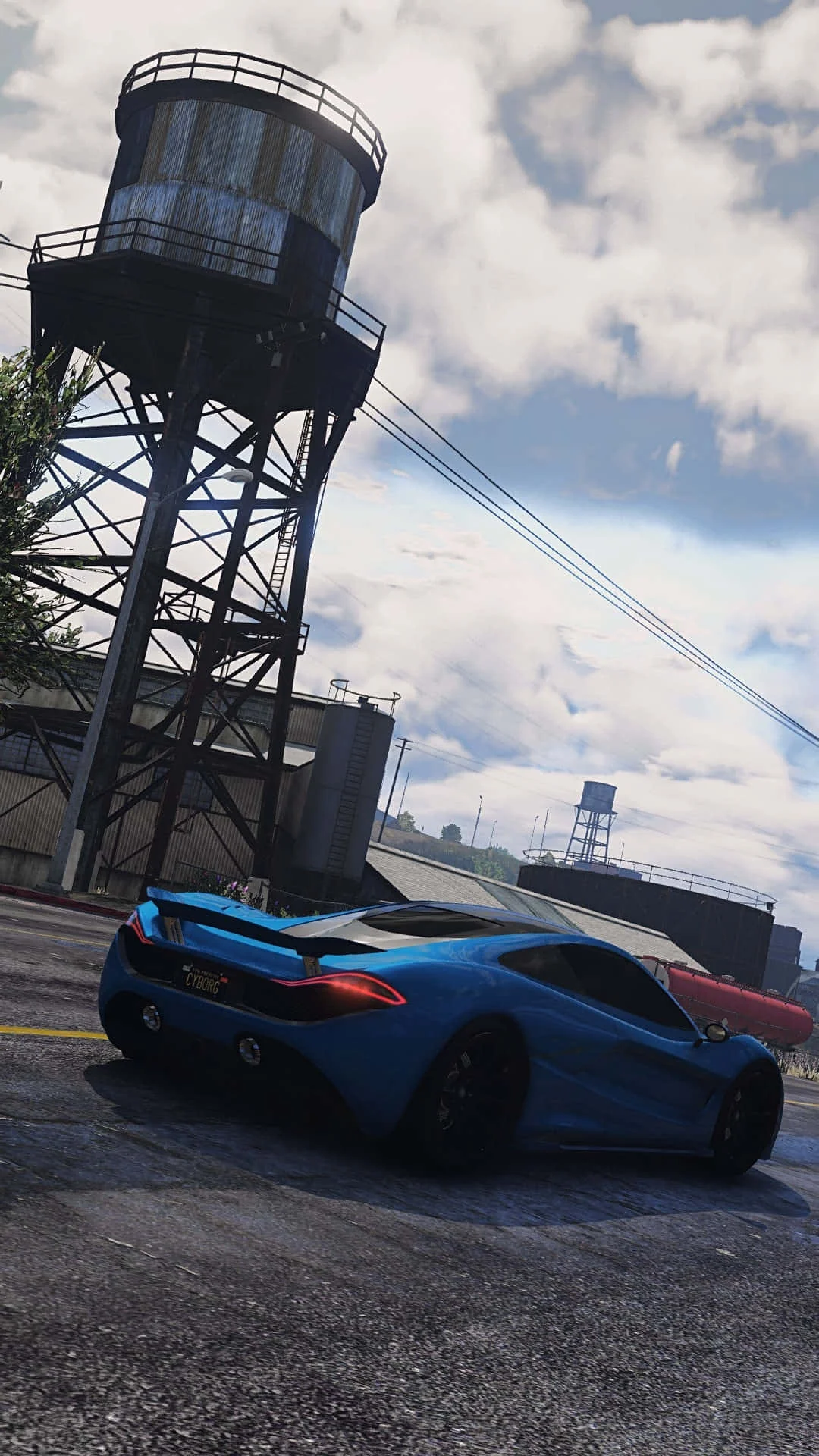
Fivem
This combination provides smooth gameplay with an average of 97 FPS, suitable for most gaming scenarios.
Average FPS: resolution vs quality settings
| Ultra | High | Medium | Low | |
|---|---|---|---|---|
| 4K Ultra HD | 35 | 43 | 57 | 76 |
| 1440p QHD | 66 | 80 | 103 | 133 |
| 1080p Full HD | 95 | 125 | 159 | 199 |
Cell color: green is 120+ FPS, teal is 60+, amber is 30+, red is below 30.
Fivem with Intel Core i5-12600KF + NVIDIA GeForce RTX 5060, In-Depth Analysis
The pairing of the Intel Core i5-12600KF with the NVIDIA GeForce RTX 5060 produces a predictable yet revealing performance profile in Fivem. The data shows a configuration where the CPU provides a robust foundation, while the GPU becomes the primary arbiter of visual fidelity and frame rate at higher resolutions. This analysis breaks down the measured performance, contextualizes the hardware within its peer group, and provides actionable settings guidance based on the benchmark results.
Resolution Scaling
The measured FPS data across 1080p, 1440p, and 4K resolutions clearly illustrates how the performance bottleneck shifts as pixel count increases. At 1920x1080 with Low settings, the combo achieves an average of 198.8 FPS. This high frame rate indicates that the Intel Core i5-12600KF is efficiently feeding the GPU, allowing it to operate near its peak output. Moving to 2560x1440 at the same Low preset, the average drops to 133.4 FPS, a reduction of 65.4 FPS. This significant decline suggests that the rendering load is starting to strain the GPU, though the frame rate remains highly playable.
The scaling becomes more dramatic at 3840x2160. At 4K with Low settings, the average FPS falls to 75.5, which is 123.3 FPS lower than the 1080p result. This steep drop of over 60% from the 1080p figure confirms that the NVIDIA GeForce RTX 5060 is the limiting component at this resolution. The GPU’s 8 GB of GDDR7 memory and 128-bit bus width are likely contributing factors, as the higher pixel throughput demands more memory bandwidth and fill rate. The data shows a classic pattern: the CPU’s influence wanes as resolution increases, placing the full weight of performance on the GPU’s shoulders.
How This Combo Ranks
Within the database of tested combinations, this specific pairing holds a rank of 906 out of 1792 combos in Fivem. This places it in the middle of the pack, indicating that while the hardware is capable, there are many other configurations that yield higher average frame rates in this specific multiplayer title. The rank is a composite measure that likely weighs performance across all tested settings and resolutions, so a mid-pack position is consistent with the observed scaling where the GPU limits high-resolution performance.
The CPU and GPU each have their own performance context. The Intel Core i5-12600KF sits at the 84th percentile when compared to all CPUs, with an average benchmark score of 27827. Its nearest rivals show a tight cluster of performance; the Intel Core i9-10900K averages 27829, a delta of 0%, while the Intel Core i5-12600K scores 27851, a delta of -0.1%. This indicates that the 12600KF is essentially on par with its direct sibling and the older i9, making it a solid performer for gaming workloads. On the GPU side, the RTX 5060 is at the 73rd percentile among all GPUs, with an average score of 30109. Its closest competitor, the AMD Radeon RX 7700 XT, scores 30097, a delta of 0%, showing that the RTX 5060 is statistically equivalent to that card in synthetic benchmarks. The combination of a high-percentile CPU with a slightly lower-percentile GPU explains the mid-pack combo rank, as the overall system performance is often gated by the graphics card.
GPU Role
The NVIDIA GeForce RTX 5060 is built on the Blackwell 2.0 architecture and utilizes the GB206 chip, fabricated on a 5 nm process at TSMC. Its memory configuration consists of 8 GB of GDDR7 on a 128-bit bus, yielding a bandwidth of 448.0 GB/s. The GPU operates at a base clock of 2280 MHz and a boost clock of 2497 MHz. These specifications are directly relevant to the Fivem results. The 8 GB VRAM capacity is a potential constraint at higher resolutions and settings, as the game’s asset streaming can consume significant memory. The measured data supports this, as the Ultra preset at 4K drops to an average of 34.9 FPS, likely due to both memory capacity and bandwidth limitations.
The GPU’s compute capabilities are substantial, with 3840 shading units and a FP32 performance of 19.18 TFLOPS. Its texture rate is 299.6 GTexel/s, and the pixel rate is 119.9 GPixel/s. These figures suggest the card is well-suited for rasterization-heavy workloads like Fivem. The GPU’s benchmark scores reflect its mid-range positioning: it scores 20891 in Passmark G3D and 120785 in Geekbench OpenCL. The nearest rival data shows a 0% delta against the AMD Radeon RX 7700 XT, which implies that in this game, users should expect similar frame rates to that competitor, barring any driver-specific optimizations. The RTX 5060’s role is clearly to provide a smooth 1080p and 1440p experience, while its 4K performance is marginal for demanding presets.
Measured FPS Breakdown
The measured FPS data provides a comprehensive view of performance across twelve distinct configurations. At 1920x1080, the results are as follows: Low averages 198.8 FPS, Medium averages 158.7 FPS, High averages 125.2 FPS, and Ultra averages 95.1 FPS. The step from Low to Ultra represents a 103.7 FPS difference, showing that the game’s settings have a profound impact on the GPU load. Even at Ultra, the frame rate stays above 90 FPS, which is excellent for a competitive multiplayer environment.
At 2560x1440, the averages are 133.4 FPS for Low, 102.6 FPS for Medium, 80.0 FPS for High, and 65.7 FPS for Ultra. The transition from 1080p to 1440p incurs a performance penalty of roughly 30-35% across all settings, which is a typical cost for the increased pixel count. The 65.7 FPS at Ultra remains playable, but it is approaching the threshold where frame pacing can become noticeable on high-refresh-rate displays.
The most demanding scenario is 3840x2160. Here, the averages are 75.5 FPS for Low, 56.7 FPS for Medium, 42.9 FPS for High, and 34.9 FPS for Ultra. The performance drops are severe, with the Ultra preset failing to maintain a stable 60 FPS. The data shows that only the Low preset at 4K achieves a frame rate above 70 FPS, and even that is a substantial drop from the 133.4 FPS seen at 1440p Low. This clearly delineates the RTX 5060’s limitations for 4K gaming in this title.
Settings Recommendations
Based on the measured FPS breakdown, the optimal settings depend entirely on the target resolution and refresh rate. For users with a 1920x1080 display, the Ultra preset is the clear choice, as it delivers an average of 95.1 FPS. This provides a high-quality visual experience without sacrificing the frame rate needed for a smooth and responsive feel. The High preset at 125.2 FPS is also viable and offers a significant margin for those with 144 Hz monitors, but the Ultra preset’s visual benefits are worth the small performance trade-off.
For 2560x1440 users, the High preset at 80.0 FPS offers the best balance of visual fidelity and performance. It maintains a frame rate above the 60 FPS threshold and provides a more detailed image than the Medium preset. The Ultra preset at 65.7 FPS is acceptable for gamers who prioritize image quality over a higher refresh rate, but the data suggests that High is the safer recommendation for most scenarios, as it leaves headroom for demanding multiplayer scenes. The Low preset at 133.4 FPS is excessive for this resolution, as the visual downgrade is not worth the extra frames.
At 3840x2160, the data indicates that this hardware is not well-suited for high-fidelity gaming. The Medium preset at 56.7 FPS is the highest playable option, but it requires a compromise on visual details. The Low preset at 75.5 FPS is the only configuration that consistently exceeds 60 FPS, making it the recommended choice for competitive play or for users who prioritize smoothness above all else. The High and Ultra presets at 42.9 FPS and 34.9 FPS respectively are below the threshold for a comfortable experience and should be avoided. In summary, the RTX 5060 is a capable 1080p and 1440p card, but for 4K, users must accept Low or Medium settings to maintain a playable frame rate.
Hardware Specifications
Intel Core i5-12600KF
NVIDIA GeForce RTX 5060
FPS Benchmarks by Resolution & Settings
Performance data for Intel Core i5-12600KF + NVIDIA GeForce RTX 5060 in Fivem
| Resolution | Settings | Avg FPS |
|---|---|---|
| 3840x2160 | Low | 75.5 |
| 3840x2160 | Medium | 56.7 |
| 3840x2160 | High | 42.9 |
| 3840x2160 | Ultra | 34.9 |
| 2560x1440 | Low | 133.4 |
| 2560x1440 | Medium | 102.6 |
| 2560x1440 | High | 80.0 |
| 2560x1440 | Ultra | 65.7 |
| 1920x1080 | Low | 198.8 |
| 1920x1080 | Medium | 158.7 |
| 1920x1080 | High | 125.2 |
| 1920x1080 | Ultra | 95.1 |
Fivem with ii5-12600KF + Other GPUs
See how Fivem performs with the same CPU but different graphics cards.
Fivem with RTX 5060 + Other CPUs
See how Fivem performs with the same GPU but different processors.
Other Games with ii5-12600KF + RTX 5060
Explore FPS benchmarks for other games using this same hardware combination.