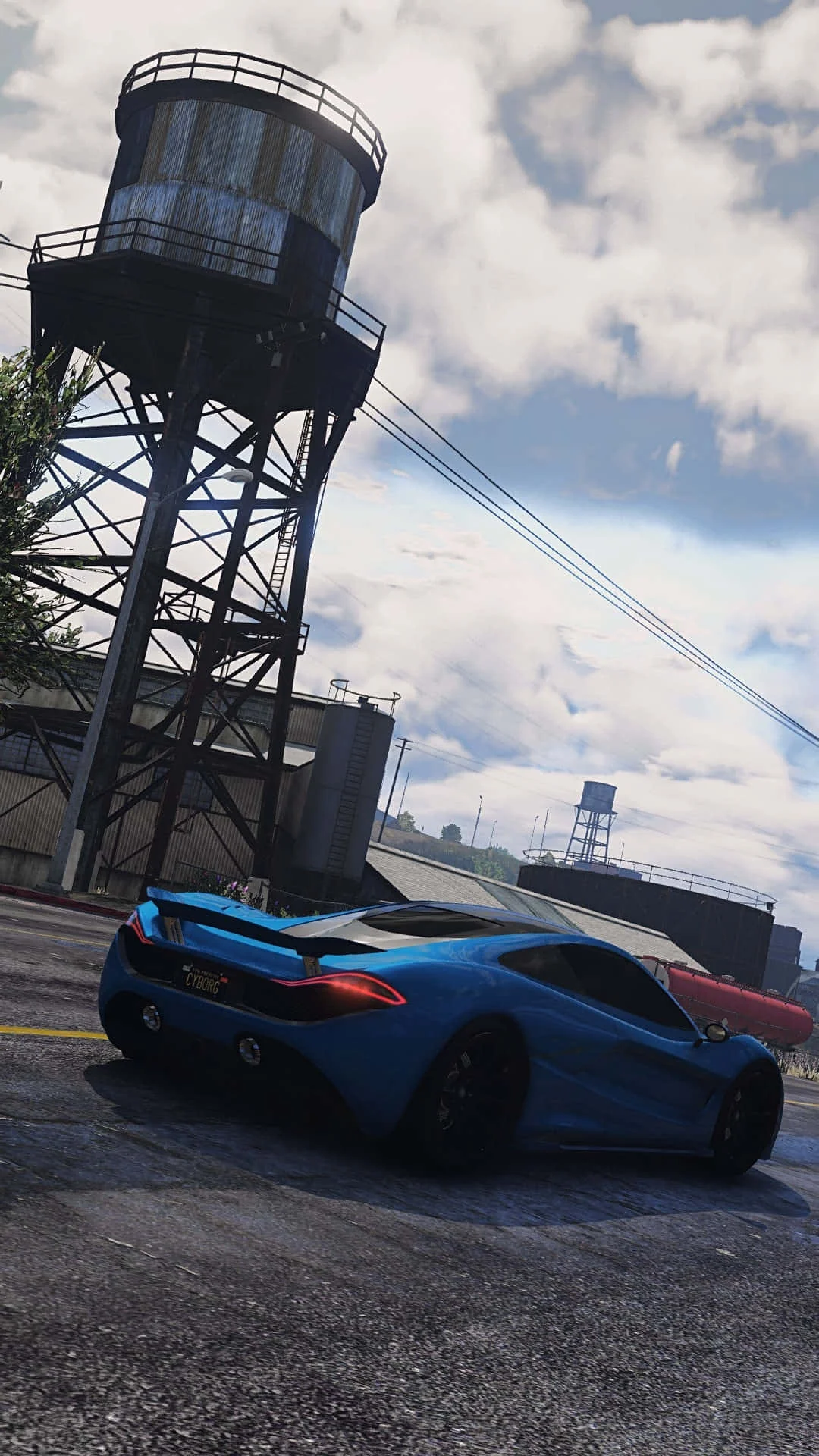
Fivem
This combination offers playable performance with an average of 43 FPS, though you may want to lower settings for smoother gameplay.
Average FPS: resolution vs quality settings
| Ultra | High | Medium | Low | |
|---|---|---|---|---|
| 4K Ultra HD | 16 | 20 | 25 | 32 |
| 1440p QHD | 29 | 37 | 46 | 58 |
| 1080p Full HD | 43 | 56 | 70 | 88 |
Cell color: green is 120+ FPS, teal is 60+, amber is 30+, red is below 30.
Fivem with AMD Ryzen 7 7700 + Intel Arc B390, In-Depth Analysis
Fivem with the AMD Ryzen 7 7700 and Intel Arc B390 presents a striking imbalance between a high-end 8-core CPU and a GPU whose benchmark percentile places it at just 9% of all graphics cards. The measured frame rates across resolutions and settings reveal a system that is overwhelmingly limited by its graphics processor, with the CPU's substantial multi-threading capabilities largely left idle. The data for this combination shows a clear pattern: the Intel Arc B390 is the decisive bottleneck at every tested configuration, and the Ryzen 7 7700's performance headroom is never fully utilized in this multiplayer title.
Resolution Scaling
The measured FPS data shows a steep and predictable decline as resolution increases, but the shape of that decline points squarely at the GPU as the limiting component. At 1080p with Low settings, the combo averages 88 FPS. Moving to 1440p Low drops that to 58 FPS, a 34% reduction. At 4K Low, the average falls to 32 FPS, which is 64% lower than the 1080p Low result. This scaling pattern is characteristic of a GPU that is saturated even at the lowest settings; a CPU-bound system would typically show a much smaller FPS drop when resolution increases because the render load is what changes, not the CPU's work.
The gap between settings at each resolution reinforces this conclusion. At 1080p, the difference between Low and Ultra is 45 FPS (88 vs 43). At 1440p, that difference narrows to 29 FPS (58 vs 29). At 4K, the spread is just 16 FPS (32 vs 16). As resolution climbs, the GPU becomes so overwhelmed that even reducing the settings provides diminishing returns. The data indicates that at 4K Ultra, the system produces only 16 FPS, while 4K Low yields 32 FPS — a doubling of performance from a settings change, but still a low frame rate. This behavior suggests that the Intel Arc B390's render output is the primary constraint, and the CPU is not a factor in these scaling results.
Interestingly, the 1080p to 1440p transition is more punishing than the 1440p to 4K transition in proportional terms for Low settings. The 1080p Low score of 88 FPS drops to 58 FPS at 1440p, a 34% loss, while moving from 1440p to 4K (58 to 32 FPS) is a 45% loss. This non-linear scaling is typical for a GPU with limited pixel throughput and memory bandwidth — the B390's memory is System Shared, making its bandwidth "System Dependent" according to the fact pack. The iGPU must compete with the CPU for memory access, and at higher resolutions the demand for frame buffer data grows, further exposing the bandwidth limitation.
CPU Role
The AMD Ryzen 7 7700 is a Zen 4 architecture part on the 5 nm process, with 8 cores and 16 threads. Its base clock is 3.80 GHz and it boosts to 5.30 GHz. The CPU has a 65 W TDP and supports DDR5 memory over a dual-channel bus. In synthetic benchmarks, it scores 18,760 in Cinebench R23 multi-core and 1,930 in single-core. Its 3DMark 16-thread score is 8,484, and the 2-thread score is 2,043. These figures indicate a highly capable processor for multi-threaded workloads, and its 87th percentile ranking versus all CPUs confirms it sits well above average.
However, in the measured Fivem data, the CPU's potential is not reflected in the frame rates. The highest average FPS recorded is 88 at 1080p Low. That is far below what this CPU could theoretically support in a less GPU-constrained scenario. The fact that the 1080p Low result is only 88 FPS, while the same CPU in other contexts would likely push much higher, indicates the GPU is preventing the CPU from reaching its ceiling. The 4-thread and 8-thread 3DMark scores (3,931 and 6,933 respectively) suggest strong mid-thread count performance, which could matter in a multiplayer game like Fivem that often has multiple server-side entities and player interactions. Yet the data shows the B390 cannot keep up with the CPU's frame generation capabilities.
The Ryzen 7 7700's nearest rivals in the benchmark database are the AMD Ryzen AI 9 365 (0.1% higher average score), Intel Core 5 221E (0.2% lower), AMD Ryzen 9 270 (0.4% lower), and Intel Core i9-13905H (0.6% lower). These deltas are tiny, indicating the CPU is well-matched against its peers in general compute. But in this specific game combo, the CPU's performance tier is irrelevant because the GPU's percentile ranking is so low. The fact that the CPU has 6,570 million transistors and a 71 mm² die size does not translate to higher FPS when the graphics processor is the binding constraint.
FAQ
Q: Why does the FPS drop so much from 1080p to 4K?
A: The measured data shows a 64% reduction in average FPS at Low settings from 1080p (88 FPS) to 4K (32 FPS). This large drop is due to the Intel Arc B390's limited pixel throughput and its System Shared memory, which becomes a bottleneck as resolution increases.
Q: Is the CPU or GPU the limiting factor in this combo?
A: The GPU is clearly the limiting factor. The Intel Arc B390 has a percentile ranking of 9% against all GPUs, while the Ryzen 7 7700 ranks in the 87th percentile for CPUs. The FPS data shows that even at 1080p Low, the system cannot exceed 88 FPS, which is well below what the CPU could deliver on its own.
Q: What is the best resolution for this combo?
A: Based on the measured rows, 1080p provides the highest frame rates across all settings. At Low settings, 1080p averages 88 FPS, while 1440p averages 58 FPS and 4K averages 32 FPS. The data suggests that 1080p is the only resolution where playable frame rates are consistently achievable.
Q: How does the Ultra setting compare to Low at 1080p?
A: At 1080p, the Low setting averages 88 FPS, while Ultra averages 43 FPS. This is a 51% reduction in performance from Low to Ultra, indicating that the GPU's limited shading units (1,536) and ROPs (24) are heavily taxed by Ultra quality presets.
Q: Does the CPU's 16 threads help in Fivem?
A: The CPU has 16 threads and scores 8,484 in 3DMark's 16-thread test, but the measured FPS data does not show any benefit from these threads. The frame rates are consistently GPU-limited, so the extra CPU threads are not utilized to improve performance in this specific combo.
Q: What does the combo's rank of 2656 out of 3005 mean?
A: The combo rank of 2656 out of 3005 tested combinations places this system in the bottom 12% of all combos. This low ranking is driven entirely by the GPU's weak performance, as the CPU is in the top 13% of all processors.
How This Combo Ranks
This combination of AMD Ryzen 7 7700 and Intel Arc B390 holds a rank of 2656 out of 3005 tested combos in the database for Fivem. That places it in the 12th percentile of all tested combinations, which is a poor result for a system with such a powerful CPU. The ranking reflects the overall gaming performance, and the data shows this is a severely imbalanced pairing. The CPU alone ranks in the 87th percentile against all CPUs, but the GPU's 9th percentile ranking drags the entire combo down.
The disparity between the CPU and GPU performance tiers is stark. The Ryzen 7 7700's average benchmark score is 40,081, while the Arc B390's is 1,482 — a factor of about 27. This massive gap indicates that the GPU is not just a bottleneck; it is a mismatch for the CPU's capabilities. In practical terms, the measured FPS at 4K Ultra (16 FPS) and 4K High (20 FPS) are below playable thresholds, and even 1080p Ultra at 43 FPS is marginal. The combo's rank would likely improve with a more powerful GPU, but as configured, it sits near the bottom of the database.
The nearest GPU rivals for the Arc B390 all have similar scores: the NVIDIA GeForce GT 520MX (1.3% higher), NVIDIA GeForce 800M (1.5% higher), NVIDIA GeForce GT 625 OEM (2.5% higher), and NVIDIA GeForce GT 710 (2.7% higher). These are all entry-level or legacy GPUs, confirming that the Arc B390 is in the lowest performance bracket. Paired with a top-tier CPU, the result is a system that cannot leverage its processor's strengths in Fivem.
Settings Recommendations
Based on the measured FPS rows, the only configuration that provides a consistently smooth experience is 1080p with Low settings, which averages 88 FPS. This is the single best result in the entire dataset. The Medium preset at 1080p averages 70 FPS, with a minimum of 59 FPS and maximum of 80 FPS, which is also acceptable for most players. High at 1080p drops to 56 FPS, which is still playable but shows a significant step down from Medium.
At 1440p, the Low setting averages 58 FPS, which might be acceptable for some, but Medium drops to 46 FPS and High to 37 FPS. Ultra at 1440p falls to 29 FPS, which is below playable standards. At 4K, all settings produce averages below 32 FPS, with Ultra at 16 FPS and High at 20 FPS. These are not recommended for any serious gaming scenario.
The data suggests that the best experience per the measured rows is 1080p Medium, as it offers 70 FPS average with a minimum of 59 FPS, providing a smoother experience than Low at 88 FPS. The Medium preset at 1080p has a min FPS of 59, which is above the 60 FPS threshold for most displays, making it the optimal choice for balanced visuals and performance. Low at 1080p has no min FPS data, but the average of 88 suggests it could dip lower, though likely still playable. Ultra at any resolution is not recommended, as the highest Ultra average is 43 FPS at 1080p.
Measured FPS Breakdown
The complete measured FPS data for this combo is as follows:
At 3840x2160 (4K), the Low preset averages 32 FPS. Medium averages 25 FPS, with a minimum of 22 FPS and maximum of 29 FPS. High averages 20 FPS. Ultra averages 16 FPS. No preset at 4K reaches a playable 30 FPS average except Low, which barely does at 32 FPS.
At 2560x1440 (1440p), Low averages 58 FPS. Medium averages 46 FPS, with a minimum of 39 FPS and maximum of 53 FPS. High averages 37 FPS. Ultra averages 29 FPS. The Low preset is the only 1440p option that maintains an average above 60 FPS, and it falls short at 58 FPS.
At 1920x1080 (1080p), Low averages 88 FPS. Medium averages 70 FPS, with a minimum of 59 FPS and maximum of 80 FPS. High averages 56 FPS. Ultra averages 43 FPS. This is the only resolution where any preset exceeds 60 FPS on average.
The data shows a consistent pattern: the gap between Low and Medium is 18 FPS at 1080p, 12 FPS at 1440p, and 7 FPS at 4K. The gap between Medium and High is 14 FPS at 1080p, 9 FPS at 1440p, and 5 FPS at 4K. The gap between High and Ultra is 13 FPS at 1080p, 8 FPS at 1440p, and 4 FPS at 4K. As resolution increases, each settings tier costs less in absolute FPS because the GPU is already saturated, but the relative performance loss is consistent.
GPU Role
The Intel Arc B390 is an integrated graphics processor based on the Xe3-LPG architecture, manufactured on Intel's 3 nm process. It has a base clock of 300 MHz and a boost clock of 2500 MHz. The GPU features 1,536 shading units, 48 texture mapping units, and 24 ROPs. It has 12 ray tracing cores and supports DirectX 12 Ultimate, OpenGL 4.6, and Vulkan 1.4. Its pixel rate is 60.00 GPixel/s and texture rate is 120.0 GTexel/s, with FP32 performance of 7.680 TFLOPS. The TDP is 80 W, and it has no dedicated memory — instead using System Shared memory with System Dependent bandwidth.
The GPU's benchmark score of 1,482 in 3DMark Steel Nomad DX12 places it in the 9th percentile of all GPUs. Its nearest rivals are all older NVIDIA parts: the GeForce GT 520MX, GeForce 800M, GeForce GT 625 OEM, and GeForce GT 710. These are all low-end or legacy GPUs, and the B390's performance is within 3% of each of them. This explains the measured FPS data: the GPU is simply not capable of driving modern game workloads at high resolutions or settings.
The GPU's memory configuration is particularly problematic for Fivem. With System Shared memory, the bandwidth is dependent on the system's memory, which in this case is DDR5 dual-channel with a theoretical bandwidth of 83.2 GB/s for the CPU. However, the GPU must share this bandwidth with the CPU, and at higher resolutions the demand for texture and frame buffer data exceeds what the shared memory can provide. The measured FPS drop from 1080p to 4K at the same settings is consistent with a memory bandwidth bottleneck, as the GPU cannot fetch data fast enough to maintain frame rates. The 12 ray tracing cores are present, but Fivem's rendering workload does not heavily utilize ray tracing, so they offer no benefit in these measurements. The GPU's boost clock of 2500 MHz is high, but the low shading unit count (1,536) and ROP count (24) limit its fill rate and pixel output, which is the primary constraint in this title.
Hardware Specifications
AMD Ryzen 7 7700
Intel Arc B390
FPS Benchmarks by Resolution & Settings
Performance data for AMD Ryzen 7 7700 + Intel Arc B390 in Fivem
| Resolution | Settings | Avg FPS |
|---|---|---|
| 3840x2160 | Low | 32.0 |
| 3840x2160 | Medium | 25.0 |
| 3840x2160 | High | 20.0 |
| 3840x2160 | Ultra | 16.0 |
| 2560x1440 | Low | 58.0 |
| 2560x1440 | Medium | 46.0 |
| 2560x1440 | High | 37.0 |
| 2560x1440 | Ultra | 29.0 |
| 1920x1080 | Low | 88.0 |
| 1920x1080 | Medium | 70.0 |
| 1920x1080 | High | 56.0 |
| 1920x1080 | Ultra | 43.0 |
Fivem with Ryzen 7 7700 + Other GPUs
See how Fivem performs with the same CPU but different graphics cards.
Fivem with Arc B390 + Other CPUs
See how Fivem performs with the same GPU but different processors.
Other Games with Ryzen 7 7700 + Arc B390
Explore FPS benchmarks for other games using this same hardware combination.