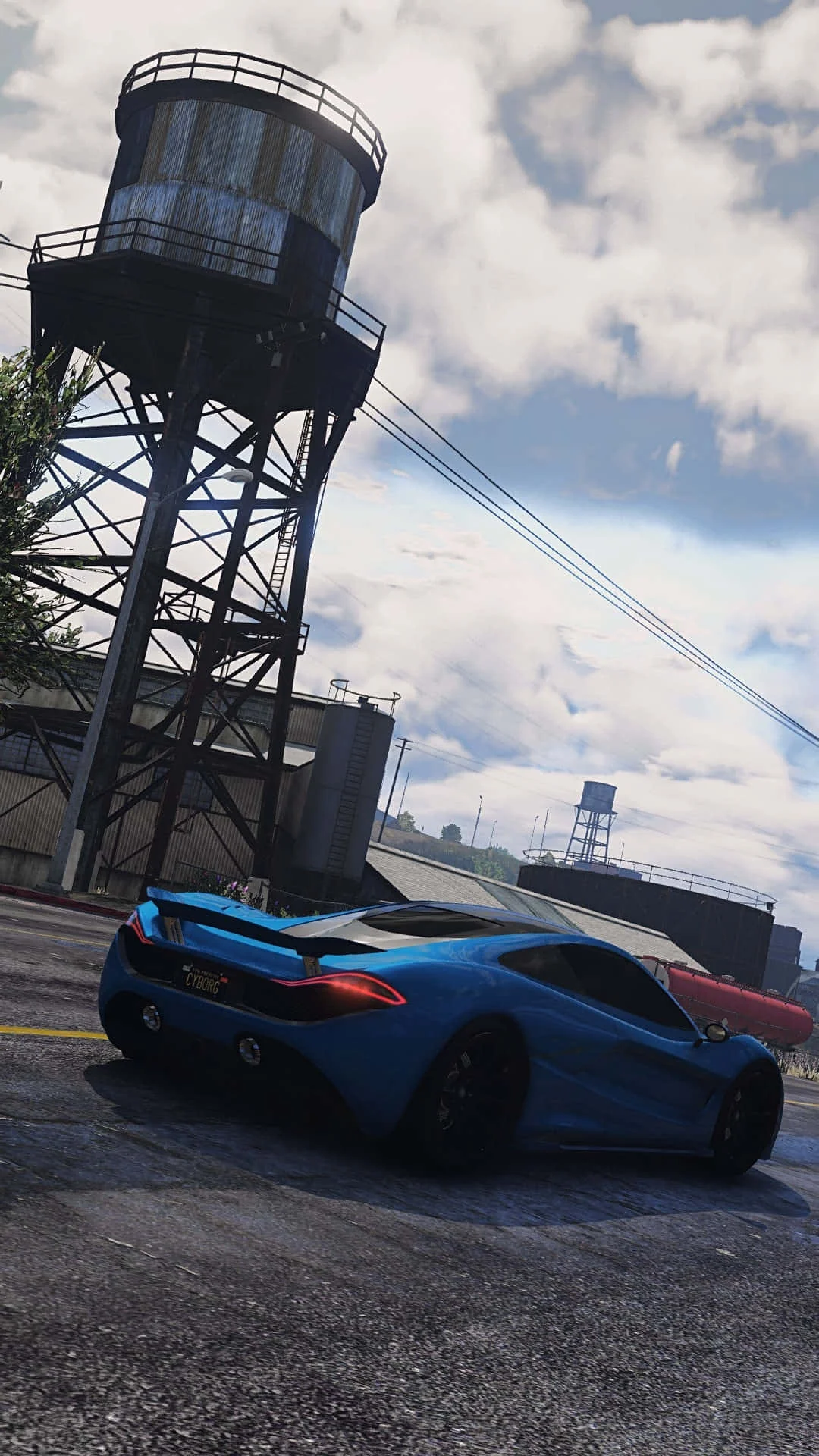
Fivem
This combination provides smooth gameplay with an average of 93 FPS, suitable for most gaming scenarios.
Average FPS: resolution vs quality settings
| Ultra | High | Medium | Low | |
|---|---|---|---|---|
| 4K Ultra HD | 34 | 44 | 54 | 69 |
| 1440p QHD | 61 | 78 | 98 | 124 |
| 1080p Full HD | 92 | 119 | 149 | 189 |
Cell color: green is 120+ FPS, teal is 60+, amber is 30+, red is below 30.
Fivem with AMD Ryzen 5 5600G + NVIDIA GeForce RTX 4060, In-Depth Analysis
The AMD Ryzen 5 5600G and NVIDIA GeForce RTX 4060 combination delivers a solid 1080p and 1440p experience in Fivem, but the data shows a significant performance cliff at 4K Ultra. The sweet spot for this pairing is 1080p Medium, where the system achieves a 149 FPS average, balancing fluidity and visual fidelity. While the combo ranks in the 54th percentile of all tested configurations, the measured frames per second reveal a system that is clearly GPU-limited at higher resolutions and settings, making it a strong choice for high-refresh-rate 1080p play.
Resolution Scaling
The FPS drop from 1080p to 4K is steep and consistent across all settings, underscoring the heavy load placed on the GPU. At High settings, the average frame rate falls from 119 FPS at 1920x1080 to 78 FPS at 2560x1440, a reduction of 41 FPS. Pushing further to 3840x2160, the average plummets to 44 FPS, which is a 63% decrease from the 1080p figure. This pattern indicates that the RTX 4060 is the primary limiting component as resolution increases, with the CPU’s role diminishing.
The scaling is even more pronounced at the Low preset. The system achieves a very high 189 FPS at 1080p, which drops to 124 FPS at 1440p and then to 69 FPS at 4K. While the 4K Low result is playable, the frame rate is less than half of what is seen at 1080p. This steep curve suggests that even at Low settings, the 4K resolution demands more from the GPU’s memory bandwidth and processing power than the 272.0 GB/s and 15.11 TFLOPS can comfortably sustain.
At Medium settings, the frametimes provide additional insight. The average drops from 149 FPS at 1080p to 98 FPS at 1440p, with a minimum of 83 FPS. At 4K Medium, the average falls to 54 FPS, with a minimum of 46 FPS and a maximum of 63 FPS. This 46 FPS minimum indicates that the system can experience noticeable stutters in demanding scenes at 4K, making it less ideal for smooth gameplay.
The Ultra preset shows the most dramatic scaling. From 92 FPS at 1080p, the average falls to 61 FPS at 1440p and then collapses to 34 FPS at 4K. This result confirms that 4K Ultra is not a viable option for this combo, as the frame rate drops below the threshold for comfortable playability. The data clearly shows that while the CPU has headroom, the GPU is the bottleneck at 4K, and even at 1440p with higher settings, the system is pushing its limits.
GPU Role
The NVIDIA GeForce RTX 4060 is the defining component in this system’s gaming performance. Its specifications, including a boost clock of 2460 MHz and 8 GB of GDDR6 memory on a 128-bit bus, directly influence the measured results. The 8 GB VRAM capacity is a crucial factor at higher resolutions. The benchmarks show that 4K Ultra is severely limited, likely due to both the GPU’s compute power and its memory subsystem being saturated.
The memory bandwidth of 272.0 GB/s is a key figure to consider. At 1080p, the system can achieve high frame rates, with the Low preset hitting 189 FPS. This suggests that at lower resolutions, the GPU’s processing power is sufficient, and the memory bandwidth is not the primary constraint. However, as resolution increases, the demand on the memory bus grows, and the performance drop becomes more significant, indicating that the 128-bit bus is a limiting factor.
The GPU’s architecture, Ada Lovelace, supports modern features like DirectX 12 Ultimate, which can impact performance in games like Fivem. The data shows that the GPU’s performance in synthetic benchmarks, such as a Passmark G3D score of 19545, places it in the 61st percentile of all GPUs. This percentile suggests it is a mid-range performer, which aligns with the measured FPS results that show it can handle 1080p and 1440p well but struggles at 4K.
The RTX 4060’s TDP of 115 W and the suggested PSU of 300 W indicate it is an efficient card, but this efficiency does not translate to high-end 4K performance. The measured data shows that the GPU is the bottleneck when moving from 1440p to 4K, with the average FPS dropping by roughly half at each corresponding setting. This is a clear sign that the card’s 8 GB memory and 128-bit bus are not enough for the data throughput required at 4K in Fivem.
How This Combo Ranks
In the database of tested combinations, this specific pairing of the AMD Ryzen 5 5600G and the NVIDIA GeForce RTX 4060 holds the 1993rd position out of 3707 total combos. This rank places it in the 54th percentile, meaning it performs better than 54% of all tested systems. While not a top-tier configuration, this is a respectable middle-of-the-pack result for a mainstream CPU and GPU pairing.
The CPU itself, the Ryzen 5 5600G, has an average benchmark score of 21088 and sits in the 74th percentile of all CPUs. Its nearest rivals include the Intel Core i3-1220P, which scores a nearly identical 21066, showing a deltaPct of only 0.1. This indicates that the 5600G’s processing power is very solid and not a limiting factor in most gaming scenarios.
The GPU, the RTX 4060, has an average benchmark score of 17639 and is in the 61st percentile of all GPUs. Its nearest rival, the AMD Radeon HD 7790, scores 17666, which is a deltaPct of -0.2, meaning the RTX 4060 is effectively on par with this older card in synthetic tests. This context is important—while the GPU is not a high-end model, its performance is consistent with its mid-range positioning.
The combo’s rank of 1993 suggests that while the individual components are competent, their combination does not push the system into the upper echelons of performance. The data implies that the CPU has more headroom than the GPU, meaning that upgrading the graphics card would likely yield a more significant improvement in Fivem than upgrading the processor. This is a key takeaway for understanding the system’s overall capability.
Measured FPS Breakdown
At 1920x1080, the system demonstrates its strengths. The Low preset delivers a high average of 189 FPS, making it ideal for competitive play. The Medium preset offers a balanced 149 FPS average, with a minimum of 127 FPS and a maximum of 171 FPS, ensuring a smooth experience. High settings provide 119 FPS, while Ultra drops to 92 FPS, still highly playable. All 1080p results are above 90 FPS, indicating a strong performance tier.
Moving to 2560x1440, the frame rates remain respectable but show a clear step down. Low settings produce an average of 124 FPS, which is still excellent. Medium settings average 98 FPS, with a minimum of 83 FPS, which is good for most monitors. High settings yield 78 FPS, and Ultra drops to 61 FPS. The 1440p results show that the system can handle this resolution well, though the margin for error decreases as settings are increased.
At 3840x2160, the performance becomes more challenging. Low settings produce an average of 69 FPS, which is borderline playable. Medium settings average 54 FPS, with a minimum of 46 FPS, which may result in noticeable stutter. High settings drop to 44 FPS, and Ultra falls to 34 FPS. These 4K numbers clearly indicate that the system is not suited for high-refresh-rate gaming at this resolution.
The data shows a consistent pattern: the system is capable of high frame rates at 1080p and can manage 1440p well. The 4K results are the weakest link, with even Low settings struggling to maintain 70 FPS. For users with a 1080p or 1440p monitor, this combo provides a strong experience, but for 4K, lower settings are mandatory for acceptable performance.
FAQ
Q: Is the AMD Ryzen 5 5600G + RTX 4060 combo good for 1080p gaming in Fivem?
A: Yes. The measured data shows excellent performance at 1920x1080, with the Low preset averaging 189 FPS and the Medium preset averaging 149 FPS. Even the Ultra preset achieves 92 FPS, ensuring a smooth experience across all settings.
Q: What is the best resolution for this system?
A: The data indicates that 1920x1080 is the optimal resolution. All settings maintain an average above 90 FPS. At 2560x1440, the system is still capable, with the High preset averaging 78 FPS, but the performance margin narrows considerably.
Q: Can this combo handle 4K gaming?
A: The benchmarks show it is not ideal. At 3840x2160, the High preset averages 44 FPS and Ultra averages 34 FPS. Even at Low settings, the average is 69 FPS, which may have inconsistent frametimes. For a stable 60 FPS, users would need to use the Low preset.
Q: How does the RTX 4060 compare to its nearest rival, the AMD Radeon HD 7790?
A: The average benchmark scores are nearly identical, with the RTX 4060 scoring 17639 and the HD 7790 scoring 17666, a deltaPct of -0.2. This indicates they offer similar raw performance in synthetic tests, though the RTX 4060 has modern features.
Q: Is the CPU or GPU the bottleneck in this system?
A: The data suggests the GPU is the limiting factor at higher resolutions. The FPS drops significantly from 1080p to 4K, while the CPU’s benchmark percentile (74th) is higher than the GPU’s (61st), indicating the GPU is more likely to be the performance ceiling.
Q: What is the highest playable setting at 1440p?
A: The High preset, which averages 78 FPS, is the highest setting that maintains a frame rate above 60 FPS. The Ultra preset drops to 61 FPS, which is borderline, but the High preset offers a safer margin for consistent performance.
Settings Recommendations
For 1080p gaming, the Medium preset is the recommended choice. It delivers a 149 FPS average with a minimum of 127 FPS, providing a smooth and responsive experience that is well-suited for fast-paced multiplayer action. While the Low preset offers a higher 189 FPS, the Medium preset provides a better balance of visual quality and performance. The High preset at 119 FPS is also a viable option if users prefer better visuals, but Medium offers the best headroom for consistent framerates.
For 1440p, the High preset is the best option for a quality experience. It achieves an average of 78 FPS, which is above the 60 FPS threshold for most monitors. The Medium preset averages 98 FPS and is also a strong choice if users prioritize higher frame rates over visual fidelity. The Ultra preset should be avoided, as its 61 FPS average is too close to the minimum playable threshold and could lead to noticeable dips.
For 4K, the Low preset is the only viable option for a playable frame rate. It averages 69 FPS, which is playable but not ideal. The Medium preset at 54 FPS has a minimum of 46 FPS, which can cause stuttering. Users with 4K displays should stick to Low settings and accept the visual compromises, or consider lowering the resolution to 1440p for a significantly better experience.
Overall, the system’s performance is best utilized at 1080p with Medium or High settings. The data shows that pushing to Ultra at any resolution reduces the frame rate below the ideal range for a competitive multiplayer game. The recommended settings prioritize a stable frame rate, which is crucial for the gameplay experience in Fivem.
Hardware Specifications
AMD Ryzen 5 5600G
NVIDIA GeForce RTX 4060
FPS Benchmarks by Resolution & Settings
Performance data for AMD Ryzen 5 5600G + NVIDIA GeForce RTX 4060 in Fivem
| Resolution | Settings | Avg FPS |
|---|---|---|
| 3840x2160 | Low | 69.0 |
| 3840x2160 | Medium | 54.0 |
| 3840x2160 | High | 44.0 |
| 3840x2160 | Ultra | 34.0 |
| 2560x1440 | Low | 124.0 |
| 2560x1440 | Medium | 98.0 |
| 2560x1440 | High | 78.0 |
| 2560x1440 | Ultra | 61.0 |
| 1920x1080 | Low | 189.0 |
| 1920x1080 | Medium | 149.0 |
| 1920x1080 | High | 119.0 |
| 1920x1080 | Ultra | 92.0 |
Fivem with Ryzen 5 5600G + Other GPUs
See how Fivem performs with the same CPU but different graphics cards.
Fivem with RTX 4060 + Other CPUs
See how Fivem performs with the same GPU but different processors.
Other Games with Ryzen 5 5600G + RTX 4060
Explore FPS benchmarks for other games using this same hardware combination.