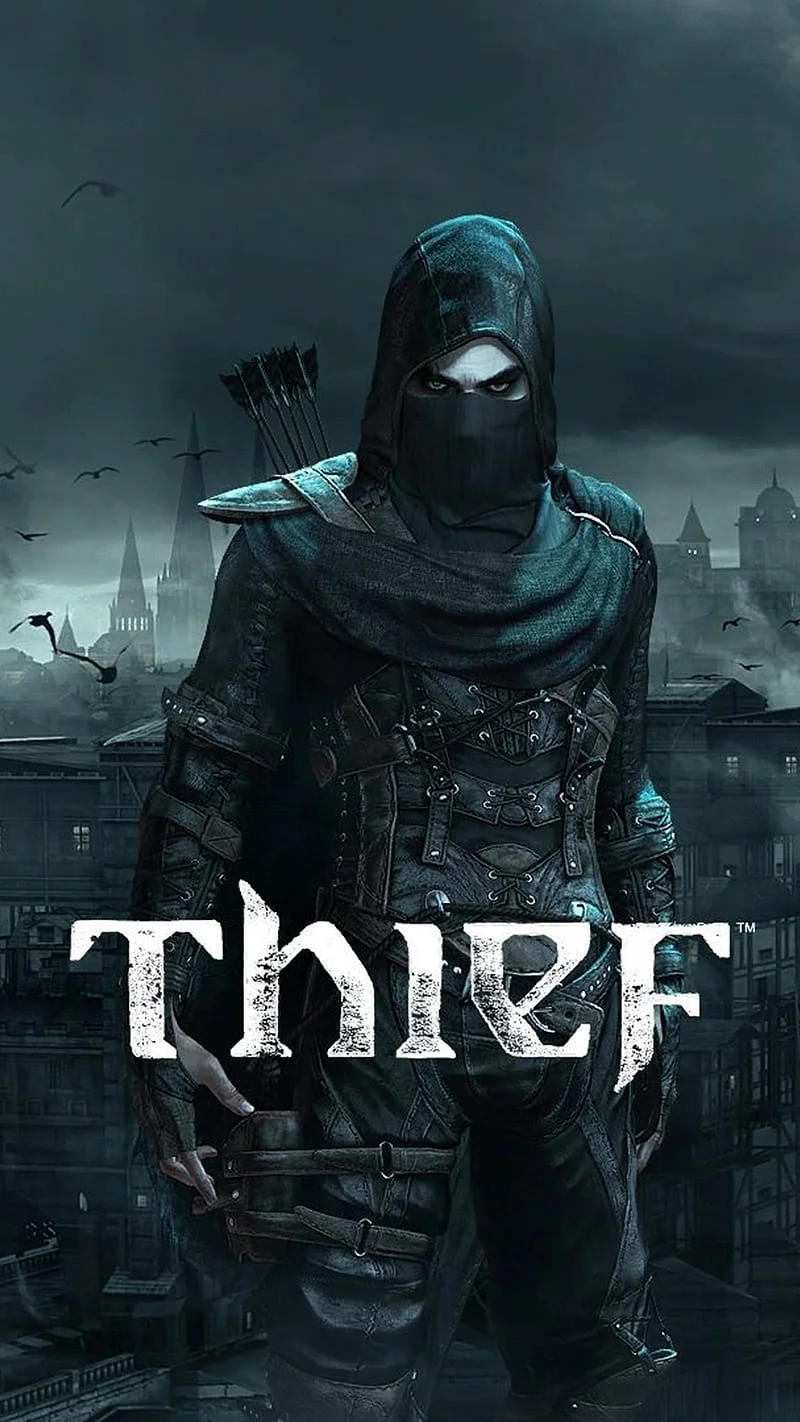
Thief
This combination offers playable performance with an average of 43 FPS, though you may want to lower settings for smoother gameplay.
Average FPS: resolution vs quality settings
| Ultra | High | Medium | Low | |
|---|---|---|---|---|
| 4K Ultra HD | 19 | 20 | 26 | 35 |
| 1440p QHD | 33 | 34 | 45 | 59 |
| 1080p Full HD | 48 | 50 | 66 | 86 |
Cell color: green is 120+ FPS, teal is 60+, amber is 30+, red is below 30.
Thief with Intel Core i7-14700KF + Intel Arc B390, In-Depth Analysis
# How This Combo Ranks
The Intel Core i7-14700KF paired with the Intel Arc B390 lands at rank 2534 out of 2851 tested combos in Thief. That places this configuration in the bottom 11% of all tested combinations, a position driven almost entirely by the GPU rather than the processor. The combo sits 317 spots above the absolute bottom, meaning there are still a meaningful number of slower pairings, but the overall picture is clear: this is a low-performing combo for a 2014 stealth title.
The rank becomes more telling when you consider what the CPU is capable of on its own. The i7-14700KF holds a 94th percentile ranking among all CPUs tested, with an average benchmark score of 70163. That is a top-tier processor by any measure. The Arc B390, by contrast, sits at just the 9th percentile among all GPUs, with an average score of 1482. This massive discrepancy between CPU strength and GPU weakness explains why the combo ranks so low: the processor is doing everything it can, but the graphics solution is holding the entire system back.
Looking at the GPU's nearest rivals makes the situation even starker. The Arc B390 scores 1482 in the 3DMark Steel Nomad DX12 test, which is just 1.3% above the NVIDIA GeForce GT 520MX (1463), 1.5% above the GeForce 800M (1460), 2.5% above the GeForce GT 625 OEM (1446), and 2.7% above the GeForce GT 710 (1443). These are all entry-level or legacy mobile/desktop parts. The Arc B390 is effectively competing with hardware that was considered low-end over a decade ago, which explains why Thief, despite being a game from 2014, cannot run smoothly at higher settings.
In practical terms, the combo's rank means that most other tested systems will outperform it. The data shows that 2533 other combinations deliver higher frame rates in Thief, and only 317 deliver worse results. For a game that is not particularly demanding by modern standards, this level of performance is surprising and speaks directly to the Arc B390's limitations as an integrated graphics solution with system-shared memory.
# Settings Recommendations
The measured FPS data provides clear guidance on which settings preset delivers the best experience for this combo. Across all three resolutions tested, the Low preset produces the highest average frame rates, and in most cases it is the only preset that approaches playable territory.
At 1920x1080, the Low preset delivers 86 average FPS, which is the single highest score in the entire dataset for this combo. Medium drops to 66 average FPS, High falls to 50, and Ultra bottoms out at 48. The gap between Low and Medium is 20 FPS, which is substantial. The gap between High and Ultra is only 2 FPS, suggesting diminishing returns at the top end. If the goal is maximum smoothness, Low at 1080p is the obvious choice.
At 2560x1440, Low still delivers 59 average FPS, which is playable for a stealth game. Medium drops to 45, High to 34, and Ultra to 33. The 1440p Low result is 27 FPS lower than the 1080p Low result, showing a steep resolution penalty. For 1440p, Low is the only preset that remains above the 50 FPS threshold, and even then it barely clears it.
At 3840x2160, even Low drops to 35 average FPS. Medium manages 26, High falls to 20, and Ultra is at 19. None of these are ideal for a smooth experience, but Low at 4K is at least within range of being tolerable for slower-paced gameplay. The data shows a clear pattern: this combo should be run at the Low preset at any resolution, and users should be prepared to lower resolution if they want more headroom.
For the best balance of playability and visual quality, the Medium preset at 1080p with 66 average FPS is the only non-Low option that stays comfortably above 60. However, given that Low at 1080p offers 86 FPS, the recommendation is unambiguous: use Low at 1080p for the best experience, and only consider Medium if visual fidelity takes priority over frame rate smoothness.
# FAQ
Q: What is the best resolution for this combo in Thief?
A: The data shows 1920x1080 at Low settings delivers 86 average FPS, the highest measured result. At 2560x1440 Low, the average drops to 59 FPS, and at 3840x2160 Low, it falls to 35 FPS. The 1080p Low configuration is the only one that provides a comfortable margin above 60 FPS.
Q: How does the Arc B390 compare to its closest GPU rivals?
A: The Arc B390 scores 1482 in 3DMark Steel Nomad DX12, which is 1.3% above the NVIDIA GeForce GT 520MX (1463), 1.5% above the GeForce 800M (1460), 2.5% above the GeForce GT 625 OEM (1446), and 2.7% above the GeForce GT 710 (1443). It outperforms all of them, but only by a narrow margin.
Q: Can this combo run Thief at Ultra settings?
A: The data shows Ultra settings produce 48 average FPS at 1080p, 33 at 1440p, and 19 at 4K. While technically playable at 1080p, the frame rate is below the 60 FPS threshold and significantly lower than the Low preset's 86 FPS at the same resolution.
Q: What is the CPU's performance ranking relative to other processors?
A: The Intel Core i7-14700KF holds a 94th percentile ranking among all CPUs. Its average benchmark score of 70163 places it 0.2% above the AMD Ryzen 7 9700F (69996), 0.4% above the AMD Ryzen 9 7940HX (69875), 0.9% above the AMD Ryzen 9 7950X (69515), and 1% below the Intel Core Ultra 7 265K (70879).
Q: How much FPS is lost when moving from 1080p to 4K at Medium settings?
A: At Medium settings, the average FPS drops from 66 at 1920x1080 to 45 at 2560x1440, and finally to 26 at 3840x2160. This represents a 40 FPS loss from 1080p to 4K, or a 61% reduction in average frame rate.
Q: Is the Arc B390's performance bottlenecked by the CPU?
A: No, the data indicates the opposite. The CPU ranks in the 94th percentile with a top-tier average score of 70163, while the GPU ranks in the 9th percentile with a score of 1482. The GPU is the limiting component by a wide margin.
# Measured FPS Breakdown
The measured FPS data for this combo covers three resolutions and four settings presets, providing a complete picture of performance across the spectrum.
1920x1080: The Low preset produces 86 average FPS, which is the highest score in the entire dataset. Medium follows at 66 average FPS, with minimum and maximum values of 56 and 75 respectively, indicating a relatively stable range. High drops to 50 average FPS, and Ultra is the slowest at 48 average FPS. The progression from Low to Ultra shows a steady decline: 86 to 66 to 50 to 48. The drop from Low to Medium is 20 FPS, while the drop from High to Ultra is only 2 FPS, suggesting that the Ultra preset adds little visual benefit for the performance cost at this resolution.
2560x1440: Low delivers 59 average FPS, which is the only preset at this resolution that exceeds 50. Medium produces 45 average FPS, with a minimum of 38 and a maximum of 52, showing a wider variance than at 1080p. High falls to 34 average FPS, and Ultra is at 33 average FPS. The pattern mirrors 1080p but with a uniform shift downward: 59, 45, 34, 33. The difference between Low and Medium is 14 FPS, and the difference between High and Ultra is just 1 FPS.
3840x2160: Low yields 35 average FPS, which is the highest at this resolution. Medium produces 26 average FPS, with a minimum of 22 and a maximum of 30. High drops to 20 average FPS, and Ultra is at 19 average FPS. The sequence is 35, 26, 20, 19. At 4K, even the Low preset struggles to maintain a smooth experience, and the gap between High and Ultra narrows to just 1 FPS.
Across all resolutions, the Medium preset is the only one with recorded minimum and maximum values, allowing for a closer look at stability. At 1080p Medium, the range is 56 to 75 FPS, a spread of 19 FPS. At 1440p Medium, the range is 38 to 52, also a spread of 14 FPS. At 4K Medium, the range is 22 to 30, a spread of 8 FPS. The relative consistency improves at higher resolutions, but the absolute performance drops.
The data shows that every settings preset at 1080p except Ultra is above 50 FPS, while at 1440p only Low exceeds 50, and at 4K no preset reaches 40. This combo is best suited to 1080p gaming, with diminishing returns at higher resolutions regardless of settings.
# GPU Role
The Intel Arc B390 is an integrated graphics solution built on the Xe3-LPG architecture, using a 3 nm process node from Intel. It features 1536 shading units, 48 texture mapping units, and 24 raster output units, along with 12 ray tracing cores. The GPU operates at a base clock of 300 MHz and a boost clock of 2500 MHz, with a TDP of 80 W.
The most critical specification for this game's performance is the memory configuration. The Arc B390 uses system-shared memory, meaning it has no dedicated VRAM of its own. The memory size, type, and bus width are all listed as "System Shared," and the bandwidth is described as "System Dependent." This means the GPU must compete with the CPU for memory bandwidth, which is a severe disadvantage in a game like Thief that requires consistent frame pacing.
The GPU's compute capabilities are modest. It delivers 7.680 TFLOPS of FP32 performance and 15.36 TFLOPS of FP16 performance. The pixel rate is 60.00 GPixel/s, and the texture rate is 120.0 GTexel/s. These figures place the Arc B390 firmly in the entry-level segment, which is confirmed by its 9th percentile ranking among all GPUs.
In the context of Thief, the GPU's limitations are evident in the measured frame rates. At 1080p Low, the GPU manages 86 FPS, but at 1080p Ultra, it drops to 48 FPS. At 4K Ultra, it falls to 19 FPS. The pattern shows that the GPU cannot handle the increased pixel count or the higher graphical fidelity of the Ultra preset. The system-shared memory is likely the primary bottleneck, as the GPU must access main system memory for all texture and geometry data, which introduces latency and reduces effective bandwidth.
The nearest rival data further contextualizes the GPU's position. The Arc B390's 3DMark Steel Nomad DX12 score of 1482 is just 1.3% above the GT 520MX and 2.7% above the GT 710. These are not gaming GPUs by any modern standard. The Arc B390 is essentially a productivity-oriented integrated solution that happens to be paired with a flagship CPU, and the game performance reflects that mismatch.
# CPU Role
The Intel Core i7-14700KF is a Raptor Lake-R architecture processor with 20 cores and 28 threads, manufactured on Intel's 10 nm process node. It has a base clock of 3.40 GHz and a boost clock of 5.60 GHz, with a TDP of 125 W. The cache hierarchy includes 80 KB of L1 per core, 2 MB of L2 per core, and 33 MB of shared L3 cache. It supports dual-channel DDR4 and DDR5 memory.
In the context of Thief, the CPU is vastly overpowered relative to the GPU. The processor's 94th percentile ranking among all CPUs, with an average benchmark score of 70163, places it among the fastest desktop processors available. Its nearest rivals are all high-end chips: the AMD Ryzen 7 9700F (69996, 0.2% lower), the AMD Ryzen 9 7940HX (69875, 0.4% lower), the AMD Ryzen 9 7950X (69515, 0.9% lower), and the Intel Core Ultra 7 265K (70879, 1% higher). This is elite company.
The CPU's benchmark results reinforce its strength. In Cinebench R23, it scores 44167 in multi-core and 6235 in single-core. In Geekbench, it scores 21462 multi-core and 2578 single-core. These numbers indicate that the CPU is not the limiting factor in Thief's performance. In fact, the CPU is likely idle or lightly loaded during gameplay, as the GPU cannot generate enough frames to stress the processor.
The CPU's architecture supports PCIe Gen 5 with 16 lanes, which is more than sufficient for any modern GPU. However, since the Arc B390 is an integrated solution that uses the IGP bus interface, the PCIe lanes are irrelevant for this particular pairing. The CPU also supports ECC memory and has an unlocked multiplier, but these features have no bearing on Thief's performance.
The measured FPS data shows that the CPU is not causing any frame rate drops. The performance pattern across resolutions and settings follows a GPU-bound trajectory: frame rates decline as resolution and settings increase, which is exactly what you would expect when the GPU is the bottleneck. If the CPU were the limiting factor, you would see relatively flat frame rates across resolutions, but that is not the case here.
# Resolution Scaling
The resolution scaling data reveals a clear and consistent pattern: frame rates drop significantly as resolution increases, confirming that the GPU is the limiting component in this combo.
At Low settings, the average FPS goes from 86 at 1920x1080 to 59 at 2560x1440 to 35 at 3840x2160. That is a 27 FPS drop from 1080p to 1440p (a 31% reduction) and another 24 FPS drop from 1440p to 4K (a 41% reduction). The total loss from 1080p to 4K is 51 FPS, or 59% of the original frame rate.
At Medium settings, the average FPS goes from 66 at 1080p to 45 at 1440p to 26 at 4K. The drop from 1080p to 1440p is 21 FPS (32%), and the drop from 1440p to 4K is 19 FPS (42%). The total loss is 40 FPS, or 61%.
At High settings, the average FPS goes from 50 at 1080p to 34 at 1440p to 20 at 4K. The drop from 1080p to 1440p is 16 FPS (32%), and the drop from 1440p to 4K is 14 FPS (41%). The total loss is 30 FPS, or 60%.
At Ultra settings, the average FPS goes from 48 at 1080p to 33 at 1440p to 19 at 4K. The drop from 1080p to 1440p is 15 FPS (31%), and the drop from 1440p to 4K is 14 FPS (42%). The total loss is 29 FPS, or 60%.
The consistency of these percentage drops is notable. Across all four settings presets, the reduction from 1080p to 1440p is between 31% and 32%, and the reduction from 1440p to 4K is between 41% and 42%. This uniformity indicates that the scaling is driven by pixel count and GPU fill rate, not by any specific settings feature. The Arc B390's 60.00 GPixel/s pixel rate is simply insufficient to handle the increased resolution demands.
The fact that the percentage drops are so consistent regardless of settings is a strong indicator that the GPU is the bottleneck. A CPU-bound system would show larger percentage drops at lower resolutions (where the CPU works harder) and smaller drops at higher resolutions (where the GPU takes over). Instead, the data shows the opposite pattern, with slightly larger percentage drops at 4K, which is the signature of a GPU-bound configuration. The CPU has enough headroom to handle any resolution, but the GPU does not.
Hardware Specifications
Intel Core i7-14700KF
Intel Arc B390
FPS Benchmarks by Resolution & Settings
Performance data for Intel Core i7-14700KF + Intel Arc B390 in Thief
| Resolution | Settings | Avg FPS |
|---|---|---|
| 3840x2160 | Low | 35.0 |
| 3840x2160 | Medium | 26.0 |
| 3840x2160 | High | 20.0 |
| 3840x2160 | Ultra | 19.0 |
| 2560x1440 | Low | 59.0 |
| 2560x1440 | Medium | 45.0 |
| 2560x1440 | High | 34.0 |
| 2560x1440 | Ultra | 33.0 |
| 1920x1080 | Low | 86.0 |
| 1920x1080 | Medium | 66.0 |
| 1920x1080 | High | 50.0 |
| 1920x1080 | Ultra | 48.0 |
Thief with ii7-14700KF + Other GPUs
See how Thief performs with the same CPU but different graphics cards.
Thief with Arc B390 + Other CPUs
See how Thief performs with the same GPU but different processors.
Other Games with ii7-14700KF + Arc B390
Explore FPS benchmarks for other games using this same hardware combination.