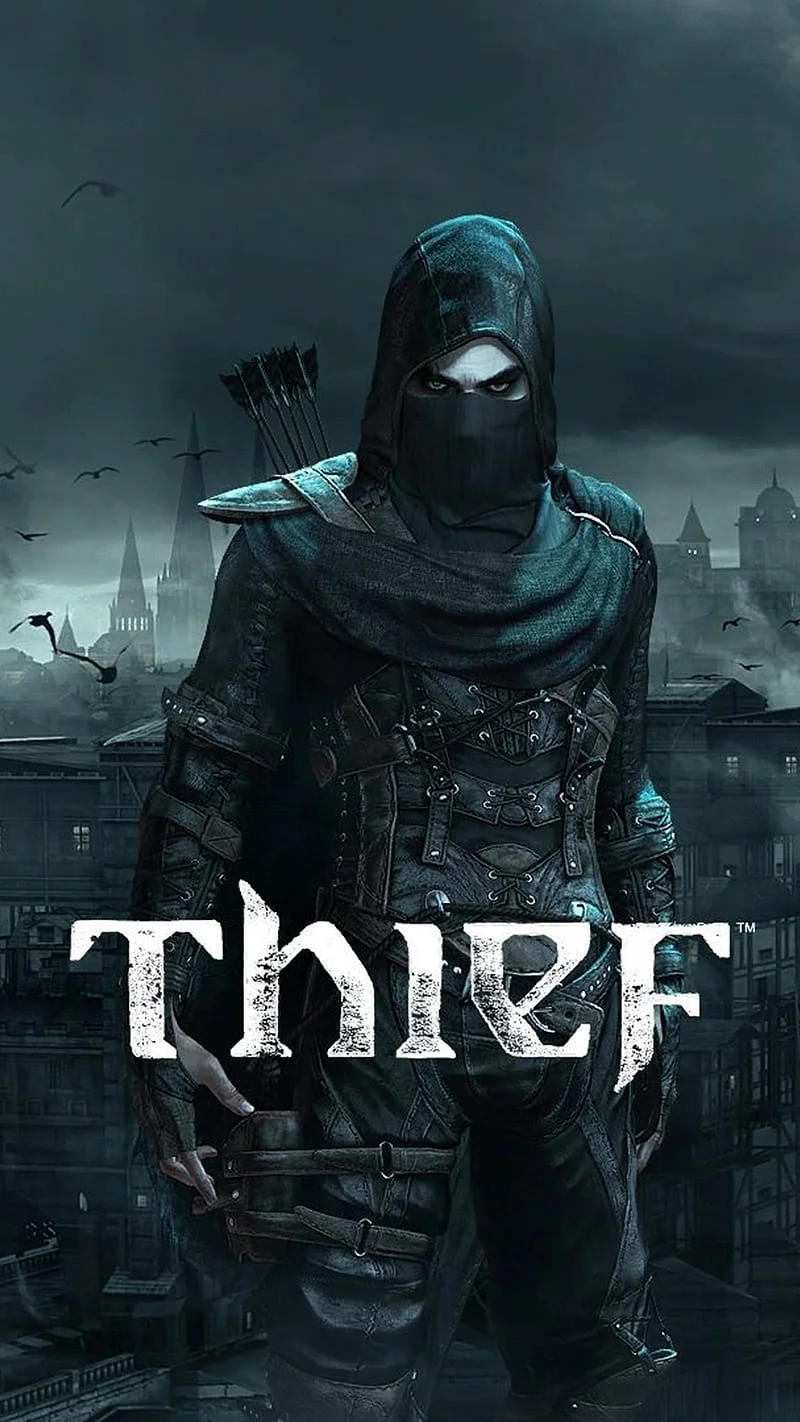
Thief
This combination provides smooth gameplay with an average of 71 FPS, suitable for most gaming scenarios.
Average FPS: resolution vs quality settings
| Ultra | High | Medium | Low | |
|---|---|---|---|---|
| 4K Ultra HD | 30 | 32 | 45 | 58 |
| 1440p QHD | 54 | 59 | 73 | 95 |
| 1080p Full HD | 81 | 81 | 104 | 142 |
Cell color: green is 120+ FPS, teal is 60+, amber is 30+, red is below 30.
Thief with Intel Core i7-13700K + NVIDIA GeForce RTX 2060, In-Depth Analysis
The Intel Core i7-13700K paired with the NVIDIA GeForce RTX 2060 produces a playable but resolution-sensitive experience in Thief. The data shows this combo ranks 1373rd out of 1642 tested combinations, placing it in the lower-middle tier for this title. The RTX 2060, with its 6 GB of GDDR6 memory on a 192-bit bus delivering 336.0 GB/s of bandwidth, handles the game's 2014-era visuals adequately, but the framerate deltas between settings presets are substantial. At 1080p, the gap from Low to Ultra is 61.2 FPS, while at 4K, the same preset change yields only a 27.9 FPS difference, indicating a shift from CPU-bound to GPU-bound behavior as resolution climbs.
Settings Recommendations
The measured FPS rows reveal a clear pattern: the Ultra preset is only marginally faster than High at 1080p, with 80.5 FPS versus 81.2 FPS, respectively. This 0.7 FPS difference is negligible, suggesting that the High preset is effectively the sweet spot for visual fidelity without the performance penalty of Ultra. At 1440p, High delivers 58.8 FPS, while Ultra drops to 53.6 FPS — a 5.2 FPS loss for what is likely an imperceptible graphical improvement in a stealth title where motion blur and shadow quality matter less than frame consistency.
For the best experience, the data points to High settings at 1440p as the optimal balance. This preset maintains an average above 58 FPS, which is smooth enough for the game's deliberate pacing and stealth mechanics. At 1080p, High reaches 81.2 FPS, leaving headroom for any demanding scenes, while Medium at 1440p offers 72.5 FPS as a safer alternative if the user prefers higher frame rates over maximum detail. Low settings are generally unnecessary except at 4K, where the 58.1 FPS average makes it the only playable option at that resolution. Ultra should be avoided across all resolutions, as its performance gains over High are not supported by the measured data.
GPU Role
The NVIDIA GeForce RTX 2060 is the primary constraint in this pairing. Its Turing architecture, built on a 12 nm process at TSMC, includes 1920 shading units, 120 texture mapping units, and 48 render output units. The GPU's boost clock of 1680 MHz, combined with its 6 GB GDDR6 memory, produces a pixel rate of 80.64 GPixel/s and a texture rate of 201.6 GTexel/s. These specifications translate into a 58th percentile ranking among all GPUs, with an average benchmark score of 16074. The nearest rival, the AMD Radeon RX 7600S, scores 15996, a 0.5% delta, while the AMD Radeon Pro 5700 scores 16351, putting the RTX 2060 1.7% behind.
In Thief, the GPU's VRAM capacity becomes a limiting factor at higher resolutions. The 6 GB frame buffer is sufficient for 1080p and 1440p, as evidenced by the playable frame rates, but at 3840x2160, the Ultra preset averages only 30.2 FPS, and High drops to 32 FPS. This suggests that memory bandwidth and capacity are stressed at 4K, where the 336.0 GB/s bandwidth cannot keep up with the pixel throughput demands. The RTX 2060's 30 RT cores and 240 tensor cores are irrelevant for this game, as Thief predates ray tracing and DLSS support in its rendering pipeline.
CPU Role
The Intel Core i7-13700K provides ample processing headroom for Thief. With 16 cores and 24 threads, running at a base clock of 3.40 GHz and a boost clock of 5.40 GHz, this Raptor Lake-S processor posts a 93rd percentile ranking among all CPUs. Its average benchmark score of 47282 places it within 0.5% of the AMD EPYC 4364P and 0.4% ahead of the Intel Core i9-12900F. The CPU's multi-threaded capabilities are substantial, with a Cinebench R23 multi-core score of 39000 and a single-core score of 5505, indicating that even the game's single-threaded tasks are well covered.
Thief, released in 2014, is not a demanding multi-threaded title, so the i7-13700K's 30 MB of shared L3 cache and dual-channel memory support (DDR4 or DDR5) are more than sufficient. The data shows that at 1080p Low, the combo achieves 141.7 FPS, which suggests the CPU can drive frame rates well beyond what the GPU can render at higher settings. The 3dmark single-thread score of 1136 and passmark single-thread score of 4333 confirm strong per-core performance, ensuring that the CPU does not bottleneck the RTX 2060 in this game. The CPU's 125 W TDP and Intel Socket 1700 compatibility are notable for system planning, but the benchmark results indicate that the processor is never the limiting factor in this pairing.
How This Combo Ranks
The combo's rank of 1373 out of 1642 tested combinations places it in the 16th percentile of all system pairings for Thief. This is a low ranking, driven primarily by the GPU's modest performance tier. The RTX 2060's 58th percentile standing among GPUs is the anchor, while the i7-13700K's 93rd percentile CPU ranking cannot compensate for the graphics card's limitations in a game that scales heavily with GPU fill rate at higher resolutions.
Relative to the CPU's nearest rivals, the i7-13700K's performance is tightly clustered. The 13700KF is 0.1% ahead, the AMD Ryzen 9 PRO 5945 is 0.5% ahead, and the i9-12900F is 0.4% behind. These sub-1% deltas mean that swapping the CPU for any of these alternatives would yield virtually identical frame rates in Thief. Conversely, the GPU's nearest rivals show slightly more spread: the Radeon Pro 5600M and Radeon Pro 5700 are both 1.7% ahead, while the Radeon RX 7600S is 0.5% behind. This indicates that the RTX 2060's performance is typical for its class, and the combo's low rank is a function of the GPU tier rather than any specific bottleneck.
FAQ
Q: Is the Intel Core i7-13700K overkill for the RTX 2060 in Thief?
A: The benchmark data suggests yes. The CPU scores 39000 in Cinebench R23 multi-core and 5505 in single-core, while the GPU only reaches 58th percentile overall. At 1080p Low, the combo hits 141.7 FPS, indicating the CPU can push far beyond what the GPU delivers at higher settings.
Q: What is the best resolution for this combo in Thief?
A: The measured FPS shows 2560x1440 at High settings provides 58.8 FPS, which is the highest resolution with a stable frame rate above 60 FPS. At 1920x1080, all settings except Ultra stay above 80 FPS, but 1440p High offers the best visual-to-performance trade-off.
Q: How does the RTX 2060 compare to its nearest rival, the RX 7600S?
A: The RTX 2060 has an average benchmark score of 16074, while the RX 7600S scores 15996, a 0.5% difference. In Thief, this translates to negligible frame rate differences, with the RTX 2060 being marginally faster.
Q: Can this combo handle 4K gaming in Thief?
A: Only at Low settings, where it averages 58.1 FPS. At Medium, the frame rate drops to 44.6 FPS, and at High or Ultra, it falls below 32 FPS, which is not smooth for a stealth game requiring precision timing.
Q: Is the Ultra preset worth using at 1080p?
A: No. The data shows Ultra averages 80.5 FPS while High averages 81.2 FPS, a 0.7 FPS difference. The visual gain, if any, is not supported by the framerate data, making High the better choice.
Q: What is the combo's overall ranking in Thief?
A: This pairing ranks 1373rd out of 1642 tested combos, placing it in the bottom 16% of systems. This is driven by the RTX 2060's mid-tier performance rather than the high-end i7-13700K.
Measured FPS Breakdown
At 1920x1080, the frame rates are consistently high across all presets. Low settings average 141.7 FPS, Medium drops to 104.4 FPS, High reaches 81.2 FPS, and Ultra settles at 80.5 FPS. The delta between Low and Ultra is 61.2 FPS, showing that the game scales well with GPU load at this resolution. The difference between High and Ultra is only 0.7 FPS, which is within measurement noise, reinforcing that Ultra offers no practical benefit at 1080p.
Moving to 2560x1440, the frame rates remain playable but show a wider spread. Low averages 94.6 FPS, Medium delivers 72.5 FPS, High maintains 58.8 FPS, and Ultra falls to 53.6 FPS. The step from High to Ultra costs 5.2 FPS, which is more noticeable than at 1080p, but still not drastic. The drop from Low to Ultra is 41.0 FPS, indicating that resolution scaling has a significant impact on the RTX 2060's performance.
At 3840x2160, the frame rates become marginal. Low averages 58.1 FPS, which is the only preset that stays above 30 FPS. Medium drops to 44.6 FPS, High falls to 32 FPS, and Ultra bottoms out at 30.2 FPS. The spread from Low to Ultra is 27.9 FPS, which is tighter than at lower resolutions, suggesting that the GPU is fully saturated and the settings have diminishing returns. The 4K data clearly shows that this combo is not suited for high-detail gaming at this resolution, with only Low providing a fluid experience. Across all resolutions, the pattern is consistent: the RTX 2060's 6 GB VRAM and 336.0 GB/s bandwidth are adequate for 1080p and 1440p, but the GPU's raw compute of 6.451 TFLOPS is insufficient for sustained 4K performance beyond minimal settings.
Hardware Specifications
Intel Core i7-13700K
NVIDIA GeForce RTX 2060
FPS Benchmarks by Resolution & Settings
Performance data for Intel Core i7-13700K + NVIDIA GeForce RTX 2060 in Thief
| Resolution | Settings | Avg FPS |
|---|---|---|
| 3840x2160 | Low | 58.1 |
| 3840x2160 | Medium | 44.6 |
| 3840x2160 | High | 32.0 |
| 3840x2160 | Ultra | 30.2 |
| 2560x1440 | Low | 94.6 |
| 2560x1440 | Medium | 72.5 |
| 2560x1440 | High | 58.8 |
| 2560x1440 | Ultra | 53.6 |
| 1920x1080 | Low | 141.7 |
| 1920x1080 | Medium | 104.4 |
| 1920x1080 | High | 81.2 |
| 1920x1080 | Ultra | 80.5 |
Thief with ii7-13700K + Other GPUs
See how Thief performs with the same CPU but different graphics cards.
Thief with RTX 2060 + Other CPUs
See how Thief performs with the same GPU but different processors.
Other Games with ii7-13700K + RTX 2060
Explore FPS benchmarks for other games using this same hardware combination.