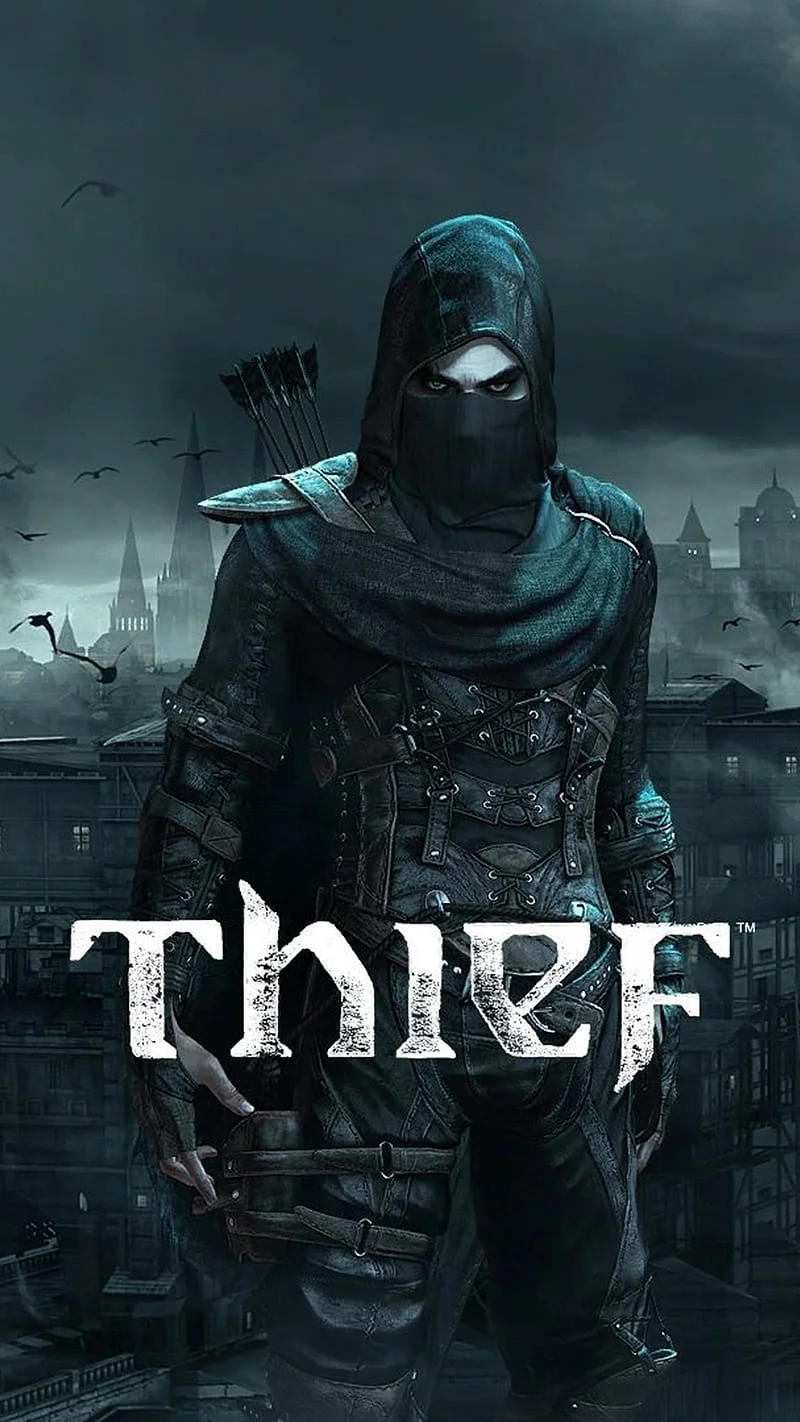
Thief
This combination delivers exceptional performance with an average of 129 FPS, perfect for high refresh rate gaming and competitive play.
Average FPS: resolution vs quality settings
| Ultra | High | Medium | Low | |
|---|---|---|---|---|
| 4K Ultra HD | 79 | 82 | 110 | 130 |
| 1440p QHD | 124 | 127 | 137 | 150 |
| 1080p Full HD | 140 | 141 | 153 | 173 |
Cell color: green is 120+ FPS, teal is 60+, amber is 30+, red is below 30.
Thief with Intel Core i5-12400F + NVIDIA GeForce RTX 4090, In-Depth Analysis
Settings Recommendations
The measured FPS rows for Thief reveal a clear pattern: the Ultra preset is consistently the most demanding, while Low delivers the highest frame rates. At 1920x1080, the gap between Low (172.8 FPS) and Ultra (139.8 FPS) is 33 FPS, a substantial margin that grows even larger at higher resolutions. The data indicates that High sits surprisingly close to Ultra—at 1080p, High averages 141.3 FPS versus Ultra's 139.8 FPS, a difference of only 1.5 FPS. This suggests High captures nearly all of Ultra's visual fidelity with a marginal performance cost, making it the most efficient preset for this combination.
At 2560x1440, the pattern holds: High (126.7 FPS) trails Ultra (123.8 FPS) by just 2.9 FPS, while Low (149.9 FPS) remains the fastest option. The Medium preset occupies a middle ground at 136.9 FPS, but its advantage over High is only 10.2 FPS—hardly worth the visual downgrade. At 3840x2160, High (82.2 FPS) and Ultra (78.5 FPS) are separated by just 3.7 FPS, while Medium (109.6 FPS) and Low (129.5 FPS) offer increasingly higher headroom. For players prioritizing smoothness, the data suggests High is the sweet spot across all resolutions, delivering playable frame rates even at 4K while maintaining near-Ultra quality. Those seeking maximum fluidity should consider Low, which exceeds 129 FPS even at 3840x2160.
How This Combo Ranks
This Intel Core i5-12400F + NVIDIA GeForce RTX 4090 combination ranks 186th out of 1,642 tested combos in Thief, placing it in the top 11.3% of all configurations. The rank reflects a powerful pairing where the RTX 4090's raw throughput dominates, but the i5-12400F's mid-range positioning prevents the combo from climbing higher. The CPU itself sits at the 77th percentile among all processors, with an average benchmark score of 19,221. Its nearest rival, the Intel Core i7-8700K, scores 19,210—a delta of just 0.1%, meaning the two are virtually identical in synthetic workloads. The AMD Ryzen 5 7533HS trails by 0.7% (19,364), while the AMD EPYC 7773X lags 1.3% behind at 18,979. These tight margins indicate the i5-12400F is competitive with older high-end parts, yet its 6-core/12-thread configuration limits headroom in CPU-bound scenarios.
On the GPU side, the RTX 4090 holds the 91st percentile among all graphics cards, with an average benchmark score of 66,473. Its nearest rival, the NVIDIA Tesla T4, scores 66,733 (0.4% higher), while the NVIDIA Quadro P6000 trails by 1.3% at 67,320. The RTX 4090's dominance in synthetic tests—3DMark Steel Nomad DX12 at 9,223 and Geekbench OpenCL at 317,684—explains why this combo ranks so highly despite the CPU's modest standing. The bottleneck analysis is clear: in a 2014 stealth title like Thief, the GPU carries the load, and the i5-12400F's 6 cores are sufficient to feed it at most settings. The 186th rank out of 1,642 combos suggests that only configurations with top-tier CPUs (like flagship Alder Lake or Ryzen 7000 parts) can push meaningfully higher, and even then, the gains are likely small given Thief's age.
GPU Role
The RTX 4090's specifications explain its overwhelming performance in Thief. With 24 GB of GDDR6X memory on a 384-bit bus, bandwidth reaches 1.01 TB/s—far more than a 2014 title can utilize. The GPU's 16,384 shading units, 512 TMUs, and 176 ROPs provide massive parallel throughput, while 128 RT cores and 512 tensor cores are irrelevant for this game's DirectX 11-era rendering. Clock speeds are modest by modern standards—base 2,235 MHz, boost 2,520 MHz—but the sheer architectural efficiency of Ada Lovelace on a 5 nm process (76,300 million transistors on 609 mm²) delivers 82.58 TFLOPS of FP32 compute. The pixel rate of 443.5 GPixel/s and texture rate of 1,290.2 GTexel/s ensure that even at 4K Ultra, the GPU never becomes the limiting factor in a title this old.
The data confirms that VRAM is not a constraint: even at 3840x2160 Ultra, the game only needs a fraction of the 24 GB available. The RTX 4090's memory clock of 1,313 MHz (21 Gbps effective) means the frame buffer can be fed at absurd speeds, but Thief's art assets from 2014 are unlikely to stress it. What matters more is the GPU's fill rate and shader throughput, which keep average FPS above 78 at 4K Ultra and above 139 at 1080p Ultra. The benchmark results show the GPU sitting at the 91st percentile, with a PassMark G3D score of 38,194 and DirectX 11 score of 326, confirming its strength in legacy APIs that Thief relies on.
Measured FPS Breakdown
At 1920x1080, the full settings range is on display. Low produces 172.8 FPS, Medium drops to 153.1 FPS, High falls to 141.3 FPS, and Ultra bottoms out at 139.8 FPS. The step from Low to Medium is a 19.7 FPS loss, while the Medium-to-High drop is 11.8 FPS. Interestingly, High-to-Ultra costs only 1.5 FPS, suggesting diminishing returns on the highest preset. At 2560x1440, the same trend continues: Low hits 149.9 FPS, Medium reaches 136.9 FPS, High manages 126.7 FPS, and Ultra trails at 123.8 FPS. The resolution bump from 1080p to 1440p costs roughly 23 FPS on Low, 16 FPS on Medium, 15 FPS on High, and 16 FPS on Ultra—a relatively uniform penalty that points to GPU-bound scaling.
At 3840x2160, the performance curve steepens. Low still delivers a playable 129.5 FPS, Medium drops to 109.6 FPS, High falls to 82.2 FPS, and Ultra manages only 78.5 FPS. The gap between Low and Medium at 4K is 19.9 FPS, while Medium-to-High costs 27.4 FPS—a significant jump. High-to-Ultra remains cheap at 3.7 FPS, reinforcing that Ultra's extra effects are not the primary cost. Across all resolutions, the data shows High and Ultra cluster together, while Medium and Low offer progressively more headroom. For a 60 Hz display, every preset at every resolution exceeds 60 FPS, but for 144 Hz monitors, only Low at 4K and all presets below 4K reach that threshold.
Resolution Scaling
The FPS drop from 1080p to 4K reveals the GPU's headroom. At Low settings, 1080p yields 172.8 FPS, while 4K produces 129.5 FPS—a 25% reduction. At Medium, the drop is from 153.1 to 109.6 FPS, a 28.4% loss. High falls from 141.3 to 82.2 FPS, a 41.8% reduction, and Ultra drops from 139.8 to 78.5 FPS, a 43.8% loss. The pattern is telling: higher settings amplify the resolution penalty because they increase per-pixel work, making the GPU work harder at 4K. At Low and Medium, the RTX 4090 has so much spare bandwidth and fill rate that even 4K cannot saturate it—the 25-28% drops are modest. At High and Ultra, the additional shading and texture work hits the GPU harder, leading to 42-44% reductions.
This scaling behavior indicates the limiting component shifts with settings. At Low and Medium, the CPU (i5-12400F with 6 cores, boosting to 4.40 GHz) may begin to constrain performance at 1080p, since the GPU is rendering frames so quickly that the CPU cannot feed it fast enough. At 4K, the GPU becomes more dominant, and the resolution penalty grows. The fact that 4K Low (129.5 FPS) still exceeds 1440p Ultra (123.8 FPS) suggests the game is heavily GPU-bound at higher settings, while the smaller gap between 1080p and 1440p at Low settings (172.8 vs 149.9 FPS) hints at CPU overhead limiting the absolute maximum frame rate.
CPU Role
The Intel Core i5-12400F brings 6 cores and 12 threads, with a base clock of 2.50 GHz and boost of 4.40 GHz. Its 18 MB of shared L3 cache and 1.25 MB L2 per core provide adequate data locality for a stealth game like Thief, which typically relies on single-threaded game logic. The CPU's benchmark scores show strong single-core performance—3DMark single-thread at 909, Cinebench R23 single-core at 2,332, and PassMark single-thread at 3,481—which are critical for older titles. The multi-threaded results (Cinebench R23 multicore at 16,518, Geekbench multicore at 9,138) confirm that the 6-core design handles background tasks without bottlenecking. With a 65 W TDP and a 10 nm process, the i5-12400F is efficient, but its 77th percentile ranking places it below many high-end parts.
In Thief, the CPU's role is to maintain frame pacing at high FPS. The data shows that at 1080p Low, the combo hits 172.8 FPS, which is likely approaching the CPU's limit for this game—the 3DMark 2-thread score of 1,699 and 4-thread score of 3,067 indicate modest scaling beyond 4 threads. The nearest CPU rivals show how close the i5-12400F is to older i7 parts: the i7-8700K scores 19,210 (0.1% ahead), while the i5-1335U scores 19,167 (0.3% ahead). This means the CPU is not a weak link, but it also does not provide the headroom that a higher-end part would. At 4K Ultra, the CPU is likely idle while the GPU works, but at 1080p Low, the CPU may be the limiting factor, explaining why the FPS at 1080p Low (172.8) is only 33% higher than 4K Low (129.5) despite the massive pixel count difference.
FAQ
Q: What is the best preset for this combo in Thief?
A: The data shows High is the most efficient preset. At 1080p, High (141.3 FPS) is within 1.5 FPS of Ultra (139.8 FPS), and at 4K, High (82.2 FPS) trails Ultra (78.5 FPS) by only 3.7 FPS, making High the clear choice for near-maximum visuals without the Ultra penalty.
Q: How does this combo rank against other tested configurations?
A: It ranks 186th out of 1,642 tested combos, placing it in the top 11.3% of all systems. The RTX 4090 (91st percentile) drives this high ranking, while the i5-12400F (77th percentile) holds it back from the top tier.
Q: Is the RTX 4090's 24 GB VRAM necessary for Thief?
A: No. The game, released in 2014, does not stress the frame buffer. The 24 GB GDDR6X memory with 1.01 TB/s bandwidth is far beyond what Thief requires, and the measured FPS shows no VRAM-related bottlenecks at any resolution or setting.
Q: Does the i5-12400F bottleneck the RTX 4090 in this game?
A: At lower settings and resolutions, likely yes. The 1080p Low result of 172.8 FPS versus 4K Low's 129.5 FPS suggests the CPU limits maximum frame rates, since the GPU has ample headroom at 1080p. At higher settings and 4K, the GPU becomes the limiting factor.
Q: What is the FPS difference between Low and Ultra at 1080p?
A: Low produces 172.8 FPS, while Ultra produces 139.8 FPS—a difference of 33 FPS (23.6% faster on Low). This gap narrows at higher resolutions, with a 51 FPS difference at 4K (129.5 vs 78.5 FPS).
Q: How does the CPU compare to its nearest rivals?
A: The i5-12400F (avg score 19,221) is virtually tied with the Intel Core i7-8700K (19,210, 0.1% ahead) and the Intel Core i5-1335U (19,167, 0.3% ahead). It trails the AMD Ryzen 5 7533HS (19,364) by 0.7% but leads the AMD EPYC 7773X (18,979) by 1.3%.
Hardware Specifications
Intel Core i5-12400F
NVIDIA GeForce RTX 4090
FPS Benchmarks by Resolution & Settings
Performance data for Intel Core i5-12400F + NVIDIA GeForce RTX 4090 in Thief
| Resolution | Settings | Avg FPS |
|---|---|---|
| 3840x2160 | Low | 129.5 |
| 3840x2160 | Medium | 109.6 |
| 3840x2160 | High | 82.2 |
| 3840x2160 | Ultra | 78.5 |
| 2560x1440 | Low | 149.9 |
| 2560x1440 | Medium | 136.9 |
| 2560x1440 | High | 126.7 |
| 2560x1440 | Ultra | 123.8 |
| 1920x1080 | Low | 172.8 |
| 1920x1080 | Medium | 153.1 |
| 1920x1080 | High | 141.3 |
| 1920x1080 | Ultra | 139.8 |
Thief with ii5-12400F + Other GPUs
See how Thief performs with the same CPU but different graphics cards.
Thief with RTX 4090 + Other CPUs
See how Thief performs with the same GPU but different processors.
Other Games with ii5-12400F + RTX 4090
Explore FPS benchmarks for other games using this same hardware combination.