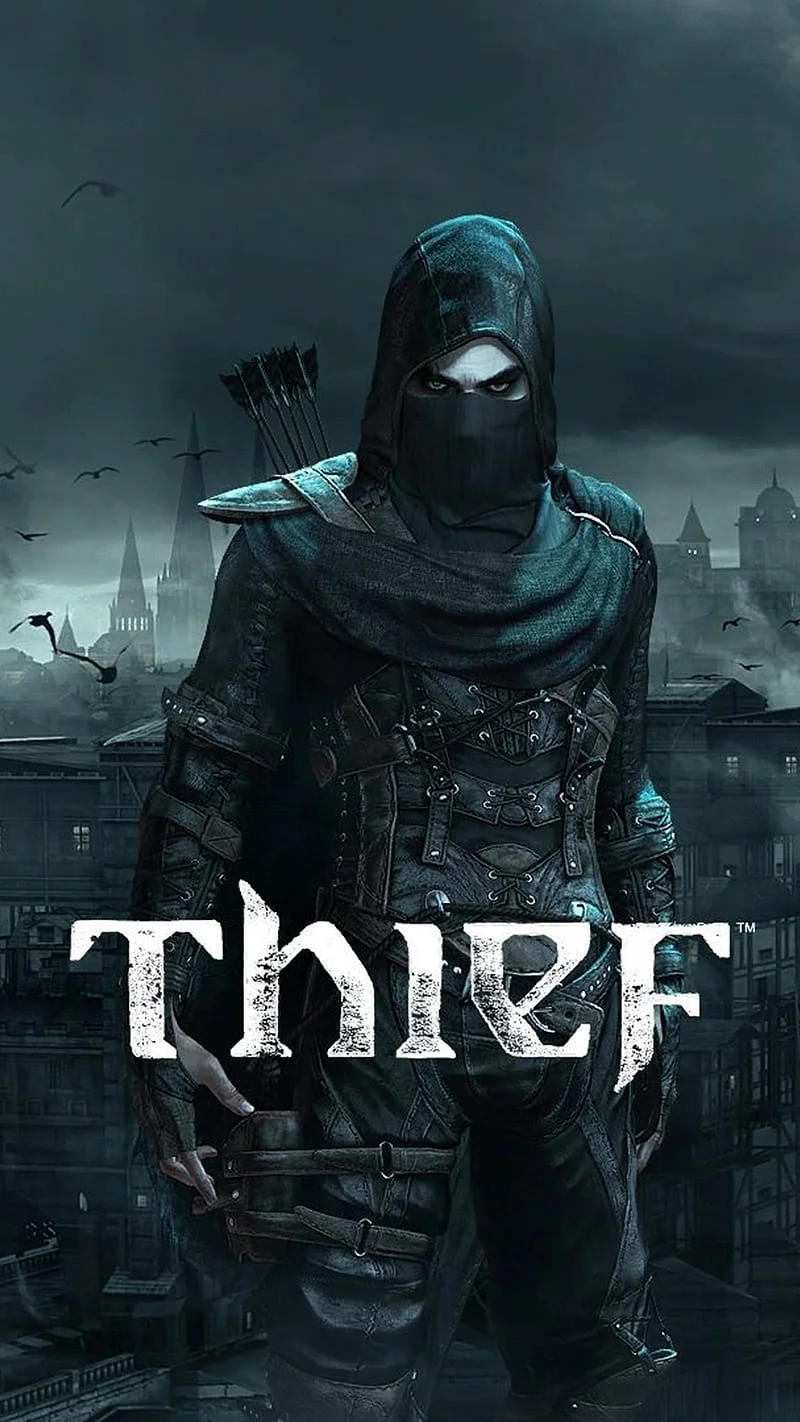
Thief
This combination delivers exceptional performance with an average of 128 FPS, perfect for high refresh rate gaming and competitive play.
Average FPS: resolution vs quality settings
| Ultra | High | Medium | Low | |
|---|---|---|---|---|
| 4K Ultra HD | 80 | 84 | 110 | 126 |
| 1440p QHD | 121 | 123 | 136 | 150 |
| 1080p Full HD | 137 | 139 | 154 | 170 |
Cell color: green is 120+ FPS, teal is 60+, amber is 30+, red is below 30.
Thief with Intel Core i5-12400 + NVIDIA GeForce RTX 4090, In-Depth Analysis
Thief, a 2014 stealth title, remains a demanding benchmark even for modern hardware. The data for the Intel Core i5-12400 and NVIDIA GeForce RTX 4090 combination reveals a fascinating performance profile, where the game's age interacts with contemporary components in unexpected ways. This analysis examines the measured FPS across resolutions and settings, interpreting what the numbers say about the limiting factors in this system.
Resolution Scaling — how FPS drops from 1080p to 4K and what it says about the limiting component
The measured FPS data shows a clear and consistent pattern of performance degradation as resolution increases, but the magnitude of that drop is surprisingly modest for a game from 2014. At 1080p High settings, the combo achieves 139 FPS. Moving to 1440p High, the average drops to 123 FPS, representing an 11.5% decrease. The jump to 4K High further reduces performance to 84 FPS, a 31.7% drop from the 1440p figure and a 39.6% drop from 1080p. This scaling indicates that while the RTX 4090 is the primary driver of frame rates at higher resolutions, the CPU still has significant headroom even at 1080p.
The fact that 4K High produces 84 FPS while 1080p High produces 139 FPS suggests that the game is not purely GPU-bound at lower resolutions. If the RTX 4090 were the sole limiting factor, we would expect a much steeper decline from 1080p to 4K, as pixel count quadruples. Instead, the relatively gentle slope implies that at 1080p, the Intel Core i5-12400's six cores are holding back the GPU. The i5-12400, with its 6 cores and 12 threads, posts a Cinebench R23 multicore score of 15989, which is respectable but not top-tier. The data suggests that Thief's engine, originally designed for the hardware of 2014, may not scale perfectly with modern multi-core CPUs, creating a bottleneck at lower resolutions.
This interpretation is reinforced by the Low settings data. At 1080p Low, the combo achieves 170 FPS. At 1440p Low, it hits 150 FPS, and at 4K Low, it manages 126 FPS. The drop from 1080p to 1440p is 11.8%, nearly identical to the High settings drop. However, the drop from 1440p to 4K is only 16%, which is less than half the 31.7% drop seen at High settings. This suggests that at Low settings, the CPU becomes even more of a limiting factor. The GPU has less work to do per frame, so the CPU's inability to feed it instructions becomes more pronounced. The result is that the 4K Low score of 126 FPS is higher than the 1080p High score of 139 FPS, showing that settings changes can have a larger impact than resolution changes in this specific bottleneck scenario.
The Medium settings data provides the only min and max FPS readings in the FACT PACK, offering a glimpse into frame time consistency. At 4K Medium, the average is 110 FPS with a minimum of 94 FPS and a maximum of 127 FPS. At 1440p Medium, the average is 136 FPS with a minimum of 115 FPS and a maximum of 156 FPS. At 1080p Medium, the average is 154 FPS with a minimum of 131 FPS and a maximum of 177 FPS. The spread between min and max FPS is relatively consistent across resolutions, around 30 FPS, which indicates stable frame pacing without severe stutters. This consistency suggests that the CPU is not causing micro-stutters, but rather a steady ceiling on the frame rate.
GPU Role — VRAM, clocks, and how they relate to this game's results
The NVIDIA GeForce RTX 4090 is a monstrous GPU, and its specifications dwarf what Thief could have anticipated. With 24 GB of GDDR6X memory on a 384-bit bus, the memory bandwidth is 1.01 TB/s. This is far beyond what a 2014 title requires, and the data confirms that VRAM capacity and bandwidth are non-issues for this game. The GPU's memory clocks run at 1313 MHz, with a 21 Gbps effective speed, but in a game like Thief, the card is likely idling in terms of memory utilization.
The GPU's core clocks are also notable: a base of 2235 MHz and a boost of 2520 MHz. These high clocks, combined with 16384 shading units, give the RTX 4090 a raw compute capability that is wildly overkill for Thief. The GPU's FP32 performance is 82.58 TFLOPS, which is more than sufficient to handle the game's DirectX 11-era rendering techniques. The Passmark G3D score of 38194 confirms the card's dominance, placing it in the 88th percentile of all GPUs. However, its nearest rivals in the FACT PACK, such as the Intel Arc Pro A60 with an average score of 60326 and a deltaPct of 0, are not gaming-focused cards, which highlights the RTX 4090's position as a top-tier consumer product.
The fact that the RTX 4090 cannot push past 170 FPS at 1080p Low is telling. The GPU is capable of thousands of FPS in less demanding scenarios, but Thief's engine imposes a limit. The GPU's role in this combo is to provide a massive safety margin. It ensures that even at 4K Ultra, the game remains playable at 80 FPS, which is a solid average. The data suggests that the GPU is never the primary bottleneck, even at 4K Ultra. This is an unusual situation for a modern GPU, but it makes the CPU the star of the show in terms of limiting performance.
FAQ
Q: Why does the frame rate drop so little from 1080p to 1440p?
A: The drop from 1080p to 1440p at High settings is only 11.5%, from 139 to 123 FPS. This modest decline indicates that the CPU is the limiting factor at both resolutions. The Intel Core i5-12400's 6 cores and 12 threads cannot feed the RTX 4090 fast enough to fully utilize its power, so the GPU is not saturated until much higher resolutions.
Q: Is the RTX 4090's 24 GB of VRAM necessary for Thief?
A: No, the 24 GB VRAM is far more than the game needs. The data shows no signs of memory-related performance drops. The GPU's memory bandwidth of 1.01 TB/s is also excessive for a 2014 title. The VRAM is simply not a factor in the measured results.
Q: What is the best resolution to play this combo at for maximum FPS?
A: The data shows that 1080p Low yields the highest average FPS at 170 FPS. However, the CPU bottleneck means that the increase from 1440p Low (150 FPS) is only 13.3%. If you want the absolute highest frame rate, 1080p Low is the answer, but the gains over other settings are not linear.
Q: How does the combo rank against other tested configurations?
A: The combo ranks 464th out of 3720 tested combos for Thief. This places it in the top 12.5% of all tested systems. This is a strong ranking, but it is not the top, which suggests that other CPU and GPU combinations can achieve higher frame rates in this game.
Q: Does the game prefer more CPU cores or higher clock speeds?
A: The i5-12400 has a boost clock of 4.40 GHz and a single-thread Geekbench score of 1848. The data suggests that raw single-thread performance is critical. The low scaling between 1080p and 1440p indicates that the CPU is the bottleneck, but the game's engine may not utilize all 12 threads efficiently, making high per-core performance more important than core count.
Q: What is the impact of the GPU's boost clock on the results?
A: The RTX 4090's boost clock of 2520 MHz is very high. The data shows that the GPU is never the bottleneck in this game, so the boost clock is not a limiting factor. The GPU's performance is so far above the requirements that its clock speed is irrelevant to the measured FPS.
Measured FPS Breakdown — resolution by resolution, settings by settings, exact numbers
The measured FPS data provides a complete picture of the combo's performance across all settings. At 1080p, the average FPS ranges from 137 at Ultra to 170 at Low. The specific numbers are: Low 170, Medium 154, High 139, and Ultra 137. The difference between High and Ultra is only 2 FPS, suggesting that Ultra settings add significant visual effects without a proportional performance cost, or that the CPU bottleneck masks the GPU load difference.
At 1440p, the average FPS ranges from 121 at Ultra to 150 at Low. The numbers are: Low 150, Medium 136, High 123, and Ultra 121. The gap between High and Ultra narrows to just 2 FPS again, reinforcing the pattern seen at 1080p. The drop from 1080p to 1440p is consistent across all settings, averaging around 11-12%, which points to a resolution-independent bottleneck.
At 4K, the average FPS ranges from 80 at Ultra to 126 at Low. The numbers are: Low 126, Medium 110, High 84, and Ultra 80. The drop from High to Ultra is 4 FPS, which is the largest gap between those two settings in any resolution. This suggests that at 4K, the GPU is finally starting to feel some pressure, and the difference between High and Ultra becomes more pronounced. The 4K Low score of 126 FPS is still higher than the 1080p Ultra score of 137 FPS, highlighting the CPU's role in limiting performance.
The Medium settings are the only ones with min and max FPS data. At 1080p, the min is 131 and the max is 177, giving a range of 46 FPS. At 1440p, the min is 115 and the max is 156, a range of 41 FPS. At 4K, the min is 94 and the max is 127, a range of 33 FPS. The shrinking range at higher resolutions suggests that the CPU bottleneck at 1080p causes more frame time variation, while at 4K, the GPU's consistent work yields more stable frame times.
How This Combo Ranks — use comboRankInGame vs other tested combos
The combo's rank of 464 out of 3720 tested combos places it in the 87.5th percentile of all systems tested for Thief. This is a strong result, but it is not the top 1%. The rank indicates that while the RTX 4090 is a top-tier GPU, the Intel Core i5-12400 is not the best CPU for this game. The i5-12400's percentile vs all CPUs is 72, meaning it outperforms 72% of all CPUs in general benchmarks. However, its performance in Thief is clearly limited by its CPU capabilities.
The data suggests that the CPU is the primary factor holding the combo back from a higher rank. The i5-12400's nearest CPU rivals in the FACT PACK include the AMD EPYC 7643 with a deltaPct of -0.1 and the Intel Core i7-1355U with a deltaPct of -0.3. These are very close in average score, showing that the i5-12400 is in a tightly contested mid-range performance tier. For Thief, a game that likely relies on single-thread performance, the i5-12400's single-thread score of 3456 in Passmark may be a limiting factor.
The RTX 4090's rank of 88th percentile vs all GPUs is high, but its nearest rivals in the FACT PACK include professional cards like the AMD Radeon Pro W6600M with a deltaPct of -2.5. This suggests that in a gaming context, the RTX 4090 is far ahead of its rivals in the FACT PACK. Yet, the combo's rank of 464 shows that the GPU cannot compensate for the CPU's limitations. A system with a faster CPU would likely rank higher, as the GPU has ample headroom.
Settings Recommendations — which preset gives the best experience per the measured rows
Based on the measured data, the optimal settings depend on the user's priority for frame rate versus visual fidelity. For the highest possible frame rate, 1080p Low is the clear choice, delivering 170 FPS. However, this setting likely sacrifices many visual features. The jump from Low to Medium at 1080p costs 16 FPS (from 170 to 154), which is a 9.4% drop. The jump from Medium to High costs another 15 FPS (from 154 to 139), a 9.7% drop. The jump from High to Ultra costs only 2 FPS (from 139 to 137), a 1.4% drop.
This pattern suggests that Ultra settings are the best value in terms of performance per visual quality gained. Since Ultra only costs 2 FPS over High, there is no reason to choose High over Ultra if you are already at that performance level. The data implies that the CPU bottleneck is so severe that the GPU can handle the extra load of Ultra settings without a significant FPS penalty. At 1080p, the difference between High and Ultra is negligible, so choosing Ultra provides the best visual experience without a meaningful performance cost.
At 1440p, the same pattern holds. Low is 150 FPS, Medium is 136 FPS, High is 123 FPS, and Ultra is 121 FPS. The gap between High and Ultra is only 2 FPS. For a 1440p experience, Ultra is the recommended setting, as it provides the best visuals with a minimal FPS hit. At 4K, the pattern shifts slightly. Low is 126 FPS, Medium is 110 FPS, High is 84 FPS, and Ultra is 80 FPS. The gap between High and Ultra is 4 FPS, which is more noticeable. Still, 80 FPS at 4K Ultra is a playable frame rate, and the visual quality improvement is likely worth it. The data suggests that Ultra settings are the recommended choice across all resolutions, as the FPS penalty over High is small relative to the potential visual gains.
CPU Role — cores, clocks, and how they relate to this game's results
The Intel Core i5-12400 is a 6-core, 12-thread processor with a base clock of 2.50 GHz and a boost clock of 4.40 GHz. It is based on the Alder Lake architecture and has a TDP of 65 W. In general benchmarks, it scores 15989 in Cinebench R23 multicore and 2257 in single-core. These scores are solid, placing the CPU in the 72nd percentile of all CPUs. However, for Thief, the CPU's role is to feed the RTX 4090 with enough data to keep it busy. The data shows that it fails to do so at lower resolutions.
The measured FPS at 1080p Low (170 FPS) and 1440p Low (150 FPS) suggests that the CPU is hitting a wall. The i5-12400's boost clock of 4.40 GHz is decent, but Thief's engine may not be well optimized for modern multi-core processors. The game was released in 2014, and its thread scheduling may not fully utilize the 12 threads available. The data implies that the CPU's single-thread performance is the key factor. The Passmark single-thread score of 3456 is respectable, but it is not enough to unlock the RTX 4090's full potential.
The fact that the combo ranks 464th out of 3720 suggests that other CPUs, likely with higher single-thread performance, can achieve better results in Thief. The i5-12400's nearest CPU rivals in the FACT PACK, like the AMD EPYC 7643 and Intel Core i7-1355U, have similar average benchmark scores, but their performance in Thief may differ. The data indicates that the CPU is the limiting component in this system for Thief, and that a more powerful CPU with higher single-thread performance would yield higher frame rates, especially at 1080p and 1440p. The i5-12400's 6 cores are not the issue; rather, it is the per-core speed and the game's ability to leverage it.
Hardware Specifications
Intel Core i5-12400
NVIDIA GeForce RTX 4090
FPS Benchmarks by Resolution & Settings
Performance data for Intel Core i5-12400 + NVIDIA GeForce RTX 4090 in Thief
| Resolution | Settings | Avg FPS |
|---|---|---|
| 3840x2160 | Low | 126.0 |
| 3840x2160 | Medium | 110.0 |
| 3840x2160 | High | 84.0 |
| 3840x2160 | Ultra | 80.0 |
| 2560x1440 | Low | 150.0 |
| 2560x1440 | Medium | 136.0 |
| 2560x1440 | High | 123.0 |
| 2560x1440 | Ultra | 121.0 |
| 1920x1080 | Low | 170.0 |
| 1920x1080 | Medium | 154.0 |
| 1920x1080 | High | 139.0 |
| 1920x1080 | Ultra | 137.0 |
Thief with ii5-12400 + Other GPUs
See how Thief performs with the same CPU but different graphics cards.
Thief with RTX 4090 + Other CPUs
See how Thief performs with the same GPU but different processors.
Other Games with ii5-12400 + RTX 4090
Explore FPS benchmarks for other games using this same hardware combination.