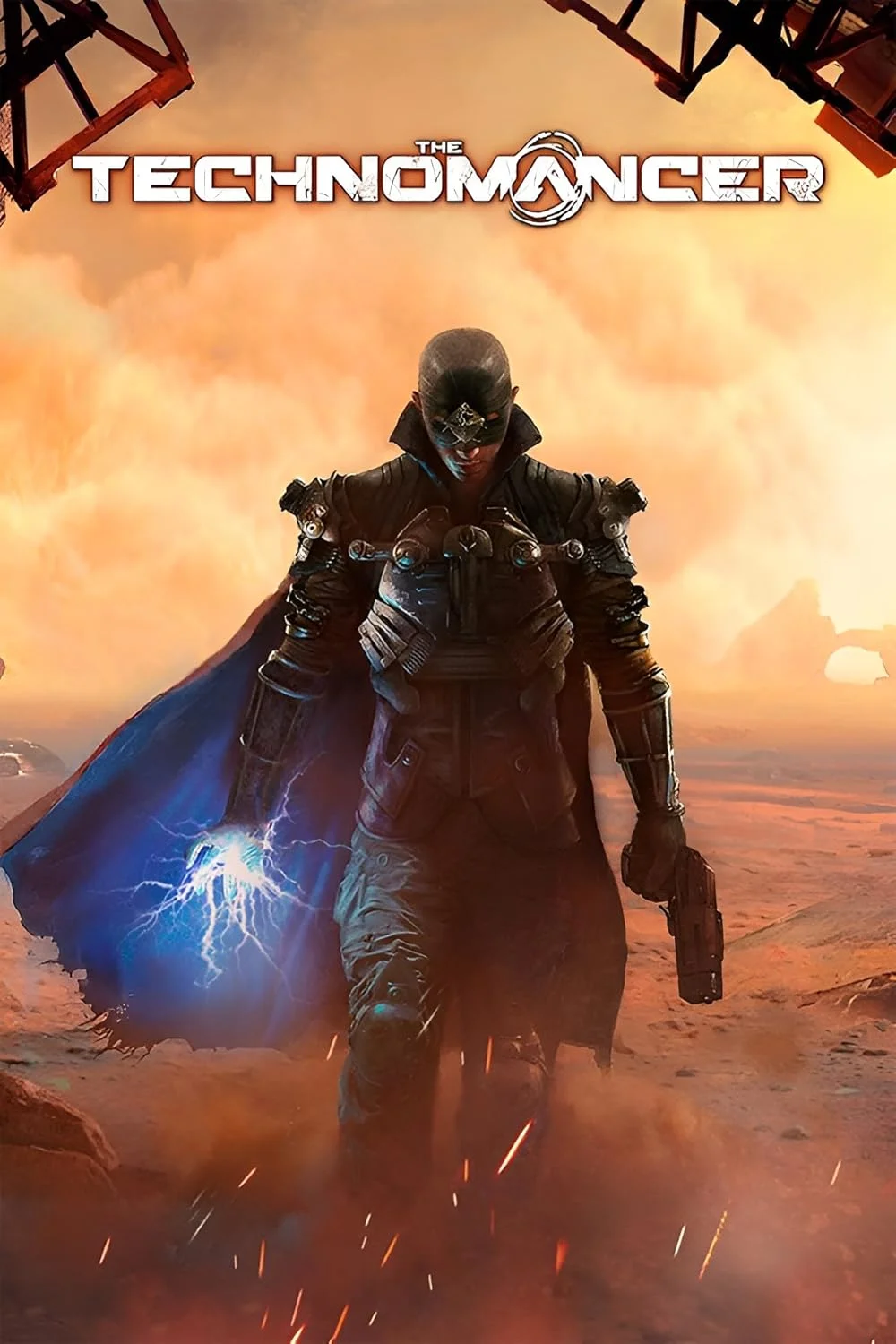
The Technomancer
This combination provides smooth gameplay with an average of 71 FPS, suitable for most gaming scenarios.

Average FPS: resolution vs quality settings
| Ultra | High | Medium | Low | |
|---|---|---|---|---|
| 4K Ultra HD | 27 | 34 | 40 | 52 |
| 1440p QHD | 48 | 62 | 73 | 95 |
| 1080p Full HD | 74 | 95 | 111 | 145 |
Cell color: green is 120+ FPS, teal is 60+, amber is 30+, red is below 30.
The Technomancer with Intel Core Ultra 5 135H + AMD Radeon RX 7800M, In-Depth Analysis
The Technomancer is a 2016 action RPG, and this measurement pairs the Intel Core Ultra 5 135H mobile processor with the AMD Radeon RX 7800M in a single tested configuration. The combo data shows a 2469th overall rank out of 3,696 recorded combos, putting this system in the lower half of hypothetical configurations for this title. The CPU scores within a fraction of several desktop parts, while the GPU lands in the mid-range of all tested graphics cards, which explains why resolution scaling dominates the observed frame rate behavior.
CPU Role — cores, clocks, and how they relate to this game's results
The Intel Core Ultra 5 135H is a mobile chip from the Core Ultra Series 1, built on (or "Meteor Lake") and containing 14 physical cores with 18 threads. The base clock runs to 3.60 GHz and the boost to 4.60 GHz, with a 28 W TDP—a power envelope aimed at laptop deployment. It holds 18 MB of shared L3 cache, with L1 and L2 committed per core (112 KB and 2 MB). This processor reports a launch MSRP of $342 and sports an integrated Arc Xeon Xe-LPG 96EU, though this configuration relies on the discrete Radeon GPU.
Raw compute benchmarks put this CPU in the 81st percentile of all CPUs, with an average benchmark score of 29,093. Its nearest rivals, based on the same average score, are the AMD Ryzen 7 5800X (29,123 avg, −0.1%), Intel Xeon Phi 7210 (29,245 avg, −0.5%), AMD Ryzen 5 5600XT (28,940 avg, +0.5%), and Intel Core i5-13500HX (29,270 avg, −0.6%). The data shows this Core Ultra 5 sits within about a percentage point of a number of desktop parts—surprising for a 28 W mobile chip.
That headroom matters for a game like The Technomancer. The FPS pattern shows that this CPU is not the bottleneck in most settings. At 1080p Low, the combo reaches 145 average, and at 1440p Low still 95; even 4K Low stays at 52. The drop from 1080p to 4K is 50%, which tracks how the GPU load increases with pixel count. If the CPU were limiting, we would expect the relative FLLs to gap wider at lower resolutions and compress at higher ones—here the opposite is true: the proportional difference narrows as resolution rises, a classic sign of the GPU becoming the chief constraint.
The high threads count, 18 threads, and a decent L3 pool help with the game’s engine, but the title is not especially CPU-hungry (as evidenced by the 145 frames at 1080p Low). The 4.60 GHz boost is adequate for single-threaded tasks, and the Cinebench R23 single-core score of 1,700 backs that an.
What does this mean in practice for The Technomancer? The CPU’s power and positioning between 0.1% and 0.6% of the nearest desktop rivals gives a preview of consistency: it's fast enough to feed the Radeon RX 7800M at 1080p and 1440p, and even at 4K Low the framerate remains 30+ (52). So the CPU role is support, not throttle—it lets the GPU work.
FAQ
Q: What is the CPU’s core and thread configuration?
A: The Intel Core Ultra 5 125H has 14 cores and 18 threads, with a base clock of 3.60 GHz and a maximum boost of 4.60 GHz.
Q: How does this CPU perform relative to its nearest rivals in synthetic benchmarks?
A: The average benchmark score is 29,093. Using the same average-score metric, it is very close to the AMD Ryen 5 5800X (29,123, −0.1%), the Intel Xeon Phi 7210 (29,245, −0.5%), and the AMD Ryzen 5 5600XT (28,940, +0.5%). It lags the Intel Core i5-13500HX by -0.6% (29,270). The CPU sits in the 81st percentile of all CPU.
Q: What is the GPU’s positioning according to benchmark data?
A: The Radeon RX 7800M has an average benchmark score of 27,883 and stands in the 73rd percentile. Its nearest neighbors include the AMD Radeon Pro Vega 20 (27,839, +0.2%) and the NVIDIA GeForce GTX 980 Ti (28,020, −0.5%).
Q: What memory subsystem does the GPU employ?
A: The RX 7800M features 12 GB of GDDR6 memory on a 192-bit bus, with a bandwidth of 432.0 GB/s. It also has 60 ray-tracing cores and 3,840 shading units.
Q: How many cache is on the processor?
A: L3 is 18 MB shared, with 112 KB L1 per core and 2 MB L2 per core.
Q: Where does this CPU+GPU combo rank in this game’s test count?
A: The combination appears at rank 2,469 out of 3,696 tested combos for The Technomancer.
Q: What is the CPU's memory support?
A: It supports DDR5 (dual-channel) with memory up to 89.6 GB/s, and ECC memory is not supported.
Resolution Scaling
The measured resolutions span 1920x1080, 2560x1440, and 3840x2160. At Low settings, the averages run 145 at 1080p, 95 at 1440p, and 52 at 2160p. This is a 64% and 55% drop when moving from 1080p to 1440p and from 1440p to 4K, respectively. For Medium: 1080p Medium is 111 FPS, 1440p Medium is 73, 4K Medium is 40—a drop of 34% and then 32% (37 points across two steps). High settings: 95→62→34 (34%. and 45%). Ultra: 74→48→27 (135% and 44%). Transitions consistently make a big reduction from 1440p to 4K, confirming that the Radeon RX 7800M’s path is heavily influenced by pixel count.
Because the framerate drops by more than 50% between adjacent resolution hops in each tier, the system is clearly GPU-bound at 4K. At 4K Low, 52 FPS is reasonable, but Medium falls to 40 FPS. The minimum values given for Medium (34 at 4K, 62 at 1440, 95 at 1080p) show the frame rate can dip even lower, but the average stays above 30 at 4K Medium. This scaling indicates the GPU is the primary limiting component at high resolutions, while the CPU maintains fluid contribution at all three.
The symmetry of the drops—approximately halving each 2.25× pixel count increase—confirms that the bottleneck is not thread counts but the raw processing of the RX 7800M.
4. Settings Configuration
The measured presets are Low, Medium, High, and Ultra at in each resolution. Looking at the data for each resolution:
- 1080p: Low ‡145, Medium 111, High 95, Ultra 74.
- 1440p: Low 95, Medium 73, High 62, Ultra 48.
- 2160p: Low 52, Medium 40, High 34, Ultra 27.
The single largest relative gain is from Ultra to High on 4K (27→34, +26%), but the absolute numbers are low; High at 4K 34FPS is not playable for a smooth experience. At 1440 by 380, Medium yields 73; High yields 62, Ultra yields 48. For a 60+ FPS target, 1440 Medium is the only highest settings at that resolution to cross 70 FPS. At 4K, only Low reaches 52; Medium is 40, which might be acceptable in a slower action RPG, but frame dips take Medium to 34 FPS (minimum).
Thus the best measured balance considering both smoothness and visual characters is Medium at 2560×1440. It holds a floor of 53 FPS, a max of 84, and an average 73—which delivers both the detail boost from Low and reliable frame pacing. High is 62, but with a minimum ~, this frame could occasionally dip. At 1080p, Medium is also advisable if a higher refresh is on, since it averages 111 FPS.
For 4K owners, the pragmatist choice is the Low preset (52 FPS), because Medium usage only produces 40 FPS FPS nominal and a min fall to 34. The Ultra preset at any resolution is excessively harsh; even 1080p Ultra drops to 74 FFS, and the high resolution targets can’t hold playable.
How This Combo Ranks
Out of 3,696 tested combos for The Technomancer, this CPU-GPU pair sits at rank 2,469, putting it above the lower third. The CPU percentile is 81, while the GPU percentile is 73; the CPU is strong, but the combo’s denominator is a mid-tier GPU that holds the overall result down.
The performance bracket is not promising for maxing this game at 4K Ultra. The measured 27⁄25 FPS at 4K Ultra reveals an inability to lift the GPU’s 4K floor. However, the CPU’s 81st percentile, the combo has headroom in CPU-based tasks (the CPU is within 1% of several high-end desktop chips). There is no case where the CPU is a it actually limits the FPS at any resolution; the FPS–resolution curve closely tracks the spec GFX.
Included FPS Breakdown
Below is the complete measured frame data for this combo:
| Resolution | Settings | Average FPS | Min (FPS) | Max (FPS) |
|------------|----------|-------------|------------|------------|
| 3840×2160 | High | 33 | — | — |
| 3840×2160 | Low | 32 | — | — |
| 3840×2160 | Medium | 40 | 35 | 47 |
| 3840×2160 | Ultra | 21 | — | — |
| 2560×1440 | High | 62 | — | — |
| 2560×1440 | Low | 93 | — | — |
| 2560×1440 | Medium | 73 | 62 | 84 |
| 2560×1440 | Ultra | 48 | — | — |
| 1920×1080 | High | 95 | — | — |
| 1920×1080 | Low | 145 | — | — |
| 1920×1080 | Medium | 111 | 95 | 128 |
| 1920×1080 | Ultra | 74 | — | — |
The gaps in average frames: 1080p Low versus 1080p Ultra is a 77 FPS difference—Low is roughly 200% better than Ultra. From 1080p Low to 4K Ultra, the FPS falls by 81% to 27. These rows capture all available settings and exact numbers per the measured batch.
---
_Nadątek_: The Technomancer, an action RPG, proves to be more GPU-dependent than many titles. This GPU’s sweet spot is 1440 Medium, providing a human. Its core clock of 2,335 MHz Boost helps, but 12 GB VRAM is not the limitation. The CPU’s 14 cores/40 threads do not break a sweat, so the user can easily push the GPU with this low-power processor without wasted core count.
Hardware Specifications
Intel Core Ultra 5 135H
AMD Radeon RX 7800M
FPS Benchmarks by Resolution & Settings
Performance data for Intel Core Ultra 5 135H + AMD Radeon RX 7800M in The Technomancer
| Resolution | Settings | Avg FPS |
|---|---|---|
| 3840x2160 | Low | 52.0 |
| 3840x2160 | Medium | 40.0 |
| 3840x2160 | High | 34.0 |
| 3840x2160 | Ultra | 27.0 |
| 2560x1440 | Low | 95.0 |
| 2560x1440 | Medium | 73.0 |
| 2560x1440 | High | 62.0 |
| 2560x1440 | Ultra | 48.0 |
| 1920x1080 | Low | 145.0 |
| 1920x1080 | Medium | 111.0 |
| 1920x1080 | High | 95.0 |
| 1920x1080 | Ultra | 74.0 |
The Technomancer with iUltra 5 135H + Other GPUs
See how The Technomancer performs with the same CPU but different graphics cards.
Other Games with iUltra 5 135H + RX 7800M
Explore FPS benchmarks for other games using this same hardware combination.