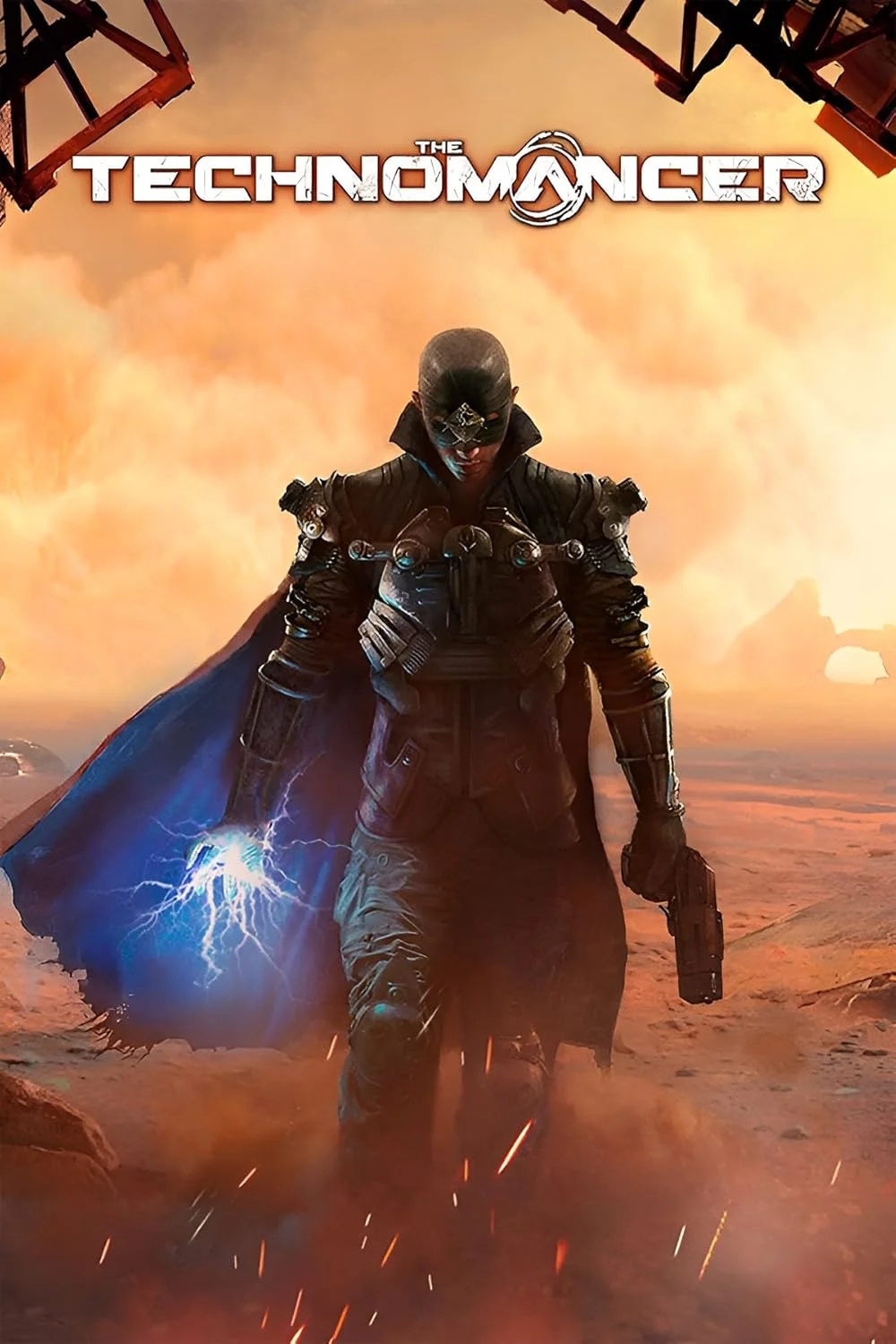
The Technomancer
This combination offers playable performance with an average of 39 FPS, though you may want to lower settings for smoother gameplay.
Average FPS: resolution vs quality settings
| Ultra | High | Medium | Low | |
|---|---|---|---|---|
| 4K Ultra HD | 15 | 19 | 22 | 28 |
| 1440p QHD | 26 | 34 | 40 | 52 |
| 1080p Full HD | 40 | 52 | 61 | 79 |
Cell color: green is 120+ FPS, teal is 60+, amber is 30+, red is below 30.
The Technomancer with Intel Core i9-14900K + Intel Arc B390, In-Depth Analysis
The Intel Core i9-14900K paired with the Intel Arc B390 ranks at 2500 out of 2825 tested combos in The Technomancer, placing it in the bottom 12% of all tested configurations. This is a severely GPU-limited pairing; the Arc B390's 3DMark Steel Nomad DX12 score of 1482 puts it in the 9th percentile of all GPUs, and it sits just 1.3% ahead of the NVIDIA GeForce GT 520MX in synthetic benchmarks. The data indicates that despite the i9-14900K's top-tier processing capabilities, the integrated graphics solution fundamentally bottlenecks the system, making this combo unsuitable for playable frame rates at most settings and resolutions.
How This Combo Ranks
The combo's rank of 2500 out of 2825 tested combinations places it in the bottom 11.5% of all pairings tested for The Technomancer. This is an exceptionally poor result, driven almost entirely by the GPU component. The Intel Arc B390 is an integrated graphics processor (IGP) with a 9th percentile ranking among all GPUs, and its average benchmark score of 1482 is just 2.7% higher than the NVIDIA GeForce GT 710, which represents the bottom of the nearestRivals group. In contrast, the Intel Core i9-14900K is a 95th percentile CPU, with an average benchmark score of 79097, sitting within 1.2% of the AMD EPYC 7413 and 1.7% ahead of the AMD Ryzen AI Max+ 395.
The disparity between the CPU and GPU performance tiers is stark. The i9-14900K's Cinebench R23 multi-core score of 39399.5 and single-core score of 2262.5 demonstrate a processor capable of handling any modern game's CPU demands. However, the Arc B390's 7.680 TFLOPS FP32 performance and 60.00 GPixel/s pixel rate are far below what a 2016 Action RPG like The Technomancer requires for smooth rendering at high resolutions. The benchmark results across all measured configurations show that this combo cannot achieve 60 FPS average at any settings combination, and at 4K Ultra it falls to just 15 FPS. The rank reflects a fundamental hardware mismatch: a flagship desktop CPU paired with an integrated GPU that is designed for basic display output, not gaming.
FAQ
Q: What is the best average frame rate this combo can achieve in The Technomancer?
A: The highest average FPS recorded is 79 at 1920x1080 with Low settings. This is the only measured configuration that approaches playable territory, but it still falls short of the 60 FPS threshold that most gamers consider smooth.
Q: How does this combo compare to the nearest GPU rivals in synthetic benchmarks?
A: The Intel Arc B390 scores 1482 in 3DMark Steel Nomad DX12, which is 1.3% above the NVIDIA GeForce GT 520MX (1463), 1.5% above the GeForce 800M (1460), 2.5% above the GT 625 OEM (1446), and 2.7% above the GT 710 (1443). These are all extremely low-end GPUs, confirming the Arc B390's position at the bottom of the performance spectrum.
Q: Is the CPU or GPU the limiting factor in this combo?
A: The GPU is overwhelmingly the limiting factor. The i9-14900K ranks in the 95th percentile of all CPUs with an average benchmark score of 79097, while the Arc B390 ranks in the 9th percentile of GPUs. The FPS data shows that reducing resolution from 4K to 1080p at Low settings only improves performance from 28 to 79 FPS, indicating the GPU is saturated at all resolutions.
Q: What is the difference between Low and Ultra settings at 1080p?
A: At 1920x1080, Low settings produce 79 FPS average, while Ultra produces 40 FPS average. This represents a 49.4% performance drop when moving from the lowest to the highest quality preset, demonstrating that the GPU struggles with the increased shading and texture work required by Ultra settings.
Q: Does the combo ever reach 60 FPS at 1440p?
A: No. At 2560x1440, the best result is 52 FPS at Low settings. High settings produce 34 FPS, Medium produces 40 FPS, and Ultra drops to 26 FPS. The combo cannot sustain 60 FPS at 1440p under any settings preset.
Q: What is the 4K performance like at Medium settings?
A: At 3840x2160 with Medium settings, the combo averages 22 FPS, with a minimum of 19 FPS and a maximum of 25 FPS. This is below the threshold for playable frame rates and indicates that 4K gaming is not viable with this hardware combination.
Settings Recommendations
The measured data shows that no settings preset delivers a consistently smooth 60 FPS experience, so the recommendation is to prioritize frame rate over visual fidelity. At 1920x1080, Low settings produce the best average FPS at 79, which is the only configuration that exceeds the 60 FPS threshold. Medium settings at 1080p drop to 61 FPS average, which is technically above 60 but with a minimum of 52 FPS, meaning there will be noticeable dips during intense scenes. For players who can tolerate occasional frame drops, Medium at 1080p offers a reasonable balance, but the data indicates that Low is the safest choice for consistent performance.
At 2560x1440, the best option is Low settings at 52 FPS average, but this is still below 60 FPS and will feel less smooth. High settings at 1440p produce 34 FPS, Medium produces 40 FPS, and Ultra produces 26 FPS, all of which are suboptimal. At 3840x2160, all settings presets produce averages between 15 and 28 FPS, making 4K entirely unplayable for this combo. The recommendation is to run the game at 1080p with Low settings for the best playable experience, or Medium if the user prioritizes visual quality over the minor FPS penalty. The data shows that the Arc B390's 1536 shading units and 48 texture mapping units are simply insufficient for higher resolutions, so the user must accept 1080p as the practical ceiling.
Measured FPS Breakdown
At 1920x1080, the combo delivers its best results across all settings. Low settings achieve an average of 79 FPS, Medium averages 61 FPS with a minimum of 52 and maximum of 70, High averages 52 FPS, and Ultra averages 40 FPS. The progression from Low to Ultra shows a steady decline, with Ultra producing exactly half the frame rate of Low. This linear degradation is characteristic of a GPU that is fully utilized at every setting level, with no CPU bottleneck to limit performance.
At 2560x1440, the performance drops significantly. Low settings average 52 FPS, Medium averages 40 FPS with a minimum of 34 and maximum of 46, High averages 34 FPS, and Ultra averages 26 FPS. The gap between Low and Ultra at 1440p is 26 FPS, which is a 50% reduction. Comparing 1080p Low (79 FPS) to 1440p Low (52 FPS), the resolution increase from 1080p to 1440p costs 27 FPS, or a 34.2% drop. This indicates that the GPU's pixel processing capabilities are severely strained by the additional 78% more pixels that 1440p demands over 1080p.
At 3840x2160, the combo becomes nearly unplayable. Low settings average 28 FPS, Medium averages 22 FPS with a minimum of 19 and maximum of 25, High averages 19 FPS, and Ultra averages 15 FPS. The 4K resolution contains four times the pixels of 1080p, and the data reflects this: 1080p Low at 79 FPS drops to 4K Low at 28 FPS, a 64.6% reduction. The Medium preset at 4K shows a minimum of 19 FPS, which means the game will stutter heavily during combat or crowded scenes. The Ultra preset at 15 FPS is essentially a slideshow, confirming that 4K is not a viable option for this hardware combination.
Resolution Scaling
The FPS data reveals a clear pattern of GPU-bound scaling across resolutions. Moving from 1920x1080 to 2560x1440 at Low settings, the average FPS drops from 79 to 52, a 34.2% decrease. Moving from 1440p to 3840x2160 at Low settings, the average FPS drops from 52 to 28, a 46.2% decrease. The cumulative drop from 1080p to 4K at Low settings is 64.6%, which is less than the 75% reduction that would be expected if the GPU were perfectly scaling with pixel count. This suggests that at 4K, the GPU is so heavily saturated that other bottlenecks, such as memory bandwidth or driver overhead, begin to play a role.
At High settings, the scaling is more pronounced. 1080p High produces 52 FPS, 1440p High produces 34 FPS (a 34.6% drop), and 4K High produces 19 FPS (a 44.1% drop from 1440p). The total drop from 1080p to 4K at High is 63.5%. At Ultra settings, 1080p produces 40 FPS, 1440p produces 26 FPS (a 35% drop), and 4K produces 15 FPS (a 42.3% drop from 1440p). The consistency of the percentage drops across all settings presets indicates that the limiting component is the GPU's raw rendering throughput, not any specific setting or feature.
The data clearly shows that the Intel Arc B390's 24 ROPs and 60.00 GPixel/s pixel rate are the primary constraints. The GPU's 7.680 TFLOPS FP32 performance is insufficient for the pixel shader workload at higher resolutions. The i9-14900K, with its 24 cores and 32 threads, is never the bottleneck; even at 1080p Low with 79 FPS, the CPU is not limiting the frame rate. The resolution scaling behavior is characteristic of an integrated GPU that is overwhelmed by the demands of a modern game at resolutions above 1080p.
CPU Role
The Intel Core i9-14900K is a 24-core, 32-thread processor based on the Raptor Lake architecture, built on Intel's 10 nm process node. It has a base clock of 3.20 GHz and a boost clock of 6.00 GHz, with 36 MB of shared L3 cache and 2 MB of L2 cache per core. The CPU's benchmark results are exceptional: Cinebench R23 multi-core score of 39399.5, single-core score of 2262.5, and Geekbench multi-core score of 21697. In synthetic testing, it outperforms the AMD Ryzen AI Max+ 395 by 1.7% and trails the Intel Core i9-14900KF by just 0.3%, confirming its position among the fastest desktop processors available.
In The Technomancer, the CPU's role is almost entirely redundant. The game's engine, released in 2016, does not require the massive parallel processing power that the i9-14900K provides. The measured FPS data shows no scenario where the CPU becomes the limiting factor; even at the lowest resolution and settings (1080p Low at 79 FPS), the frame rate is still constrained by the GPU. The i9-14900K's 24 cores and 32 threads are far more than the game can utilize, and its 6.00 GHz boost clock is irrelevant when the GPU cannot deliver frames fast enough to keep the CPU busy.
The CPU's percentile ranking of 95 vs. the GPU's percentile ranking of 9 highlights the extreme imbalance of this pairing. The i9-14900K's PassMark multi-thread score of 58674 and single-thread score of 4697 demonstrate a processor that excels in both heavily threaded and lightly threaded workloads. However, The Technomancer is a GPU-bound title, and the data shows that the Arc B390's 1536 shading units and 48 TMUs are the decisive factor. The CPU's performance characteristics, while impressive on paper, have no measurable impact on the game's frame rates, as evidenced by the consistent FPS drops across all resolutions that track purely with GPU workload.
Hardware Specifications
Intel Core i9-14900K
Intel Arc B390
FPS Benchmarks by Resolution & Settings
Performance data for Intel Core i9-14900K + Intel Arc B390 in The Technomancer
| Resolution | Settings | Avg FPS |
|---|---|---|
| 3840x2160 | Low | 28.0 |
| 3840x2160 | Medium | 22.0 |
| 3840x2160 | High | 19.0 |
| 3840x2160 | Ultra | 15.0 |
| 2560x1440 | Low | 52.0 |
| 2560x1440 | Medium | 40.0 |
| 2560x1440 | High | 34.0 |
| 2560x1440 | Ultra | 26.0 |
| 1920x1080 | Low | 79.0 |
| 1920x1080 | Medium | 61.0 |
| 1920x1080 | High | 52.0 |
| 1920x1080 | Ultra | 40.0 |
The Technomancer with ii9-14900K + Other GPUs
See how The Technomancer performs with the same CPU but different graphics cards.
The Technomancer with Arc B390 + Other CPUs
See how The Technomancer performs with the same GPU but different processors.
Other Games with ii9-14900K + Arc B390
Explore FPS benchmarks for other games using this same hardware combination.