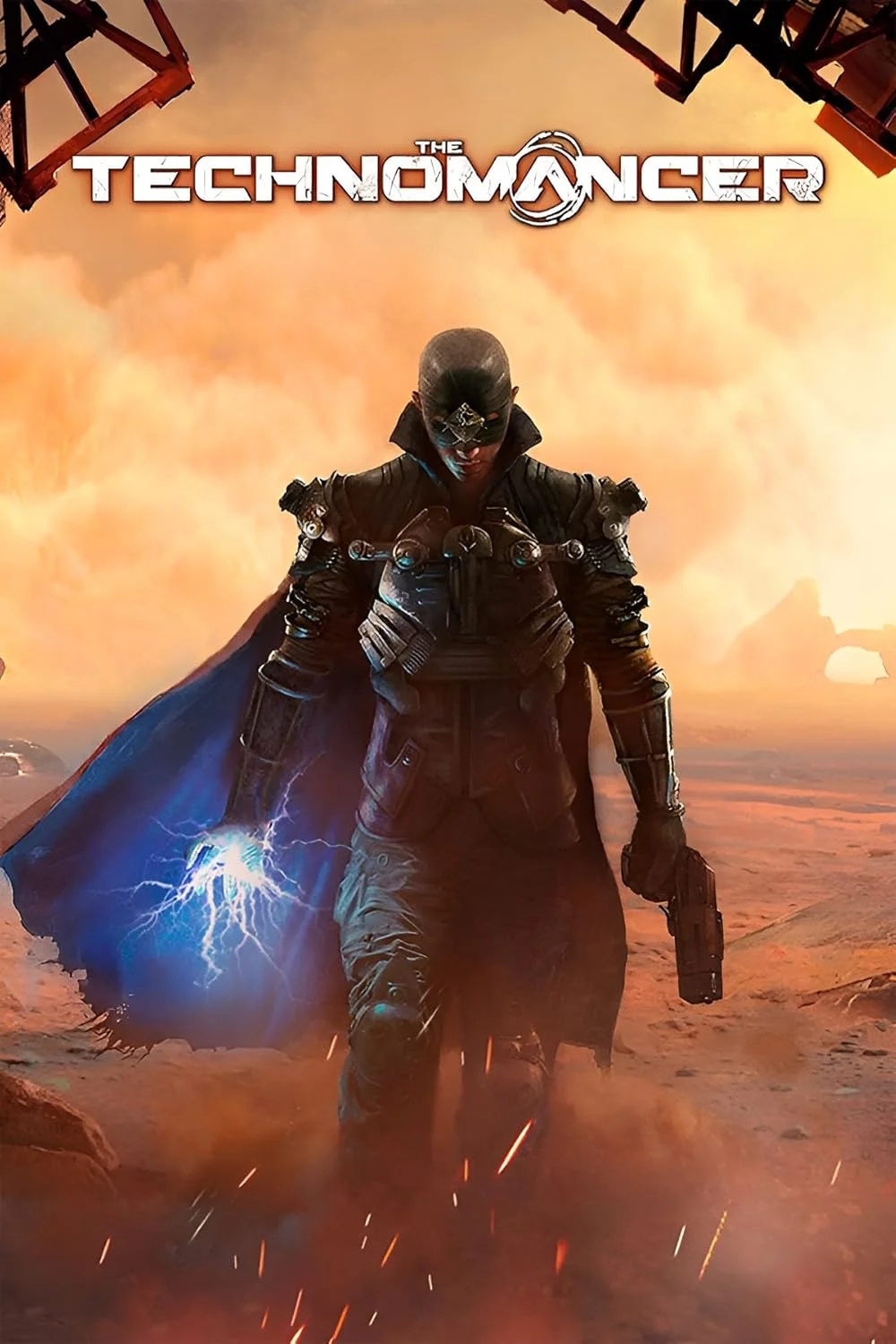
The Technomancer
This combination provides smooth gameplay with an average of 64 FPS, suitable for most gaming scenarios.
Average FPS: resolution vs quality settings
| Ultra | High | Medium | Low | |
|---|---|---|---|---|
| 4K Ultra HD | 25 | 32 | 39 | 48 |
| 1440p QHD | 45 | 55 | 66 | 82 |
| 1080p Full HD | 67 | 83 | 100 | 128 |
Cell color: green is 120+ FPS, teal is 60+, amber is 30+, red is below 30.
The Technomancer with Intel Core i7-14700K + NVIDIA GeForce RTX 2060, In-Depth Analysis
The Technomancer presents a demanding workload for the NVIDIA GeForce RTX 2060, even when paired with the high-end Intel Core i7-14700K. The measured frame rates across resolutions and settings reveal a system where the GPU is the definitive performance ceiling, with the processor providing ample headroom. This analysis breaks down the scaling behavior, component roles, and overall ranking of this specific combination.
Resolution Scaling
The performance drop from 1080p to 4K is steep and consistent, indicating a classic GPU-bound scenario. At High settings, the average frame rate falls from 83.2 FPS at 1920x1080 to 55.4 FPS at 2560x1440, a reduction of approximately 33%. Moving to 3840x2160, the average further drops to 32.4 FPS, which is a 61% decline from the 1080p figure. This scaling pattern is a clear signature of the rendering pipeline being saturated by the graphics card's capabilities, not the CPU.
The impact of resolution is most pronounced at the highest visual fidelity. At Ultra settings, the average frame rate at 4K is just 24.7 FPS, making the game largely unplayable at that combination. The gap between Low and Ultra settings also widens significantly as resolution increases. At 1080p, the difference between Low (128.4 FPS) and Ultra (67 FPS) is 61.4 FPS. At 4K, that same difference narrows to just 23.3 FPS (48 FPS Low vs. 24.7 FPS Ultra). This compression of performance at higher resolutions suggests that the GPU is running out of raw throughput and memory bandwidth, making the additional workload from higher settings less impactful on the final frame rate.
The data strongly indicates that the limiting component at all resolutions is the GPU. The RTX 2060's 6 GB of VRAM and 192-bit memory bus are likely strained at 4K, as evidenced by the sub-40 FPS averages even on Medium settings (38.6 FPS). The CPU, with its high core count and boost clock, is not the bottleneck; it is waiting on the GPU to finish its work. For a smooth 60 FPS experience, users would need to stick to 1080p, where even High settings (83.2 FPS) are viable, or 1440p with reduced settings, as the Low preset at 1440p delivers 82.4 FPS.
CPU Role
The Intel Core i7-14700K is a formidable processor, and its specifications far exceed what The Technomancer requires. With 20 cores and 28 threads, it offers immense parallel processing capability. Its benchmark scores are equally impressive; for instance, it scores 44,534 points in Cinebench R23 multi-core and 6,287 points in single-core. This single-core strength is crucial for gaming, and the 14700K's performance is reflected in its 96th percentile ranking among all CPUs.
In this game, the CPU's role is to feed the GPU with data and process game logic. Given that the RTX 2060 is the bottleneck, the 14700K's power is largely held in reserve. The processor's high boost clock of 5.60 GHz ensures that even the most demanding single-threaded tasks in the game are handled with ease, but it cannot compensate for the GPU's limitations. The data shows that the CPU is not a limiting factor; the frame rates are dictated by the graphics card's rendering speed.
The processor's nearest rivals in overall benchmark scores include the Intel Core i7-14700KF, which scores nearly identically (70,104 vs. 70,074, a 0% delta), and the AMD Ryzen 9 9950X, which is 0.5% faster. This context shows that the 14700K is at the top of the performance heap. For a 2016 game like The Technomancer, this CPU provides an enormous performance buffer, but it is an unused one in this pairing. The measure of its capability is that it can easily maintain high frame rates in CPU-bound scenarios, but those scenarios do not arise here.
FAQ
Q: What is the average frame rate for this combo at 1080p with High settings?
A: The measured average frame rate is 83.2 FPS at 1920x1080 with High settings.
Q: Is the Intel Core i7-14700K or the RTX 2060 the main bottleneck in this game?
A: The benchmark data indicates the GPU is the limiting component. The frame rates drop significantly with resolution, a clear sign of GPU saturation, while the CPU's high core count and clock speeds are more than sufficient for the game's demands.
Q: Can this system run The Technomancer at 4K with playable frame rates?
A: At 4K, the average frame rates are low across all settings, ranging from 24.7 FPS on Ultra to 48 FPS on Low. These results suggest that a consistent 60 FPS experience is not achievable at this resolution.
Q: How does the performance at 1440p compare to 1080p?
A: At 1440p with High settings, the average frame rate is 55.4 FPS, which is a substantial drop from the 83.2 FPS seen at 1080p. This shows a significant performance cost for the higher resolution.
Q: What is the performance difference between Low and Ultra settings at 1080p?
A: At 1080p, the game runs at an average of 128.4 FPS on Low settings and 67 FPS on Ultra settings. This represents a 61.4 FPS difference, showing a large performance impact from the visual settings.
Q: How does this CPU compare to its nearest rival, the Intel Core i7-14700KF?
A: The Intel Core i7-14700K has an average benchmark score of 70,074, while the Intel Core i7-14700KF scores 70,104. The delta is 0%, meaning their overall performance is effectively identical.
How This Combo Ranks
In the extensive database of tested combinations for The Technomancer, this pairing of the Intel Core i7-14700K and the NVIDIA GeForce RTX 2060 ranks 1342nd out of 1656 combos. This places it in the bottom quintile of tested systems, which is a direct consequence of the GPU's age and performance class. While the CPU is a top-tier component, the overall system performance is dragged down by the graphics card.
This ranking is not a measure of the CPU's capability but rather a reflection of the final frame rates delivered by the RTX 2060. The GPU's average benchmark score of 16,074 places it in the 58th percentile of all GPUs, which is a modest mid-range position. When paired with a CPU in the 96th percentile, the system's overall performance is limited by the weaker component. The ranking highlights the importance of a balanced build; a high-end processor does not boost the gaming experience if the GPU cannot keep pace. For users looking to improve this combo's standing, upgrading the graphics card would be the only path, as the CPU provides no meaningful bottleneck to overcome.
GPU Role
The NVIDIA GeForce RTX 2060 is the decisive factor in this system's gaming performance. Its specifications, including 6 GB of GDDR6 memory on a 192-bit bus, provide a bandwidth of 336.0 GB/s. The card's boost clock of 1680 MHz and 1920 shading units allow for respectable performance at 1080p, but its memory capacity and bus width are insufficient for the demands of 4K gaming. This is evident in the measured frame rates, where the card struggles to maintain playable levels at high resolutions.
The GPU's benchmark results confirm its mid-range status. It scores 14,111 in Passmark's G3D test and 6,451 TFLOPS in FP32 performance. Its nearest rivals include the AMD Radeon RX 7600S, which scores 15,996 (a 0.5% delta), and the AMD Radeon Pro 5600M, which scores 16,351 (a -1.7% delta). This places the RTX 2060 in a competitive bracket with other mid-range offerings, but far from the performance needed for high-resolution gaming in a demanding title.
The 12 nm Turing architecture and 160 W TDP are also factors. The card is from a previous generation and has been marked as "End-of-life," meaning it is no longer in production. For The Technomancer, the data shows that the GPU's role is to provide a playable experience at 1080p, where it can achieve over 60 FPS on High settings. At 1440p, it requires a reduction in settings to maintain smoothness, and at 4K, it is simply out of its depth. The GPU's performance is the single most important factor in this combo's ranking, and its limitations are clearly exposed by this game's resolution scaling.
Hardware Specifications
Intel Core i7-14700K
NVIDIA GeForce RTX 2060
FPS Benchmarks by Resolution & Settings
Performance data for Intel Core i7-14700K + NVIDIA GeForce RTX 2060 in The Technomancer
| Resolution | Settings | Avg FPS |
|---|---|---|
| 3840x2160 | Low | 48.0 |
| 3840x2160 | Medium | 38.6 |
| 3840x2160 | High | 32.4 |
| 3840x2160 | Ultra | 24.7 |
| 2560x1440 | Low | 82.4 |
| 2560x1440 | Medium | 66.3 |
| 2560x1440 | High | 55.4 |
| 2560x1440 | Ultra | 45.1 |
| 1920x1080 | Low | 128.4 |
| 1920x1080 | Medium | 99.6 |
| 1920x1080 | High | 83.2 |
| 1920x1080 | Ultra | 67.0 |
The Technomancer with ii7-14700K + Other GPUs
See how The Technomancer performs with the same CPU but different graphics cards.
The Technomancer with RTX 2060 + Other CPUs
See how The Technomancer performs with the same GPU but different processors.
Other Games with ii7-14700K + RTX 2060
Explore FPS benchmarks for other games using this same hardware combination.