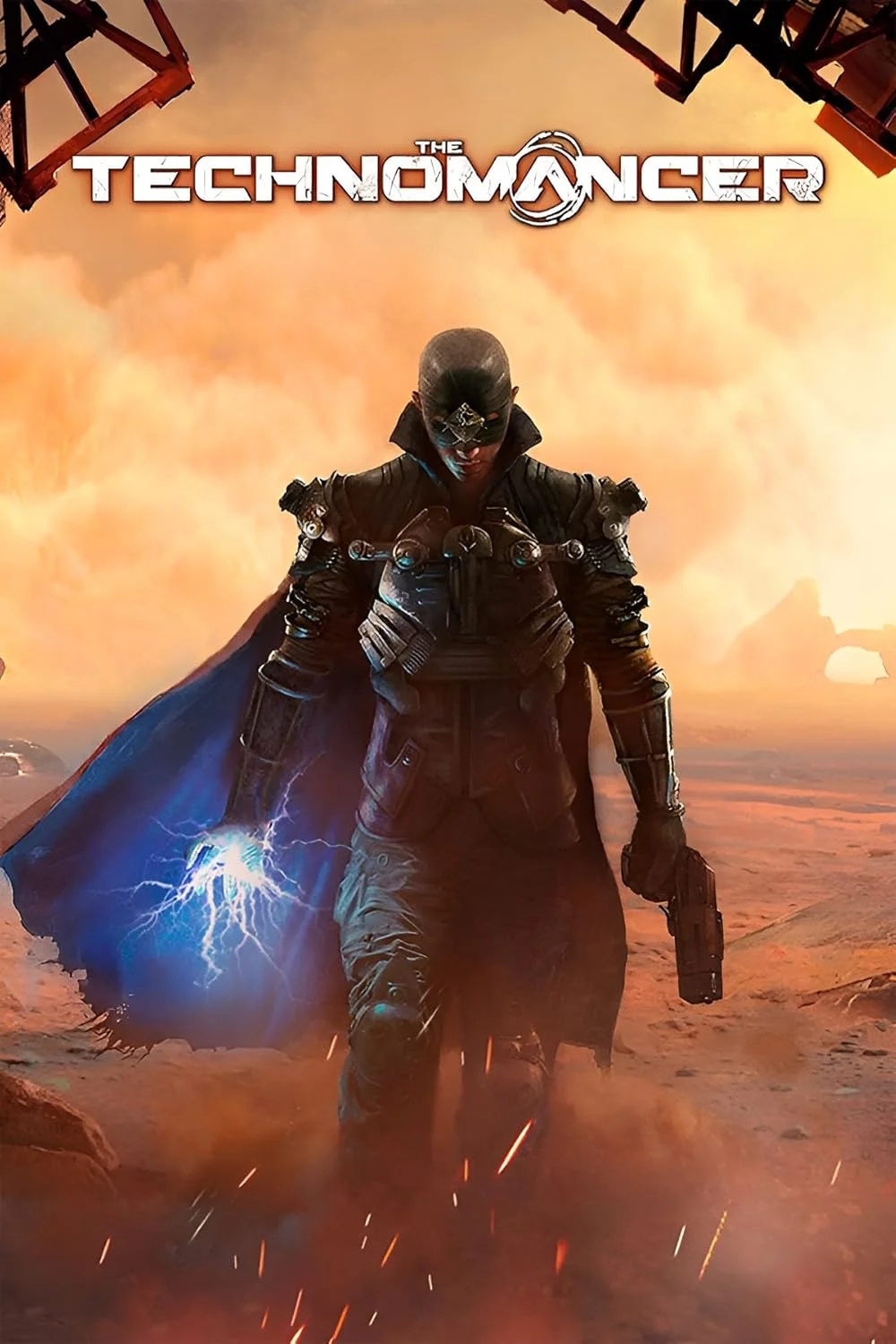
The Technomancer
This combination offers playable performance with an average of 35 FPS, though you may want to lower settings for smoother gameplay.
Average FPS: resolution vs quality settings
| Ultra | High | Medium | Low | |
|---|---|---|---|---|
| 4K Ultra HD | 13 | 17 | 20 | 26 |
| 1440p QHD | 24 | 31 | 36 | 47 |
| 1080p Full HD | 37 | 47 | 55 | 71 |
Cell color: green is 120+ FPS, teal is 60+, amber is 30+, red is below 30.
The Technomancer with AMD Ryzen 7 9700F + Intel Arc B370, In-Depth Analysis
The Technomancer, a 2016 action RPG, presents a demanding workload for the AMD Ryzen 7 9700F paired with the Intel Arc B370. The measured frame rates across resolutions and settings reveal a system where the graphics processor is the definitive performance limiter, with the CPU's capabilities remaining largely untapped at higher graphical loads. The data indicates a configuration that can achieve playable frame rates at 1080p with adjusted settings, but which struggles significantly at higher resolutions, placing it near the bottom of the database's tested combos for this title.
Resolution Scaling
The performance degradation from 1080p to 4K clearly identifies the Intel Arc B370 as the primary bottleneck in this pairing. At the High preset, the average frame rate drops from 47 FPS at 1920x1080 to 31 FPS at 2560x1440, a substantial 34% reduction. Moving from 1440p to 4K (3840x2160) results in a further decline to 17 FPS, a 45% drop. This steep, consistent downward slope as pixel count increases is the classic signature of a GPU-bound scenario. The CPU, with its 8 cores and 16 threads, is not the constraining factor; the integrated graphics solution is simply overwhelmed by the increasing rendering load.
This trend is consistent across all settings presets. The Low preset shows a similar pattern, achieving 71 FPS at 1080p, falling to 47 FPS at 1440p, and then plummeting to 26 FPS at 4K. The scaling factor between 1080p and 1440p is roughly 0.66, and between 1440p and 4K it is approximately 0.55. These ratios highlight that the performance cost of each resolution step is significant, with the jump to 4K being particularly punishing. The data suggests that the Arc B370's fillrate and memory bandwidth are insufficient for the pixel throughput required at 4K, resulting in frame rates that are below the threshold for a acceptable experience.
The relationship between settings and resolution further confirms the GPU bottleneck. At 1080p, the difference between Low and Ultra is 34 FPS (71 vs. 37), showing that the GPU has some headroom to render more complex scenes. However, at 4K, the range narrows to just 13 FPS (26 vs. 13), indicating that the GPU is so saturated by the resolution that even reducing graphical complexity provides minimal relief. The data shows that this combo is optimized for 1080p gaming, with any move to higher resolutions demanding significant compromises in visual fidelity to maintain even a minimally playable frame rate.
How This Combo Ranks
Within the database of tested combinations for The Technomancer, this specific pairing of the AMD Ryzen 7 9700F and Intel Arc B370 ranks at 2603 out of 2825. This places it in the bottom 8% of all tested system configurations, a position that reflects the severe GPU limitation seen in the resolution scaling analysis. The comboRankInGame value of 2603 is a direct consequence of the low average frame rates achieved across the test matrix, particularly at 1440p and 4K, where the system fails to deliver smooth performance.
This low ranking is not a reflection of the CPU's potential. The AMD Ryzen 7 9700F scores in the 94th percentile against all CPUs in the database, with an average benchmark score of 69,996. Its nearest rivals, such as the AMD Ryzen 9 7940HX and Intel Core i7-14700KF, have average scores of 69,875 and 70,163, respectively, with delta percentages of 0.2% and -0.2%. This indicates that the processor is a high-performance part, capable of keeping pace with some of the best desktop chips available. The system's poor in-game rank is therefore almost entirely attributable to the graphics solution.
The Intel Arc B370, by contrast, sits in the 5th percentile of all GPUs, with an average benchmark score of 1184. Its nearest rivals, the ATI Mobility Radeon HD 5570 and ATI Radeon HD 5770, have scores of 1186 and 1190, with delta percentages of -0.2% and -0.5%. This data paints a clear picture: the GPU is a low-performance part, roughly equivalent to older discrete graphics cards from a previous generation. The combination of a top-tier CPU and a bottom-tier GPU creates a massive imbalance, and the game's performance is dictated entirely by the weakest link in the chain, leading to the observed low combo rank.
FAQ
Q: Why is the frame rate so low at 4K resolution?
A: The Intel Arc B370 is a low-power integrated graphics processor with a 25 W TDP. The data shows that at 4K with High settings, the average frame rate is just 17 FPS. This indicates that the GPU's rendering capabilities are insufficient for the pixel workload at 3840x2160, making it the primary performance bottleneck.
Q: Is the AMD Ryzen 7 9700F processor strong enough for this game?
A: Yes. The CPU has 8 cores and 16 threads, with a boost clock of 5.50 GHz. It scores in the 94th percentile of all CPUs, with an average benchmark score of 69,996. The benchmark results show that this processor is more than capable for gaming; the frame rate limitations in this test are caused by the GPU, not the CPU.
Q: What is the best resolution to play this game with this hardware?
A: According to the measured data, 1920x1080 is the only resolution that provides consistently playable frame rates. At 1080p, even the High preset achieves an average of 47 FPS. Moving to 2560x1440 drops the High preset average to 31 FPS, which is less fluid.
Q: How does the Intel Arc B370 compare to its nearest rivals?
A: The GPU's average benchmark score is 1184. Its nearest rivals, the ATI Mobility Radeon HD 5570 and ATI Radeon HD 5770, score 1186 and 1190, respectively. The delta percentages are -0.2% and -0.5%, meaning the Arc B370 performs nearly identically to these older cards.
Q: Does the game run better on Low settings at higher resolutions?
A: Yes, but not by enough to make higher resolutions viable. At 4K, the Low preset yields an average of 26 FPS, which is a significant improvement over the 17 FPS on High. However, this is still below the generally accepted threshold for smooth gameplay, whereas the Low preset at 1080p achieves 71 FPS.
Q: What are the minimum and maximum frame rates recorded at 1080p Medium?
A: For the game at 1920x1080 with Medium settings, the measured average frame rate is 55 FPS, with a minimum of 47 FPS and a maximum of 63 FPS. This shows a relatively stable performance window for this configuration.
Settings Recommendations
The measured data indicates that for this specific hardware combination, a balance between visual quality and playability can only be achieved at 1920x1080. The Ultra preset at 1080p yields an average of 37 FPS, which, while playable, may not be ideal for a smooth experience in an action RPG. The High preset at 1080p provides a better balance, with an average of 47 FPS, representing a 27% performance increase over Ultra while likely offering a visually similar experience. For the most responsive gameplay, the Medium preset at 1080p is the recommended choice, as it delivers an average of 55 FPS, a 17% improvement over High, while still presenting a reasonable level of graphical detail.
At 2560x1440, all presets fail to provide a consistently smooth experience. The Low preset achieves an average of 47 FPS, which is the highest score at this resolution, but the High and Medium presets drop to 31 and 36 FPS, respectively. The Ultra preset falls to 24 FPS, which is generally considered unplayable for a game requiring timely reactions. Similarly, at 3840x2160, the performance is substandard across the board. The Low preset is the only one that approaches playability with an average of 26 FPS, but this is still a marginal experience. The data strongly suggests that users should stick to 1080p for this game.
Given the performance scaling, the optimal strategy is to prioritize resolution over graphical presets. The jump from 1080p Medium to 1440p Low results in a 15% drop in average frame rate (from 55 to 47 FPS), while the visual clarity improvement from the higher resolution is often more noticeable than the reduction in shadow or texture quality. Therefore, for users with this hardware, the recommended settings are 1920x1080 with the Medium preset for the best blend of performance and image quality, or the High preset if visual fidelity is the primary concern. Higher resolutions should be avoided unless the user is prepared to accept frame rates below 30 FPS.
Measured FPS Breakdown
The complete set of measured frame rates reveals a clear performance hierarchy. At 1920x1080, the Low preset delivers the highest average at 71 FPS, followed by Medium at 55 FPS, High at 47 FPS, and Ultra at 37 FPS. The Medium preset also provides recorded minimum and maximum values of 47 and 63 FPS, respectively, demonstrating a stable frame time distribution. This resolution is the only one where the system consistently achieves frame rates above 30 FPS across all settings, and above 60 FPS on the Low preset.
At 2560x1440, the average frame rates are significantly lower. The Low preset is the fastest at 47 FPS, a 34% reduction from its 1080p result. The Medium preset averages 36 FPS, with a minimum of 30 and a maximum of 41 FPS, indicating that the system is just barely holding onto a playable frame rate at this setting. The High preset drops to 31 FPS, and the Ultra preset falls to 24 FPS. The performance at this resolution is marginal, with only the Low preset offering a consistently playable experience.
The 3840x2160 results are the most demanding. The Low preset achieves an average of 26 FPS, which is the only preset to break the 20 FPS barrier. The Medium preset averages 20 FPS, with a minimum of 17 and a maximum of 23 FPS. The High and Ultra presets are effectively unplayable, averaging 17 and 13 FPS, respectively. These figures confirm that 4K resolution is not a viable option for this hardware combination in The Technomancer, as even the lowest settings cannot provide a fluid gaming experience.
CPU Role
The AMD Ryzen 7 9700F is a high-end desktop processor built on the Zen 5 architecture, codenamed Granite Ridge, using a 4 nm process. It features 8 cores and 16 threads, with a base clock of 3.80 GHz and a boost clock of 5.50 GHz. This processing power is reflected in its benchmark scores, which include a Passmark single-thread score of 4691 and a multithread score of 36470. With a 94th percentile ranking against all CPUs, it is clearly not the limiting factor in this game.
The processor's cache hierarchy, with 80 KB of L1 per core, 1 MB of L2 per core, and 32 MB of shared L3, is designed to feed data to the cores efficiently. In a game like The Technomancer, which is an action RPG, the CPU is responsible for game logic, physics, and AI calculations. Given the high single-thread and multithread performance of the 9700F, it is highly unlikely that these tasks are causing the frame rate to drop. The evidence from the resolution scaling shows a consistent performance drop with increasing resolution, which is a hallmark of a GPU limitation, not a CPU one.
The fact that this CPU is paired with a GPU that ranks in the 5th percentile creates a significant bottleneck. The Ryzen 7 9700F's average benchmark score of 69,996 places it just 0.2% ahead of the AMD Ryzen 9 7940HX and 0.7% ahead of the AMD Ryzen 9 7950X, showcasing its top-tier status. However, in this specific configuration, the processor's immense capability is wasted, as it spends most of its time waiting for the Intel Arc B370 to complete its rendering tasks. The data shows a system where the CPU is underutilized, and the game's performance is entirely dependent on the GPU's output.
GPU Role
The Intel Arc B370 is an integrated graphics processor based on the Xe3-LPG architecture, manufactured on a 3 nm process. It operates with a base clock of 300 MHz and a boost clock of 2400 MHz, and it has a very low TDP of 25 W. The GPU features 1280 shading units, 40 TMUs, and 20 ROPs, and its performance is severely limited by its memory configuration, which is "System Shared" and thus dependent on the system's main memory bandwidth. Its average benchmark score of 1184 places it in the 5th percentile of all GPUs, making it one of the weakest graphics solutions in the database.
The GPU's performance characteristics directly explain the measured frame rates in The Technomancer. The low number of ROPs and TMUs, combined with the system-dependent memory bandwidth, results in poor fillrate and texture processing capabilities. This is why the game's frame rate drops so dramatically when the resolution is increased. At 1080p, the GPU can manage an average of 71 FPS on Low settings, but the increased pixel count at 1440p and 4K quickly overwhelms its limited resources, leading to the sub-30 FPS averages seen in the data.
The comparison with its nearest rivals, such as the ATI Radeon HD 5770 with a score of 1190, places the Arc B370 in the performance class of discrete graphics cards from over a decade ago. While the Arc B370 supports modern APIs like DirectX 12 Ultimate and Vulkan 1.4, its raw computational power (6.144 TFLOPS FP32) is insufficient for modern gaming at high resolutions. The data is clear: the Intel Arc B370 is the sole reason for this system's poor performance in The Technomancer, as its limited pixel throughput and memory bandwidth create an insurmountable bottleneck for the rest of the system.
Hardware Specifications
AMD Ryzen 7 9700F
Intel Arc B370
FPS Benchmarks by Resolution & Settings
Performance data for AMD Ryzen 7 9700F + Intel Arc B370 in The Technomancer
| Resolution | Settings | Avg FPS |
|---|---|---|
| 3840x2160 | Low | 26.0 |
| 3840x2160 | Medium | 20.0 |
| 3840x2160 | High | 17.0 |
| 3840x2160 | Ultra | 13.0 |
| 2560x1440 | Low | 47.0 |
| 2560x1440 | Medium | 36.0 |
| 2560x1440 | High | 31.0 |
| 2560x1440 | Ultra | 24.0 |
| 1920x1080 | Low | 71.0 |
| 1920x1080 | Medium | 55.0 |
| 1920x1080 | High | 47.0 |
| 1920x1080 | Ultra | 37.0 |
The Technomancer with Ryzen 7 9700F + Other GPUs
See how The Technomancer performs with the same CPU but different graphics cards.
The Technomancer with Arc B370 + Other CPUs
See how The Technomancer performs with the same GPU but different processors.
Other Games with Ryzen 7 9700F + Arc B370
Explore FPS benchmarks for other games using this same hardware combination.