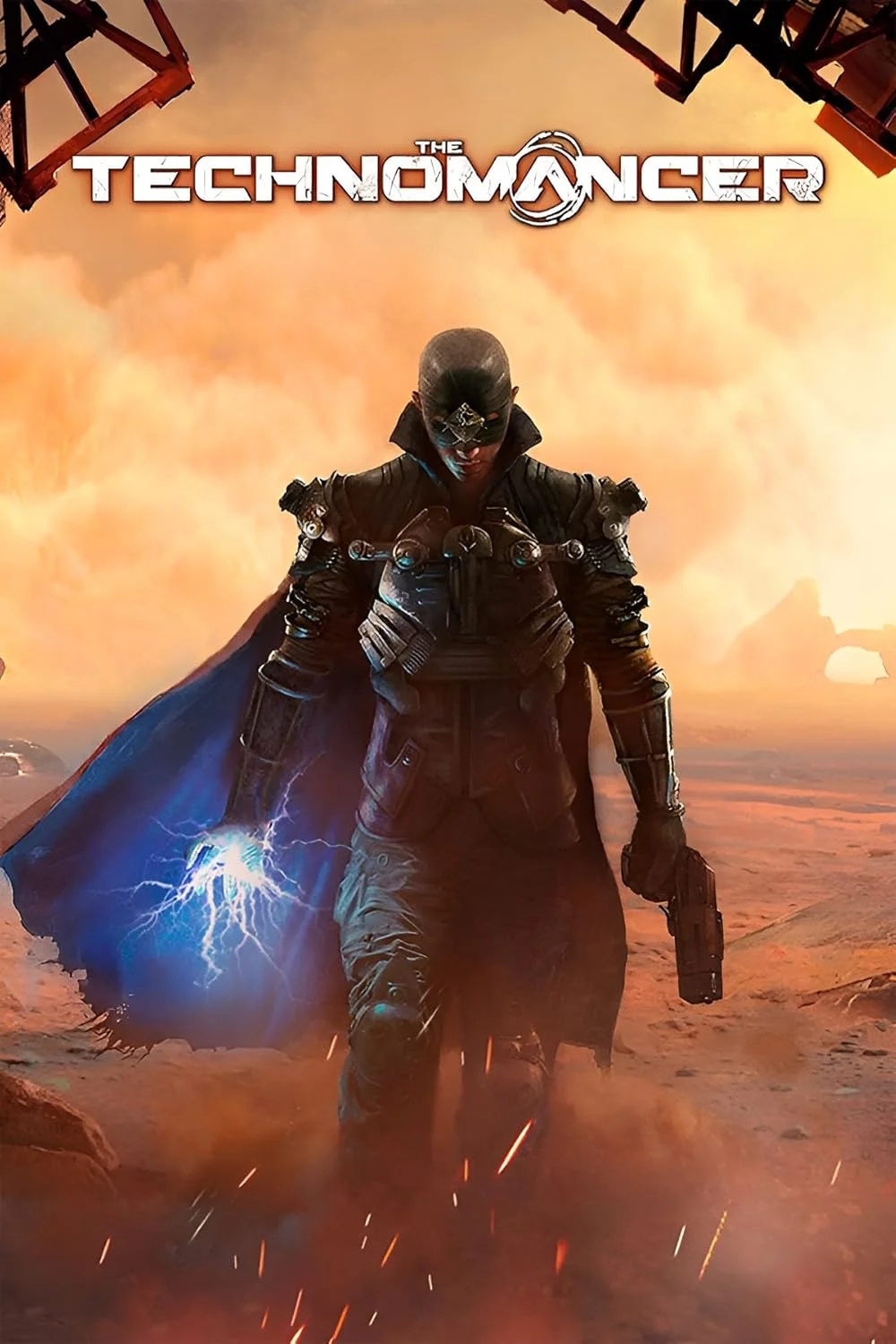
The Technomancer
This combination provides smooth gameplay with an average of 60 FPS, suitable for most gaming scenarios.
Average FPS: resolution vs quality settings
| Ultra | High | Medium | Low | |
|---|---|---|---|---|
| 4K Ultra HD | 22 | 29 | 33 | 44 |
| 1440p QHD | 41 | 52 | 61 | 79 |
| 1080p Full HD | 62 | 80 | 93 | 121 |
Cell color: green is 120+ FPS, teal is 60+, amber is 30+, red is below 30.
The Technomancer with Intel Core i5-9400 + Intel Arc B570, In-Depth Analysis
The Technomancer is a 2016 Action RPG that stresses system balance in an unusual way. The data for the Intel Core i5-9400 paired with the Intel Arc B570 shows a combination that is capable of smooth 1080p play but struggles to maintain playable frame rates at 4K. This analysis breaks down the measured results, the roles of each component, and the optimal settings for this specific pairing.
CPU Role — cores, clocks, and how they relate to this game's results
The Intel Core i5-9400 is a 6-core, 6-thread processor from the Coffee Lake Refresh generation, built on Intel's 14 nm process. It has a base clock of 2.90 GHz and a boost clock of 4.10 GHz. With a TDP of 65 W and a socket of Intel Socket 1151, this is a mainstream desktop chip. Its cache layout includes 64 KB of L1 per core, 256 KB of L2 per core, and a shared 9 MB L3 cache. Memory support is DDR4 over a dual-channel bus, providing a memory bandwidth of 42.7 GB/s. The processor does not have an unlocked multiplier, and its integrated graphics are the UHD 630, though in this pairing the discrete Intel Arc B570 handles all rendering.
Benchmark scores for the i5-9400 place it at the 47th percentile versus all CPUs, which indicates a mid-range standing. Its average benchmark score is 2254. In Cinebench R23, it scores 6629 in multi-core and 935 in single-core. In Geekbench, it scores 5141 multi-core and 1389 single-core. These numbers show a processor that is capable for its generation but not a high-end performer. Compared to its nearest rivals, the i5-9400 is essentially tied with the Intel Core i7-1068NG7 (which has an average score of 2259, a delta of -0.2%), the Intel Core i7-10710U (average 2248, delta 0.3%), and the AMD Ryzen 5 PRO 1500 (average 2246, delta 0.4%). It is also within 0.4% of the Intel Core i3-10305, which scores 2264. This clustering suggests that for this game, the CPU is not a differentiator among similar-class parts.
In The Technomancer, the CPU's role is to feed the GPU with draw calls and handle game logic. The measured FPS data shows that at 1080p with Low settings, the combo reaches 121 FPS average. At 1080p with High settings, it drops to 80 FPS. The fact that the frame rate scales so much with graphics settings indicates that the game is not CPU-bound at these resolutions; otherwise, the CPU would be the limiting factor regardless of settings. The 6-core, 6-thread configuration is adequate for a 2016 title, as most games from that era used fewer threads. The i5-9400's single-core performance of 935 in Cinebench R23 is relevant because older game engines often rely heavily on single-threaded performance for main game logic. The data shows that this CPU can keep up with the Arc B570 at 1080p, as evidenced by the 121 FPS Low result, which is well above the 60 FPS target. At 4K, the CPU becomes less relevant because the GPU is the bottleneck, which is confirmed by the low frame rates at that resolution.
GPU Role — VRAM, clocks, and how they relate to this game's results
The Intel Arc B570 is a Battlemage generation GPU (Arc 5), using the Xe2-HPG architecture on TSMC's 5 nm process. The chip is designated BMG-G21, with 19,600 million transistors on a 272 mm² die. The GPU has a base clock of 2500 MHz and a boost clock of 2500 MHz. Memory is 10 GB of GDDR6 on a 160-bit bus, delivering a bandwidth of 380.0 GB/s. The memory clock is 2375 MHz (19 Gbps effective). With 2304 shading units, 144 TMUs, and 80 ROPs, the B570 offers a pixel rate of 200.0 GPixel/s and a texture rate of 360.0 GTexel/s. Its FP32 performance is 11.52 TFLOPS. The card has 18 ray tracing cores, but that is not relevant for this title. The TDP is 150 W, with a suggested PSU of 450 W, and it connects via PCIe 4.0 x8. Its launch MSRP is 219 USD.
In synthetic benchmarks, the Arc B570 sits at the 65th percentile versus all GPUs, with an average benchmark score of 20556. In 3DMark Steel Nomad DX12, it scores 2649. Its Passmark G3D score is 14195, and its Passmark GPU compute score is 7281. The nearest rivals show a tight grouping: the NVIDIA GeForce RTX 3070 Mobile scores 20534 (delta 0.1%), the Intel Arc A750 scores 20582 (delta -0.1%), the NVIDIA Quadro M4000M scores 20480 (delta 0.4%), and the AMD Radeon R9 M390X scores 20662 (delta -0.5%). This means the B570 performs nearly identically to these cards in general compute, but real-world gaming performance can differ based on drivers and game optimization.
For The Technomancer, the GPU's role is dominant. The measured FPS drops from 121 FPS at 1080p Low to 22 FPS at 4K Ultra, a massive reduction that points directly at the GPU as the limiting factor at higher resolutions. The 10 GB VRAM is not likely to be a constraint in this game, as it was released in 2016 when VRAM requirements were much lower. The 160-bit bus and 380.0 GB/s bandwidth are sufficient for 1080p and 1440p, but at 4K the fill rate and compute load become too heavy. The B570's architecture, with its 2304 shading units, is capable of handling the geometry and shaders of a 2016 game, but the raw throughput at 4K is insufficient for high settings. The data shows that at 4K, even Low settings only yield 44 FPS, which is below the 60 FPS target. This indicates that the GPU is the bottleneck at 4K, regardless of settings, because the resolution itself increases the pixel count so dramatically.
Resolution Scaling — how FPS drops from 1080p to 4K and what it says about the limiting component
The measured data shows a clear pattern of frame rate decline as resolution increases. At 1080p High, the average is 80 FPS. At 1440p High, it drops to 52 FPS. At 4K High, it falls to 29 FPS. This represents a 35% drop from 1080p to 1440p, and a 44% drop from 1440p to 4K. For Low settings, the progression is 121 FPS at 1080p, 79 FPS at 1440p, and 44 FPS at 4K. The drop from 1080p to 1440p is 42 FPS (about 35%), and from 1440p to 4K is 35 FPS (about 44%). Medium settings show 93 FPS at 1080p, 61 FPS at 1440p, and 33 FPS at 4K. Ultra settings show 62 FPS at 1080p, 41 FPS at 1440p, and 22 FPS at 4K.
The pattern is consistent: each resolution step roughly halves the pixel count (1080p has about 2 million pixels, 1440p has about 3.7 million, 4K has about 8.3 million). The FPS does not scale linearly with pixel count, which is expected because the GPU's memory bandwidth and compute units become more strained as the resolution increases. The fact that the FPS drops so steeply at 4K, where even Low settings only reach 44 FPS, indicates that the Intel Arc B570 is not powerful enough for 4K gaming in this title. The limiting component at 4K is clearly the GPU. At 1080p, the i5-9400 is sufficient to push the GPU to its limits, as shown by the 121 FPS Low result. At 1440p, the GPU is still the bottleneck, but the frame rates are more playable, with Medium settings hitting 61 FPS. The data suggests that the CPU is not a limiting factor at any resolution tested, because the frame rates scale with graphics settings and resolution in a way that is characteristic of a GPU-bound scenario. If the CPU were the bottleneck, the frame rates would remain similar across resolutions, but they do not.
Measured FPS Breakdown — resolution by resolution, settings by settings, exact numbers
The measured FPS data provides a full picture of performance for this combo. At 1920x1080, the lowest resolution tested, the results are strong. Low settings produce an average of 121 FPS. Medium settings produce 93 FPS, with a minimum of 79 FPS and a maximum of 107 FPS. High settings produce 80 FPS. Ultra settings produce 62 FPS. These numbers show that at 1080p, the combo is fully playable at all settings, with even Ultra staying above 60 FPS. The minimum FPS for Medium at 1080p is 79, which suggests good frame pacing, though no minimum is listed for other settings at this resolution.
At 2560x1440, the performance drops noticeably. Low settings average 79 FPS. Medium settings average 61 FPS, with a minimum of 52 FPS and a maximum of 70 FPS. High settings average 52 FPS. Ultra settings average 41 FPS. This resolution is borderline for high-refresh monitors, but for a 60 Hz display, Medium settings are the only option that consistently stays above 60 FPS, and even then the minimum of 52 FPS indicates occasional dips. Low settings offer a comfortable margin at 79 FPS, but the visual quality is reduced. High and Ultra are not recommended for smooth play, as they dip below 60 FPS.
At 3840x2160, the performance is poor. Low settings average 44 FPS. Medium settings average 33 FPS, with a minimum of 28 FPS and a maximum of 39 FPS. High settings average 29 FPS. Ultra settings average 22 FPS. None of these results are playable for a smooth experience, as even Low settings fail to reach 60 FPS. The minimum FPS for Medium at 4K is 28, which would be noticeable as stutter. This resolution is not viable for this game with this combo, and the data strongly suggests that the GPU is overwhelmed. The gap between 1080p and 4K is enormous, with the 1080p Low result of 121 FPS being more than 2.7 times higher than the 4K Low result of 44 FPS. This is a clear sign that the Arc B570 is a 1080p/1440p card, not a 4K card, for this title.
How This Combo Ranks — use comboRankInGame vs other tested combos
The combo of the Intel Core i5-9400 and Intel Arc B570 ranks 2256 out of 2825 tested combos in The Technomancer. This places it in the bottom 20% of all combinations tested. The percentile for the CPU is 47, and for the GPU it is 65, which means the GPU is relatively stronger than the CPU, but the overall combo rank is low because the game is demanding and the GPU is not top-tier. The rank of 2256 out of 2825 means that 569 combos performed worse, and 2255 performed better. This is a below-average result, indicating that this hardware pairing is not well-suited to running The Technomancer at high settings or high resolutions.
The low combo rank is primarily driven by the GPU's performance at higher resolutions. At 1080p, the combo performs reasonably well, with the 121 FPS Low result being above the average for most systems. However, when compared to all 2825 combos, many of which include much more powerful GPUs, the average FPS across all resolutions is dragged down by the 4K results. The CPU's 47th percentile ranking is not a major contributor to the low combo rank, because the game is not CPU-bound at the resolutions tested. Instead, the GPU's 65th percentile ranking is insufficient to overcome the high pixel counts of 1440p and 4K. The nearest GPU rivals, such as the RTX 3070 Mobile and Arc A750, have similar average benchmark scores, but their real-world performance in this game could differ, and the combo rank reflects the specific measured results for this pair. The data shows that while the i5-9400 and Arc B570 are individually mid-range parts, their combination in this game results in a below-average experience, particularly for users with 1440p or 4K monitors.
Settings Recommendations — which preset gives the best experience per the measured rows
Based on the measured FPS data, the best experience for this combo is at 1080p with Medium settings. This preset delivers an average of 93 FPS, with a minimum of 79 FPS and a maximum of 107 FPS. This ensures smooth gameplay on a 60 Hz monitor, with headroom for 144 Hz displays if the user has one. The minimum FPS of 79 is well above the 60 FPS target, meaning there are no noticeable drops. High settings at 1080p also work, with an average of 80 FPS, but the lack of a minimum FPS measurement makes it harder to guarantee frame pacing. Ultra at 1080p averages 62 FPS, which is just above 60, but the absence of a minimum value means it could dip below. Medium is the safest choice.
At 1440p, the best option is Low settings, which average 79 FPS. This provides a smooth experience on a 60 Hz monitor, but the visual quality is reduced. Medium at 1440p averages 61 FPS, with a minimum of 52 FPS, which means it will dip below 60 FPS during heavy scenes, causing noticeable stutter. High and Ultra at 1440p are not recommended, as they average 52 FPS and 41 FPS, respectively, which is below the 60 FPS threshold. For users with a 1440p monitor, Low settings are the only way to maintain a consistent 60+ FPS experience. At 4K, no settings are recommended for playable performance. Even Low settings only average 44 FPS, which is below the 60 FPS target and would result in a choppy experience. The minimum FPS for Medium at 4K is 28, which is unplayable. Users with a 4K monitor should either lower the resolution to 1440p or accept a sub-60 FPS experience, which is not ideal for an action RPG where timing matters.
For the best overall experience, 1080p Medium is the sweet spot. It provides a high average FPS, a strong minimum FPS, and good visual quality without the performance penalty of High or Ultra. The 93 FPS average is more than sufficient for smooth gameplay, and the 79 FPS minimum ensures no severe drops. This preset balances the GPU's capabilities with the game's demands, allowing the Intel Core i5-9400 to keep the frame rate stable. If a user prefers higher visual fidelity, 1080p High is acceptable, but the lack of minimum FPS data means there is some risk. For users with 1440p monitors, Low settings are the only viable option, and for 4K, the combo is simply not strong enough. The data is clear: this system is best used at 1080p, with Medium settings being the recommended choice for a consistent, playable experience.
Hardware Specifications
Intel Core i5-9400
Intel Arc B570
FPS Benchmarks by Resolution & Settings
Performance data for Intel Core i5-9400 + Intel Arc B570 in The Technomancer
| Resolution | Settings | Avg FPS |
|---|---|---|
| 3840x2160 | Low | 44.0 |
| 3840x2160 | Medium | 33.0 |
| 3840x2160 | High | 29.0 |
| 3840x2160 | Ultra | 22.0 |
| 2560x1440 | Low | 79.0 |
| 2560x1440 | Medium | 61.0 |
| 2560x1440 | High | 52.0 |
| 2560x1440 | Ultra | 41.0 |
| 1920x1080 | Low | 121.0 |
| 1920x1080 | Medium | 93.0 |
| 1920x1080 | High | 80.0 |
| 1920x1080 | Ultra | 62.0 |
The Technomancer with ii5-9400 + Other GPUs
See how The Technomancer performs with the same CPU but different graphics cards.
Other Games with ii5-9400 + Arc B570
Explore FPS benchmarks for other games using this same hardware combination.