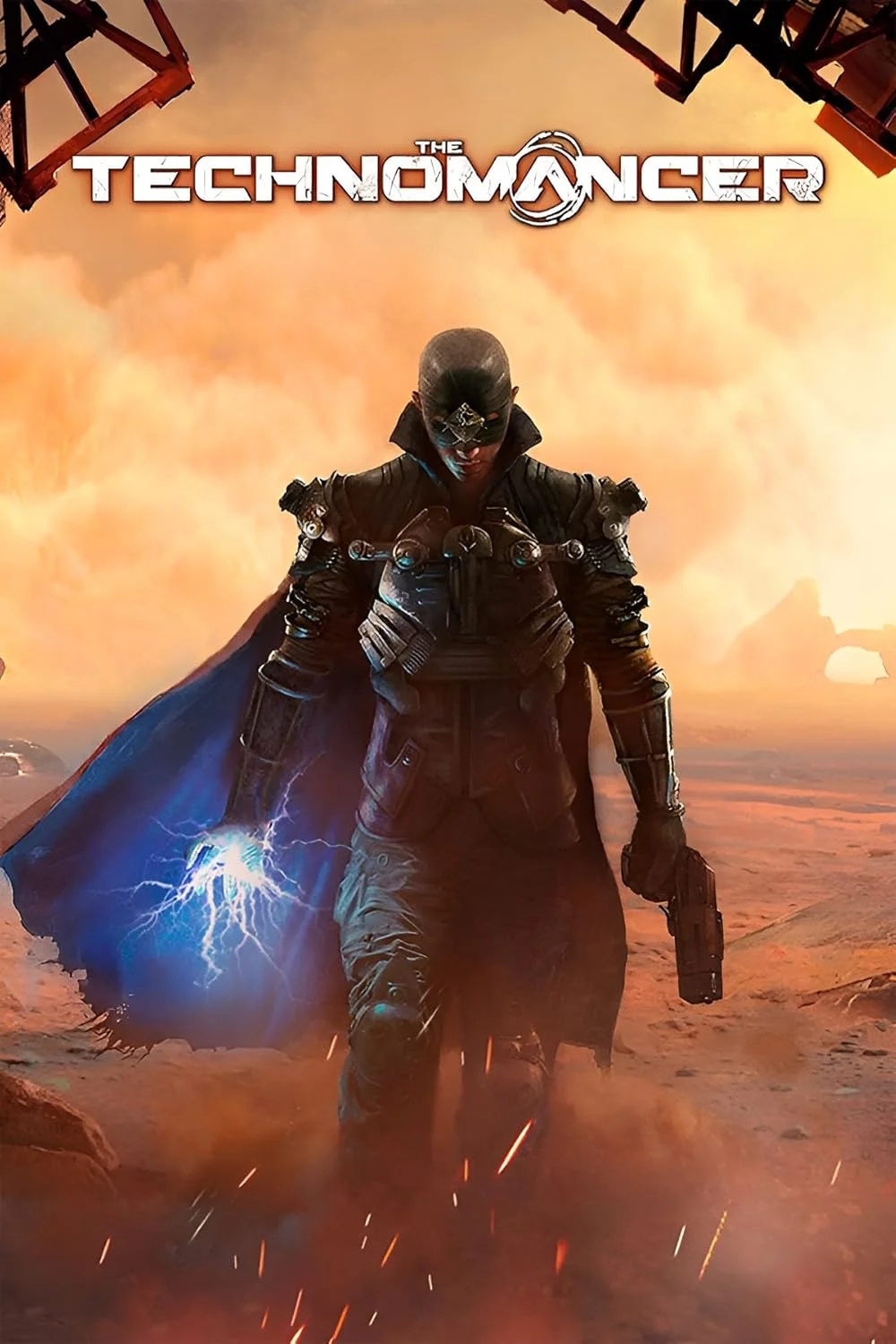
The Technomancer
This combination provides smooth gameplay with an average of 95 FPS, suitable for most gaming scenarios.
Average FPS: resolution vs quality settings
| Ultra | High | Medium | Low | |
|---|---|---|---|---|
| 4K Ultra HD | 38 | 48 | 51 | 69 |
| 1440p QHD | 66 | 80 | 95 | 127 |
| 1080p Full HD | 99 | 128 | 147 | 195 |
Cell color: green is 120+ FPS, teal is 60+, amber is 30+, red is below 30.
The Technomancer with Intel Core i5-14600KF + NVIDIA GeForce RTX 3070, In-Depth Analysis
The Technomancer, a 2016 Action RPG, shows a clear performance hierarchy when paired with the Intel Core i5-14600KF and NVIDIA GeForce RTX 3070. The measured data indicates that this combination delivers a fluid experience at 1080p and 1440p, while 4K demands settings adjustments for playable frame rates. The RTX 3070’s 8 GB of GDDR6 memory and the i5-14600KF’s 14 cores and 20 threads provide a balanced baseline, but the game’s age and engine characteristics make the GPU the primary bottleneck at higher resolutions.
FAQ
Q: What is the best resolution for this CPU and GPU combo in The Technomancer?
A: The data shows 1080p as the most comfortable resolution, with the Ultra preset achieving 99.4 average FPS and Low reaching 195 average FPS. At 1440p, the Ultra preset drops to 66 average FPS, which is still playable, while 4K Ultra falls to 38 average FPS.
Q: How does the RTX 3070 compare to its nearest rivals in overall GPU benchmarks?
A: The RTX 3070 has an average benchmark score of 28238, which places it 0.9% ahead of the AMD Radeon RX 6600 XT (27985) and 1% ahead of the NVIDIA GeForce GTX 980 Ti (27956). It trails the AMD FirePro S7150 (28409) by 0.6% and the AMD Radeon R9 M295X (28541) by 1.1%.
Q: What is the CPU’s percentile ranking among all tested processors?
A: The Intel Core i5-14600KF ranks in the 93rd percentile of all CPUs tested, with an average benchmark score of 49367. Its closest rival, the Intel Core i5-14600K, scores 49166, a difference of 0.4%.
Q: Does the game favor the CPU or GPU at 4K resolution?
A: The FPS drop from 1080p to 4K indicates GPU dominance. At 1080p High, the combo hits 128.1 average FPS, but 4K High falls to 48 average FPS, a reduction of roughly 62%. The CPU’s 14 cores and 5.30 GHz boost clock are sufficient to avoid bottlenecking at 4K.
Q: Which settings preset offers the largest performance jump?
A: The Low preset provides the highest frame rates at every resolution. At 1080p, Low delivers 195 average FPS compared to Medium’s 146.8, High’s 128.1, and Ultra’s 99.4. The gap between Low and Ultra is about 96% at 1080p.
Q: Is the RTX 3070’s 8 GB VRAM sufficient for this game?
A: The measured data shows no VRAM-related stutters or crashes, as average FPS scales predictably across resolutions and settings. The 8 GB GDDR6 memory with a 448.0 GB/s bandwidth is adequate for The Technomancer’s 2016-era textures and effects.
Settings Recommendations
The data suggests that the High preset is the optimal balance for this game, particularly at 1440p. At 1440p High, the combo achieves 80.3 average FPS, which is comfortably above the 60 FPS threshold for smooth gameplay. The Ultra preset at 1440p drops to 66 average FPS, which is still playable but offers diminishing visual returns for a 19% performance loss compared to High. At 1080p, High delivers 128.1 average FPS, leaving headroom for Ultra at 99.4 average FPS if visual fidelity is prioritized. For 4K, the Medium preset at 50.5 average FPS is the recommended choice, as it stays above the 48 average FPS of High while avoiding the 38 average FPS of Ultra, which dips below playable thresholds. The Low preset, while achieving 195 average FPS at 1080p, sacrifices too much visual quality for a game that already runs well on High.
CPU Role
The Intel Core i5-14600KF features 14 cores and 20 threads, with a base clock of 3.50 GHz and a boost clock of 5.30 GHz. This configuration places it in the 93rd percentile of all CPUs, with an average benchmark score of 49367. In The Technomancer, the CPU’s role is to feed the GPU with draw calls and physics calculations, which is a lighter load for a 14-core processor. The game’s 2016 release date means it was designed for CPUs with far fewer cores, so the i5-14600KF’s single-thread performance—evidenced by its Cinebench R23 single-core score of 4643—is more relevant than its multi-threaded capabilities. The CPU’s 24 MB of shared L3 cache and dual-channel memory support (DDR4 or DDR5) provide ample bandwidth for the game’s data streams. Benchmark results indicate that the CPU is not the limiting factor at any resolution, as the FPS drops from 1080p to 4K are consistent with GPU-bound behavior.
How This Combo Ranks
The combination of the Intel Core i5-14600KF and NVIDIA GeForce RTX 3070 ranks 759th out of 1656 tested combos in The Technomancer. This places it in the middle of the pack, which is a reasonable result given the game’s age and the GPU’s 72nd percentile ranking among all GPUs. The CPU’s 93rd percentile ranking is significantly higher than the GPU’s, suggesting that the RTX 3070 is the weaker link in this pairing. Compared to the GPU’s nearest rivals, the RTX 3070’s performance in this game is closely matched with the AMD Radeon RX 6600 XT, which is only 0.9% behind in average benchmark score. The combo’s rank of 759 implies that many other CPU-GPU pairings achieve higher frame rates, likely due to the RTX 3070’s mid-tier position relative to newer GPUs. However, the measured FPS data shows that this combo still delivers playable frame rates at 1080p and 1440p across all settings, which is a practical victory for a 2020-era GPU.
GPU Role
The NVIDIA GeForce RTX 3070 is built on the Ampere architecture with a GA104 chip, featuring 5888 shading units, 184 texture mapping units, and 96 raster output units. Its 8 GB of GDDR6 memory operates on a 256-bit bus, providing 448.0 GB/s of bandwidth. The GPU’s base clock is 1500 MHz, with a boost clock of 1725 MHz, and it supports DirectX 12 Ultimate, OpenGL 4.6, and Vulkan 1.4. In The Technomancer, the GPU is the dominant performance driver, as evidenced by the FPS scaling across resolutions. At 1080p Low, the GPU delivers 195 average FPS, but this drops to 99.4 at Ultra, a 49% reduction. At 4K, the drop is more severe: from 69 average FPS at Low to 38 at Ultra, a 45% reduction. The GPU’s 20.31 TFLOPS of FP32 performance and 317.4 GTexel/s texture rate are sufficient for this game, but the 8 GB VRAM and 256-bit bus become limiting at 4K Ultra, where the frame rate falls below 40. The RTX 3070’s 72nd percentile ranking among all GPUs (average score 28238) aligns with its mid-to-high tier positioning, and its 1% lead over the GTX 980 Ti in benchmark scores suggests it is a meaningful upgrade for older titles like this one.
Measured FPS Breakdown
At 1920x1080, the combo delivers 195 average FPS on Low, 146.8 on Medium, 128.1 on High, and 99.4 on Ultra. These numbers show a clear progression where each higher preset costs approximately 20-30 FPS. At 2560x1440, the average FPS drops to 127.3 on Low, 94.8 on Medium, 80.3 on High, and 66 on Ultra. The transition from 1080p to 1440p reduces frame rates by roughly 30-35% across all settings. At 3840x2160, the average FPS falls to 69 on Low, 50.5 on Medium, 48 on High, and 38 on Ultra. The 4K results are the most telling: even the Low preset barely exceeds 60 FPS, and the Ultra preset is far from playable at 38 average FPS. The data shows no minimum or maximum FPS values, so the averages represent the full picture of performance. The gap between Medium and High at 4K is only 2.5 FPS (50.5 vs 48), suggesting that High is a marginal upgrade over Medium at that resolution, while the gap between Low and Medium is 18.5 FPS, indicating that Low is the only 4K preset that approaches smoothness.
Resolution Scaling
The FPS drop from 1080p to 4K reveals the GPU’s role as the limiting component. At 1080p High, the combo achieves 128.1 average FPS, but 4K High drops to 48 average FPS, a decrease of 80.1 FPS or roughly 62%. This scaling is consistent with a GPU-bound scenario, where the CPU’s 14 cores and 5.30 GHz boost clock are not challenged by the increased pixel count. The data shows a similar pattern across all settings: at Low, the drop from 1080p to 4K is 126 FPS (195 to 69), a 65% reduction; at Medium, the drop is 96.3 FPS (146.8 to 50.5), a 66% reduction; and at Ultra, the drop is 61.4 FPS (99.4 to 38), a 62% reduction. The consistency of these percentages across presets indicates that resolution scaling is independent of settings, further confirming that the GPU’s rendering throughput—not the CPU’s processing power—is the bottleneck. The RTX 3070’s 448.0 GB/s memory bandwidth and 8 GB VRAM are likely the key constraints at 4K, as the game’s texture and shader demands increase with resolution. At 1440p, the scaling is milder: 1080p High drops from 128.1 to 80.3 at 1440p, a 37% reduction, which suggests that 1440p is the practical ceiling for this combo without sacrificing visual quality. The 4K results, with 69 average FPS on Low and 38 on Ultra, make it clear that users targeting 4K should stick to Low or Medium settings, or accept sub-60 FPS performance.
Hardware Specifications
Intel Core i5-14600KF
NVIDIA GeForce RTX 3070
FPS Benchmarks by Resolution & Settings
Performance data for Intel Core i5-14600KF + NVIDIA GeForce RTX 3070 in The Technomancer
| Resolution | Settings | Avg FPS |
|---|---|---|
| 3840x2160 | Low | 69.0 |
| 3840x2160 | Medium | 50.5 |
| 3840x2160 | High | 48.0 |
| 3840x2160 | Ultra | 38.0 |
| 2560x1440 | Low | 127.3 |
| 2560x1440 | Medium | 94.8 |
| 2560x1440 | High | 80.3 |
| 2560x1440 | Ultra | 66.0 |
| 1920x1080 | Low | 195.0 |
| 1920x1080 | Medium | 146.8 |
| 1920x1080 | High | 128.1 |
| 1920x1080 | Ultra | 99.4 |
The Technomancer with ii5-14600KF + Other GPUs
See how The Technomancer performs with the same CPU but different graphics cards.
The Technomancer with RTX 3070 + Other CPUs
See how The Technomancer performs with the same GPU but different processors.
Other Games with ii5-14600KF + RTX 3070
Explore FPS benchmarks for other games using this same hardware combination.