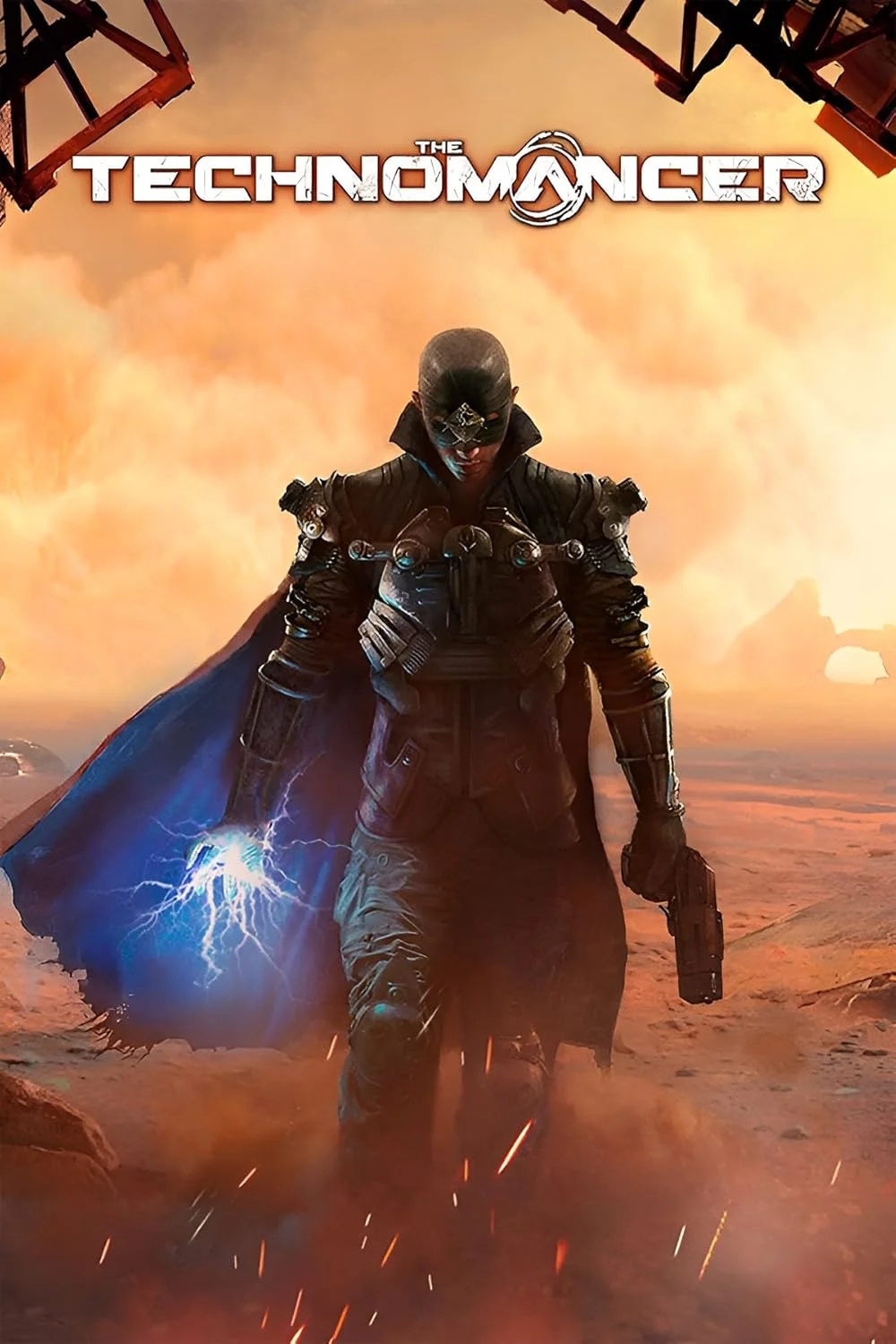
The Technomancer
This combination offers playable performance with an average of 39 FPS, though you may want to lower settings for smoother gameplay.
Average FPS: resolution vs quality settings
| Ultra | High | Medium | Low | |
|---|---|---|---|---|
| 4K Ultra HD | 15 | 19 | 22 | 28 |
| 1440p QHD | 26 | 34 | 40 | 52 |
| 1080p Full HD | 40 | 52 | 61 | 79 |
Cell color: green is 120+ FPS, teal is 60+, amber is 30+, red is below 30.
The Technomancer with Intel Core i5-12600KF + Intel Arc B390, In-Depth Analysis
The Intel Core i5-12600KF paired with the Intel Arc B390 produces a very constrained experience in The Technomancer, landing at rank 2500 out of 2825 tested combos. This places the combination in the bottom 12% of all tested hardware pairings, indicating that it will struggle to provide smooth gameplay at most settings. The data shows a system that is heavily limited by the graphics solution, with the CPU offering ample headroom that the GPU cannot utilize, particularly at higher resolutions and quality presets.
How This Combo Ranks
The combo rank of 2500 out of 2825 is a clear signal that this is a low-performance pairing for The Technomancer. This position is primarily driven by the Intel Arc B390, which sits at the 9th percentile among all GPUs. Benchmark results place the Arc B390's average score at 1482, which is only 1.3% above the NVIDIA GeForce GT 520MX, 1.5% above the NVIDIA GeForce 800M, 2.5% above the NVIDIA GeForce GT 625 OEM, and 2.7% above the NVIDIA GeForce GT 710. These nearest rivals are all entry-level or legacy parts, confirming the Arc B390's position as a very weak graphics processor in this context.
In contrast, the Intel Core i5-12600KF is a capable processor, performing at the 79th percentile among all CPUs. Its average benchmark score of 27799 is essentially neck-and-neck with its nearest rivals, trailing the AMD Ryzen 7 5800X3D by only 0.3% and the Intel Core i9-10900K by 0.3%, while leading the AMD Ryzen 5 8500GE by 0.3%. This massive disparity between the CPU's relative strength (79th percentile) and the GPU's weakness (9th percentile) creates a severely unbalanced system. The measured FPS data suggests that the Arc B390 is the definitive bottleneck, preventing the i5-12600KF from ever being a limiting factor in this game. The rank is not a reflection of the CPU's capability but rather a near-total indictment of the GPU's performance ceiling.
FAQ
*Q: Can this combo run The Technomancer at 1080p smoothly?*
A: The data indicates that only the Low preset at 1920x1080 achieves a playable average of 79 FPS. The Medium preset drops to 61 FPS, while the High preset produces 52 FPS, and the Ultra preset only manages 40 FPS. For a consistently smooth experience, 1080p Low is the only setting that provides a significant frame rate buffer.
Q: What is the best resolution for this hardware?
A: According to the measured results, 1920x1080 is the only resolution that yields an average frame rate above 60 FPS, and only on the Low preset. At 2560x1440, the best average is 52 FPS on Low. At 3840x2160, the maximum average FPS is 28 on Low, which is not a playable experience.
Q: How does the CPU compare to its direct competitors?
A: The Intel Core i5-12600KF's average benchmark score is 27799. It performs within 0.3% of the AMD Ryzen 7 5800X3D and Intel Core i9-10900K, and is 0.3% faster than the AMD Ryzen 5 8500GE. This indicates the CPU is a well-rounded performer, but its strength is irrelevant here due to the GPU limitation.
Q: Is the GPU the bottleneck in this system?
A: Yes, the data strongly suggests this. The GPU's average benchmark score is 1482, placing it at the 9th percentile, while the CPU sits at the 79th percentile. The FPS drops as resolution and settings increase, which is characteristic of a GPU-bound scenario, not a CPU-bound one.
Q: What are the minimum FPS numbers for this combo?
A: The only settings with recorded minimum FPS values are the Medium presets. At 1920x1080 Medium, the minimum is 52 FPS. At 2560x1440 Medium, it is 34 FPS, and at 3840x2160 Medium, it is 19 FPS. These minimums show that even the Medium preset can see significant dips.
Q: How does the GPU rank relative to its peers?
A: The Intel Arc B390 is at the 9th percentile of all GPUs. Its performance is nearly identical to that of the NVIDIA GeForce GT 520MX and GeForce 800M, and it is only slightly faster than the GeForce GT 625 OEM and GeForce GT 710, all of which are very low-end cards.
Settings Recommendations
Given the measured data, the only viable configuration for a playable experience is the Low preset at 1920x1080, which delivers an average of 79 FPS. This is the only setting and resolution combination that breaks the 60 FPS threshold. The Medium preset at 1080p offers 61 FPS, which is technically playable but leaves little headroom for demanding scenes. The High preset at 1080p drops to 52 FPS, which may be acceptable for some players but is not ideal for an action RPG.
For users who prioritize visual fidelity over frame rate, the Medium preset at 2560x1440 yields an average of 40 FPS, but this is a significant step down in smoothness. The data shows that attempting to play at 3840x2160 is not recommended, as even the Low preset only manages 28 FPS. The Ultra preset is the worst performer, with averages of 40 FPS at 1080p, 26 FPS at 1440p, and 15 FPS at 4K. The analysis of the measured rows indicates that the Low preset is the only one that provides a consistently smooth experience, and it is the recommended starting point for this combination.
Measured FPS Breakdown
The measured FPS data provides a clear picture of the system's limitations across all resolutions and settings.
At 1920x1080, the frame rates are the highest. The Low preset achieves an average of 79 FPS. The Medium preset averages 61 FPS, with a minimum of 52 FPS and a maximum of 70 FPS. The High preset averages 52 FPS. The Ultra preset averages 40 FPS. This shows that even at the lowest resolution, the Ultra preset struggles to maintain a high frame rate.
At 2560x1440, performance drops significantly. The Low preset averages 52 FPS. The Medium preset averages 40 FPS, with a minimum of 34 FPS and a maximum of 46 FPS. The High preset averages 34 FPS. The Ultra preset averages 26 FPS. None of the 1440p presets achieve a 60 FPS average, indicating a poor experience for fast-paced gameplay.
At 3840x2160, the system is heavily overburdened. The Low preset averages only 28 FPS. The Medium preset averages 22 FPS, with a minimum of 19 FPS and a maximum of 25 FPS. The High preset averages 19 FPS. The Ultra preset averages 15 FPS. All 4K results are below 30 FPS, rendering the game effectively unplayable at this resolution.
The frame rate scaling from Low to Ultra at each resolution is consistent: each step up in settings incurs a significant performance cost. For instance, at 1080p, moving from Low to Medium reduces the average by 18 FPS, and moving from Medium to High reduces it by another 9 FPS.
Resolution Scaling
The FPS drop from 1080p to 4K is steep and consistent across all settings. At Low settings, the average FPS goes from 79 at 1080p, to 52 at 1440p, and down to 28 at 4K. This represents a 34% drop from 1080p to 1440p, and a further 46% drop from 1440p to 4K. At High settings, the numbers are 52, 34, and 19 FPS for the same resolution ladder.
This scaling pattern is a classic indicator of a GPU-bound system. The CPU's performance is largely constant across resolutions, so the dramatic frame rate decline is solely due to the increasing pixel count and the corresponding workload on the graphics processor. The Intel Arc B390, with its system-shared memory and 9th percentile ranking, is simply overwhelmed by the demands of higher resolutions. The data shows that the limiting component is unequivocally the GPU, as the frame rate falls off a cliff as resolution increases, which would not happen if the CPU were the bottleneck. The game's performance is directly tied to the GPU's rendering capability, which diminishes rapidly with more pixels.
CPU Role
The Intel Core i5-12600KF features 10 cores and 16 threads, with a base clock of 3.70 GHz and a boost clock of 4.90 GHz. It has a 20 MB shared L3 cache and supports dual-channel DDR4 and DDR5 memory. These specifications point to a strong processor for gaming, and its benchmark results confirm this, with a Cinebench R23 multicore score of 23391 and a single-core score of 3302. The CPU's performance is in the 79th percentile, making it a strong component on its own.
However, in this specific pairing, the CPU's role is severely diminished. The measured FPS data shows that the frame rates are consistently low across all settings, even at 1080p Low where the CPU has the least amount of work to do. The fact that the frame rate scales so heavily with resolution and settings indicates that the CPU is not the bottleneck. In a game like The Technomancer, which is an action RPG, the CPU's 16 threads are more than sufficient to handle the game's logic and AI. The data suggests that the i5-12600KF is sitting idle for significant portions of the frame time, waiting for the GPU to complete its rendering tasks. The CPU's high potential is entirely untapped due to the Arc B390's inability to keep up.
GPU Role
The Intel Arc B390 is a mobile/IGP-class solution based on the Xe3-LPG architecture, built on a 3 nm process. It has a boost clock of 2500 MHz, 1536 shading units, 48 TMUs, and 24 ROPs. Its memory is "System Shared," meaning it has no dedicated VRAM and relies on system memory, with bandwidth described as "System Dependent." The GPU's TDP is 80 W.
The GPU's performance is the definitive constraint in this system. Its 3DMark Steel Nomad DX12 score is 1482, placing it at the 9th percentile. This score is nearly identical to the NVIDIA GeForce GT 520MX and GeForce 800M, which are ancient, low-end parts. The shared memory architecture is a major drawback, as it has to compete with the CPU for memory bandwidth, which is a likely contributor to the poor performance in a game like The Technomancer. The data shows that the GPU is completely overwhelmed at 1440p and 4K resolutions, producing average frame rates below 52 FPS and 28 FPS, respectively. Even at 1080p, the Ultra preset only manages 40 FPS. The GPU's low pixel rate of 60.00 GPixel/s and texture rate of 120.0 GTexel/s are insufficient for modern gaming demands. The benchmark results confirm that this GPU is not designed for high-performance gaming, and its role here is to be the sole reason for the combo's low rank.
Hardware Specifications
Intel Core i5-12600KF
Intel Arc B390
FPS Benchmarks by Resolution & Settings
Performance data for Intel Core i5-12600KF + Intel Arc B390 in The Technomancer
| Resolution | Settings | Avg FPS |
|---|---|---|
| 3840x2160 | Low | 28.0 |
| 3840x2160 | Medium | 22.0 |
| 3840x2160 | High | 19.0 |
| 3840x2160 | Ultra | 15.0 |
| 2560x1440 | Low | 52.0 |
| 2560x1440 | Medium | 40.0 |
| 2560x1440 | High | 34.0 |
| 2560x1440 | Ultra | 26.0 |
| 1920x1080 | Low | 79.0 |
| 1920x1080 | Medium | 61.0 |
| 1920x1080 | High | 52.0 |
| 1920x1080 | Ultra | 40.0 |
The Technomancer with ii5-12600KF + Other GPUs
See how The Technomancer performs with the same CPU but different graphics cards.
The Technomancer with Arc B390 + Other CPUs
See how The Technomancer performs with the same GPU but different processors.
Other Games with ii5-12600KF + Arc B390
Explore FPS benchmarks for other games using this same hardware combination.