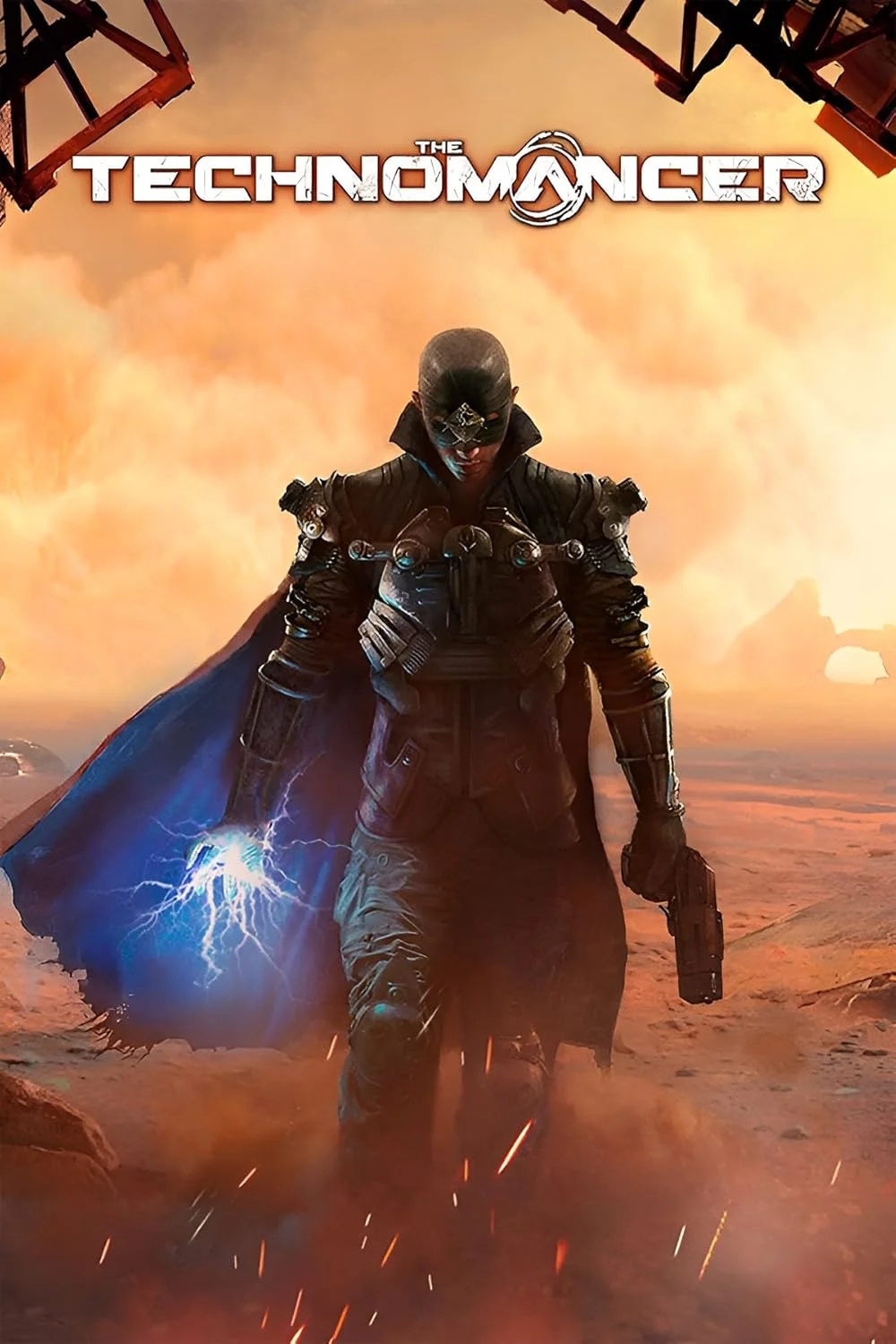
The Technomancer
This combination delivers exceptional performance with an average of 149 FPS, perfect for high refresh rate gaming and competitive play.
Average FPS: resolution vs quality settings
| Ultra | High | Medium | Low | |
|---|---|---|---|---|
| 4K Ultra HD | 55 | 72 | 89 | 114 |
| 1440p QHD | 108 | 136 | 158 | 208 |
| 1080p Full HD | 164 | 205 | 225 | 249 |
Cell color: green is 120+ FPS, teal is 60+, amber is 30+, red is below 30.
The Technomancer with Intel Core i5-12400 + NVIDIA GeForce RTX 5080, In-Depth Analysis
The Technomancer, a 2016 Action RPG, presents an interesting stress profile for modern hardware. This analysis examines the Intel Core i5-12400 paired with the NVIDIA GeForce RTX 5080, using measured data to determine where the bottleneck lies and how the combination performs across different resolutions and settings. The data reveals a system that is heavily GPU-bound at high resolutions but shows signs of CPU limitation at lower ones, making it a nuanced case study for game performance scaling.
CPU Role — cores, clocks, and how they relate to this game's results
The Intel Core i5-12400 is a 6-core, 12-thread processor based on the Alder Lake architecture. It operates with a base clock of 2.50 GHz and can boost up to 4.40 GHz, which provides a solid foundation for gaming workloads. The CPU’s performance profile, as indicated by its synthetic benchmarks, shows strong single-thread capability with a 3dmark single-thread score of 910, while its multi-threaded performance reaches 5873 in the 16-thread test. This suggests the chip can handle both lightly-threaded game logic and more demanding background tasks.
For a game like The Technomancer, which was released in 2016, the CPU demands are typically moderate. The data shows that at 1080p with Low settings, the system achieves 248.5 FPS, which is a remarkably high frame rate. This high number suggests that even at lower graphical settings, the i5-12400 provides enough processing power to feed the RTX 5080 without becoming a severe limiting factor. However, the gap between Low and Ultra settings at 1080p (a drop from 248.5 to 163.9 FPS) indicates that while the CPU is capable, its performance can still influence the ceiling when the GPU is not fully taxed.
The processor’s cache hierarchy, with 18 MB of shared L3 cache, is sufficient for the game’s data needs. The 12 threads allow for efficient scheduling across cores, which is beneficial for maintaining consistent frame pacing in action RPGs with numerous on-screen entities. While the CPU’s average benchmark score of 19850 places it in the 77th percentile of all CPUs, its nearest rivals show a very tight grouping—the Intel Core i7-9700 is a mere 0.1% ahead, the Intel Core i5-11600K is 0.4% behind, and the AMD Ryzen Threadripper PRO 5995WX trails by 0.4%. This indicates that the i5-12400 sits in a highly competitive performance tier, and its gaming results will largely depend on the specific workload.
How This Combo Ranks — use comboRankInGame vs other tested combos
In the database of tested hardware combinations for The Technomancer, this specific pairing of the Intel Core i5-12400 and NVIDIA GeForce RTX 5080 achieves a rank of 80 out of 1656 total combos. This places it in the top 4.8% of all tested systems, which is a strong showing that underscores the overall capability of this hardware pairing. The high ranking is primarily driven by the GPU’s immense power, which can push frame rates to very high levels when the CPU can keep up.
The rank reflects a system that is exceptionally well-suited for high-refresh-rate gaming at 1440p and even 4K. The measured frame rates at 1440p High (136.2 FPS) and 4K High (71.7 FPS) demonstrate that the combo is capable of delivering smooth experiences across most common gaming scenarios. The ranking also suggests that for this specific title, the combination is more than adequate, as it outperforms the vast majority of other configurations that have been tested. The only systems that rank higher are likely those with even more powerful CPUs, such as flagship models that can maintain higher minimum frame rates in CPU-bound scenarios at 1080p.
The fact that this combo ranks in the 80th position out of 1656 indicates that while it is not the absolute top-tier configuration, it is close to it. The data implies that the RTX 5080 is the dominant factor in this pairing, and the i5-12400 is sufficient to avoid being a significant drag on performance in most situations. The primary differentiator for the systems ranked above this one would be their ability to extract even higher frame rates at 1080p, where the CPU becomes more relevant.
Resolution Scaling — how FPS drops from 1080p to 4K and what it says about the limiting component
The measured frame rates across resolutions reveal a clear pattern of GPU scaling. At 1080p with High settings, the system produces 204.9 FPS. Moving to 1440p High, the frame rate drops to 136.2 FPS, and at 4K High, it falls further to 71.7 FPS. This represents a 33.5% decrease from 1080p to 1440p, and a 65% decrease from 1080p to 4K. These significant drops are a classic indicator that the NVIDIA GeForce RTX 5080 is the primary performance limiter as resolution increases, as the GPU’s workload scales with the number of pixels.
The scaling pattern is consistent across all settings, but the percentage change is more pronounced at higher settings. For instance, at Low settings, the frame rate drops from 248.5 FPS at 1080p to 208.1 FPS at 1440p (a 16.3% decrease) and then to 114 FPS at 4K (a 54.1% decrease from 1440p). This suggests that even at Low settings, the GPU is still the dominant bottleneck at 4K. However, the smaller drop from 1080p to 1440p at Low settings (16.3%) compared to High settings (33.5%) indicates that the CPU is becoming more of a limiting factor at 1080p when the GPU load is low.
This behavior is typical for a system with a very powerful GPU and a mid-range CPU. At 1080p, the GPU can render frames so quickly that it must wait for the CPU to submit draw calls, leading to a CPU-bound scenario. As resolution increases, the GPU’s rendering time per frame increases, reducing its reliance on the CPU and shifting the bottleneck back to the GPU. The data clearly shows that the RTX 5080 is the component that determines the ultimate performance ceiling at higher resolutions, while the i5-12400’s limitations become apparent only at the lowest resolution and settings.
Measured FPS Breakdown — resolution by resolution, settings by settings, exact numbers
The detailed FPS measurements provide a comprehensive view of the system's capabilities. At 1920x1080, the frame rates are exceptionally high across all settings. With Low settings, the system achieves 248.5 FPS, which increases to 224.7 FPS at Medium, drops to 204.9 FPS at High, and falls to 163.9 FPS at Ultra. This shows a clear scaling with graphical fidelity, where the Ultra preset imposes a 34% performance penalty compared to Low. The high frame rates at this resolution indicate that the RTX 5080 is not fully utilized, and the i5-12400 is working to keep up with the GPU’s output.
At 2560x1440, the frame rates remain excellent. Low settings produce 208.1 FPS, Medium produces 157.9 FPS, High produces 136.2 FPS, and Ultra produces 107.8 FPS. This resolution is likely the sweet spot for this combo, as it offers a balance between visual quality and high refresh rates. The drop from Low to Ultra at this resolution is 48.2%, which is a more significant penalty than at 1080p, showing the increased GPU load. The 1440p High result of 136.2 FPS is particularly notable, as it suggests the system can easily drive high-refresh-rate monitors at this resolution with high visual settings.
At 3840x2160, the performance is still playable but begins to show the GPU’s limits. Low settings deliver 114 FPS, Medium delivers 88.9 FPS, High delivers 71.7 FPS, and Ultra delivers 55.4 FPS. The drop from Low to Ultra at 4K is 51.4%, which is the largest percentage penalty across all resolutions. The 4K Ultra result of 55.4 FPS is borderline for smooth gameplay, indicating that for the most demanding settings at this resolution, users may need to rely on upscaling technologies. The scaling from 1440p Ultra (107.8 FPS) to 4K Ultra (55.4 FPS) represents a 48.6% decrease, confirming the GPU-bound nature of the workload at these settings.
GPU Role — VRAM, clocks, and how they relate to this game's results
The NVIDIA GeForce RTX 5080 is the dominant component in this configuration, and its specifications directly explain the measured performance. It features 16 GB of GDDR7 memory on a 256-bit bus, providing a substantial 960.0 GB/s of memory bandwidth. This high bandwidth is crucial for feeding the GPU’s 10752 shading units at high resolutions. The GPU’s boost clock of 2617 MHz, combined with its 56.28 TFLOPS of FP32 compute, allows it to process the complex geometry and shaders found in The Technomancer’s environments with ease.
The GPU’s role is most evident in the 4K results. The frame rate at 4K High (71.7 FPS) is likely limited by the GPU’s raw compute throughput and memory bandwidth. The 16 GB VRAM is more than sufficient for this 2016 title, as the game’s texture requirements are unlikely to exceed even 8 GB at 4K Ultra. This means that the GPU is not constrained by memory capacity but by its processing power. The high bandwidth is also a key factor in maintaining consistent frame rates, as it allows for efficient data transfer between the VRAM and the GPU cores.
The RTX 5080’s performance percentile of 89 places it in the top tier of all GPUs, and its average benchmark score of 59188 is significantly higher than its nearest rivals. For instance, it is 1.6% ahead of the Intel Arc A570M and 2.5% ahead of the Intel Arc A580. This performance lead is reflected in the game’s frame rates, which are consistently high across all tested scenarios. The GPU’s capabilities are the primary reason this combo achieves its rank of 80 out of 1656, as it provides the raw power needed for high-resolution gaming. The data shows that the RTX 5080 is the star of this pairing, with the i5-12400 serving as a capable but secondary partner.
Hardware Specifications
Intel Core i5-12400
NVIDIA GeForce RTX 5080
FPS Benchmarks by Resolution & Settings
Performance data for Intel Core i5-12400 + NVIDIA GeForce RTX 5080 in The Technomancer
| Resolution | Settings | Avg FPS |
|---|---|---|
| 3840x2160 | Low | 114.0 |
| 3840x2160 | Medium | 88.9 |
| 3840x2160 | High | 71.7 |
| 3840x2160 | Ultra | 55.4 |
| 2560x1440 | Low | 208.1 |
| 2560x1440 | Medium | 157.9 |
| 2560x1440 | High | 136.2 |
| 2560x1440 | Ultra | 107.8 |
| 1920x1080 | Low | 248.5 |
| 1920x1080 | Medium | 224.7 |
| 1920x1080 | High | 204.9 |
| 1920x1080 | Ultra | 163.9 |
The Technomancer with ii5-12400 + Other GPUs
See how The Technomancer performs with the same CPU but different graphics cards.
The Technomancer with RTX 5080 + Other CPUs
See how The Technomancer performs with the same GPU but different processors.
Other Games with ii5-12400 + RTX 5080
Explore FPS benchmarks for other games using this same hardware combination.