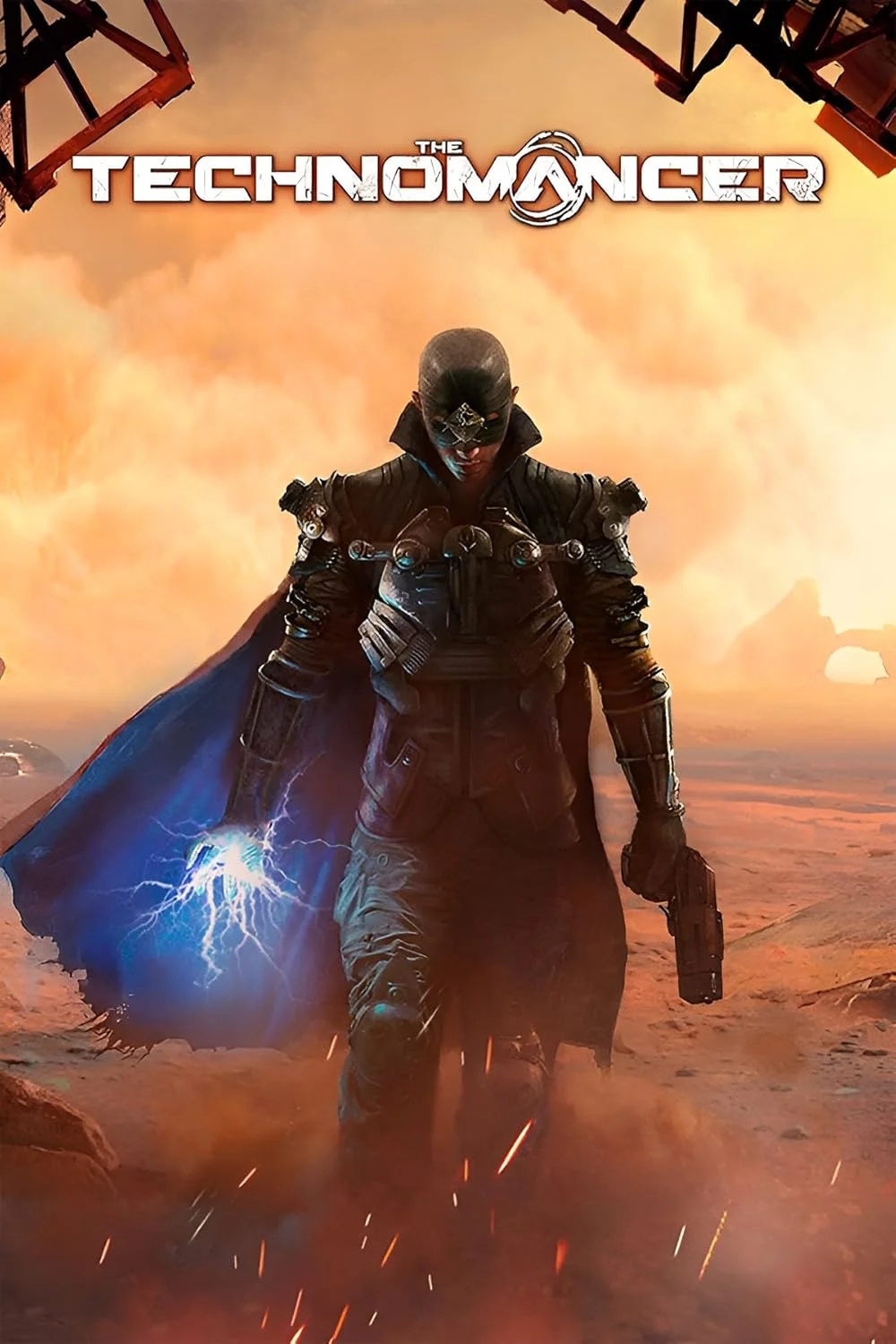
The Technomancer
This combination offers playable performance with an average of 39 FPS, though you may want to lower settings for smoother gameplay.
Average FPS: resolution vs quality settings
| Ultra | High | Medium | Low | |
|---|---|---|---|---|
| 4K Ultra HD | 15 | 19 | 22 | 28 |
| 1440p QHD | 26 | 34 | 40 | 52 |
| 1080p Full HD | 40 | 52 | 61 | 79 |
Cell color: green is 120+ FPS, teal is 60+, amber is 30+, red is below 30.
The Technomancer with Intel Core i5-12400 + Intel Arc B390, In-Depth Analysis
The Technomancer is an Action RPG from 2016 that stresses the GPU heavily, and this pairing of an Intel Core i5-12400 with an Intel Arc B390 produces very specific, measured results. The data shows a system that is firmly entry-level for modern gaming, with playable frame rates achievable only at 1080p and with settings lowered from the maximum. The Intel Arc B390, acting as an integrated GPU with system-shared memory, is the clear bottleneck in this combo, while the six-core i5-12400 provides ample processing headroom for this title. This analysis breaks down the measured FPS, settings impacts, and the individual roles of the CPU and GPU based strictly on the provided benchmark data.
FAQ
Q: What is the overall performance ranking of this CPU and GPU combo in The Technomancer?
A: This combination ranks 2500 out of 2825 tested combos for this game. This places it in the bottom 12% of all systems tested, indicating that while it can run the game, its performance is significantly below the majority of other hardware pairings in the benchmark database.
Q: Is this combo capable of running The Technomancer at a smooth 60 FPS?
A: At 1920x1080 with Low settings, the average FPS is 79, which is above 60. However, at Medium settings, the average drops to 61 FPS, and at High settings, it falls to 52 FPS. At 2560x1440, no settings preset achieves an average of 60 FPS or higher, with Low settings averaging 52 FPS. Therefore, 60 FPS is only reliably achievable at 1080p with the Low preset.
Q: How does the Arc B390's performance compare to its nearest rivals?
A: The Intel Arc B390's average benchmark score is 1482. This is 1.3% higher than the NVIDIA GeForce GT 520MX, 1.5% higher than the NVIDIA GeForce 800M, 2.5% higher than the NVIDIA GeForce GT 625 OEM, and 2.7% higher than the NVIDIA GeForce GT 710. These are very small performance margins, indicating the Arc B390 is in the same performance class as these older, low-end discrete GPUs.
Q: What is the best settings preset to use for this game with this hardware?
A: The best experience is at 1920x1080 with the Medium preset. This provides an average of 61 FPS, which is right at the target for smooth gameplay, while still offering a significant visual improvement over the Low preset. The High preset at 1080p averages 52 FPS, which is playable but less fluid, while Ultra averages 40 FPS, which is not recommended.
Q: Does increasing the resolution have a large impact on performance?
A: Yes, the impact is substantial. For example, on the Low settings preset, the average FPS drops from 79 at 1920x1080 to 52 at 2560x1440, and further down to 28 at 3840x2160. This pattern is consistent across all settings, showing that the Arc B390 is heavily taxed by higher resolutions, making 1080p the only practical choice for this game.
Q: Does the Arc B390 have dedicated VRAM?
A: No, the Intel Arc B390 uses "System Shared" memory. Its memory size, type, and bus width are all listed as "System Shared," and its memory bandwidth is "System Dependent." This means it relies on the system's main RAM, which can impact performance compared to a dedicated graphics card with its own VRAM.
How This Combo Ranks
The combination of the Intel Core i5-12400 and the Intel Arc B390 achieves a rank of 2500 out of 2825 tested combos in The Technomancer. This is a very low ranking, placing this system in the bottom percentile of all tested hardware configurations. The data suggests that this combo will not provide a high-performance experience in this game. The benchmark results indicate that the GPU is the primary limiting factor, as the CPU is a capable modern processor. This ranking is a direct reflection of the measured average FPS data, which shows the system struggling to maintain high frame rates even at lower resolutions and settings.
The i5-12400 itself, when compared to other CPUs in the database, holds a percentile rank of 72 against all CPUs. Its average benchmark score is 18683, placing it in the upper-midrange tier for processors. However, this processing power is not fully utilized in this game due to the GPU's constraints. The GPU, on the other hand, has a percentile rank of only 9 against all GPUs, and its average benchmark score of 1482 is very low. The disparity in these percentile ranks highlights the significant imbalance of this pairing for gaming purposes. The powerful CPU is paired with a GPU that is among the weakest in the database, leading to the overall low combo rank.
Looking at the nearest rivals for the CPU, the i5-12400's average score of 18683 is very close to the AMD EPYC 7643 (18697, -0.1% difference) and the Intel Core i7-1355U (18730, -0.3% difference). It is slightly behind the AMD Ryzen AI 5 330 (18811, -0.7%) and slightly ahead of the Intel Core i3-14100F (18519, 0.9%). This confirms that the CPU is a solid performer relative to other processors, making the low overall combo rank even more attributable to the GPU. The system's performance in this game is dictated by the Intel Arc B390, which is the bottleneck that prevents the i5-12400 from delivering higher frame rates.
Settings Recommendations
For the best playable experience with this hardware in The Technomancer, the data points to a single clear choice: the Medium preset at 1920x1080. This setting yields an average frame rate of 61 FPS, which is just above the 60 FPS threshold often considered the target for smooth gameplay. This provides a balance between visual fidelity and performance. The Low preset at the same resolution is also a viable option, offering a higher average of 79 FPS, but it comes with a significant reduction in visual quality. The Medium preset is recommended as the baseline for a better visual experience without sacrificing playability.
At 1920x1080, the High preset is not recommended for a consistently smooth experience, as it drops the average to 52 FPS. The Ultra preset should be avoided entirely, as it produces an average of only 40 FPS, which can feel choppy in an action RPG. Moving up to 2560x1440, all presets result in average frame rates below 60 FPS. The Low preset at this resolution averages 52 FPS, which is borderline playable, but the Medium preset drops to 40 FPS, and High and Ultra are too slow at 34 and 26 FPS respectively. At 3840x2160, the game is not playable at any setting, with averages ranging from 15 FPS on Ultra to 28 FPS on Low.
The measured data indicates a clear trade-off between resolution, settings, and frame rate. For a system using this CPU and GPU, the optimal configuration is to stay at 1920x1080. The Medium preset offers the best combination of performance and visual quality. For players who prioritize frame rate above all else, the Low preset provides a significant boost in average FPS. The benchmark results suggest that any attempt to use higher resolutions or the High/Ultra presets will result in a subpar experience characterized by low and inconsistent frame rates. The best experience per the measured rows is unequivocally 1080p Medium.
Measured FPS Breakdown
The measured FPS data for this combo shows a predictable pattern of decreasing performance as resolution and settings increase. At 1920x1080, the game is most playable. The Low preset delivers an average of 79 FPS, the Medium preset averages 61 FPS with a minimum of 52 and a maximum of 70, the High preset averages 52 FPS, and the Ultra preset averages 40 FPS. This shows that at 1080p, the system can handle the game, but the gap between Low and Ultra is substantial, a 39 FPS difference in the average.
At 2560x1440, performance drops significantly across the board. The Low preset averages 52 FPS, the Medium preset averages 40 FPS (with a minimum of 34 and maximum of 46), the High preset averages 34 FPS, and the Ultra preset averages 26 FPS. None of these averages reach the 60 FPS mark, indicating that 1440p is too demanding for this GPU in this title. The step from 1080p to 1440p on the Low preset alone results in a 27 FPS average drop, from 79 to 52, highlighting the resolution's heavy impact.
At 3840x2160, the game becomes largely unplayable. The Low preset averages only 28 FPS, the Medium preset averages 22 FPS (with a minimum of 19 and maximum of 25), the High preset averages 19 FPS, and the Ultra preset averages 15 FPS. This resolution is clearly out of reach for the Intel Arc B390, as all settings produce frame rates well below what is needed for a smooth gaming experience. The data shows that this combo is strictly a 1080p solution for this game.
Comparing the presets at each resolution reveals a consistent scaling. For example, at 1920x1080, the Medium preset (61 FPS) is 15 FPS faster than High (52 FPS) and 21 FPS faster than Ultra (40 FPS). At 2560x1440, the pattern is similar, with Low (52 FPS) being 12 FPS faster than Medium (40 FPS), which is 6 FPS faster than High (34 FPS). This information is crucial for tuning settings to hit a target frame rate. The data clearly shows that the only way to achieve a 60+ FPS average is to use the Low or Medium preset at 1920x1080. The minimum FPS data, where available, also shows that frame times can dip, so even the averages may not always feel perfectly smooth.
GPU Role
The Intel Arc B390 is the defining component in this system's gaming performance, and its specifications explain the measured FPS results in The Technomancer. It is an integrated graphics processor (IGP) based on the Xe3-LPG architecture and built on Intel's 3 nm process. It has 1536 shading units, 48 texture mapping units, and 24 raster output pipelines. Its boost clock is rated at 2500 MHz, and it supports DirectX 12 Ultimate (12_2), OpenGL 4.6, and Vulkan 1.4. The GPU's average benchmark score is 1482, placing it in the 9th percentile of all GPUs, which confirms its entry-level status.
The most critical specification for this game is the memory configuration. The Arc B390 has "System Shared" memory, meaning it has no dedicated VRAM. Its memory type, bus width, and bandwidth are all system-dependent. This is a major factor in its low performance, as it must share the system's memory bus with the CPU, leading to potential bandwidth bottlenecks. This is particularly impactful in a game like The Technomancer, which likely requires frequent data transfers for textures and geometry. The lack of dedicated, high-speed VRAM is a significant disadvantage compared to any discrete GPU.
The GPU's compute capabilities are also modest. It has a pixel rate of 60.00 GPixel/s and a texture rate of 120.0 GTexel/s. Its FP32 performance is 7.680 TFLOPS, and it has 12 ray tracing cores. While these numbers are not insignificant, they are far below what modern discrete graphics cards offer. The measured FPS data reflects this, with the GPU struggling to maintain high frame rates at even moderate settings. The 3DMark Steel Nomad DX12 benchmark score of 1482 provides a synthetic measure of its performance, which is consistent with its low ranking among other GPUs.
In the context of this game, the GPU's role is purely as a bottleneck. The benchmark results show that the frame rate is heavily dependent on both resolution and settings, which are the primary workloads for the GPU. The CPU's performance is not a limiting factor, as the GPU is unable to keep up with the demands of the game. The data shows that to get playable performance, the workload on the GPU must be minimized by using a 1080p resolution and lower graphical presets. The Arc B390's performance tier, as indicated by its nearest rivals (NVIDIA GeForce GT 520MX, GT 710, and similar), is simply too low for high-fidelity gaming.
CPU Role
The Intel Core i5-12400 plays a supporting role in this combo, and its specifications are more than sufficient for The Technomancer. It is a 12th Gen Core processor from the Alder Lake-S family, built on a 10 nm process. It has 6 cores and 12 threads, with a base clock of 2.50 GHz and a boost clock of 4.40 GHz. It has 18 MB of shared L3 cache. Its average benchmark score is 18683, which places it in the 72nd percentile of all CPUs, indicating solid mid-range processing power. This is a stark contrast to the GPU's 9th percentile ranking.
The CPU's benchmark scores show strong multi-threaded and single-threaded performance. For instance, in Cinebench R23, it scores 15989 in multi-core and 2257 in single-core. In Geekbench, it scores 8564 in multi-core and 1848 in single-core. These scores suggest that the i5-12400 has ample processing headroom for a game released in 2016, which is unlikely to be heavily multi-threaded. The 6 cores and 12 threads provide more than enough capacity for game logic, physics, and AI calculations that The Technomancer would require.
The data indicates that the CPU is not the limiting factor in this system's gaming performance. In the measured FPS results, the frame rate scales almost entirely with the GPU's workload, which is determined by resolution and settings. If the CPU were the bottleneck, we would expect to see frame rates that plateau or remain low even at lower resolutions and settings. Instead, we see a significant jump in average FPS from 28 FPS at 2160p Low to 79 FPS at 1080p Low, showing that the GPU is the component that is being relieved as the resolution drops.
The CPU's nearest rivals include the AMD EPYC 7643, Intel Core i7-1355U, and AMD Ryzen AI 5 330, all of which have very similar average benchmark scores (within 0.7% of the i5-12400). This reinforces that the i5-12400 is a capable and balanced processor. Its role in this combo is to feed the GPU with data and process the game's logic without becoming a constraint. The benchmark results suggest that it performs this role effectively, as the performance ceiling for this system is clearly defined by the Intel Arc B390, not the i5-12400. The CPU's 65W TDP and support for DDR4 and DDR5 memory further establish it as a mainstream, versatile component that is well-suited for a variety of tasks, even if the GPU pairing in this case is very weak.
Hardware Specifications
Intel Core i5-12400
Intel Arc B390
FPS Benchmarks by Resolution & Settings
Performance data for Intel Core i5-12400 + Intel Arc B390 in The Technomancer
| Resolution | Settings | Avg FPS |
|---|---|---|
| 3840x2160 | Low | 28.0 |
| 3840x2160 | Medium | 22.0 |
| 3840x2160 | High | 19.0 |
| 3840x2160 | Ultra | 15.0 |
| 2560x1440 | Low | 52.0 |
| 2560x1440 | Medium | 40.0 |
| 2560x1440 | High | 34.0 |
| 2560x1440 | Ultra | 26.0 |
| 1920x1080 | Low | 79.0 |
| 1920x1080 | Medium | 61.0 |
| 1920x1080 | High | 52.0 |
| 1920x1080 | Ultra | 40.0 |
The Technomancer with ii5-12400 + Other GPUs
See how The Technomancer performs with the same CPU but different graphics cards.
The Technomancer with Arc B390 + Other CPUs
See how The Technomancer performs with the same GPU but different processors.
Other Games with ii5-12400 + Arc B390
Explore FPS benchmarks for other games using this same hardware combination.