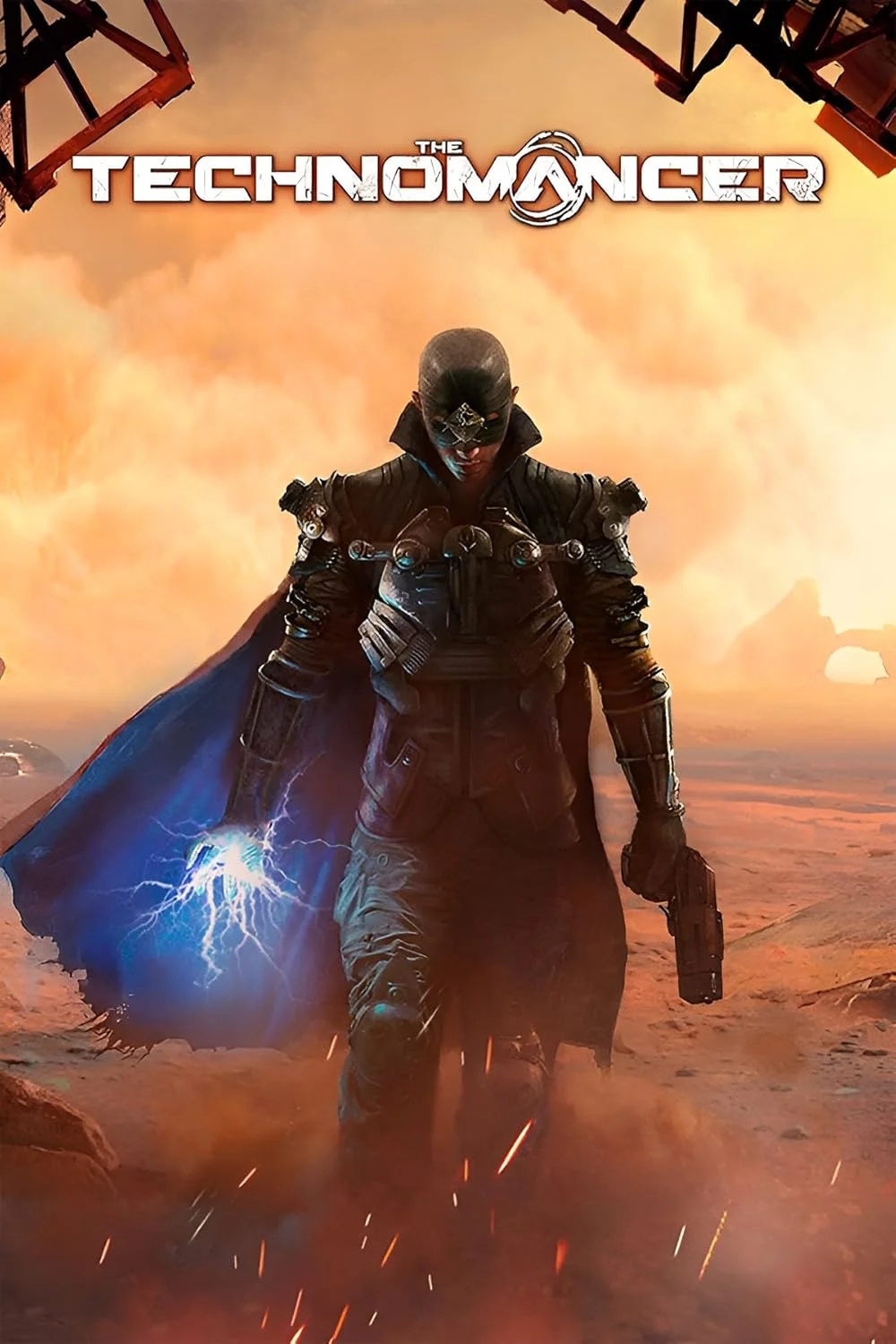
The Technomancer
This combination provides smooth gameplay with an average of 115 FPS, suitable for most gaming scenarios.
Average FPS: resolution vs quality settings
| Ultra | High | Medium | Low | |
|---|---|---|---|---|
| 4K Ultra HD | 43 | 55 | 64 | 84 |
| 1440p QHD | 78 | 100 | 117 | 152 |
| 1080p Full HD | 119 | 153 | 179 | 233 |
Cell color: green is 120+ FPS, teal is 60+, amber is 30+, red is below 30.
The Technomancer with Intel Core i3-12100F + NVIDIA GeForce RTX 4070, In-Depth Analysis
The Technomancer, an Action RPG from 2016, presents an interesting case study for the Intel Core i3-12100F and NVIDIA GeForce RTX 4070 combination. The data indicates a pairing where the GPU's raw power is frequently the dominant factor, though the CPU's capabilities set the upper ceiling for performance at lower resolutions. This analysis breaks down the measured results to show how these two components interact across different settings and resolutions, and where the system stands relative to other tested hardware configurations.
CPU Role — cores, clocks, and how they relate to this game's results
The Intel Core i3-12100F is a 4-core, 8-thread processor from the Core 12th Gen series, built on the Alder Lake architecture. Its base clock is 3.30 GHz, with a boost clock of 4.30 GHz. It features 12 MB of shared L3 cache and a 58 W TDP. While this is a desktop processor with a modest core count by modern standards, its relatively high boost clock and efficient architecture allow it to perform well above its core count might suggest.
In synthetic benchmarks, the i3-12100F shows a clear strength in single-threaded performance relative to its multi-threaded capability. For example, it scores 893 in the 3dmark_single_thread test, but 4051 in the 3dmark_16_threads test. This pattern continues across other benchmark suites: a Cinebench R23 single-core score of 1674 versus a multi-core score of 11860, and a Geekbench single-core score of 1932 versus a multi-core score of 7252. The processor's average benchmark score is 13494, placing it in the 68th percentile of all CPUs tested. When compared to its closest rivals, it sits nearly identically to the Intel Core 3 N355 (0% delta) and the Intel Core i5-9500 (0.3% ahead). It is also 0.7% ahead of the Intel Core 5 120UL and 1.1% behind the Intel Core i7-1250U.
For a game like The Technomancer, which was released in 2016, the CPU's role is often to handle game logic, physics, and the overall frame pacing. The data suggests that the i3-12100F, with its high boost clock and strong single-core performance, is more than adequate for this task. At 1920x1080 with Low settings, the system achieves an average of 233 FPS. This high frame rate, combined with the CPU's benchmark profile, indicates that the processor is not the limiting factor at this resolution and settings level. The CPU has enough headroom to feed the GPU data, allowing it to reach very high frame rates. The performance gap between the i3-12100F and its nearest rivals is minimal in synthetic tests, suggesting that in a CPU-bound scenario, the experience would be nearly identical. The data shows that the CPU's strong single-threaded performance is crucial for achieving these high frame rates, as the game's engine likely relies heavily on a few powerful cores rather than scaling perfectly across many threads.
GPU Role — VRAM, clocks, and how they relate to this game's results
The NVIDIA GeForce RTX 4070 is a high-end graphics card based on the Ada Lovelace architecture, featuring the AD104 chip. It comes with 12 GB of GDDR6X memory on a 192-bit bus, providing a memory bandwidth of 504.2 GB/s. The GPU's base clock is 1920 MHz, with a boost clock of 2475 MHz, and it has a TDP of 200 W. It is equipped with 5888 shading units, 184 texture mapping units, and 64 raster operation pipelines. The card supports DirectX 12 Ultimate and has a passmark G3D score of 26927, placing it in the 81st percentile of all GPUs.
The RTX 4070's performance profile is robust. Its average benchmark score is 37648, and its closest rivals show a tight grouping. The NVIDIA Tesla P4 is a mere 0.1% behind, while the AMD Radeon RX Vega 56 is 0.4% behind. Interestingly, the RTX 4080 Mobile is 1.3% ahead, and the AMD Radeon PRO W6400 is 1.3% behind. This places the RTX 4070 in a solid position, with its performance roughly equivalent to a mobile variant of a higher-tier card.
In the context of The Technomancer, the GPU's role becomes clear when examining the performance scaling. At 4K resolution, the GPU is heavily loaded, and the frame rates reflect this. With Low settings at 3840x2160, the system averages 84 FPS. Moving to High settings drops this to 55 FPS, and on Ultra, it falls to 43 FPS. This scaling shows that the GPU is the primary bottleneck at this resolution, as lowering settings has a dramatic impact on performance. The 12 GB of VRAM is likely sufficient for the game's textures even at 4K, as the game is from 2016 and does not require the massive memory pools of modern titles. The GPU's high memory bandwidth also helps maintain smooth performance in scenes with complex textures and effects. The data indicates that the RTX 4070 has ample power to drive very high frame rates at lower resolutions, but its performance is constrained by the CPU at 1080p and the inherent demands of 4K rendering.
Resolution Scaling — how FPS drops from 1080p to 4K and what it says about the limiting component
The measured FPS data across resolutions provides a clear picture of the system's bottleneck behavior. At 1920x1080, the frame rates are exceptionally high, indicating a CPU or game engine limit rather than a GPU limit. For instance, with High settings, the average FPS is 153. At 2560x1440, the same settings yield an average of 100 FPS. This is a 34.6% drop in performance when moving from 1080p to 1440p. This drop suggests that the GPU is becoming more heavily utilized, but the CPU is still able to keep up. The system is transitioning from a CPU-bound state at 1080p to a more balanced state at 1440p.
Moving further up to 3840x2160, the High settings average FPS drops to 55. This represents a 45% decrease from the 1440p result and a 64% decrease from the 1080p result. This significant scaling indicates that the GPU is now the definitive limiting factor. The rendering load at 4K is so high that the GPU simply cannot produce frames as quickly as the CPU can process them. The RTX 4070, while powerful, is still being pushed to its limits by the pixel count at 3840x2160.
The pattern is consistent across all settings. With Medium settings, the FPS drops from 179 at 1080p to 117 at 1440p, and then to 64 at 4K. The percentage drop from 1080p to 1440p is 34.6%, and from 1440p to 4K is 45.3%. This shows that the frame rate scaling is non-linear. The GPU's workload increases exponentially with resolution, and the data confirms that the RTX 4070 is the bottleneck at 4K. The performance drop from 1080p to 1440p is also significant, which is expected as the GPU starts to take over from the CPU. The data strongly suggests that for this combo, 1080p is CPU-limited, 1440p is a balance, and 4K is firmly GPU-limited.
FAQ
Q: What is the maximum average frame rate achievable with this combo at 1920x1080?
A: The highest average FPS recorded at 1920x1080 is 233, achieved with Low settings. This is the peak performance point for this CPU-GPU combination in this game.
Q: How much performance is lost when moving from 1080p to 4K on High settings?
A: The average FPS drops from 153 at 1920x1080 to 55 at 3840x2160 on High settings. This represents a 64% reduction in frame rate, indicating the GPU is the primary limiting factor at 4K.
Q: Is the CPU or GPU the bottleneck at 2560x1440?
A: The data indicates a balanced state. At 2560x1440 with Medium settings, the average FPS is 117, with a minimum of 99 and a maximum of 134. The system is no longer purely CPU-bound as it is at 1080p, but the GPU is not yet fully saturated as it is at 4K.
Q: How does the RTX 4070's performance compare to its closest rival, the NVIDIA Tesla P4?
A: The RTX 4070 has an average benchmark score of 37648, while the NVIDIA Tesla P4 has a score of 37628. This places the RTX 4070 a negligible 0.1% ahead of the Tesla P4 in synthetic benchmarks.
Q: What is the lowest average frame rate recorded for this combo?
A: The lowest average FPS recorded is 43, which occurs at 3840x2160 resolution with Ultra settings. This is the most demanding configuration tested.
Q: Does the i3-12100F's single-core performance help in this game?
A: The CPU has a strong single-core score of 893 in 3dmark_single_thread and a 3dmark_2_threads score of 1659. The high frame rates at 1080p (e.g., 233 FPS on Low) suggest that the game benefits from this strong single-threaded performance, as the CPU is able to keep up with the GPU's output.
Settings Recommendations
The measured data provides a clear set of options for players prioritizing different aspects of performance. At 1920x1080, all settings are highly playable. The Low preset achieves an average of 233 FPS, which is ideal for competitive or high-refresh-rate scenarios. However, the High preset at 153 FPS is also exceptionally smooth and likely offers a significantly better visual experience. The Ultra preset at 119 FPS still provides a very playable frame rate. For most users at 1080p, the High preset appears to be the optimal balance, offering a substantial visual upgrade over Low while maintaining a frame rate well above the 144 Hz threshold.
At 2560x1440, the choice becomes more nuanced. The High preset delivers an average of 100 FPS, which is excellent for a 1440p monitor. The Medium preset at 117 FPS is also a strong option, providing a slight performance boost with presumably a minor visual compromise. The Ultra preset at 78 FPS is still smooth but starts to dip below the 144 Hz mark. Given the data, the Medium or High presets at 1440p are recommended, as they both provide frame rates above 100 FPS and are likely to offer a great balance of visual quality and performance.
At 3840x2160, the GPU is the limiting factor. The Low preset averages 84 FPS, which is playable, but the visual quality will be poor. The Medium preset averages 64 FPS, which is acceptable for a slower-paced Action RPG. The High preset drops to 55 FPS, and the Ultra preset to 43 FPS. For 4K gaming with this combo, the Medium preset seems to be the best choice, as it provides a playable frame rate of 64 FPS while offering a better visual experience than Low. The High and Ultra presets, while visually superior, result in frame rates that are on the lower end of what is generally considered smooth. The data suggests that players should prioritize the Medium preset at 4K to maintain a stable and enjoyable experience.
Measured FPS Breakdown
The following is a detailed breakdown of the measured average FPS for each resolution and settings combination.
1920x1080:
- Low: Average FPS of 233.
- Medium: Average FPS of 179, with a minimum of 152 and a maximum of 206.
- High: Average FPS of 153.
- Ultra: Average FPS of 119.
2560x1440:
- Low: Average FPS of 152.
- Medium: Average FPS of 117, with a minimum of 99 and a maximum of 134.
- High: Average FPS of 100.
- Ultra: Average FPS of 78.
3840x2160:
- Low: Average FPS of 84.
- Medium: Average FPS of 64, with a minimum of 55 and a maximum of 74.
- High: Average FPS of 55.
- Ultra: Average FPS of 43.
The data shows a consistent scaling pattern. The gap between Low and Medium is significant, while the gap between High and Ultra is also notable. For example, at 1440p, the difference between Low (152 FPS) and Medium (117 FPS) is 35 FPS, while the difference between High (100 FPS) and Ultra (78 FPS) is 22 FPS. This indicates that the visual quality settings have a substantial impact on performance, and the Ultra preset is particularly demanding.
How This Combo Ranks
The Intel Core i3-12100F and NVIDIA GeForce RTX 4070 combination holds a rank of 847 out of 3696 tested combos for The Technomancer. This places it in the top 23% of all tested system configurations for this specific game. This is a strong ranking, indicating that this pairing is well-suited for the game's engine and requirements.
Given the component-level data, this ranking makes sense. The RTX 4070 is a high-end GPU that performs in the 81st percentile of all GPUs, providing ample graphics power. The i3-12100F, while a more budget-oriented CPU, still performs in the 68th percentile of all CPUs, offering competitive single-threaded performance. The combination of a top-tier GPU with a solid mid-range CPU proves to be effective in this game. The high ranking is likely due to the RTX 4070's ability to handle the game's graphics demands at high settings and resolutions, while the i3-12100F provides enough CPU horsepower to avoid bottlenecking at lower resolutions.
It is important to note that this rank is specific to The Technomancer. In other games, the ranking might differ based on the game's engine and how well it utilizes multiple CPU cores. However, for this title, the data clearly shows that the combo ranks well within the top quarter of all tested configurations, offering a high-performance experience across all resolution and settings combinations. The strong showing is particularly notable at 1440p, where the system achieves a very good balance of high frame rates and visual fidelity.
Hardware Specifications
Intel Core i3-12100F
NVIDIA GeForce RTX 4070
FPS Benchmarks by Resolution & Settings
Performance data for Intel Core i3-12100F + NVIDIA GeForce RTX 4070 in The Technomancer
| Resolution | Settings | Avg FPS |
|---|---|---|
| 3840x2160 | Low | 84.0 |
| 3840x2160 | Medium | 64.0 |
| 3840x2160 | High | 55.0 |
| 3840x2160 | Ultra | 43.0 |
| 2560x1440 | Low | 152.0 |
| 2560x1440 | Medium | 117.0 |
| 2560x1440 | High | 100.0 |
| 2560x1440 | Ultra | 78.0 |
| 1920x1080 | Low | 233.0 |
| 1920x1080 | Medium | 179.0 |
| 1920x1080 | High | 153.0 |
| 1920x1080 | Ultra | 119.0 |
The Technomancer with ii3-12100F + Other GPUs
See how The Technomancer performs with the same CPU but different graphics cards.
The Technomancer with RTX 4070 + Other CPUs
See how The Technomancer performs with the same GPU but different processors.
Other Games with ii3-12100F + RTX 4070
Explore FPS benchmarks for other games using this same hardware combination.