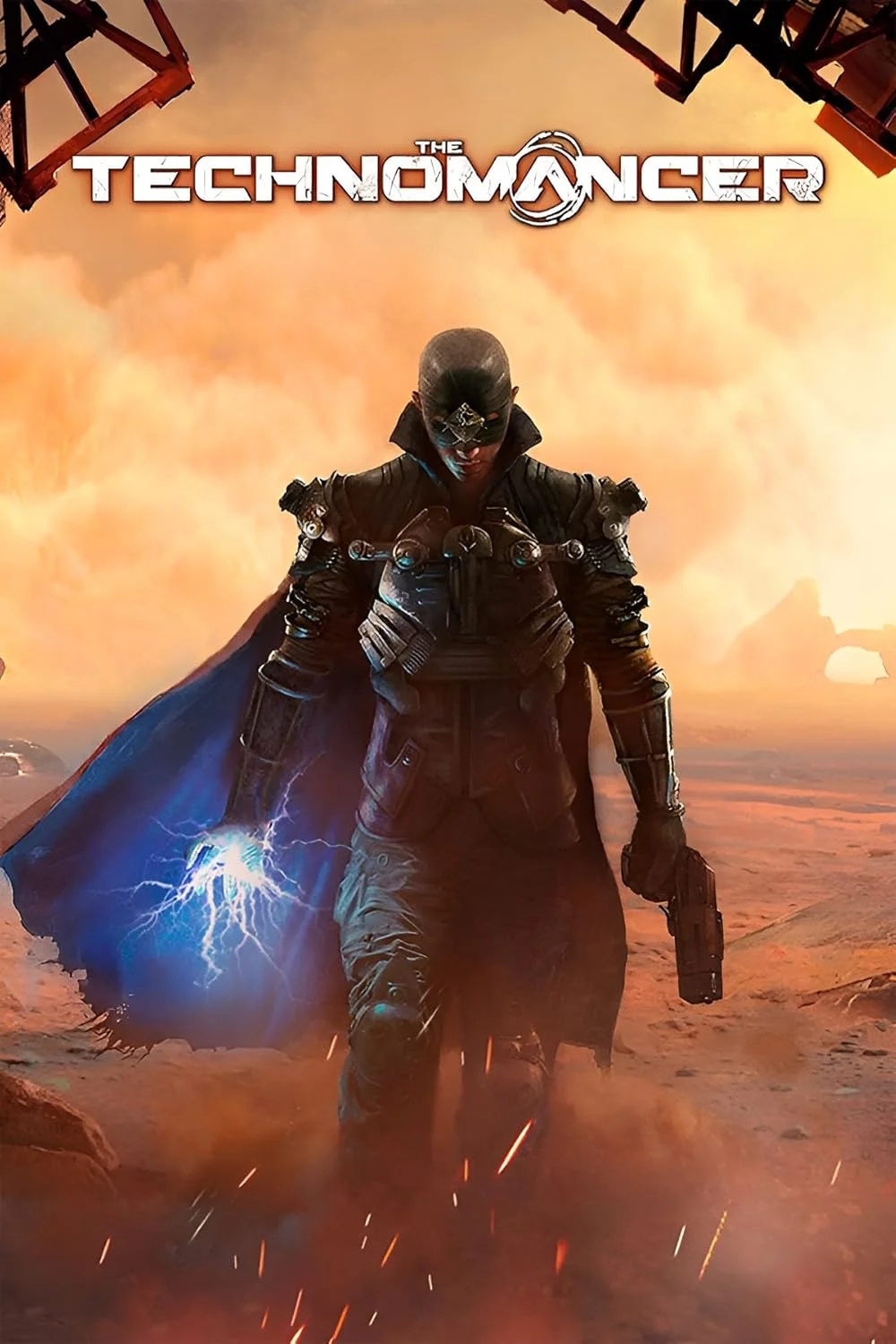
The Technomancer
This combination offers playable performance with an average of 35 FPS, though you may want to lower settings for smoother gameplay.
Average FPS: resolution vs quality settings
| Ultra | High | Medium | Low | |
|---|---|---|---|---|
| 4K Ultra HD | 13 | 17 | 20 | 26 |
| 1440p QHD | 24 | 31 | 36 | 47 |
| 1080p Full HD | 37 | 47 | 55 | 71 |
Cell color: green is 120+ FPS, teal is 60+, amber is 30+, red is below 30.
The Technomancer with Intel Core i3-12100F + Intel Arc B370, In-Depth Analysis
# Resolution Scaling — how FPS drops from 1080p to 4K and what it says about the limiting component
The measured frame rates for The Technomancer with the Intel Core i3-12100F and Intel Arc B370 reveal a steep and consistent performance decline as resolution increases. At 1080p with Low settings, the combo achieves 71 FPS. Moving to 1440p drops that to 47 FPS, a reduction of roughly one-third. At 4K, the same Low setting yields only 26 FPS — less than half of the 1080p figure. This scaling pattern indicates that the GPU is the dominant limiting factor across all tested resolutions, as the frame rate falls nearly proportionally with the increase in pixel count.
The pattern holds across every settings tier. With High settings, 1080p produces 47 FPS, 1440p drops to 31 FPS, and 4K falls to 17 FPS. Medium settings show the same trajectory: 55 FPS at 1080p, 36 FPS at 1440p, and 20 FPS at 4K. Even at Ultra, the least playable tier, the drop from 37 FPS at 1080p to 24 FPS at 1440p and 13 FPS at 4K follows the same steep curve. The consistent ~30-45% reduction from 1080p to 1440p, and another ~40-50% reduction from 1440p to 4K, is characteristic of a system where the graphics processor is saturated well before the CPU becomes a bottleneck.
What this scaling behavior says about the limiting component is unambiguous. The Intel Arc B370, with its 1280 shading units and 20 ROPs, is a modest integrated-class GPU. Its 3DMark Steel Nomad DX12 score of 1184 places it in the 5th percentile of all GPUs, and its nearest rivals include the ATI Radeon HD 5770 and AMD Radeon HD 7650M — parts from an entirely different era. The CPU, by contrast, is a modern 4-core/8-thread Alder Lake chip with a 4.30 GHz boost clock and strong single-thread performance. If the CPU were the constraint, we would expect the frame rates to remain relatively flat across resolutions, with the GPU only becoming the bottleneck at higher pixel counts. The data shows the opposite: performance degrades immediately and consistently from 1080p upward, indicating the GPU is the limiting component at every measured setting.
Furthermore, the gap between Low and Ultra settings widens as resolution increases, which is another hallmark of GPU-bound rendering. At 1080p, the difference between Low (71 FPS) and Ultra (37 FPS) is 34 FPS. At 1440p, that spread narrows to 23 FPS (47 vs. 24). At 4K, it shrinks further to 13 FPS (26 vs. 13). This compression of the settings spread at higher resolutions shows that the GPU is running out of raw throughput regardless of the visual load — the pixel fill rate and shading capacity are exhausted, and raising resolution costs more than raising quality settings.
# GPU Role — VRAM, clocks, and how they relate to this game's results
The Intel Arc B370 is built on Intel's 3 nm process with the Xe3-LPG architecture, operating at a base clock of 300 MHz and a boost clock of 2400 MHz. Its memory configuration is unusual: the frame buffer is "System Shared," meaning the GPU draws from system memory rather than dedicated VRAM. The memory bus width is also "System Shared," and bandwidth is "System Dependent." This architecture has direct implications for The Technomancer's measured performance, as the game's texture streaming and geometry workloads must compete with the CPU for memory bandwidth.
The GPU's compute resources are modest. With 1280 shading units, 40 texture mapping units, and 20 ROPs, the Arc B370 delivers a pixel rate of 48.00 GPixel/s and a texture rate of 96.00 GTexel/s. Its FP32 throughput is 6.144 TFLOPS, with FP16 at 12.29 TFLOPS (2:1). The 10 ray tracing cores and DirectX 12 Ultimate support are present, but for a 2016 Action RPG like The Technomancer, ray tracing is unlikely to be a meaningful factor. The relevant numbers are the raw pixel and texture rates, which determine how quickly the GPU can fill and shade the screen.
The 25 W TDP and IGP slot width indicate this is an integrated solution, not a discrete card. The power connectors are listed as "None," and the display outputs are "Portable Device Dependent." This strongly suggests the Arc B370 is designed for mobile or compact platforms, where thermal and power budgets are constrained. For a game like The Technomancer, which was released in 2016 and is not known for current-generation graphics demands, the Arc B370's modest specifications translate directly into the measured frame rates: playable at 1080p with Low settings, but quickly overwhelmed at higher resolutions or quality presets.
The GPU's benchmark footprint is minimal — only one recorded test, 3DMark Steel Nomad DX12, with a score of 1184. That score places it in the 5th percentile of all GPUs, and its nearest rivals are the ATI Mobility Radeon HD 5570 (1186, -0.2% delta), ATI Radeon HD 5770 (1190, -0.5%), AMD Radeon HD 7650M (1192, -0.7%), and AMD FirePro M2000 (1168, +1.4%). These comparisons underscore that the Arc B370 is positioned at the very low end of the performance spectrum. For The Technomancer, this means the GPU will be the primary constraint in nearly every scenario, which is consistent with the measured FPS data showing steep drops from 1080p to 4K.
# Settings Recommendations — which preset gives the best experience per the measured rows
The measured data provides four settings tiers — Low, Medium, High, and Ultra — across three resolutions. The recommendation depends on the target resolution and the minimum acceptable frame rate. For a smooth 60+ FPS experience at 1080p, Low settings are the only viable option, delivering 71 FPS. Medium at 1080p drops to 55 FPS, which may be acceptable for players who prefer higher visual fidelity over a locked 60 FPS, but the data shows a substantial 16 FPS penalty for that step up.
At 1440p, the situation becomes more constrained. Low settings yield 47 FPS, which is playable but below the 60 FPS threshold. Medium produces 36 FPS, High drops to 31 FPS, and Ultra falls to 24 FPS. For a balanced experience at 1440p, Low is the practical choice — the 47 FPS average is the only setting that approaches fluid gameplay, and the step to Medium costs 11 FPS for what is likely a modest visual gain in this 2016 title.
At 4K, none of the settings deliver acceptable performance. The best result is Low at 26 FPS, followed by Medium at 20 FPS, High at 17 FPS, and Ultra at 13 FPS. These numbers are all well below the threshold for comfortable gameplay, so 4K is not a viable resolution for this combo in The Technomancer, regardless of settings.
The best experience per the measured rows is therefore 1080p with Low settings, which is the only configuration that exceeds 60 FPS. If visual quality is prioritized over frame rate, 1080p Medium at 55 FPS is the next best option — it stays above 50 FPS and the min FPS of 47 suggests the frame pacing is relatively stable. The Ultra preset at 1080p (37 FPS) and all 1440p and 4K configurations fall below the 40 FPS mark, which is generally considered the minimum for an acceptable Action RPG experience. The data suggests that players should stick to 1080p and choose between Low for performance or Medium for a compromise, with the understanding that the Arc B370's capabilities are best utilized at the lowest resolution and quality settings.
# Measured FPS Breakdown — resolution by resolution, settings by settings, exact numbers
1920x1080 (1080p)
- Low: 71 FPS average
- Medium: 55 FPS average, with a minimum of 47 FPS and maximum of 63 FPS
- High: 47 FPS average
- Ultra: 37 FPS average
At 1080p, the Arc B370 delivers its best results. The Low preset is the only one to break 60 FPS, and the Medium preset, while 16 FPS lower, maintains a respectable 55 FPS average with a min/max spread of 47-63 FPS, indicating reasonably consistent frame delivery. High and Ultra both fall below 50 FPS, with Ultra dropping to 37 FPS — a figure that begins to feel sluggish for an action-oriented game.
2560x1440 (1440p)
- Low: 47 FPS average
- Medium: 36 FPS average, with a minimum of 30 FPS and maximum of 41 FPS
- High: 31 FPS average
- Ultra: 24 FPS average
The jump to 1440p costs roughly one-third of the frame rate across all settings. Low is the only preset that stays above 40 FPS, and Medium's 36 FPS average with a 30 FPS minimum means the experience will occasionally dip into stutter territory. High and Ultra are marginal at best, with 31 FPS and 24 FPS respectively.
3840x2160 (4K)
- Low: 26 FPS average
- Medium: 20 FPS average, with a minimum of 17 FPS and maximum of 23 FPS
- High: 17 FPS average
- Ultra: 13 FPS average
At 4K, the Arc B370 is simply overwhelmed. Even the Low preset cannot reach 30 FPS, and Ultra drops to a slideshow-like 13 FPS. The Medium preset's min/max spread of 17-23 FPS shows that frame delivery is inconsistent, compounding the low average. None of these configurations are playable for a game that requires timely input responses.
# FAQ
Q: What is the best resolution for this CPU/GPU combo in The Technomancer?
A: 1080p is the only resolution where the combo achieves playable frame rates. At 1080p with Low settings, the average FPS is 71, and with Medium settings it is 55. At 1440p, the best result is 47 FPS on Low, and at 4K, the best is 26 FPS on Low.
Q: Can this combo run The Technomancer at Ultra settings?
A: Yes, but only at 1080p, where the measured average is 37 FPS. At 1440p, Ultra averages 24 FPS, and at 4K, it averages 13 FPS. None of these configurations provide a smooth experience.
Q: How does the Intel Arc B370 compare to its nearest GPU rivals?
A: The Arc B370 scores 1184 in 3DMark Steel Nomad DX12. Its nearest rivals are the ATI Mobility Radeon HD 5570 at 1186 (-0.2%), ATI Radeon HD 5770 at 1190 (-0.5%), AMD Radeon HD 7650M at 1192 (-0.7%), and AMD FirePro M2000 at 1168 (+1.4%). This places the Arc B370 in the 5th percentile of all GPUs.
Q: Is the CPU or GPU the bottleneck in this system?
A: The GPU is the clear bottleneck. The CPU, an Intel Core i3-12100F, has strong single-thread performance (1674 in Cinebench R23 single-core) and is more than capable for a game from 2016. The GPU's 5th percentile ranking and the steep FPS drops with increasing resolution confirm that the Arc B370 is the limiting component.
Q: What is the average FPS difference between Low and Ultra settings at 1080p?
A: At 1080p, Low averages 71 FPS and Ultra averages 37 FPS, a difference of 34 FPS. The Medium preset sits in between at 55 FPS, and High at 47 FPS.
Q: What are the minimum and maximum FPS recorded for Medium settings?
A: For Medium settings, the measured data shows: at 1080p, a minimum of 47 FPS and maximum of 63 FPS; at 1440p, a minimum of 30 FPS and maximum of 41 FPS; at 4K, a minimum of 17 FPS and maximum of 23 FPS.
# CPU Role — cores, clocks, and how they relate to this game's results
The Intel Core i3-12100F is a 4-core, 8-thread processor from the Alder Lake generation, built on Intel's 10 nm process. Its base clock is 3.30 GHz with a boost clock of 4.30 GHz, and it has a 58 W TDP. The cache hierarchy consists of 80 KB of L1 per core, 1.25 MB of L2 per core, and 12 MB of shared L3 cache. This is a modest but modern CPU that scores in the 68th percentile of all processors, with an average benchmark score of 13494.
In Cinebench R23, the i3-12100F scores 11860 in multi-core and 1674 in single-core. The single-core result is particularly relevant for a game like The Technomancer, which was released in 2016 and is unlikely to scale well beyond a few threads. The 4-core/8-thread configuration is sufficient for the game's threading model, and the high single-thread performance ensures that the CPU can feed the GPU without becoming a bottleneck. In Geekbench, the processor scores 7252 multi-core and 1932 single-core, reinforcing its strong per-core performance.
The CPU's nearest rivals in the benchmark database are the Intel Core 3 N355 with an average score of 13492 (0% delta), Intel Core i5-9500 at 13452 (+0.3% delta), Intel Core 5 120UL at 13594 (-0.7% delta), and Intel Core i7-1250U at 13351 (+1.1% delta). These comparisons show that the i3-12100F sits squarely in the mid-range of CPU performance, and its modern architecture gives it a significant advantage over older parts. The 3DMark results (4051 in 16-thread, 4026 in 8-thread, 4023 in max-thread, 2859 in 4-thread, 1659 in 2-thread, and 893 in single-thread) further demonstrate its consistent scaling across thread counts.
For The Technomancer specifically, the CPU is not the limiting factor. The measured FPS data shows that performance degrades with resolution and settings in a manner consistent with GPU saturation. If the CPU were the constraint, we would expect to see frame rates plateau at a certain level regardless of resolution — but instead, the FPS drops by roughly half from 1080p to 4K at every settings tier. The i3-12100F's strong single-thread score and adequate multi-thread performance mean it can keep up with the Arc B370's modest output. The GPU, with its 5th percentile ranking, is the component that determines this combo's performance in The Technomancer.
# How This Combo Ranks — use comboRankInGame vs other tested combos
The combination of the Intel Core i3-12100F and Intel Arc B370 ranks 2603 out of 2825 tested combos in The Technomancer. This places it in the bottom 8% of all tested configurations, which is consistent with the GPU's 5th percentile ranking and the measured frame rates. The rank reflects the overall performance ceiling of the system, and given the Arc B370's position near the bottom of the GPU benchmark chart, this result is expected.
The combo's rank is driven almost entirely by the GPU. The CPU, while not a high-end part, is solidly mid-range with a 68th percentile ranking. The processor's nearest rivals in the broader benchmark database — the Intel Core 3 N355, Core i5-9500, Core 5 120UL, and Core i7-1250U — all sit within 1.1% of its average score, indicating that the i3-12100F is a capable mainstream chip. If the combo rank were CPU-limited, we would expect it to be much higher.
Instead, the 2603rd position out of 2825 combos is a direct consequence of pairing a mid-range CPU with a bottom-tier GPU. The measured FPS data confirms this: at 1080p Low, the combo achieves 71 FPS, which is playable but not exceptional. At any higher resolution or settings tier, the frame rates fall below acceptable levels. The combo's rank of 2603 reflects the fact that most other tested combinations — whether they use faster GPUs, faster CPUs, or both — will outperform this pairing in The Technomancer.
For context, being ranked 2603 out of 2825 means that only 222 tested combos perform worse. This is a very low position on the leaderboard, but it is not the absolute worst — the GPU's 5th percentile ranking is below the 8th percentile position of the combo, suggesting that some other factors (likely the CPU's strong single-thread performance) prevent the system from falling even further. The data indicates that players using this combo should expect to run The Technomancer at 1080p with Low to Medium settings to achieve playable frame rates, and that the system is not suitable for higher resolutions or quality presets.
Hardware Specifications
Intel Core i3-12100F
Intel Arc B370
FPS Benchmarks by Resolution & Settings
Performance data for Intel Core i3-12100F + Intel Arc B370 in The Technomancer
| Resolution | Settings | Avg FPS |
|---|---|---|
| 3840x2160 | Low | 26.0 |
| 3840x2160 | Medium | 20.0 |
| 3840x2160 | High | 17.0 |
| 3840x2160 | Ultra | 13.0 |
| 2560x1440 | Low | 47.0 |
| 2560x1440 | Medium | 36.0 |
| 2560x1440 | High | 31.0 |
| 2560x1440 | Ultra | 24.0 |
| 1920x1080 | Low | 71.0 |
| 1920x1080 | Medium | 55.0 |
| 1920x1080 | High | 47.0 |
| 1920x1080 | Ultra | 37.0 |
The Technomancer with ii3-12100F + Other GPUs
See how The Technomancer performs with the same CPU but different graphics cards.
The Technomancer with Arc B370 + Other CPUs
See how The Technomancer performs with the same GPU but different processors.
Other Games with ii3-12100F + Arc B370
Explore FPS benchmarks for other games using this same hardware combination.