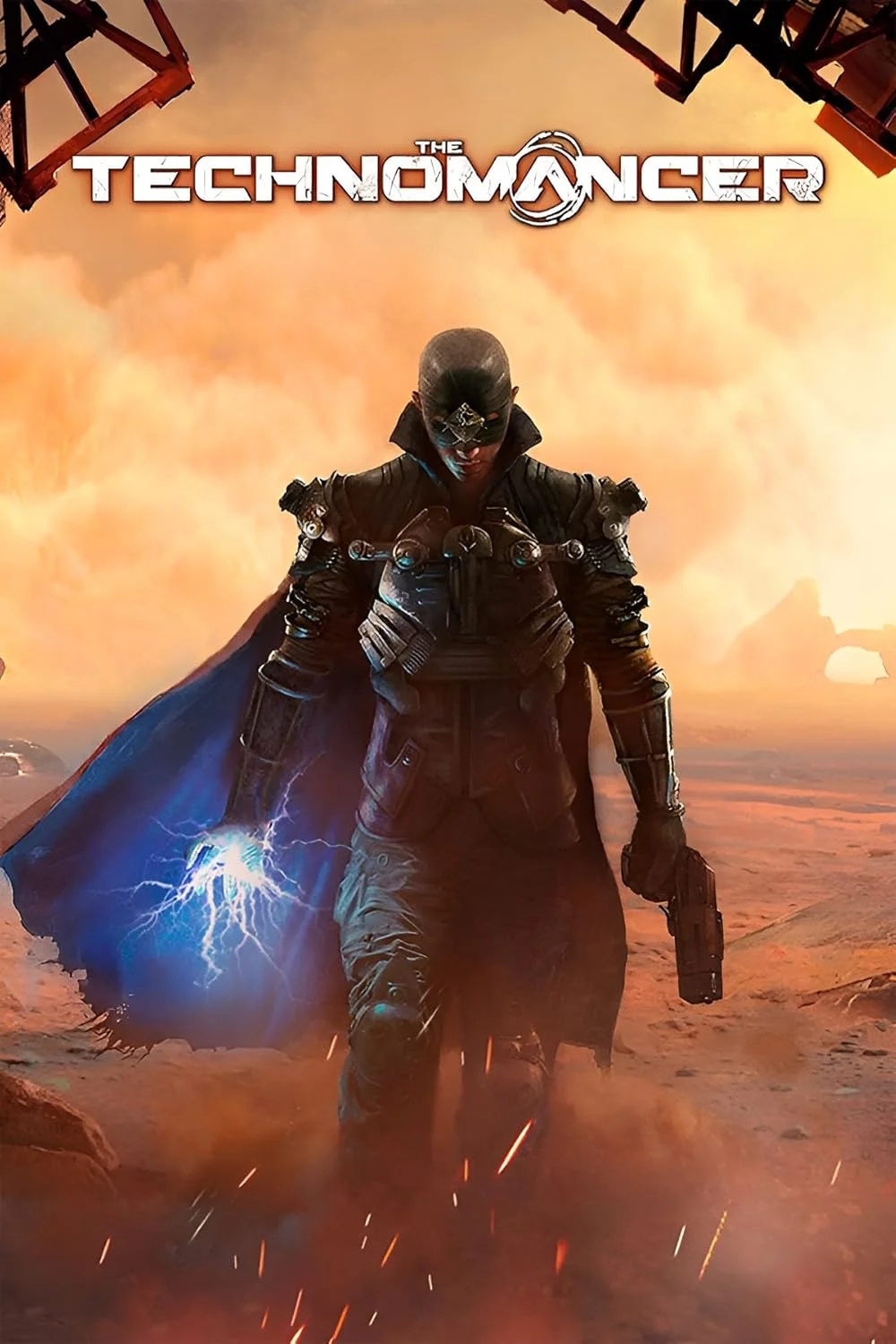
The Technomancer
This combination offers playable performance with an average of 39 FPS, though you may want to lower settings for smoother gameplay.
Average FPS: resolution vs quality settings
| Ultra | High | Medium | Low | |
|---|---|---|---|---|
| 4K Ultra HD | 15 | 19 | 22 | 28 |
| 1440p QHD | 26 | 34 | 40 | 52 |
| 1080p Full HD | 40 | 52 | 61 | 79 |
Cell color: green is 120+ FPS, teal is 60+, amber is 30+, red is below 30.
The Technomancer with AMD Ryzen 7 9700X + Intel Arc B390, In-Depth Analysis
Resolution Scaling
The measured frame rates for The Technomancer with the AMD Ryzen 7 9700X and Intel Arc B390 show a steep and consistent decline as resolution increases from 1920x1080 to 3840x2160. At the Low preset, the average frame rate drops from 79 FPS at 1080p to 52 FPS at 1440p, a reduction of 27 FPS, and then further to 28 FPS at 4K. This pattern indicates that the graphics processor becomes the primary limiting factor at higher resolutions, as the rendering workload scales directly with pixel count.
Examining the High preset tells a similar story. The average frame rate at 1920x1080 is 52 FPS, which falls to 34 FPS at 2560x1440 and bottoms out at 19 FPS at 3840x2160. The percentage drop from 1080p to 1440p is approximately 35%, while the drop from 1440p to 4K is roughly 44%. This accelerating decline suggests that the GPU's compute resources are being saturated well before the 4K boundary, and the system is unable to maintain playable performance at the highest resolution even on lower quality settings.
The Medium preset, which includes minimum and maximum frame rate data, provides additional insight into the scaling behavior. At 1920x1080 Medium, the average is 61 FPS with a minimum of 52 FPS and a maximum of 70 FPS. At 2560x1440 Medium, the average falls to 40 FPS with a range of 34 to 46 FPS. At 3840x2160 Medium, the average drops to 22 FPS with a range of 19 to 25 FPS. The minimum frame rates at 4K fall below 20 FPS, which indicates that the experience becomes inconsistent and likely stutter-prone.
The Ultra preset shows the most severe scaling penalty. At 1080p Ultra, the average is 40 FPS, which is already marginal for smooth gameplay. At 1440p Ultra, it drops to 26 FPS, and at 4K Ultra, it reaches just 15 FPS. The data suggests that Ultra settings are not viable at any resolution above 1080p for this combination, and even at 1080p the frame rate hovers near the threshold where input response and visual smoothness degrade noticeably.
The scaling behavior across all presets points to a GPU-bound scenario at 1440p and above. The CPU, with its 8 cores and 16 threads, is unlikely to be the bottleneck in a 2016 Action RPG, especially given the low geometric complexity typical of that era. Instead, the Intel Arc B390's modest shading unit count of 1536 and its 24 ROPs appear to be the constraints. The pixel rate of 60.00 GPixel/s and texture rate of 120.0 GTexel/s are the hardware specifications that govern how quickly frames can be filled and textured, and these limits become apparent as resolution climbs.
GPU Role
The Intel Arc B390 is an integrated graphics solution based on the Xe3-LPG architecture, fabricated on Intel's 3 nm process. Its base clock is 300 MHz with a boost clock of 2500 MHz, and it draws a TDP of 80 W. The memory configuration is System Shared, meaning there is no dedicated VRAM; the GPU relies on the system's DDR5 memory, with bandwidth described as System Dependent. This shared memory arrangement has direct implications for The Technomancer, a game that benefits from dedicated graphics memory for texture streaming and frame buffering.
The GPU's benchmark standing is low relative to the broader market. Its 3DMark Steel Nomad DX12 score is 1482, which places it in the 9th percentile among all GPUs. The nearest rivals in the benchmark database are the NVIDIA GeForce GT 520MX with a score of 1463 (1.3% slower), the NVIDIA GeForce 800M with 1460 (1.5% slower), the NVIDIA GeForce GT 625 OEM with 1446 (2.5% slower), and the NVIDIA GeForce GT 710 with 1443 (2.7% slower). These comparisons place the Arc B390 at the very bottom of the performance spectrum, which aligns with the measured frame rates in The Technomancer.
The FP32 compute throughput of 7.680 TFLOPS is the raw arithmetic capability, while the FP16 rate of 15.36 TFLOPS (2:1) indicates that half-precision workloads can be processed twice as fast. For a game like The Technomancer, which relies on standard single-precision shader math, the FP32 figure is the more relevant metric, and it is evidently insufficient for high-resolution rendering. The 12 RT cores are irrelevant for this title, as The Technomancer predates ray tracing implementations and does not use them.
The lack of dedicated VRAM is a critical factor. At 4K resolution, the frame buffer requirements exceed what can be efficiently managed through system memory sharing, and the measured average frame rates of 19 FPS at High and 15 FPS at Ultra reflect this constraint. Even at 1080p, the GPU is only able to produce 52 FPS at High settings, which suggests that the shared memory bandwidth is a limiting factor regardless of resolution. The texture rate of 120.0 GTexel/s, while not exceptionally low on paper, is paired with a narrow memory interface that cannot feed the texture units at sufficient speed for sustained high frame rates.
How This Combo Ranks
In the benchmark database, this specific combination of the AMD Ryzen 7 9700X and the Intel Arc B390 ranks 2500 out of 2825 tested combos for The Technomancer. This places the combo in the bottom 12% of all configurations tested, meaning that roughly 88% of tested systems deliver higher average frame rates in this game. The ranking reflects the GPU's severe limitation rather than the CPU's capability, as the Ryzen 7 9700X is a high-end desktop processor with strong synthetic scores.
The CPU's percentile standing among all processors is 86, with an average benchmark score of 37943. Its nearest rivals are the Intel Core i9-14901E with a score of 37911 (0.1% slower), the AMD Ryzen AI 9 HX 370 with 37904 (0.1% slower), the Intel Core 5 211E with 37829 (0.3% slower), and the AMD Ryzen AI Embedded P132 with 37804 (0.4% slower). This places the Ryzen 7 9700X in a tight cluster at the top of the CPU performance hierarchy, but that computational headroom is wasted when paired with a GPU that ranks in the 9th percentile.
The disparity between CPU and GPU performance classes is stark. The CPU can handle any workload The Technomancer presents, including the physics calculations and AI routines that drive the Action RPG gameplay. However, the GPU becomes the bottleneck well before the CPU is stressed. The measured frame rates at 1080p Low of 79 FPS are the highest recorded for this combo, and they are still below what the CPU could theoretically support if paired with a more capable graphics solution. The combo ranking of 2500 out of 2825 is therefore a direct consequence of the GPU's low performance ceiling.
Measured FPS Breakdown
The complete set of measured frame rates for The Technomancer with this hardware pairing is as follows. At 1920x1080, the Low preset delivers an average of 79 FPS, which is the highest frame rate recorded across all tested configurations. The Medium preset at 1080p averages 61 FPS with a minimum of 52 FPS and a maximum of 70 FPS. The High preset averages 52 FPS, and the Ultra preset averages 40 FPS. All four presets at 1080p are technically playable, though Ultra sits at a level where motion smoothness is compromised.
Moving to 2560x1440, the Low preset drops to an average of 52 FPS, which is identical to the 1080p High average. The Medium preset averages 40 FPS with a range of 34 to 46 FPS. The High preset averages 34 FPS, and the Ultra preset averages 26 FPS. At this resolution, only the Low preset remains consistently above the 60 FPS threshold for smooth gameplay, and it does not reach it; 52 FPS is acceptable but not ideal for fast-paced action sequences.
At 3840x2160, the frame rates become marginal to unplayable. The Low preset averages 28 FPS, the Medium preset averages 22 FPS with a range of 19 to 25 FPS, the High preset averages 19 FPS, and the Ultra preset averages 15 FPS. No preset at 4K achieves even 30 FPS, which is typically considered the minimum for a playable experience in a game that requires responsive input. The minimum frame rate of 19 FPS at Medium settings indicates that the experience would be punctuated by noticeable hitches.
The data shows a clear hierarchy: resolution has a larger impact on frame rate than settings at the higher resolutions. At 1080p, reducing from Ultra to Low yields a gain of 39 FPS (from 40 to 79). At 1440p, the same settings reduction yields 26 FPS (from 26 to 52). At 4K, the gain is 13 FPS (from 15 to 28). This diminishing return on settings adjustments as resolution increases is a classic sign of a GPU that is fully saturated at the higher pixel counts.
Settings Recommendations
Given the measured data, the optimal settings for this hardware combination depend on the target resolution. At 1920x1080, the Medium preset provides the best balance between visual quality and performance, with an average of 61 FPS and a minimum of 52 FPS. The High preset at 52 FPS is also acceptable, but the Medium preset offers a 9 FPS improvement over High while maintaining a minimum frame rate that stays above 50 FPS. The Ultra preset at 40 FPS is playable but sits at the lower edge of acceptable performance for an action game where reaction time matters.
At 2560x1440, the Low preset is the only viable option for responsive gameplay, delivering 52 FPS. The Medium preset at 40 FPS is borderline; the minimum of 34 FPS means that combat encounters with multiple enemies could cause noticeable slowdown. The High preset at 34 FPS and the Ultra preset at 26 FPS are not recommended for a game that requires precise timing for dodges and parries. Users who prioritize visual fidelity over frame rate might accept the Medium preset, but the data indicates that Low is the safe choice.
At 3840x2160, no preset achieves a playable frame rate. The Low preset at 28 FPS is the best possible result, but it falls below the 30 FPS threshold that most players would consider the absolute minimum. The Medium preset at 22 FPS and the High preset at 19 FPS are both too slow for effective gameplay, and the Ultra preset at 15 FPS is effectively a slideshow. For this resolution, the recommendation is to avoid it entirely with this GPU, or to accept that the game will run at a significantly reduced quality and frame rate.
The overall recommendation across all resolutions is to use the Low preset if the target is 1440p, and the Medium preset if the target is 1080p. The Medium preset at 1080p offers the best combination of visual quality and performance, with the minimum frame rate of 52 FPS ensuring that even the most demanding scenes remain fluid. The High preset at 1080p is a reasonable alternative for users who want slightly better textures and effects, but the 9 FPS penalty compared to Medium is a meaningful trade-off.
FAQ
Q: What is the highest average frame rate this combo achieves in The Technomancer?
A: The highest average frame rate is 79 FPS, achieved at 1920x1080 with the Low preset.
Q: Can this hardware run The Technomancer at 4K resolution?
A: At 3840x2160, the best average frame rate is 28 FPS on the Low preset, which falls below the 30 FPS threshold for playable performance. The Ultra preset averages only 15 FPS.
Q: How does the Intel Arc B390 compare to its nearest GPU rivals?
A: The Arc B390 has a 3DMark Steel Nomad DX12 score of 1482, which is 1.3% higher than the NVIDIA GeForce GT 520MX, 1.5% higher than the GeForce 800M, 2.5% higher than the GeForce GT 625 OEM, and 2.7% higher than the GeForce GT 710.
Q: What is the combo's ranking among all tested systems for this game?
A: The combo ranks 2500 out of 2825 total tested combinations, placing it in the bottom 12% of all configurations.
Q: Which settings provide the smoothest experience at 1080p?
A: The Medium preset at 1920x1080 delivers an average of 61 FPS with a minimum of 52 FPS, making it the best choice for consistent performance at that resolution.
Q: Does the CPU limit performance in this game?
A: No. The CPU has an average benchmark score of 37943 and ranks in the 86th percentile among all processors. The GPU, with a 9th percentile ranking, is the limiting component.
CPU Role
The AMD Ryzen 7 9700X is a desktop processor from the 9000 series, built on the Zen 5 architecture with the Granite Ridge codename. It features 8 cores and 16 threads, with a base clock of 3.80 GHz and a boost clock of 5.50 GHz. The TDP is 65 W, and it is manufactured on TSMC's 4 nm process with 8,315 million transistors on a 70.6 mm² die. The cache hierarchy includes 80 KB of L1 per core, 1 MB of L2 per core, and 32 MB of shared L3 cache.
In synthetic benchmarks, the CPU demonstrates strong multi-threaded and single-threaded performance. The Cinebench R23 multicore score is 20485, while the single-core score is 2211. The Geekbench multicore score is 17906, and the single-core score is 3023. The 3DMark results show scaling from 2525 at 2 threads to 9771 at max threads, indicating that the processor efficiently utilizes its 16 threads. The Passmark multithread score is 37161, with a single-thread score of 4654.
For The Technomancer, a 2016 Action RPG, the CPU's capabilities are far beyond what the game requires. The game's engine was designed for the hardware of its era, and even the most demanding CPU-bound scenarios, such as large crowds or complex physics interactions, would not stress the Ryzen 7 9700X's 8 cores. The benchmark results for the CPU, which place it in the 86th percentile and within 0.4% of its nearest rivals, confirm that it is a top-tier processor that does not introduce any performance ceiling.
The measured frame rates in The Technomancer are entirely consistent with a GPU-bound scenario. At 1080p Low, the 79 FPS average is likely close to the GPU's maximum output, and the CPU is idle waiting for the next frame. The fact that the frame rate drops by more than half when moving from 1080p to 4K at the same settings is definitive evidence that the GPU, not the CPU, determines the performance. The CPU's role is to feed the GPU with draw calls and game state data, and it does so with ample headroom to spare.
Hardware Specifications
AMD Ryzen 7 9700X
Intel Arc B390
FPS Benchmarks by Resolution & Settings
Performance data for AMD Ryzen 7 9700X + Intel Arc B390 in The Technomancer
| Resolution | Settings | Avg FPS |
|---|---|---|
| 3840x2160 | Low | 28.0 |
| 3840x2160 | Medium | 22.0 |
| 3840x2160 | High | 19.0 |
| 3840x2160 | Ultra | 15.0 |
| 2560x1440 | Low | 52.0 |
| 2560x1440 | Medium | 40.0 |
| 2560x1440 | High | 34.0 |
| 2560x1440 | Ultra | 26.0 |
| 1920x1080 | Low | 79.0 |
| 1920x1080 | Medium | 61.0 |
| 1920x1080 | High | 52.0 |
| 1920x1080 | Ultra | 40.0 |
The Technomancer with Ryzen 7 9700X + Other GPUs
See how The Technomancer performs with the same CPU but different graphics cards.
The Technomancer with Arc B390 + Other CPUs
See how The Technomancer performs with the same GPU but different processors.
Other Games with Ryzen 7 9700X + Arc B390
Explore FPS benchmarks for other games using this same hardware combination.