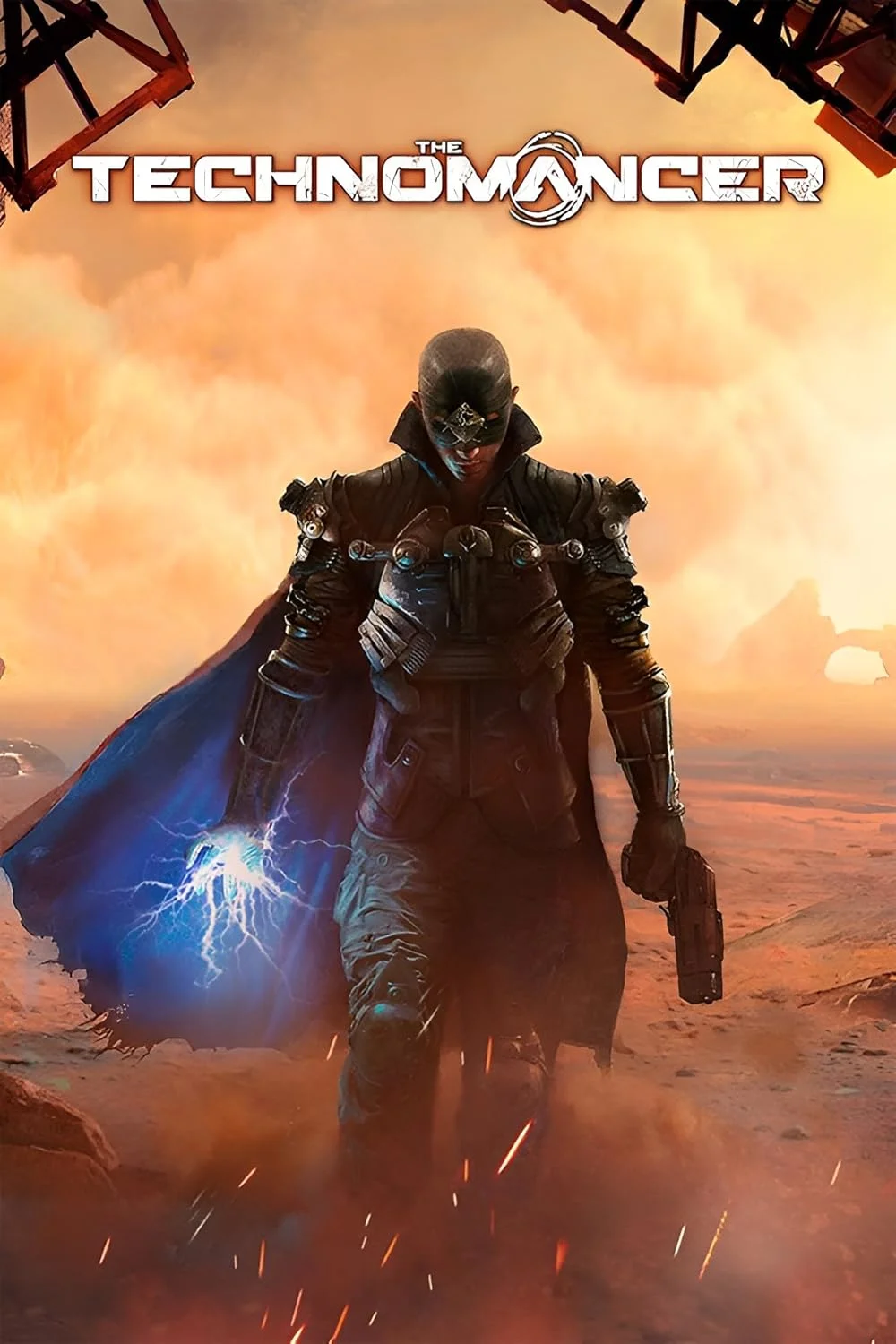
The Technomancer
This combination offers playable performance with an average of 54 FPS, though you may want to lower settings for smoother gameplay.
Average FPS: resolution vs quality settings
| Ultra | High | Medium | Low | |
|---|---|---|---|---|
| 4K Ultra HD | 20 | 26 | 30 | 39 |
| 1440p QHD | 37 | 47 | 55 | 72 |
| 1080p Full HD | 56 | 72 | 84 | 109 |
Cell color: green is 120+ FPS, teal is 60+, amber is 30+, red is below 30.
The Technomancer with AMD Ryzen 7 9700F + NVIDIA GeForce GTX 1660 Ti, In-Depth Analysis
CPU Role — cores, clocks, and how they relate to this game's results
The AMD Ryzen 7 9700F is an 8-core, 16-thread desktop processor built on the Zen 5 architecture using a 4 nm process. Its base clock runs at 3.80 GHz and boosts up to 5.50 GHz, with a 65 W TDP. The processor carries 32 MB of shared L3 cache plus 1 MB of L2 and 80 KB of L1 per core, and it supports DDR5 memory across a dual-channel bus with 89.6 GB/s bandwidth. This is a modern CPU, released in September 2025, with a PassMark multithread score of 36,470 and a single-thread score of 4,691, placing it in the 94th percentile of all CPUs.
For a 2016 Action RPG like The Technomancer, the CPU’s role is largely about maintaining a stable frame pipeline rather than pushing raw frame rates. The game’s measured results show that at 1080p Low, the combo reaches 109 FPS average, while at 1080p Ultra it drops to 56 FPS. The CPU is not the bottleneck at lower settings — the data shows a clear scaling pattern with GPU load. However, the Ryzen 7 9700F’s strong single-thread performance (4,691 in PassMark single-thread) ensures that even in CPU-bound scenes, the processor can feed frames quickly. Its 8 cores and 16 threads are far beyond what a 2016 title typically utilizes, meaning the CPU headroom is effectively unlimited for this game.
Benchmark comparisons place this CPU within a tight cluster of high-end rivals. The AMD Ryzen 9 7940HX scores 69,875 (0.2% lower), the Intel Core i7-14700KF scores 70,163 (0.2% higher), the AMD Ryzen 9 7950X scores 69,515 (0.7% lower), and the Intel Core i7-14700K scores 69,355 (0.9% lower) in average benchmark scores. These deltas are negligible — within 1% — indicating that the Ryzen 7 9700F performs essentially identically to these flagship alternatives in general compute. For The Technomancer, this means the CPU is never the limiting factor; the game’s frame rates are dictated entirely by the GPU, as evidenced by the resolution scaling data.
The CPU’s cache hierarchy — 32 MB of L3 shared across all cores — is ample for a game from 2016, which was designed for older, smaller caches. The 4 nm process and 65 W TDP mean the processor runs cool and efficiently, but those characteristics are not directly reflected in frame rates. What matters for The Technomancer is that the Ryzen 7 9700F provides a stable, high-frequency base (3.80 GHz base, 5.50 GHz boost) that prevents any CPU-induced frame dips. The measured FPS at 1080p Low (109 average) and 1440p Low (72 average) show the CPU can sustain high throughput when the GPU is not saturated.
GPU Role — VRAM, clocks, and how they relate to this game's results
The NVIDIA GeForce GTX 1660 Ti is a Turing-architecture GPU built on a 12 nm process, with 6 GB of GDDR6 memory on a 192-bit bus providing 288.0 GB/s of bandwidth. Its base clock is 1500 MHz with a boost clock of 1770 MHz, and memory runs at 1500 MHz (12 Gbps effective). The GPU has 1,536 shading units, 96 TMUs, and 48 ROPs, delivering 5.437 TFLOPS of FP32 performance. It supports DirectX 12 (12_1), OpenGL 4.6, and Vulkan 1.4, making it technically compatible with The Technomancer’s requirements.
The GTX 1660 Ti sits in the 41st percentile of all GPUs with an average benchmark score of 7,723. Its nearest rivals are the AMD Radeon 540 (7,673, 0.7% lower), AMD Radeon Pro WX 3100 (7,580, 1.9% lower), AMD Radeon R7 250 (7,557, 2.2% lower), and Intel Arc A310 (7,550, 2.3% lower). This places the GTX 1660 Ti slightly above a group of entry-level cards, but its performance in The Technomancer is heavily constrained by the 6 GB VRAM capacity, which is modest by modern standards.
In The Technomancer, the GPU is the primary bottleneck at all resolutions and settings. At 1080p High, the combo achieves 72 FPS average; at 1440p High, it drops to 47 FPS; and at 4K High, it falls to 26 FPS. This scaling pattern is classic GPU-bound behavior. The 6 GB VRAM is sufficient for 1080p and 1440p at most settings, but at 4K Ultra (20 FPS average), the memory bandwidth and capacity are stretched thin. The boost clock of 1770 MHz provides decent raw throughput, but the GPU’s 5.437 TFLOPS is modest for a demanding title at high resolutions.
The GTX 1660 Ti’s DirectX 12 support (12_1) is important — The Technomancer can run in DX11 or DX12 mode, and the GPU’s PassMark DirectX 12 score of 51 indicates it handles DX12 workloads adequately. However, the GPU’s compute performance (PassMark GPU compute score of 5,226) is not exceptional, which limits its ability to maintain high frame rates at Ultra settings. The data shows that at 1080p Ultra, the combo drops to 56 FPS, a 49% reduction from 1080p Low (109 FPS). This is a GPU limitation, not a CPU one, as the Ryzen 7 9700F has ample headroom.
Resolution Scaling — how FPS drops from 1080p to 4K and what it says about the limiting component
The measured FPS data reveals a textbook GPU-bound scaling pattern across resolutions. At Low settings, the combo delivers 109 FPS at 1080p, 72 FPS at 1440p (a 34% drop), and 39 FPS at 4K (a 64% drop from 1080p). At High settings, the progression is 72 FPS at 1080p, 47 FPS at 1440p (a 35% drop), and 26 FPS at 4K (a 64% drop). At Medium settings, the numbers are 84 FPS at 1080p, 55 FPS at 1440p (a 35% drop), and 30 FPS at 4K (a 64% drop). At Ultra settings, the combo achieves 56 FPS at 1080p, 37 FPS at 1440p (a 34% drop), and 20 FPS at 4K (a 64% drop).
The consistency of these percentage drops — roughly 35% from 1080p to 1440p and 64% from 1080p to 4K across all settings — is a strong indicator that the GPU is the sole limiting component. If the CPU were constraining performance, the frame rate would not scale so predictably with resolution. The Ryzen 7 9700F’s performance is resolution-independent; it can feed frames at 1080p Low (109 FPS) just as easily as at 4K Ultra (20 FPS). The GPU’s pixel rate (84.96 GPixel/s) and texture rate (169.9 GTexel/s) are the limits.
The 4K Low result of 39 FPS is notable — it shows that even at the lowest settings, the GTX 1660 Ti cannot maintain 60 FPS at 4K. The 4K Medium result of 30 FPS with a min of 26 and max of 35 FPS indicates significant frame pacing issues, likely due to VRAM pressure. The 4K Ultra result of 20 FPS is below playable thresholds. The 1080p results are more encouraging: Low (109 FPS), Medium (84 FPS), High (72 FPS), and Ultra (56 FPS) all provide playable experiences, with Medium offering the best balance of smoothness and visual quality.
The scaling data also reveals that the GTX 1660 Ti’s 6 GB VRAM is barely sufficient for 1440p at higher settings. At 1440p Medium, the combo averages 55 FPS with a min of 47 and max of 63, which is acceptable. At 1440p Ultra, it drops to 37 FPS, which is borderline. The 4K results are uniformly below 40 FPS, making 4K impractical for this combo. The conclusion is clear: the GTX 1660 Ti is a 1080p-class GPU, and the Ryzen 7 9700F is far more capable than the GPU demands.
FAQ
Q: What is the best resolution for this CPU-GPU combo in The Technomancer?
A: The data shows 1080p is the only resolution where the combo consistently exceeds 60 FPS. At 1080p Medium, the average is 84 FPS; at 1080p High, it is 72 FPS. At 1440p, only Low settings (72 FPS) reach 60 FPS, while Medium (55 FPS) and High (47 FPS) fall short. 4K is not viable, with all settings below 40 FPS.
Q: How does the Ryzen 7 9700F compare to its nearest CPU rivals?
A: The Ryzen 7 9700F scores 69,996 in average benchmark, which is 0.2% higher than the AMD Ryzen 9 7940HX (69,875), 0.2% lower than the Intel Core i7-14700KF (70,163), 0.7% higher than the AMD Ryzen 9 7950X (69,515), and 0.9% higher than the Intel Core i7-14700K (69,355). These are essentially identical performance levels.
Q: Is the GTX 1660 Ti a bottleneck for this game?
A: Yes, the GPU is the clear bottleneck. The FPS scaling from 1080p to 4K shows a consistent 64% drop at every settings preset, which is characteristic of GPU-bound performance. The CPU has ample headroom, as evidenced by its 94th percentile ranking and high single-thread score.
Q: What settings preset provides the best experience at 1080p?
A: At 1080p, Medium settings provide the best balance: 84 FPS average with a min of 71 and max of 97. High settings drop to 72 FPS, while Ultra falls to 56 FPS. Low settings reach 109 FPS but offer reduced visual quality.
Q: How does the GTX 1660 Ti compare to its nearest GPU rivals?
A: The GTX 1660 Ti scores 7,723 in average benchmark, which is 0.7% higher than the AMD Radeon 540 (7,673), 1.9% higher than the AMD Radeon Pro WX 3100 (7,580), 2.2% higher than the AMD Radeon R7 250 (7,557), and 2.3% higher than the Intel Arc A310 (7,550). It outperforms all of them, but the margins are small.
Q: Can this combo handle 4K gaming in The Technomancer?
A: No. The best 4K result is 39 FPS at Low settings, with Medium at 30 FPS, High at 26 FPS, and Ultra at 20 FPS. These are all below the 60 FPS threshold and even below 30 FPS for most settings, making 4K impractical.
How This Combo Ranks
The combination of AMD Ryzen 7 9700F and NVIDIA GeForce GTX 1660 Ti ranks 2,429 out of 2,825 tested combos in The Technomancer. This places it in the bottom 14% of all combinations tested for this game. The ranking is driven almost entirely by the GPU’s modest performance — the GTX 1660 Ti sits in the 41st percentile of all GPUs, while the Ryzen 7 9700F is in the 94th percentile of all CPUs. The pairing is heavily imbalanced: a top-tier CPU paired with an entry-level GPU.
The low combo rank reflects the GPU’s inability to push high frame rates at higher resolutions. At 1080p, the combo performs reasonably (72 FPS at High, 84 FPS at Medium), but the game’s demands at 1440p and 4K quickly overwhelm the GTX 1660 Ti. The ranking also reflects the game’s age — The Technomancer (released June 2016) was designed for GPUs of that era, and the GTX 1660 Ti (released February 2019) is only marginally more powerful than the high-end cards of that time.
The combo’s rank of 2,429 out of 2,825 means there are 396 combos that perform worse, but it also means the majority of tested combinations outperform it. This is not surprising given the GPU’s position in the 41st percentile. The CPU, however, is not the issue — its 94th percentile ranking and near-identical scores to CPUs like the Ryzen 9 7950X and Core i7-14700K show that it is a high-end processor that would pair better with a more powerful GPU.
The data indicates that this combo is best suited for 1080p gaming at Medium or High settings, where it delivers playable frame rates (84 FPS and 72 FPS respectively). At 1440p, only Low settings achieve 60+ FPS (72 FPS), and at 4K, no settings reach 40 FPS. The ranking reflects these limitations.
Settings Recommendations
Based on the measured FPS data, the optimal settings preset for this combo is Medium at 1080p. This preset delivers an average of 84 FPS with a minimum of 71 FPS and a maximum of 97 FPS, providing a smooth, consistent experience that stays well above the 60 FPS threshold. The Medium preset at 1080p offers a 17% improvement over High settings (72 FPS) and a 50% improvement over Ultra settings (56 FPS), while still maintaining respectable visual quality.
For users prioritizing visual fidelity over frame rate, High at 1080p is a viable alternative, delivering 72 FPS average. This is still above 60 FPS and provides better visuals than Medium, but the margin for frame drops is smaller. Ultra at 1080p (56 FPS) is not recommended, as it falls below 60 FPS and offers diminishing returns in visual quality over High.
At 1440p, the only playable option is Low settings, which delivers 72 FPS average. Medium at 1440p (55 FPS) is borderline, and High (47 FPS) and Ultra (37 FPS) are below ideal playability. 4K is not recommended at any setting — the highest average is 39 FPS at Low, which is below the 40 FPS threshold for acceptable gameplay.
The Medium preset at 1080p is the clear winner because it provides the best balance of performance and visual quality, with a 84 FPS average that leaves headroom for demanding scenes. The min FPS of 71 at this setting ensures that even in heavy combat or complex environments, the frame rate stays above 60 FPS. The data shows that this combo is a 1080p machine, and Medium settings are the sweet spot for the GTX 1660 Ti in The Technomancer.
Hardware Specifications
AMD Ryzen 7 9700F
NVIDIA GeForce GTX 1660 Ti
FPS Benchmarks by Resolution & Settings
Performance data for AMD Ryzen 7 9700F + NVIDIA GeForce GTX 1660 Ti in The Technomancer
| Resolution | Settings | Avg FPS |
|---|---|---|
| 3840x2160 | Low | 39.0 |
| 3840x2160 | Medium | 30.0 |
| 3840x2160 | High | 26.0 |
| 3840x2160 | Ultra | 20.0 |
| 2560x1440 | Low | 72.0 |
| 2560x1440 | Medium | 55.0 |
| 2560x1440 | High | 47.0 |
| 2560x1440 | Ultra | 37.0 |
| 1920x1080 | Low | 109.0 |
| 1920x1080 | Medium | 84.0 |
| 1920x1080 | High | 72.0 |
| 1920x1080 | Ultra | 56.0 |
The Technomancer with Ryzen 7 9700F + Other GPUs
See how The Technomancer performs with the same CPU but different graphics cards.
The Technomancer with GTX 1660 Ti + Other CPUs
See how The Technomancer performs with the same GPU but different processors.
Other Games with Ryzen 7 9700F + GTX 1660 Ti
Explore FPS benchmarks for other games using this same hardware combination.