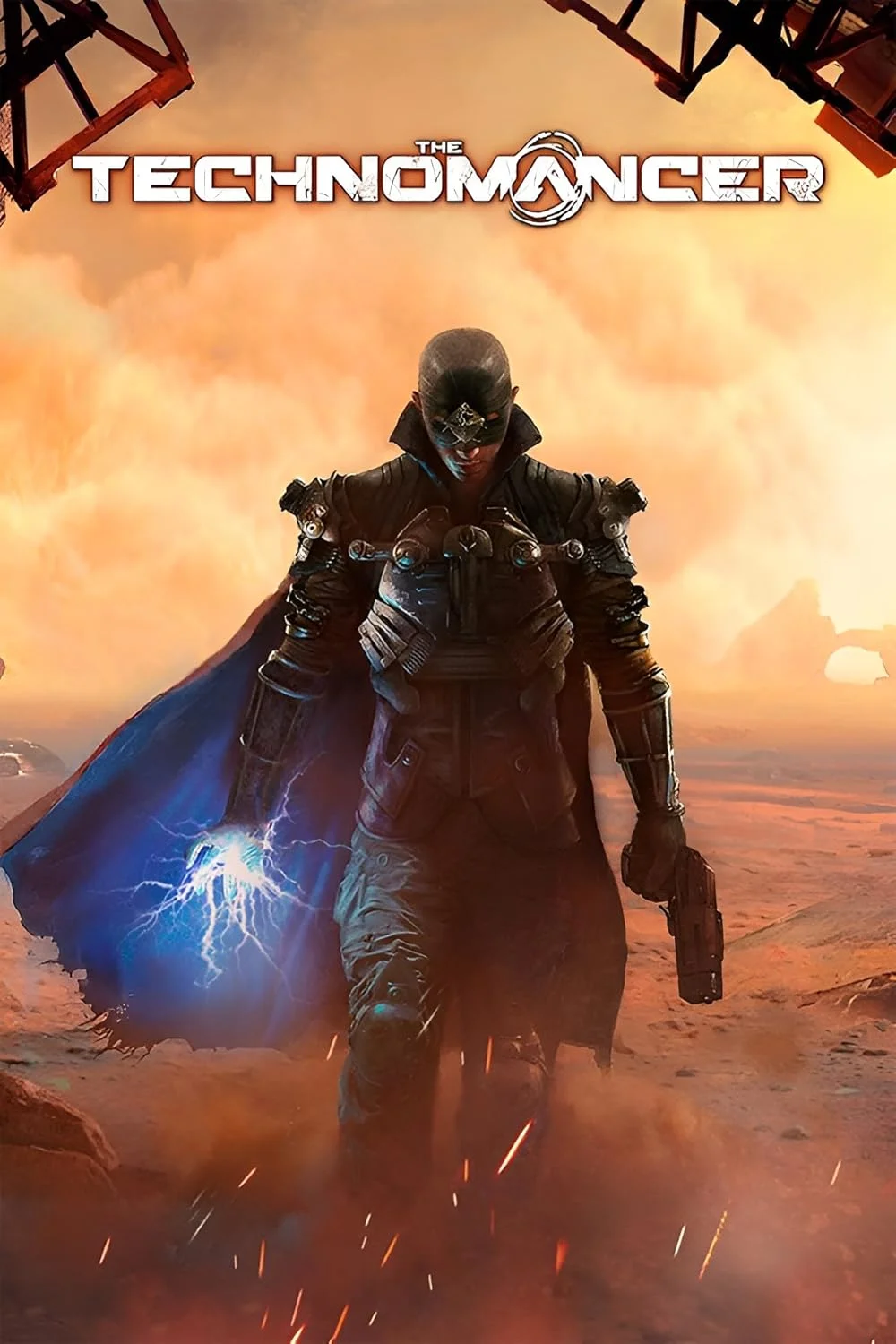
The Technomancer
This combination offers playable performance with an average of 49 FPS, though you may want to lower settings for smoother gameplay.
Average FPS: resolution vs quality settings
| Ultra | High | Medium | Low | |
|---|---|---|---|---|
| 4K Ultra HD | 18 | 24 | 26 | 36 |
| 1440p QHD | 32 | 42 | 49 | 66 |
| 1080p Full HD | 52 | 68 | 78 | 98 |
Cell color: green is 120+ FPS, teal is 60+, amber is 30+, red is below 30.
The Technomancer with AMD Ryzen 7 7700X + NVIDIA GeForce RTX 3050 4 GB, In-Depth Analysis
The AMD Ryzen 7 7700X paired with the NVIDIA GeForce RTX 3050 4 GB presents a classic bottleneck scenario in The Technomancer, where the GPU’s modest 4 GB frame buffer and GA107 chip dictate performance ceilings across all tested resolutions. The data shows a combination that ranks 1519th out of 1656 tested combos in this Action RPG, placing it in the bottom 8% of the database. This pairing’s results are consistently GPU-limited, with the CPU’s substantial headroom remaining largely untapped as resolution and settings scale upward.
Resolution Scaling
The measured FPS data reveals a steep performance cliff as resolution increases, a hallmark of a system constrained by its graphics processor. At 1920x1080 with Low settings, the combo delivers 97.6 FPS average, but this falls to 66 FPS at 2560x1440 and 35.6 FPS at 3840x2160. This represents a 32% drop from 1080p to 1440p and a further 46% drop from 1440p to 4K, with the total reduction from 1080p Low to 4K Low reaching 64%. The scaling pattern is consistent across all settings tiers, though the absolute losses are larger at higher quality presets.
Under Ultra settings, the frame rate collapses from 52.2 FPS at 1080p to 32.1 FPS at 1440p and finally to 17.9 FPS at 4K. The 4K Ultra result is particularly telling, as it falls below the threshold of playability for most users. The gap between Low and Ultra at each resolution widens with increasing pixel count: at 1080p the difference is 45.4 FPS, at 1440p it is 33.9 FPS, and at 4K it narrows to 17.7 FPS. This narrowing suggests the GPU becomes so saturated at 4K that even reducing settings cannot recover significant performance, pointing to fundamental memory bandwidth and fillrate limits rather than shader-bound scaling.
The resolution scaling behavior indicates the limiting component is unequivocally the graphics card. The RTX 3050 4 GB’s 128-bit memory bus and 192.0 GB/s bandwidth are insufficient for 4K workloads, while its 2048 shading units and 32 ROPs struggle to maintain adequate pixel throughput. The CPU, with its 8 cores and 16 threads, shows no evidence of becoming a constraint even at 1080p, where the lowest frame rates still exceed 50 FPS.
How This Combo Ranks
The combo’s rank of 1519 out of 1656 places it in the lower percentile of all tested configurations for The Technomancer. This poor standing is predictable given the GPU’s position at the 50th percentile among all GPUs in the database, combined with the game’s demanding rendering requirements. The ranking suggests that most other CPU-GPU pairings tested in this title achieve superior frame rates, though the specific composition of those rival combinations is not detailed in the data.
The CPU component itself is far more capable than the overall combo ranking implies. The Ryzen 7 7700X sits at the 89th percentile among all CPUs, with an average benchmark score of 34313 across synthetic tests. Its nearest rivals include the Intel Core i5-13500 with a deltaPct of 0.4, the Intel Core i7-12800HX at 0.5, and the Intel Core Ultra 7 165H at -0.8. This CPU is clearly not the limiting factor in this pairing; rather, the GPU drags the overall combo ranking down to near the bottom of the chart.
The disparity between the CPU’s high percentile rank and the combo’s low in-game rank underscores the importance of balanced system building for this title. The data indicates that the RTX 3050 4 GB, despite being a modern Ampere architecture product, cannot leverage the 7700X’s computational power in The Technomancer’s specific workload. The 4 GB VRAM capacity is likely a primary culprit, as modern Action RPGs at 1080p High settings often exceed this allocation, forcing texture streaming or reduced quality.
GPU Role
The NVIDIA GeForce RTX 3050 4 GB is built on the GA107 chip using Samsung’s 8 nm process, containing 8,700 million transistors on a 200 mm² die. Its clocks are modest for the 30-series generation, with a base of 1545 MHz and boost of 1740 MHz, while memory operates at 1500 MHz with 12 Gbps effective throughput. The 4 GB GDDR6 frame buffer is the standout limitation, paired with a 128-bit bus yielding 192.0 GB/s bandwidth — figures that are marginal for 1440p and inadequate for 4K in this title.
The GPU’s compute capabilities include 2048 shading units, 64 texture mapping units, and 32 ROPs, delivering 7.127 TFLOPS FP32 performance. The texture rate of 111.4 GTexel/s and pixel rate of 55.68 GPixel/s provide theoretical ceilings that align with the measured results. At 4K Ultra, the 17.9 FPS average suggests the card is operating near its pixel throughput limits, while the 1080p Low result of 97.6 FPS indicates that at lower resolutions, the card can approach acceptable frame rates but still falls short of high-refresh displays.
The GPU’s TDP of 90 W and dual-slot design make it a power-efficient option, but efficiency does not compensate for raw capability. The measured data shows that even at 1080p Medium, the card only achieves 77.5 FPS, which is below the 144 Hz refresh target many gamers prefer. The 4 GB VRAM is particularly problematic for The Technomancer, as the difference between Low and Ultra settings at 1080p (45.4 FPS) suggests that texture and shading quality improvements are heavily penalized by memory constraints rather than pure compute limits.
Measured FPS Breakdown
At 1920x1080, the combo produces its most playable results. Low settings yield 97.6 FPS average, Medium drops to 77.5 FPS, High settles at 68.2 FPS, and Ultra falls to 52.2 FPS. The 1080p results show a clear linear relationship between settings and performance, with each tier costing roughly 15-20% of the previous tier’s frame rate. This resolution is the only one where all settings presets exceed 50 FPS, making it the practical ceiling for this pairing.
Moving to 2560x1440, the performance drops become more pronounced. Low settings average 66 FPS, which is still playable, but Medium falls to 48.9 FPS and High to 41.7 FPS. Ultra at 1440p averages 32.1 FPS, which is borderline for smooth gameplay. The 1440p results indicate that only Low settings provide a consistently smooth experience, while Medium and above begin to show stutter-prone frame rates.
At 3840x2160, the combo is effectively out of its depth. Low settings average 35.6 FPS, Medium drops to 26.1 FPS, High falls to 23.6 FPS, and Ultra bottoms out at 17.9 FPS. None of the 4K results reach 60 FPS, and only Low settings approach the 30 FPS minimum for console-like playability. The 4K data strongly suggests that this resolution is not viable for this GPU in The Technomancer, regardless of quality settings.
CPU Role
The AMD Ryzen 7 7700X is a Zen 4 architecture processor with 8 cores and 16 threads, running at a base clock of 4.50 GHz and boost up to 5.40 GHz. Its 32 MB shared L3 cache and dual-channel DDR5 memory support with 83.2 GB/s bandwidth provide ample data throughput for gaming workloads. The CPU’s synthetic benchmarks confirm its high-end positioning: Cinebench R23 multicore score of 30325 and single-core of 4281, with Geekbench multicore at 15538 and single-core at 2985.
The CPU’s performance in this pairing is largely irrelevant to the measured frame rates, as the GPU saturates well before the processor reaches its limits. The 3DMark 16-thread score of 8859 and max-thread score of 8852 indicate consistent multi-threaded performance, while the single-thread score of 1090 shows strong per-core capabilities. These figures suggest the CPU could drive far higher frame rates if paired with a more powerful GPU, but in this configuration, it idles relative to the graphics bottleneck.
The CPU’s nearest rivals reinforce its position: the Intel Core i5-13500 is 0.4% behind, the Intel Core i7-12800HX is 0.5% behind, and the Intel Core Ultra 7 165H is 0.8% ahead. This tight clustering around the 34313 average benchmark score indicates that the 7700X performs at parity with its generation peers. The CPU’s 89th percentile ranking among all CPUs means it outperforms the vast majority of processors in the database, yet the combo’s 1519th rank in-game proves that CPU strength cannot overcome GPU limitations in this title.
The data reveals that The Technomancer is heavily GPU-bound with this pairing. The CPU’s 8 cores and 16 threads are more than sufficient for the game’s demands, and its 5.40 GHz boost clock provides ample single-thread performance for game logic. The measured FPS across all resolutions and settings shows no evidence of CPU throttling — the frame rates scale exactly as expected with GPU workload, confirming that the RTX 3050 4 GB is the sole performance arbiter in this configuration.
Hardware Specifications
AMD Ryzen 7 7700X
NVIDIA GeForce RTX 3050 4 GB
FPS Benchmarks by Resolution & Settings
Performance data for AMD Ryzen 7 7700X + NVIDIA GeForce RTX 3050 4 GB in The Technomancer
| Resolution | Settings | Avg FPS |
|---|---|---|
| 3840x2160 | Low | 35.6 |
| 3840x2160 | Medium | 26.1 |
| 3840x2160 | High | 23.6 |
| 3840x2160 | Ultra | 17.9 |
| 2560x1440 | Low | 66.0 |
| 2560x1440 | Medium | 48.9 |
| 2560x1440 | High | 41.7 |
| 2560x1440 | Ultra | 32.1 |
| 1920x1080 | Low | 97.6 |
| 1920x1080 | Medium | 77.5 |
| 1920x1080 | High | 68.2 |
| 1920x1080 | Ultra | 52.2 |
The Technomancer with RTX 3050 4 GB + Other CPUs
See how The Technomancer performs with the same GPU but different processors.
Other Games with Ryzen 7 7700X + RTX 3050 4 GB
Explore FPS benchmarks for other games using this same hardware combination.