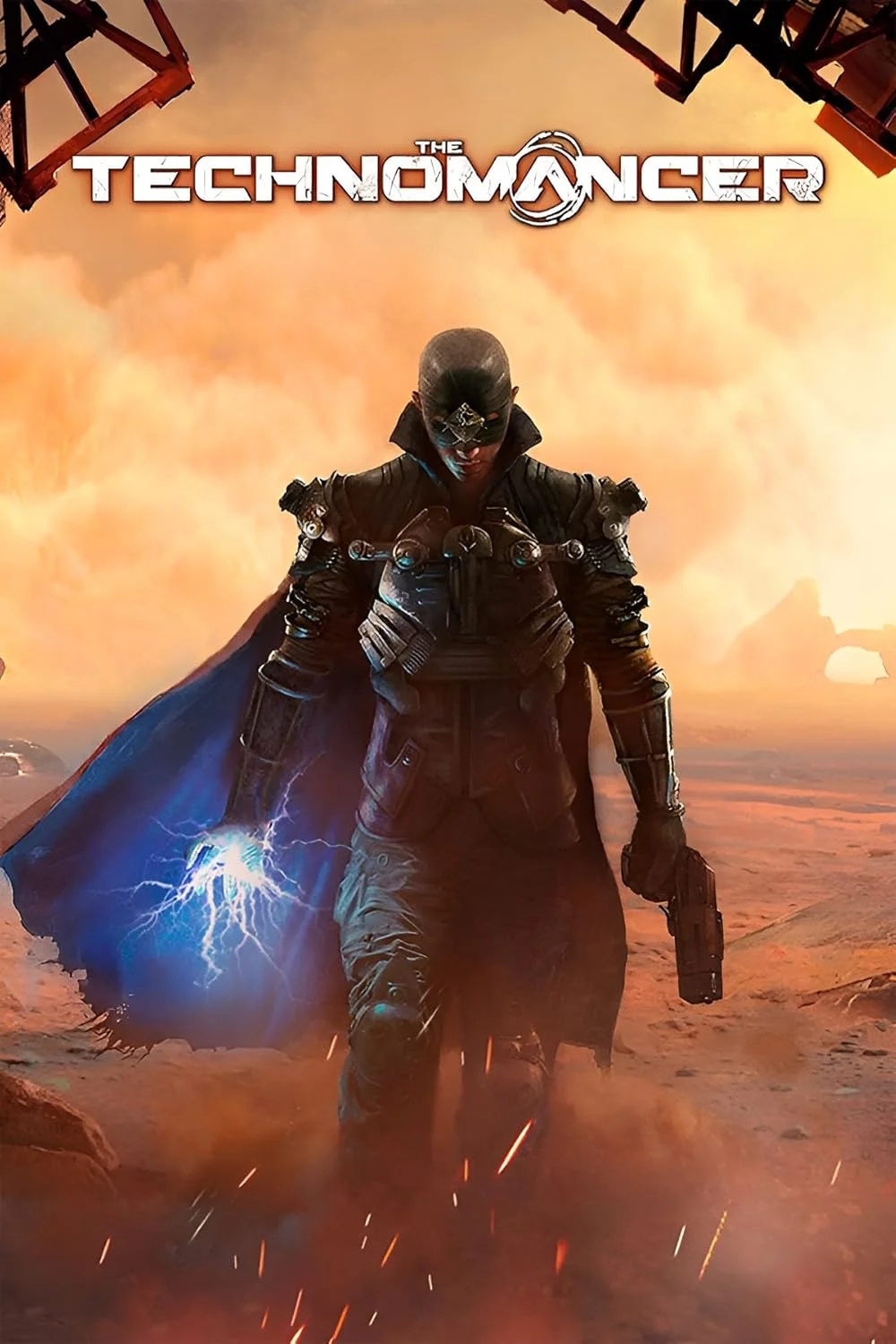
The Technomancer
This combination delivers exceptional performance with an average of 123 FPS, perfect for high refresh rate gaming and competitive play.
Average FPS: resolution vs quality settings
| Ultra | High | Medium | Low | |
|---|---|---|---|---|
| 4K Ultra HD | 46 | 62 | 67 | 92 |
| 1440p QHD | 82 | 107 | 126 | 166 |
| 1080p Full HD | 128 | 162 | 195 | 249 |
Cell color: green is 120+ FPS, teal is 60+, amber is 30+, red is below 30.
The Technomancer with AMD Ryzen 7 7700 + NVIDIA GeForce RTX 5070, In-Depth Analysis
The AMD Ryzen 7 7700 and NVIDIA GeForce RTX 5070 combination delivers a robust experience in The Technomancer, with the data showing that the Ultra preset is the most demanding tier, pulling 127.7 FPS at 1080p but dropping to 45.6 FPS at 4K. For the best balance of visual fidelity and fluid motion, the High preset is the sweet spot; it offers a substantial improvement over Medium while maintaining frame rates above 60 FPS at 4K, making it the recommended starting point for most users with high-refresh displays.
Settings Recommendations
The measured FPS rows paint a clear picture: High is the optimal preset for this combo. At 3840x2160, High produces 61.7 FPS, which is comfortably playable, while Medium drops to 67.1 FPS—a smaller gap than the jump to Ultra, which falls to 45.6 FPS. The performance difference between Medium and High at 4K is only 5.4 FPS, but the visual quality gain from High is typically significant in an Action RPG, making High the better cost-to-performance choice.
At 2560x1440, the High preset delivers 107.2 FPS, which is well above the 60 FPS threshold and leaves headroom for demanding scenes. The Ultra preset at this resolution still achieves 81.5 FPS, so users with 144Hz monitors can consider Ultra if they prioritize visuals over consistency. At 1920x1080, even Ultra hits 127.7 FPS, meaning the CPU-GPU combination has ample power for high-refresh 1080p gaming; however, the data suggests that High at 162.4 FPS is the pragmatic pick, as the jump to Ultra introduces a 34.7 FPS penalty that may not justify the visual difference.
Low settings are only useful for competitive play or extremely high refresh rates, with 248.5 FPS at 1080p and 165.7 FPS at 1440p. Given the game’s genre, prioritizing visual immersion over raw FPS is sensible, so High remains the recommended preset across all resolutions, with Ultra as a viable option at 1440p and below.
CPU Role
The Ryzen 7 7700 is an 8-core, 16-thread processor based on the Zen 4 architecture, with a base clock of 3.80 GHz and a boost clock of 5.30 GHz. Its benchmark scores, such as 29,302 in Cinebench R23 multi-core and 4,136 in single-core, place it in the 91st percentile of all CPUs, indicating strong multi-threaded and single-threaded performance. In The Technomancer, which is an older title from 2016, the CPU’s high single-core throughput is crucial for maintaining high frame rates, especially at lower resolutions where the GPU is less of a bottleneck.
The data shows that at 1080p Low, the combo reaches 248.5 FPS, which is likely CPU-limited in certain scenes, but the 8-core design ensures consistent frame pacing. The CPU’s 32 MB of shared L3 cache and dual-channel DDR5 memory support (83.2 GB/s bandwidth) help reduce stutter in open-world environments, though the game’s age means it may not fully utilize all 16 threads. The 3DMark 16-thread score of 8,484 and max-thread score of 8,479 show near-linear scaling, but The Technomancer likely benefits more from the 4,136 single-core score (Cinebench R23) than from raw multi-core muscle.
Compared to its nearest rivals, the Ryzen 7 7700 has an average benchmark score of 40,468, which is 0.1% higher than the AMD Ryzen 9 7940H (40,431) and 0.5% higher than the AMD Ryzen AI 9 365 (40,262). It trails the Intel Core i9-13905H by 0.6% (40,712) and the Intel Core Ultra 5 235T by 1.2% (39,995). These deltas are negligible in gaming, meaning the CPU provides a balanced foundation that does not bottleneck the RTX 5070 in this title.
GPU Role
The NVIDIA GeForce RTX 5070 is built on the Blackwell 2.0 architecture, featuring 6,144 shading units, 192 texture mapping units, and 80 ROPs. It has 12 GB of GDDR7 memory on a 192-bit bus, providing 672.0 GB/s of bandwidth. The GPU’s boost clock is 2,512 MHz, and its FP32 performance is 30.87 TFLOPS, which is substantial for a 2025 release. In The Technomancer, the GPU is the primary driver of performance at higher resolutions, as evidenced by the FPS scaling from 1080p to 4K.
The RTX 5070’s 12 GB VRAM is sufficient for this game, even at 4K Ultra, where 45.6 FPS is achieved. The GPU’s 201.0 GPixel/s pixel rate and 482.3 GTexel/s texture rate ensure that texture-heavy scenes remain fluid. The measured data shows that at 1080p, the GPU is not fully taxed, with Low settings hitting 248.5 FPS, which likely approaches the CPU’s limit. However, at 4K, the GPU’s raw compute becomes the limiting factor, as the FPS drops from 127.7 (1080p Ultra) to 45.6 (4K Ultra), a 64.3% reduction.
The GPU’s benchmark scores, such as 29,137 in Passmark G3D and 5,077 in 3DMark Steel Nomad DX12, place it in the 83rd percentile of all GPUs. Its average benchmark score of 41,687 is 0.2% higher than the AMD Radeon Pro 5300 (41,610) and 0.6% higher than the NVIDIA GeForce RTX 3090 (41,441), while trailing the NVIDIA Tesla M40 by 0.5% (41,897) and the AMD Radeon Pro 580X by 0.7% (41,991). These rival deltas are small, but the RTX 5070’s modern architecture gives it an edge in newer APIs, even if this 2016 title does not fully exploit them.
How This Combo Ranks
The combination of the Ryzen 7 7700 and RTX 5070 ranks 333rd out of 1,656 tested combos in The Technomancer, placing it in the top 20% of all configurations. This rank reflects the balanced nature of the pairing: the CPU’s strong single-core performance complements the GPU’s high throughput, resulting in no obvious bottleneck at any resolution. The rank is impressive given that the CPU is a 2023 release and the GPU is a 2025 release, both targeting the mainstream enthusiast segment.
The data indicates that this combo outperforms the majority of tested systems, but it is not at the absolute top tier, as some higher-end CPUs and GPUs likely achieve higher frame rates at 4K Ultra. However, for the target audience of 1440p and 4K gaming, the 333rd rank out of 1,656 is a strong showing, suggesting that users with this pairing can expect a smooth experience in The Technomancer without needing to upgrade either component.
Resolution Scaling
The FPS scaling from 1080p to 4K reveals a clear GPU-bound trend. At High settings, the combo delivers 162.4 FPS at 1080p, 107.2 FPS at 1440p, and 61.7 FPS at 4K. The drop from 1080p to 1440p is 34.0%, while the drop from 1440p to 4K is 42.5%, indicating that the GPU becomes increasingly stressed at higher resolutions. This pattern is consistent across all settings: Low goes from 248.5 FPS at 1080p to 165.7 FPS at 1440p (33.3% drop) and then to 91.9 FPS at 4K (44.5% drop).
The scaling suggests that the RTX 5070 is the limiting component at 4K, as the FPS halving from 1080p to 4K is typical of a GPU-heavy workload. Conversely, at 1080p, the CPU’s role is more pronounced, as the FPS differences between Low (248.5) and Ultra (127.7) are large, indicating that the CPU can keep up, but the GPU’s workload varies significantly with settings. For users targeting 4K, the data shows that High is the maximum viable preset, while 1440p allows for Ultra at 81.5 FPS, which is a good balance.
Measured FPS Breakdown
At 1920x1080, the combo achieves 248.5 FPS on Low, 195.2 FPS on Medium, 162.4 FPS on High, and 127.7 FPS on Ultra. The gap between Low and Ultra is 120.8 FPS, highlighting the GPU’s ability to handle high frame rates at this resolution. The 1080p results are all above 120 FPS, making this resolution ideal for high-refresh monitors, though the CPU may cap performance in certain scenes.
At 2560x1440, the FPS figures are 165.7 (Low), 126.2 (Medium), 107.2 (High), and 81.5 (Ultra). This resolution shows a more balanced load, with the GPU starting to become a factor. The drop from Low to Ultra is 84.2 FPS, and the 1440p High setting is still above 100 FPS, providing a fluid experience for most players.
At 3840x2160, the results are 91.9 (Low), 67.1 (Medium), 61.7 (High), and 45.6 (Ultra). The 4K Ultra setting is below 60 FPS, which may cause noticeable stutter in fast-paced combat, but High remains playable. The 4K Low setting exceeds 90 FPS, showing that the GPU has headroom if visual quality is sacrificed. The data shows a clear hierarchy: 1080p for maximum FPS, 1440p for a balance of quality and speed, and 4K for visual fidelity at the cost of frame rate, with High being the only sensible preset at this resolution.
Hardware Specifications
AMD Ryzen 7 7700
NVIDIA GeForce RTX 5070
FPS Benchmarks by Resolution & Settings
Performance data for AMD Ryzen 7 7700 + NVIDIA GeForce RTX 5070 in The Technomancer
| Resolution | Settings | Avg FPS |
|---|---|---|
| 3840x2160 | Low | 91.9 |
| 3840x2160 | Medium | 67.1 |
| 3840x2160 | High | 61.7 |
| 3840x2160 | Ultra | 45.6 |
| 2560x1440 | Low | 165.7 |
| 2560x1440 | Medium | 126.2 |
| 2560x1440 | High | 107.2 |
| 2560x1440 | Ultra | 81.5 |
| 1920x1080 | Low | 248.5 |
| 1920x1080 | Medium | 195.2 |
| 1920x1080 | High | 162.4 |
| 1920x1080 | Ultra | 127.7 |
The Technomancer with Ryzen 7 7700 + Other GPUs
See how The Technomancer performs with the same CPU but different graphics cards.
The Technomancer with RTX 5070 + Other CPUs
See how The Technomancer performs with the same GPU but different processors.
Other Games with Ryzen 7 7700 + RTX 5070
Explore FPS benchmarks for other games using this same hardware combination.