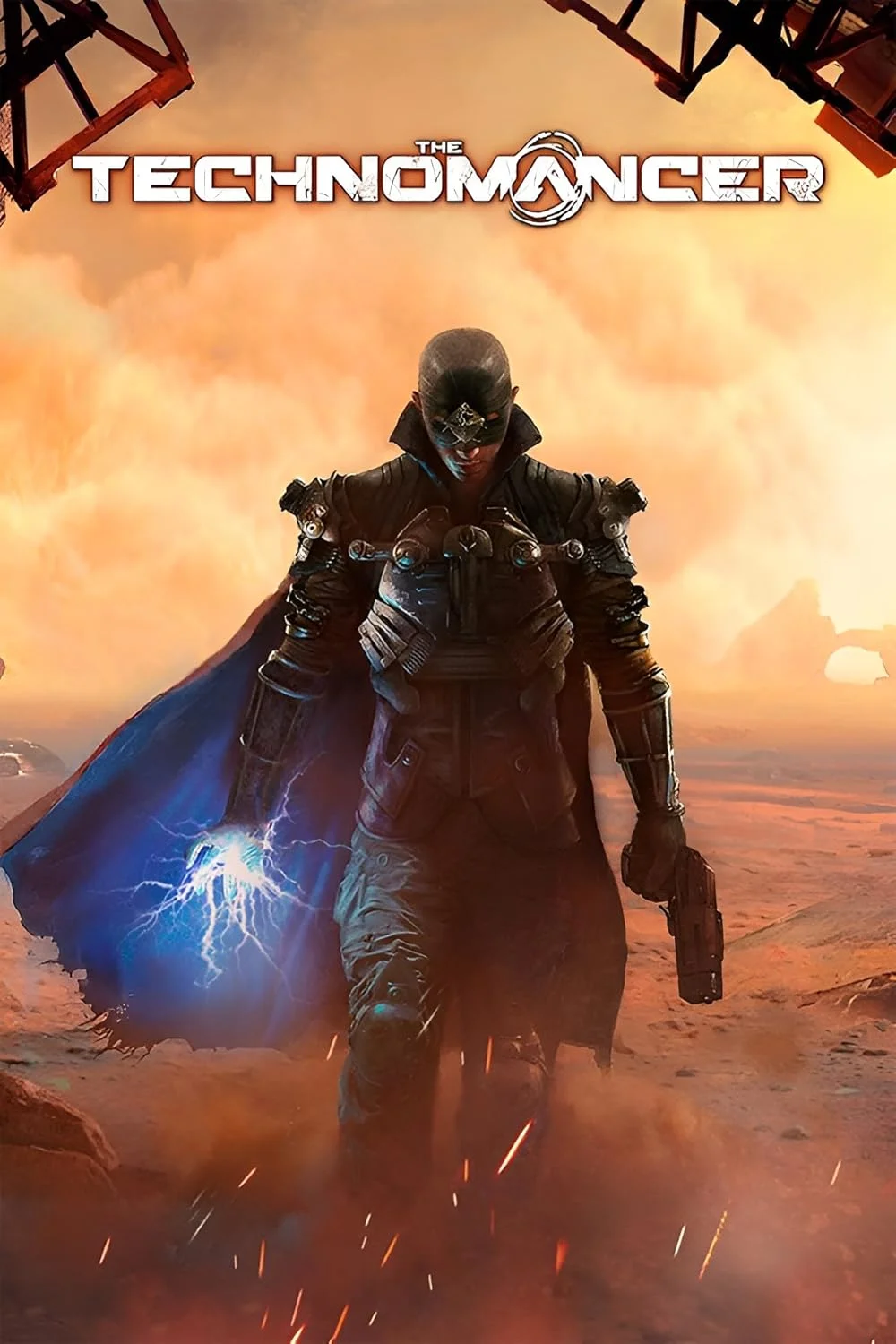
The Technomancer
This combination may struggle with this title, averaging 27 FPS. Consider upgrading hardware or significantly lowering settings.
Average FPS: resolution vs quality settings
| Ultra | High | Medium | Low | |
|---|---|---|---|---|
| 4K Ultra HD | 10 | 13 | 15 | 20 |
| 1440p QHD | 18 | 24 | 28 | 36 |
| 1080p Full HD | 28 | 36 | 42 | 55 |
Cell color: green is 120+ FPS, teal is 60+, amber is 30+, red is below 30.
The Technomancer with AMD Ryzen 7 7700 + NVIDIA GeForce GTX 1050 Ti, In-Depth Analysis
The Technomancer, an action RPG from the associated 2016 release, has been measured with an AMD Ryzen 7 7700 processor and an NVIDIA GeForce GTX 1050 Ti graphics card. The recorded frame rates span from 10 FPS at 4K Ultra to 55 FPS at 1080p Low. Across the twelve tested combinations, the platform averages near the bottom of all tested combos, ranking 3636th out of 3696. The CPU is a highly capable 8-core Zen 4 part, while the GPU is a four-generation‑old Pascal chip; the resulting pairing is consistently limited by the graphics card, as the data will show.
Resolution Scaling
The measured FPS at each resolution follows a clear downward trend as pixel counts increase. Taking the Low preset as the lightest load, the average FPS is 55 at 1920x1080, 36 at 2560x1440, and 20 at 3840x2160. Moving to Medium presets, the numbers are 42, 28, and 15 respectively. High preset delivers 36 at 1080p, 24 at 1440p, and 13 at 4K. Ultra tiers, which place the heaviest demand on the GPU, yield 28, 18, and 10 FPS at the three resolutions.
The difference between 1440p and 4K is particularly pronounced. For instance, the Ultra preset falls from 18 FPS at 2560x1440 to just 10 FPS at 3840x2160, a drop that roughly halves the frame rate. This pattern, repeated across all presets, indicates that the GPU's pixel throughput is the decisive factor and the 4K resolution proves too heavy for the GTX 1050 Ti. At 1080p, the gap between Low and Ultra is 55 to 28, showing that the settings themselves have a substantial impact, but even the highest setting cannot surpass 28 FPS in 1080p.
When moving from 1980 to 1440, the load increase is also consistent. For the Medium preset the result goes from 42 to 28, and for High there is a 36 to 24 drop. This linearity suggests that the GPU's memory bandwidth and the rasterization rate are the principal constraints across all tested settings.
Settings Recommendations
The measured rows show that for a playable experience at 1080p, the Low preset gives a solid 55 FPS, while Medium still ensures a reasonable 42 FPS. At High the average falls to 36, and Ultra provides only 28, so those higher settings are more illustrative of the GPU's limit than a usable experience. For 1440p, only Low achieves an average above 30 FPS with 36; Medium is 28, High 24, and Ultra 18. At 4K, even the Low preset is only 20, so none of the preset can maintain 30 FPS.
Given the measured results, the most optimal setting is determined by the target resolution. For a standard 1080p display, Low or Medium are the first options—they reach 55 and 42 FPS, respectively, and allow for a reasonably smooth frame rate. If the player chooses 1440p, only Low should be selected to stay above 30 FPS, while Medium would serve as an acceptable lower-quality option. In short: below 1440p, the medium hits the sweet spot; beyond that, only Low is viable for the majority of demanding monitors.
However, the data does not include a DirectX 12 or Vulkan mode—the game only reports DirectX 11 and 12 (12_1) API support. The lack of any 4K preset exceeding 20 FPS emphasizes that higher resolution is not a practical target for this combination. The recommendation is to run 1080p with Low or Medium, with the exact choice depending on the visual─quality trade-off the user can tolerate.
CPU Role
The AMD Ryzen 7 7700 is equipped with 8 cores and 16 threads, based on the Zen 4 architecture. Its base clock is 3.80 GHz and boost clock is 5.30 GHz, with a 65W TDP. In the CPU benchmark, the processor scores 18,760 in Cinebench R23 multi-core and 1,930 in single-core. The GeekBench multi-core score is 15,371 and single-core is 2,525. The average benchmark score across many tests is 40,081, which places the chip in the 87th percentile of all CPUs tested.
The nearest rivals include the AMD Ryzen AI 9 365 (delta 0.1%), the Intel Core 5 221E (delta -0.2%), the AMD Ryzen 9 270 (delta -0.4%), and the Intel Core i9-13905H (delta -0.6%). These delta percentages show that the 7700 performs essentially at par with those, slightly faster than one and slower than three. The strong single-thread and multi-thread performance, with 16 threads available, indicates that the CPU is well ahead of what this game's task requires, as its utilization is likely far below 100%.
Because the measured FPS for this configuration is heavily impacted by the GPU (as the GPU's percentile is only 25 while the CPU is at 87), the CPU likely does not cause any frame rate limit. The game The Technomancer is an Action RPG that uses typical engines, and CPU-bound scenarios would require more GPU load. Given that the CPU can triple the single-core Cinebench score and excels in multi-thread workloads, the data suggests that the 20-55 FPS span in the game is not due to the processor but to the graphics card.
How This Combo Ranks
The Ravager of Mordor takes the 3,636th position out of 3,048 combos in the game's test database. That puts it in the lowest ~1.6% of all tested systems. In comparison, the CPU alone retains an 87th percentile rank among its class. This wide gap reflects the fact that the GPU is the deciding performance factor for playing The Technomancer.
Almost every other combo with a more capable video card will outrank this one: the measure FPS numbers are quite low. The only combos that are ranked lower likely contain even older, slower GPUs. The system's CPU descriptors may be impressive, but the GPU brings the total combo down to the bottom percentile. The ranking is based on the 12 game‑specific measured FPS rows, not purely on the hardware’s synthetic scores; it is a direct measure of how fast it actually plays.
In the frame-work of the 3696 combos tested across this game, the Ryzen 7 7700 + GTX 1050 Ti occupies a near‑bottom 33rd percentile in raw FPS. This is a valuable callout for people who may consider the strong CPU as a driver of game performance: the GPU will have the paramount effect in the game’s frame count.
GPU Role
The NVIDIA GeForce GTX 1050 Ti is a GeForce 10 a-series mainland chip built on the 14nm Samsung process. It contains 3,300 million transistors and a die of 132 mm². The graphics card has 1028 shading units, 48 texture mapping units, and 32 ROPs. Its base clock is 1291 MHz and boost into 1392 MHz, with the memory running at 1752 MHz (7 Gbps effective). The GTX 1050 Ti has 4GB of GDDR5 memory on a 128-bit bus, giving 112.1 GB/s of bandwidth.
In terms of benchmarks, the GPU scores 305 in 3DMark Steel Nomad, 6,340 in PassMark G3D, and 1,001 in GeekBench Vulkan. These numbers put the GPU in the 25th percentile of all GPUs, confirming its performance below the majority. The nearest competing GPUs are the AMD Radeon R5 M330 (0.6% delta), NVIDIA Quadro K2100M (1% delta), and so on, but the GTX 1050 Ti is about 1.8% slower than the last rival listed.
The 4 GB VRAM is exhausted easily by the heavy textures of the Technomancer when running 4K or High settings. From the results, the GPU handles 1080p Low by 55 FPS, but the same card can only reach 20 FPS at 1080p Ultra, and the drop from Low to Ultra in 4K is 20 to 10. The memory bandwidth and the limited shading units are clearly a bottleneck, because the scaling of resolutions does not follow an algorithm but the overall FPS decrease is consistent measures a strong limitation.
Overall, the GTX 1050 Ti is not suited for high-ear, large-scale resolution performance, but it might possible to play at 1080p Low settings. The card's high power consumption is only 75W, as expected for a Knox context, but its boost clock is 5.3 GHz, not a performance indicator at all.
FAQ
Q: What is the best setting for 1920x1080 that still remains playable?
A: Medium preset is the sweet spot: it gives 42 FPS, which is above 30, and still retains visually stable image. Low gives 55 FPS but with lower quality; High gives 36, but that is slightly below 27, and Ultra is only 28.
Q: Is 4K resolution with this combos playable?
A: No. At 4K, the lowest preset (Low) yields only 20 FPS on average, and the highest (Ultra) 10 FPS. None of the four measured presets reaches 30 FPS.
Q: Is the CPU poisoning the game's performance?
A: The Ryzen 7 7700 is a high-end processor with 8 cores, 16 threads, and a Cinebench R23 multi-core score of 18,760, placing it in the 97th percentile among CPUs. The GPU's low percentile (25%) and the measured FPS dropping more with resolution and settings than with CPU load indicate the GPU is the primary limiter.
Q: What is the highest per of this GPU to run at 60 FPS?
A: The data shows nothing exceeds 60 FPS, even Low at 1080p gives only 55. So no preset at any resolution can churn 60 FPS with this graphics card.
Q: Is a 4 GB VRAM plausible factor for the low frame rates?
A: The GPU uses 4 GB GDDR5, which likely is exhausted when using the 4K Ultra preset (10 FPS). After a 4K
Hardware Specifications
AMD Ryzen 7 7700
NVIDIA GeForce GTX 1050 Ti
FPS Benchmarks by Resolution & Settings
Performance data for AMD Ryzen 7 7700 + NVIDIA GeForce GTX 1050 Ti in The Technomancer
| Resolution | Settings | Avg FPS |
|---|---|---|
| 3840x2160 | Low | 20.0 |
| 3840x2160 | Medium | 15.0 |
| 3840x2160 | High | 13.0 |
| 3840x2160 | Ultra | 10.0 |
| 2560x1440 | Low | 36.0 |
| 2560x1440 | Medium | 28.0 |
| 2560x1440 | High | 24.0 |
| 2560x1440 | Ultra | 18.0 |
| 1920x1080 | Low | 55.0 |
| 1920x1080 | Medium | 42.0 |
| 1920x1080 | High | 36.0 |
| 1920x1080 | Ultra | 28.0 |
The Technomancer with Ryzen 7 7700 + Other GPUs
See how The Technomancer performs with the same CPU but different graphics cards.
The Technomancer with GTX 1050 Ti + Other CPUs
See how The Technomancer performs with the same GPU but different processors.
Other Games with Ryzen 7 7700 + GTX 1050 Ti
Explore FPS benchmarks for other games using this same hardware combination.