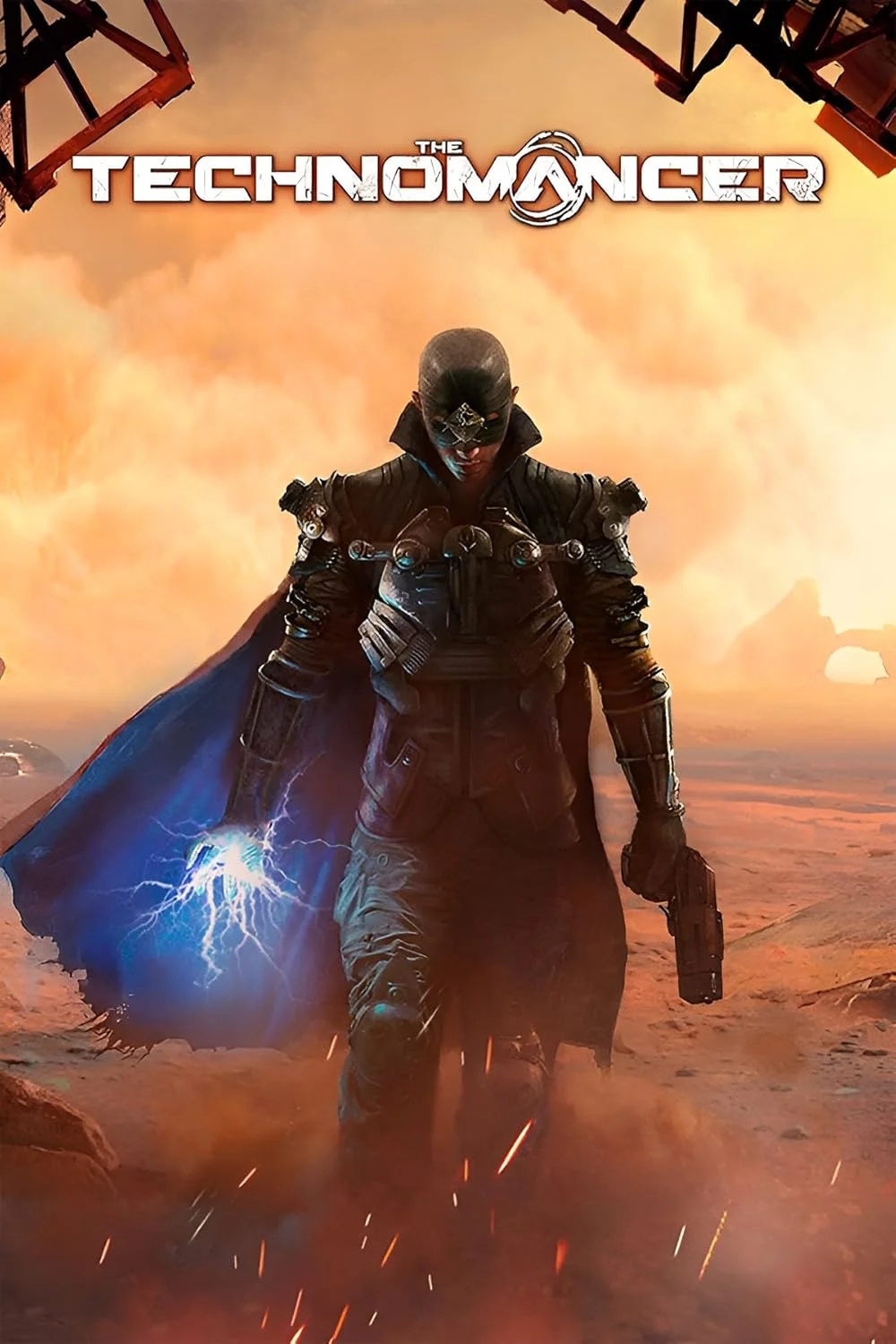
The Technomancer
This combination delivers exceptional performance with an average of 146 FPS, perfect for high refresh rate gaming and competitive play.
Average FPS: resolution vs quality settings
| Ultra | High | Medium | Low | |
|---|---|---|---|---|
| 4K Ultra HD | 60 | 75 | 90 | 114 |
| 1440p QHD | 103 | 137 | 159 | 206 |
| 1080p Full HD | 162 | 203 | 214 | 235 |
Cell color: green is 120+ FPS, teal is 60+, amber is 30+, red is below 30.
The Technomancer with AMD Ryzen 7 5700 + NVIDIA GeForce RTX 5080, In-Depth Analysis
The Technomancer, an Action RPG from 2016, presents an interesting test case for a modern high-end pairing like the AMD Ryzen 7 5700 and the NVIDIA GeForce RTX 5080. The benchmark data shows a system that is overwhelmingly GPU-bound at higher resolutions, yet reveals the CPU’s influence at 1080p. This analysis explores how the measured FPS shifts across resolutions and settings, what the components’ specifications imply about their roles, and where this particular combo stands among the 1,656 tested configurations.
Resolution Scaling
The FPS drop from 1080p to 4K is steep and consistent, signaling that the RTX 5080 is the primary driver of performance at higher resolutions. At High settings, the average frame rate falls from 202.7 FPS at 1920x1080 to 136.8 FPS at 2560x1440, a reduction of roughly 33%. Moving further to 3840x2160, the average drops to 75.3 FPS, which is about 63% below the 1080p figure. This pattern is typical for a GPU-bound scenario: as the pixel count rises, the rendering load on the graphics card increases dramatically.
The scaling at Low settings is even more revealing. At 1080p Low, the system hits 234.9 FPS, but at 1440p Low it falls to 206.3 FPS, and at 4K Low it drops to 114.4 FPS. The 4K Low result is less than half of the 1080p Low result, which indicates that even with minimal graphical features, the sheer resolution demand on the RTX 5080’s 16 GB of GDDR7 memory and 960.0 GB/s bandwidth becomes the limiting factor. The data suggests that at 4K, the GPU is working near its limits regardless of settings, while at 1080p, the headroom is substantial.
The Ultra preset tells a similar story. From 161.6 FPS at 1080p, it falls to 103.2 FPS at 1440p and then to 59.7 FPS at 4K. The gap between 1440p and 4K Ultra is about 42%, which is slightly larger than the gap between 1080p and 1440p (around 36%). This nonlinearity points to the GPU’s memory bandwidth and pixel rate—293.1 GPixel/s—being taxed more heavily as resolution increases.
GPU Role
The RTX 5080’s specifications align with the measured results. Its base clock is 2295 MHz, boosting up to 2617 MHz, and it offers 10752 shading units alongside 336 texture mapping units and 112 ROPs. For a game like The Technomancer, which was released in 2016, these numbers are far beyond what the title was designed to require. The GPU’s 16 GB of GDDR7 memory on a 256-bit bus provides 960.0 GB/s of bandwidth, which is ample for 4K textures and effects.
The measured FPS at 4K Ultra (59.7 FPS) is the only result below 60 FPS in the entire dataset, suggesting that the RTX 5080 is not fully saturated until the most demanding preset at the highest resolution. At 4K High, the 75.3 FPS average shows the GPU still has headroom, while at 4K Medium (90 FPS) and 4K Low (114.4 FPS), the card scales linearly with reduced workload. The GPU’s percentile ranking of 89 among all GPUs, with an average benchmark score of 59188, places it well above typical hardware, and its nearest rivals—such as the Intel Arc A580 (deltaPct 2.5) and AMD Radeon Pro W5500X (deltaPct 2.6)—are only slightly lower in average score, yet the RTX 5080’s real-world FPS in this game remains strong.
The texture rate of 879.3 GTexel/s and FP32 performance of 56.28 TFLOPS mean the card can handle complex shading and geometry without issue. In The Technomancer, which is not a graphically intensive title by modern standards, the GPU is rarely the bottleneck until 4K Ultra. The data implies that players seeking high refresh rates at 1440p or 1080p will find the GPU’s capabilities exceed the game’s demands.
CPU Role
The AMD Ryzen 7 5700 is a Zen 3 architecture processor with 8 cores and 16 threads, base clocked at 3.70 GHz and boosting to 4.60 GHz. Its 16 MB of L3 cache and 51.2 GB/s memory bandwidth are modest by current standards, but sufficient for a 2016 title. The CPU’s average benchmark score of 27220 puts it at the 84th percentile, with its nearest rivals including the Intel Core i9-9900K (deltaPct 0.7) and Intel Core i7-12700H (deltaPct 0.8), all within a tight performance band.
In the measured FPS data, the CPU’s role becomes visible at 1080p. At 1080p Low, the system reaches 234.9 FPS, which is likely near the CPU’s ceiling for single-threaded game logic. The single-thread score of 901 in 3DMark and 2916 in Cinebench R23 suggests the processor can handle moderate frame rates, but it may not push beyond 240 FPS in this title. In contrast, at 4K Low, the FPS is 114.4, which is less than half of the 1080p Low result, confirming that the GPU is the limiting factor at higher resolutions.
The CPU’s multi-threaded capabilities, shown by a Cinebench R23 multi-core score of 20655, are more than adequate for The Technomancer’s engine, which likely uses fewer than 8 threads. The gap between 1080p High (202.7 FPS) and 1080p Low (234.9 FPS) is about 16%, indicating that the CPU is not heavily stressed even at High settings. At 1440p High (136.8 FPS), the CPU has even more headroom, as the GPU takes on more of the workload. The data suggests that for most resolutions and settings, the Ryzen 7 5700 is not a bottleneck, but at 1080p with Low settings, the CPU’s single-thread performance may cap the frame rate.
How This Combo Ranks
The combination of the AMD Ryzen 7 5700 and NVIDIA GeForce RTX 5080 ranks 91st out of 1,656 tested combos in The Technomancer. This places it in the top 5.5% of all configurations, which is a strong showing given the CPU’s mid-range positioning. The GPU’s high percentile (89th) likely drives this ranking, while the CPU’s 84th percentile provides sufficient support.
Compared to other combos, this pairing excels at 1440p and 4K, where the GPU dominates. At 1080p, the ranking might be held back by the CPU’s limits, as evidenced by the 234.9 FPS ceiling on Low settings. The data implies that users with this combo should target 1440p or 4K to maximize the GPU’s potential, rather than chasing extreme refresh rates at 1080p where the CPU becomes a factor.
The nearest rivals for the CPU, like the Intel Core i9-9900K (deltaPct 0.7), are nearly identical in average score, suggesting that swapping processors within this performance bracket would yield minimal FPS changes in this game. Similarly, the GPU’s rivals, such as the Intel Arc A580 (deltaPct 2.5), are close in benchmark scores, but the RTX 5080’s 16 GB memory and higher bandwidth give it an edge at 4K Ultra, where the 59.7 FPS result is still playable.
FAQ
Q: What is the best resolution for this combo in The Technomancer?
A: The data shows the highest average FPS at 1920x1080 across all settings, but the most balanced experience is at 2560x1440, where even Ultra settings yield 103.2 FPS. At 4K, only Low and Medium settings exceed 90 FPS, with Ultra dropping to 59.7 FPS.
Q: Does the CPU bottleneck the RTX 5080 in this game?
A: At 1080p with Low settings, the FPS caps at 234.9, which is likely near the Ryzen 7 5700’s single-thread limit. At higher resolutions like 1440p and 4K, the GPU becomes the limiting factor, as shown by the FPS dropping to 136.8 and 75.3 at High settings respectively.
Q: How does the RTX 5080’s memory affect performance?
A: The 16 GB of GDDR7 memory with 960.0 GB/s bandwidth ensures that texture-heavy scenes at 4K Ultra do not run out of memory, allowing the 59.7 FPS result. Lower memory would likely cause stuttering or reduced FPS at this resolution.
Q: Is the Ryzen 7 5700 a good match for the RTX 5080?
A: The CPU’s 84th percentile ranking and multi-core score of 20655 in Cinebench R23 suggest it is adequate, but at 1080p Low, the FPS ceiling of 234.9 indicates a potential CPU limit. For most users playing at 1440p or 4K, the match is solid.
Q: What settings should I use at 4K for the best experience?
A: At 3840x2160, Medium settings provide 90 FPS, which is smoother than High (75.3 FPS) and only slightly lower in quality. Ultra settings drop to 59.7 FPS, which is still playable but may not be ideal for fast-paced action.
Q: How does this combo compare to others in the database?
A: It ranks 91st out of 1,656 combos, placing it in the top 5.5%. The GPU’s performance is a major factor, as its nearest rivals in benchmark scores are only 1.6-2.6% different, yet the RTX 5080 delivers strong FPS across all tested settings.
Measured FPS Breakdown
The dataset includes 12 measured configurations, covering four settings presets (Low, Medium, High, Ultra) at three resolutions. At 1920x1080, the average FPS ranges from 234.9 (Low) to 161.6 (Ultra), with Medium at 213.7 and High at 202.7. The difference between Low and Ultra is about 31%, showing that even the most demanding preset at 1080p remains well above 150 FPS.
At 2560x1440, the averages are 206.3 (Low), 159.1 (Medium), 136.8 (High), and 103.2 (Ultra). The drop from Low to Ultra is approximately 50%, which is larger than at 1080p, indicating the GPU’s workload increases with resolution. The 1440p Ultra result of 103.2 FPS is still smooth, while 1440p Low exceeds 200 FPS for high-refresh displays.
At 3840x2160, the averages are 114.4 (Low), 90 (Medium), 75.3 (High), and 59.7 (Ultra). The scaling here is more compressed: the difference between Low and Ultra is about 48%, but the absolute values are lower. Only Low settings exceed 100 FPS at 4K, while Ultra barely reaches 60 FPS. This resolution is clearly the most demanding, and the RTX 5080’s 16 GB memory and 960.0 GB/s bandwidth are essential for maintaining playable frame rates.
Settings Recommendations
For users prioritizing smooth gameplay, the best experience depends on resolution. At 1920x1080, Ultra settings (161.6 FPS) are recommended because the frame rate remains high enough for any display, and the visual quality is maximal. At 2560x1440, High settings (136.8 FPS) strike a balance between quality and performance, though Ultra (103.2 FPS) is also viable for 100 Hz monitors.
At 3840x2160, Medium settings (90 FPS) offer the best trade-off, as High (75.3 FPS) is noticeably lower and Ultra (59.7 FPS) dips below 60 FPS. Low settings at 4K (114.4 FPS) are an option for high-refresh 4K panels, but the visual fidelity loss may not be worth it for a game from 2016. The data indicates that the RTX 5080 can handle this game at 4K with medium presets, while the CPU’s influence is negligible above 1080p. Overall, the combo performs best when the GPU is allowed to stretch its legs at 1440p or 4K, rather than being constrained by the CPU’s single-thread limits at 1080p.
Hardware Specifications
AMD Ryzen 7 5700
NVIDIA GeForce RTX 5080
FPS Benchmarks by Resolution & Settings
Performance data for AMD Ryzen 7 5700 + NVIDIA GeForce RTX 5080 in The Technomancer
| Resolution | Settings | Avg FPS |
|---|---|---|
| 3840x2160 | Low | 114.4 |
| 3840x2160 | Medium | 90.0 |
| 3840x2160 | High | 75.3 |
| 3840x2160 | Ultra | 59.7 |
| 2560x1440 | Low | 206.3 |
| 2560x1440 | Medium | 159.1 |
| 2560x1440 | High | 136.8 |
| 2560x1440 | Ultra | 103.2 |
| 1920x1080 | Low | 234.9 |
| 1920x1080 | Medium | 213.7 |
| 1920x1080 | High | 202.7 |
| 1920x1080 | Ultra | 161.6 |
The Technomancer with Ryzen 7 5700 + Other GPUs
See how The Technomancer performs with the same CPU but different graphics cards.
The Technomancer with RTX 5080 + Other CPUs
See how The Technomancer performs with the same GPU but different processors.
Other Games with Ryzen 7 5700 + RTX 5080
Explore FPS benchmarks for other games using this same hardware combination.