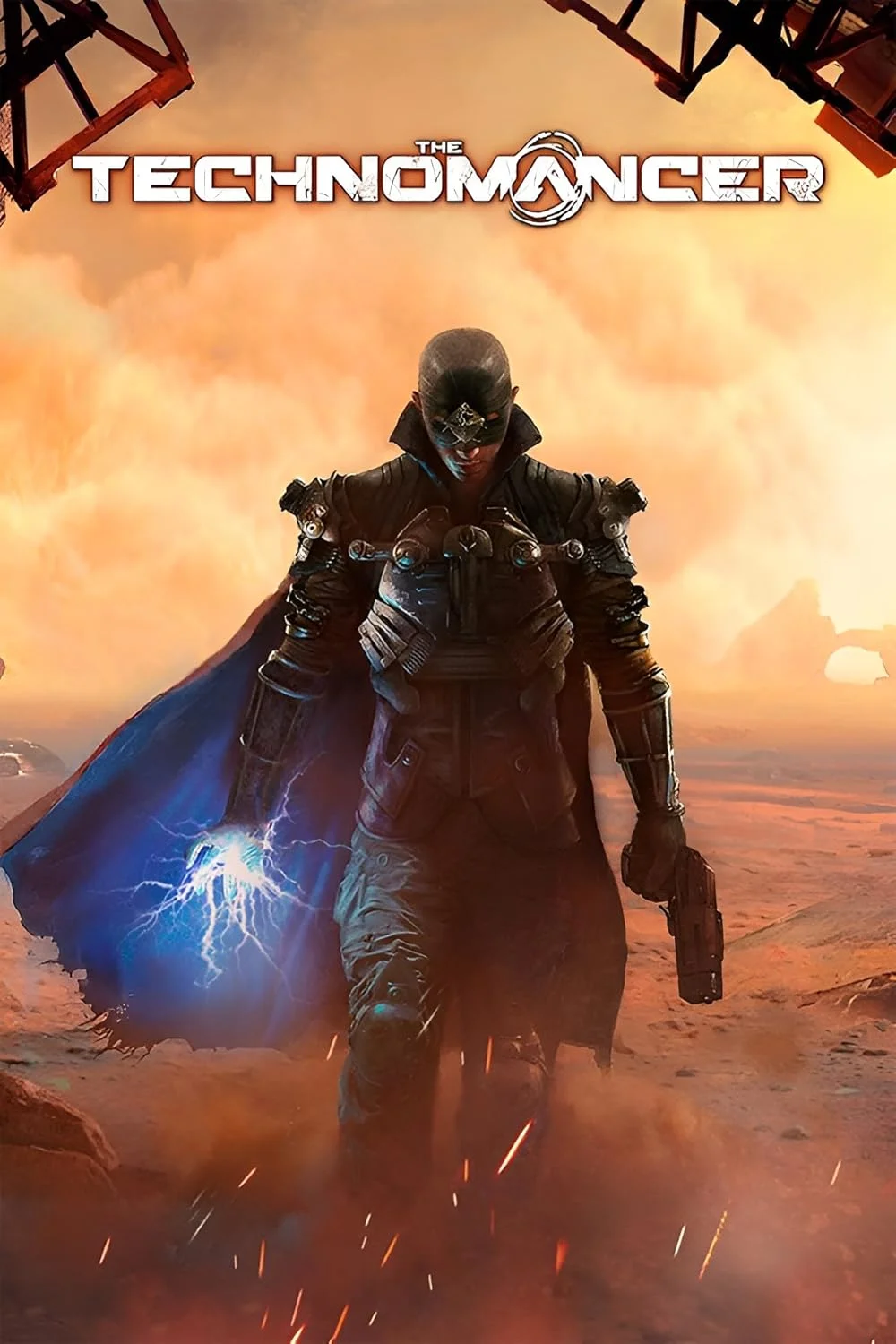
The Technomancer
This combination offers playable performance with an average of 54 FPS, though you may want to lower settings for smoother gameplay.
Average FPS: resolution vs quality settings
| Ultra | High | Medium | Low | |
|---|---|---|---|---|
| 4K Ultra HD | 20 | 26 | 30 | 39 |
| 1440p QHD | 37 | 47 | 55 | 72 |
| 1080p Full HD | 56 | 72 | 84 | 109 |
Cell color: green is 120+ FPS, teal is 60+, amber is 30+, red is below 30.
The Technomancer with AMD Ryzen 5 7400F + NVIDIA GeForce GTX 1660 Ti, In-Depth Analysis
The Technomancer, a 2016 action RPG, presents a demanding workload that clearly separates the capabilities of the AMD Ryzen 5 7400F and the NVIDIA GeForce GTX 1660 Ti. The measured frame rates across three resolutions and four quality presets reveal a system where the GPU is the primary bottleneck, but the CPU's strength ensures that resolution scaling produces predictable and substantial performance shifts. This analysis examines the measured data to understand how this specific pairing behaves, where its limits lie, and which settings offer the most playable experience.
Resolution Scaling
The measured FPS data reveals a steep and consistent performance cliff as resolution increases, a classic sign of a GPU-bound scenario. At 1080p with Low settings, the combo achieves 109 FPS, but this drops to 72 FPS at 1440p and further to 39 FPS at 4K. This represents a 64% reduction in frame rate from 1080p to 4K at the lowest settings, indicating that the GTX 1660 Ti's rendering throughput is being saturated as pixel count grows.
The pattern holds across all quality presets, though the magnitude of the drop varies. At High settings, the transition from 1080p (72 FPS) to 1440p (47 FPS) is a 35% decrease, while moving from 1440p to 4K (26 FPS) is a 45% decrease. The scaling is not perfectly linear, suggesting that at 4K, the GPU is struggling to maintain even the modest frame rates seen at lower resolutions. The Ultra preset shows the most severe scaling: 56 FPS at 1080p, 37 FPS at 1440p, and a barely playable 20 FPS at 4K, a 64% total drop from the starting point.
This behavior strongly implies that the limiting component is the GPU. The Ryzen 5 7400F, with its high single-thread performance, is not holding back the GTX 1660 Ti at any resolution. If the CPU were the bottleneck, we would expect to see smaller frame rate differences between resolutions, as the CPU workload would remain constant while the GPU workload increases. Instead, the data shows the GPU's workload scaling directly with pixel count, confirming that the GTX 1660 Ti's fill rate and memory bandwidth are the decisive factors. The 288.0 GB/s of memory bandwidth on the 192-bit bus is evidently insufficient to feed the GPU's shaders adequately at 4K, leading to the sub-30 FPS results at High and Medium settings.
The data also shows that the gap between Low and Ultra settings widens at higher resolutions. At 1080p, the difference between Low (109 FPS) and Ultra (56 FPS) is 53 FPS. At 1440p, this gap shrinks to 35 FPS (72 vs 37), and at 4K, it narrows to just 19 FPS (39 vs 20). This compression of the settings' impact at higher resolutions further confirms the GPU-bound nature, as the card is already at its absolute limit and has little headroom to render the extra visual effects demanded by higher presets.
FAQ
Q: Can this combo run The Technomancer at 4K with playable frame rates?
A: No. The measured data shows that at 4K, even the Low preset only achieves an average of 39 FPS, while Medium averages 30 FPS and High drops to 26 FPS. Ultra is unplayable at 20 FPS. These results indicate that 4K is not a viable resolution for this hardware combination.
Q: What is the best resolution for this pairing to maintain a 60+ FPS average?
A: At 1080p, the combo achieves 60+ FPS on Low (109 FPS), Medium (84 FPS), and High (72 FPS) presets. Only the Ultra preset falls below 60 FPS, with an average of 56 FPS. At 1440p, only the Low preset (72 FPS) breaks the 60 FPS barrier, while Medium (55 FPS) and High (47 FPS) fall short.
Q: How does the GTX 1660 Ti compare to its closest rivals in general performance?
A: The GPU's average benchmark score is 7723, placing it in the 41st percentile of all GPUs. Its nearest rival, the AMD Radeon 540, has an average score of 7673, which is 0.7% lower. The Intel Arc A310 is 2.3% slower, with a score of 7550. This indicates the GTX 1660 Ti is slightly ahead of its closest competitors.
Q: Is the Ryzen 5 7400F a strong CPU for gaming in this context?
A: Yes, the CPU is highly capable. It has a single-thread benchmark score of 3689 on Passmark and a Cinebench R23 single-core score of 3072. Its average benchmark score is 32750, placing it in the 83rd percentile of all CPUs. This level of performance ensures it is not a bottleneck in this GPU-limited configuration.
Q: What is the frame rate consistency like at 1080p Medium settings?
A: At 1080p Medium, the average FPS is 84, with a minimum of 71 FPS and a maximum of 97 FPS. This shows a relatively tight range, indicating a stable experience with limited frame time spikes. The 13 FPS difference between the average and minimum suggests the game is generally smooth but can occasionally dip.
Q: How does the CPU's multi-threaded performance compare to its rivals?
A: The Ryzen 5 7400F scores 21765 in Cinebench R23 multi-core. Its closest rival, the Intel Core Ultra 7 155H, has an average benchmark score that is 0.2% higher, while the AMD Ryzen 7 PRO 6850H is 0.2% lower. This places it in a highly competitive tier for multi-threaded workloads.
How This Combo Ranks
In the specific benchmark for The Technomancer, this combination of the AMD Ryzen 5 7400F and NVIDIA GeForce GTX 1660 Ti ranks 2429 out of 2825 tested combos. This places it in the bottom 14% of all configurations, which is a surprisingly low position given the individual component strengths. The ranking reflects the game's specific demands and the fact that the GTX 1660 Ti's performance level is a significant limiting factor.
The low combo rank is primarily driven by the GPU's relative weakness in this title. While the CPU is in the 83rd percentile of all CPUs, the GPU is only in the 41st percentile, and the game appears to be heavily GPU-dependent. The data suggests that many other combinations, even those with weaker CPUs, could outperform this setup if they have a stronger GPU. The ranking highlights that for The Technomancer, the graphics card is the dominant factor in determining overall performance, and the Ryzen 5 7400F's power is largely untapped in this workload.
This ranking is not a reflection of the CPU's capabilities but rather a measure of the entire system's suitability for this specific game. The 2825 combos tested include those with much more powerful GPUs, which naturally achieve higher frame rates and thus better ranks. The 2429 position indicates that the GTX 1660 Ti places this system firmly in the entry-level category for modern gaming, despite being paired with a high-end processor.
Measured FPS Breakdown
At 1920x1080, the GTX 1660 Ti delivers its best results. The Low preset produces an average of 109 FPS, providing a highly fluid experience. Medium settings reduce this to 84 FPS, with a minimum of 71 FPS and a maximum of 97 FPS, indicating good consistency. The High preset averages 72 FPS, still comfortably playable. The Ultra preset is the only one at 1080p that dips below the 60 FPS threshold, with an average of 56 FPS.
Moving to 2560x1440, performance takes a significant hit. The Low preset is the only option that maintains a 60+ FPS average at 72 FPS. Medium settings fall to an average of 55 FPS, with a minimum of 47 FPS and a maximum of 63 FPS, showing a wider variance than at 1080p. High settings average 47 FPS, and Ultra drops to 37 FPS. None of these higher presets at 1440p provide a consistently smooth experience.
At 3840x2160, the card is clearly overburdened. Low settings average 39 FPS, which is playable but not ideal for a fast-paced action RPG. Medium settings average 30 FPS, with a minimum of 26 FPS and a maximum of 35 FPS, creating a stuttering feel. High settings drop to 26 FPS, and Ultra is virtually unplayable at 20 FPS. The data shows a clear progression where each resolution and preset combination pushes the GPU further beyond its comfort zone.
GPU Role
The NVIDIA GeForce GTX 1660 Ti is the definitive performance limiter in this system. With 6 GB of GDDR6 memory on a 192-bit bus, it provides 288.0 GB/s of bandwidth. The base clock is 1500 MHz, with a boost clock of 1770 MHz. These specifications are modest by modern standards, and the benchmark results confirm that they are insufficient for high-resolution gaming in The Technomancer.
The GPU's 12 nm Turing architecture includes 1536 shading units, 96 TMUs, and 48 ROPs. Its pixel rate is 84.96 GPixel/s and its texture rate is 169.9 GTexel/s, with an FP32 performance of 5.437 TFLOPS. These figures dictate that the card can process a certain amount of geometry and pixels per second, and the 4K data shows it hitting that ceiling hard. The 6 GB VRAM is likely also a factor at 4K with High or Ultra settings, potentially causing texture swapping and contributing to the sub-30 FPS averages.
The GTX 1660 Ti's average benchmark score of 7723 places it in the 41st percentile of all GPUs. Its nearest rival, the AMD Radeon 540, scores 7673, a 0.7% difference. This shows that the 1660 Ti is at the low end of the performance spectrum. In The Technomancer, the GPU's limitations are exposed at every resolution above 1080p, and even at 1080p, it cannot maintain 60 FPS on the Ultra preset. The data suggests that for this game, the GPU is a generation or more behind the demands of the title.
Settings Recommendations
For the best experience, the data clearly points to 1080p resolution with High settings. This combination yields an average of 72 FPS, which is well within the playable range for an action RPG. It offers a significant visual upgrade over Medium settings (84 FPS) while retaining a comfortable frame rate margin. The High preset at 1080p provides a good balance between visual fidelity and smoothness.
If achieving a higher frame rate is the priority, dropping to Medium settings at 1080p is a valid option. The 84 FPS average and minimum of 71 FPS ensure a very stable experience. The jump from High to Medium provides a 12 FPS average increase, which may be noticeable for some players. However, the visual difference between these two presets may be less critical than the frame rate improvement.
The 1440p Low preset is the only viable option at that resolution, with a 72 FPS average. However, this sacrifices the visual quality of the higher presets and is generally a less desirable configuration. At 4K, no preset provides a consistently smooth experience. The Low preset at 39 FPS is the only remotely playable option, but it is far from ideal. The Ultra preset is not recommended under any circumstances, as its 20 FPS average at 4K is unplayable, and even at 1080p, it only reaches 56 FPS, which offers no advantage over High settings.
CPU Role
The AMD Ryzen 5 7400F, with 6 cores and 12 threads, provides a powerful foundation for this gaming system. Its base clock is 3.70 GHz, boosting to 4.70 GHz, and it is built on the 5 nm Zen 4 architecture. The CPU has a 32 MB L3 cache and supports DDR5 memory, contributing to its high performance in synthetic benchmarks. Its Passmark single-thread score of 3689 and Cinebench R23 single-core score of 3072 indicate that it can handle the primary game logic and draw call submission without becoming a bottleneck.
The CPU's performance relative to its rivals is notable. Its average benchmark score is 32750, placing it in the 83rd percentile. The nearest rival, the Intel Core i5-14600T, scores 32707, a negligible 0.1% difference. The AMD Ryzen 7 PRO 6850H is only 0.2% slower. This shows that the 7400F is a highly competitive processor, and its 6-core, 12-thread configuration is more than sufficient for gaming workloads.
In The Technomancer, the CPU's role is to feed the GPU with data. The measured FPS data shows that at 1080p Low, the system achieves 109 FPS, which is a high enough frame rate that a weaker CPU might start to struggle. However, the 7400F's robust single-thread performance ensures that even at these frame rates, it is not the limiting factor. The fact that frame rates scale so predictably with resolution and settings changes is definitive proof that the CPU is not holding the system back, and its high benchmark scores provide a comfortable headroom for future games or more demanding titles.
Hardware Specifications
AMD Ryzen 5 7400F
NVIDIA GeForce GTX 1660 Ti
FPS Benchmarks by Resolution & Settings
Performance data for AMD Ryzen 5 7400F + NVIDIA GeForce GTX 1660 Ti in The Technomancer
| Resolution | Settings | Avg FPS |
|---|---|---|
| 3840x2160 | Low | 39.0 |
| 3840x2160 | Medium | 30.0 |
| 3840x2160 | High | 26.0 |
| 3840x2160 | Ultra | 20.0 |
| 2560x1440 | Low | 72.0 |
| 2560x1440 | Medium | 55.0 |
| 2560x1440 | High | 47.0 |
| 2560x1440 | Ultra | 37.0 |
| 1920x1080 | Low | 109.0 |
| 1920x1080 | Medium | 84.0 |
| 1920x1080 | High | 72.0 |
| 1920x1080 | Ultra | 56.0 |
The Technomancer with Ryzen 5 7400F + Other GPUs
See how The Technomancer performs with the same CPU but different graphics cards.
The Technomancer with GTX 1660 Ti + Other CPUs
See how The Technomancer performs with the same GPU but different processors.
Other Games with Ryzen 5 7400F + GTX 1660 Ti
Explore FPS benchmarks for other games using this same hardware combination.