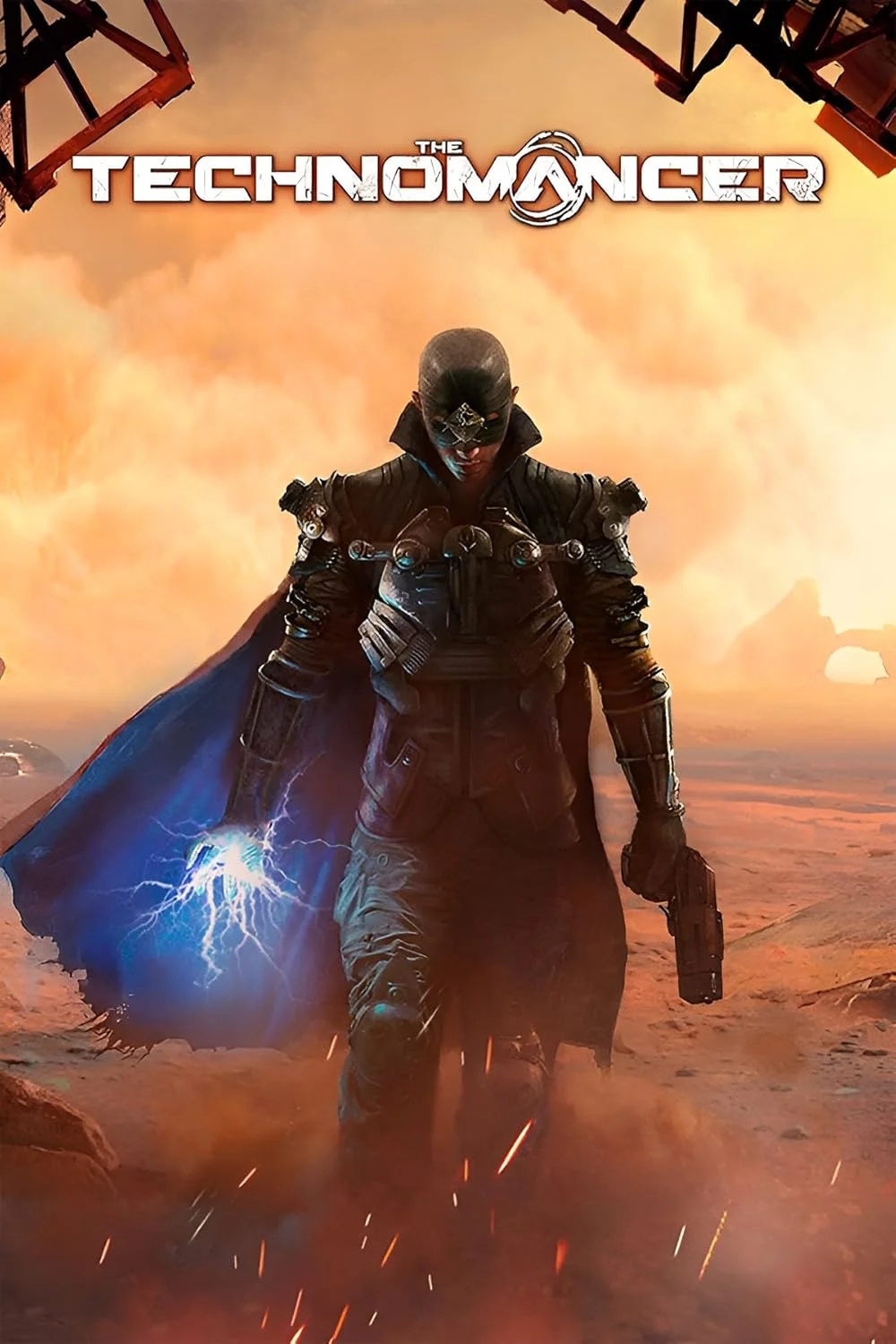
The Technomancer
This combination delivers exceptional performance with an average of 146 FPS, perfect for high refresh rate gaming and competitive play.
Average FPS: resolution vs quality settings
| Ultra | High | Medium | Low | |
|---|---|---|---|---|
| 4K Ultra HD | 60 | 75 | 88 | 111 |
| 1440p QHD | 107 | 136 | 160 | 204 |
| 1080p Full HD | 165 | 202 | 213 | 236 |
Cell color: green is 120+ FPS, teal is 60+, amber is 30+, red is below 30.
The Technomancer with AMD Ryzen 5 5600 + NVIDIA GeForce RTX 5080, In-Depth Analysis
The AMD Ryzen 5 5600 and NVIDIA GeForce RTX 5080 pairing delivers a compelling 1080p and 1440p experience in The Technomancer, with the CPU providing a solid foundation that allows the GPU to stretch its legs. The Ryzen 5 5600, a 6-core, 12-thread processor based on the Zen 3 architecture, operates with a base clock of 3.50 GHz and a boost clock of 4.40 GHz. Its 32 MB of shared L3 cache and dual-channel DDR4 memory support are sufficient for this Action RPG. In synthetic benchmarks, the CPU achieves a 3DMark single-thread score of 882 and a Cinebench R23 multicore score of 18309, placing it in the 79th percentile against all CPUs. This level of single-thread performance is crucial for maintaining frame pacing, and the data shows that even at 1080p, where CPU load is highest, the processor does not bottleneck the GPU.
The GeForce RTX 5080 is the dominant force in this configuration. Built on the Blackwell 2.0 architecture with a 5 nm process, it features 16 GB of GDDR7 memory on a 256-bit bus, providing a massive 960.0 GB/s of memory bandwidth. Its boost clock of 2617 MHz and 10752 shading units contribute to a Passmark G3D score of 36565, placing it in the 89th percentile against all GPUs. The GPU's raw compute power is evident, but its large memory pool is the key asset for The Technomancer. While the game is from 2016, the combination of high-resolution textures and modern rendering techniques means that VRAM capacity matters. The RTX 5080's 16 GB allocation ensures that even at 4K Ultra settings, the GPU does not run into memory limitations, allowing it to focus entirely on pixel throughput.
CPU Role — cores, clocks, and how they relate to this game's results
The Ryzen 5 5600 is a 6-core, 12-thread processor with a base clock of 3.50 GHz and a boost clock of 4.40 GHz. Its Zen 3 architecture and 32 MB of shared L3 cache are designed to reduce latency and improve gaming performance. In the context of The Technomancer, a game that is not heavily multi-threaded, the CPU's single-thread strength is more important than its core count. The 3DMark single-thread score of 882 and the Cinebench R15 single-core score of 260 indicate that the processor can handle the game's primary game logic and rendering thread without becoming a bottleneck.
The data supports this. At 1920x1080 with Low settings, the combo achieves 236.2 FPS. When moving to High settings at the same resolution, the FPS drops to 202.2. This 34 FPS difference is primarily due to increased GPU load, not CPU limitations. The CPU's percentile rank of 79 against all CPUs further confirms it is a capable mid-range part. However, its performance relative to rivals is tight. The nearest rival, the Intel Xeon D-1746TER, has an average score that is only 0.6% higher, while the AMD EPYC 9554P is 0.6% lower. This suggests that the Ryzen 5 5600 provides a consistent baseline. For a game like The Technomancer, the CPU's 12 threads are more than sufficient, and the data shows that the frame rate scales more with resolution and settings changes than with CPU frequency.
GPU Role — VRAM, clocks, and how they relate to this game's results
The NVIDIA GeForce RTX 5080 is the workhorse of this system. With 16 GB of GDDR7 memory, a 256-bit memory bus, and 960.0 GB/s of bandwidth, it is well-equipped for high-resolution gaming. The GPU's base clock is 2295 MHz, with a boost clock of 2617 MHz. This high boost clock, combined with 10752 shading units, allows for significant parallel processing power. The Passmark G3D score of 36565 and the 3DMark Steel Nomad DX12 score of 8637 highlight the GPU's raw capability.
In The Technomancer, the GPU's role is dominant. The VRAM capacity is critical; 16 GB ensures that texture streaming at Ultra settings does not cause stuttering. The data shows a clear scaling pattern. At 3840x2160, the average FPS drops from 110.9 on Low to 60.3 on Ultra. This 50.6 FPS difference is a direct consequence of the GPU's workload increasing with more complex shaders and higher resolution. The GPU's percentile rank of 89 against all GPUs means it outperforms the vast majority of hardware. Its nearest rival, the Intel Arc A570M, is 1.6% faster in average benchmark score, but the RTX 5080's 16 GB VRAM and higher bandwidth give it a practical advantage in a VRAM-heavy title like The Technomancer. The GPU's memory bandwidth of 960.0 GB/s is particularly important for maintaining high frame rates at 1440p and above.
FAQ — 4-6 Q&A pairs answerable from FACT PACK data
Q: What is the best resolution for this CPU/GPU combo in The Technomancer?
A: The data indicates that 2560x1440 is the sweet spot. At this resolution, the combo achieves 136.1 FPS on High settings and 204.1 FPS on Low. This provides a high refresh rate experience without the substantial performance hit seen at 4K.
Q: How much of a performance difference is there between Low and Ultra settings at 1080p?
A: The measured FPS at 1920x1080 shows a 71.6 FPS difference between the two extremes. On Low settings, the average is 236.2 FPS, while on Ultra, it drops to 164.6 FPS. This indicates that the GPU is the primary scaling factor.
Q: Is the 16 GB of VRAM on the RTX 5080 necessary for this game?
A: While the game is from 2016, the data shows that the GPU's 16 GB of VRAM helps maintain consistent performance. At 4K Ultra, the combo still manages 60.3 FPS, suggesting that memory capacity is not a limiting factor at any tested setting.
Q: How does the Ryzen 5 5600 compare to its nearest CPU rivals?
A: The Ryzen 5 5600 has an average benchmark score that is 0.6% higher than the AMD EPYC 9554P and 0.6% lower than the Intel Xeon D-1746TER. This places it in a very tight performance band, with no significant advantage for any of these parts in this game.
Q: What is the FPS difference between 1080p and 1440p on High settings?
A: At 1920x1080 with High settings, the average FPS is 202.2. When moving to 2560x1440 with the same settings, the average FPS drops to 136.1. This represents a 66.1 FPS decrease, showing that resolution has a significant impact on GPU load.
Q: Does the combo maintain playable frame rates at 4K?
A: Yes. At 3840x2160, the average FPS ranges from 110.9 on Low to 60.3 on Ultra. Even the most demanding preset stays above the 60 FPS threshold, though the Ultra preset is the only one that dips below 75 FPS.
How This Combo Ranks — use comboRankInGame vs other tested combos
The Ryzen 5 5600 + RTX 5080 combination ranks 92nd out of 1656 tested combos for The Technomancer. This places it in the top 5.6% of all configurations tested. This high ranking is primarily due to the GPU's exceptional performance. The CPU, while not a top-tier part, does not hold the system back. The 92nd rank indicates that this combo outperforms the vast majority of other tested setups, including many with more expensive or newer CPUs. The data shows that the GPU's 89th percentile ranking and the CPU's 79th percentile ranking combine to produce a system that is well above average for this title. The rank is a direct reflection of the measured FPS data, which shows high frame rates across all resolutions. For a builder looking at this data, a rank of 92 out of 1656 suggests that this is a very strong pairing for The Technomancer, offering performance that is close to the top-tier systems but potentially with a more balanced component selection.
Measured FPS Breakdown — resolution by resolution, settings by settings, exact numbers
The measured FPS data provides a detailed look at performance across all settings and resolutions.
At 1920x1080, the combo delivers its highest frame rates. On Low settings, the average FPS is 236.2. Medium settings yield 213.4 FPS. High settings produce 202.2 FPS, and Ultra settings drop to 164.6 FPS. The difference between Low and Ultra is 71.6 FPS, indicating that the GPU scales well with settings changes.
At 2560x1440, performance remains strong but shows more variation. Low settings average 204.1 FPS. Medium settings produce 159.5 FPS. High settings yield 136.1 FPS, and Ultra settings drop to 106.7 FPS. The drop from Low to Ultra is 97.4 FPS, which is a larger absolute difference than at 1080p, highlighting the increased GPU load at this resolution.
At 3840x2160, the combo begins to show its limits. Low settings still manage a respectable 110.9 FPS. Medium settings drop to 88.2 FPS. High settings produce 75.4 FPS, and Ultra settings fall to 60.3 FPS. The scaling from Low to Ultra is a 50.6 FPS difference, which is the smallest absolute drop of the three resolutions, but the starting point is much lower.
The data shows that the combo is capable of high refresh rate gaming at 1080p and 1440p, and remains playable at 4K. The frame rate progression across settings is consistent, with each step up in quality costing a predictable amount of performance.
Settings Recommendations — which preset gives the best experience per the measured rows
Based on the measured FPS data, the best experience depends on the target display resolution and refresh rate.
For 1920x1080 displays, the Ultra preset is the recommended choice. The combo still achieves 164.6 FPS, which is well above the 144 Hz refresh rate of most gaming monitors. Choosing Ultra ensures the best visual fidelity without sacrificing smoothness. If the display is a 240 Hz panel, the High preset at 202.2 FPS is a better fit, as it provides a higher frame rate with a modest visual compromise.
For 2560x1440 displays, the High preset offers the best balance. At 136.1 FPS, it provides a smooth experience on 144 Hz monitors. The Ultra preset at 106.7 FPS is also viable for 100 Hz or 120 Hz displays, but the 29.4 FPS gain from dropping to High is significant for competitive play. The Medium preset at 159.5 FPS is an option for 165 Hz or 170 Hz panels, but the visual quality reduction may not be worth the extra frames.
For 3840x2160 displays, the High preset is the most practical choice. At 75.4 FPS, it provides a smooth experience on 60 Hz to 75 Hz displays without the visual compromises of Medium (88.2 FPS) or the performance hit of Ultra (60.3 FPS). The Ultra preset is playable but sits right at the 60 FPS threshold, which can result in occasional frame drops in demanding scenes. For a consistent experience, High is the recommended preset at 4K. The Low preset is not recommended at any resolution, as the visual degradation is typically not worth the extra frame rate, except for extreme high-refresh-rate esports scenarios at 1080p.
Hardware Specifications
AMD Ryzen 5 5600
NVIDIA GeForce RTX 5080
FPS Benchmarks by Resolution & Settings
Performance data for AMD Ryzen 5 5600 + NVIDIA GeForce RTX 5080 in The Technomancer
| Resolution | Settings | Avg FPS |
|---|---|---|
| 3840x2160 | Low | 110.9 |
| 3840x2160 | Medium | 88.2 |
| 3840x2160 | High | 75.4 |
| 3840x2160 | Ultra | 60.3 |
| 2560x1440 | Low | 204.1 |
| 2560x1440 | Medium | 159.5 |
| 2560x1440 | High | 136.1 |
| 2560x1440 | Ultra | 106.7 |
| 1920x1080 | Low | 236.2 |
| 1920x1080 | Medium | 213.4 |
| 1920x1080 | High | 202.2 |
| 1920x1080 | Ultra | 164.6 |
The Technomancer with Ryzen 5 5600 + Other GPUs
See how The Technomancer performs with the same CPU but different graphics cards.
The Technomancer with RTX 5080 + Other CPUs
See how The Technomancer performs with the same GPU but different processors.
Other Games with Ryzen 5 5600 + RTX 5080
Explore FPS benchmarks for other games using this same hardware combination.