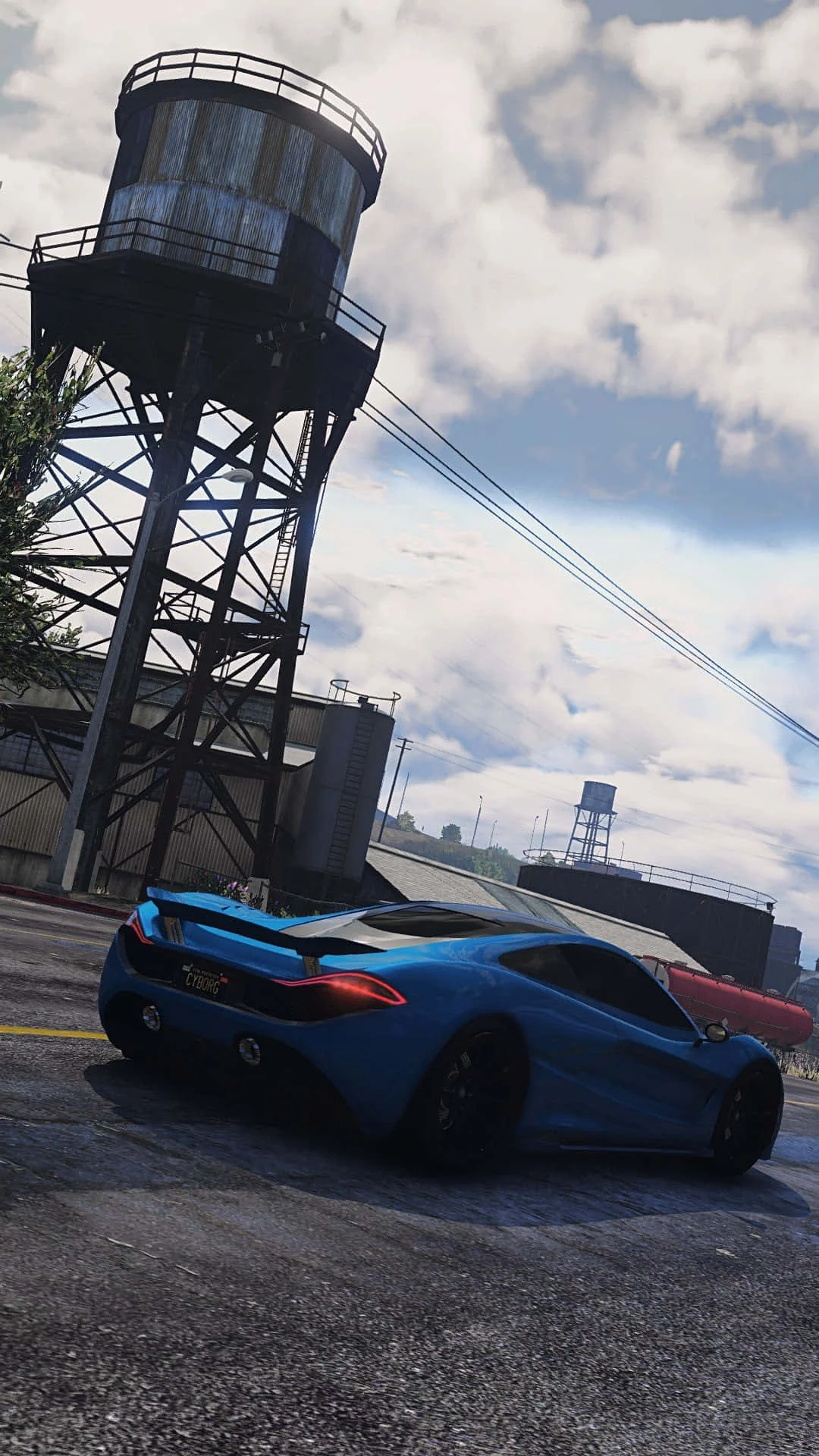
Fivem
This combination provides smooth gameplay with an average of 95 FPS, suitable for most gaming scenarios.
Average FPS: resolution vs quality settings
| Ultra | High | Medium | Low | |
|---|---|---|---|---|
| 4K Ultra HD | 35 | 45 | 56 | 71 |
| 1440p QHD | 62 | 80 | 100 | 127 |
| 1080p Full HD | 95 | 122 | 152 | 193 |
Cell color: green is 120+ FPS, teal is 60+, amber is 30+, red is below 30.
Fivem with Intel Core i7-12700KF + AMD Radeon RX 9060 XT 8 GB, In-Depth Analysis
# Fivem with Intel Core i7-12700KF + AMD Radeon RX 9060 XT 8 GB
This combination of an Intel Core i7-12700KF and an AMD Radeon RX 9060 XT 8 GB delivers playable frame rates across most settings at 1080p and 1440p in Fivem, though 4K performance falls short of smooth gameplay except at Low settings. The data shows a classic resolution-scaling pattern where the GPU becomes the dominant bottleneck as pixel count rises, while the 12-core processor provides ample headroom for the game's multi-threaded workload. With a combo rank of 1883 out of 3707 tested combinations, this pairing sits in the middle of the database, reflecting a balanced but not exceptional position for this multiplayer title.
Resolution Scaling
The measured FPS data reveals a steep and consistent drop as resolution increases from 1920x1080 to 3840x2160, indicating that the AMD Radeon RX 9060 XT 8 GB is the primary limiting component at higher pixel counts. At Low settings, average frame rates fall from 193 FPS at 1080p to 127 FPS at 1440p (a 34% reduction), then to 71 FPS at 4K (a further 44% drop from 1440p). This scaling pattern is typical of a GPU-bound scenario where the rendering workload grows quadratically with pixel count, and the 128-bit memory bus with 322.3 GB/s bandwidth becomes increasingly stressed.
The Medium settings row shows even more pronounced scaling. At 1080p Medium, the combo achieves 152 FPS average, which drops to 100 FPS at 1440p (34% lower) and 56 FPS at 4K (44% lower than 1440p). The 4K Medium result includes a measured minimum of 47 FPS and maximum of 64 FPS, indicating noticeable frame-time variance. High settings follow a similar trajectory: 122 FPS at 1080p, 80 FPS at 1440p (34% lower), and 45 FPS at 4K (44% lower than 1440p). Ultra settings produce the lowest absolute numbers, with 95 FPS at 1080p, 62 FPS at 1440p, and just 35 FPS at 4K.
The consistent ~34% reduction from 1080p to 1440p and ~44% reduction from 1440p to 4K across Low, Medium, and High presets strongly suggests that the GPU's rendering throughput, rather than CPU processing, dictates performance at resolutions above 1080p. The 8 GB VRAM capacity, while adequate for 1080p and 1440p, may also contribute to the 4K performance collapse, particularly at Ultra settings where texture memory demands increase. The data indicates that 1080p and 1440p are the viable operating resolutions for this combo, with 4K only usable at Low settings where the 71 FPS average remains above playable thresholds.
How This Combo Ranks
The combo rank of 1883 out of 3707 tested combinations places this pairing in the 50.8th percentile among all tested CPU-GPU combos in Fivem. This middle-of-the-pack position reflects a system that can handle the game competently at mainstream resolutions but does not deliver top-tier performance. The rank is particularly informative when contextualized against the individual component percentiles: the Intel Core i7-12700KF sits at the 85th percentile among all CPUs, while the AMD Radeon RX 9060 XT 8 GB ranks at the 24th percentile among all GPUs. The substantial gap between these percentiles explains why the combo lands near the median — the strong CPU cannot fully compensate for the GPU's relative weakness in this title.
In terms of GPU benchmark scores, the RX 9060 XT 8 GB achieves 4093 in the 3dmark_steel_nomad_dx12 test, placing it within 0.4% of the Intel HD Graphics 630 (4075) and 1.5% above the NVIDIA GeForce GT 755M (4033). These nearest rivals are all integrated or older mobile-class GPUs, which underscores the RX 9060 XT's position at the lower end of the discrete GPU spectrum despite its modern RDNA 4.0 architecture and 3130 MHz boost clock. The CPU, by contrast, sits within 0.2% of the Intel Core i7-12700K (35287 vs 35365 average benchmark score) and 0.1% of the Intel Core i7-13700T (35403), indicating near-identical processing capability to those parts.
The combination's rank suggests that in Fivem, which is known as a multiplayer modification platform with variable optimization, the GPU's 24th percentile standing drags the overall result down despite the CPU's strong 85th percentile showing. For users considering this combo, the data implies that upgrading the GPU would yield significantly larger frame rate gains than upgrading the CPU, given the processor's ample headroom. The rank also indicates that many combinations with weaker CPUs but stronger GPUs outperform this pairing in this specific game.
CPU Role
The Intel Core i7-12700KF brings substantial multi-threaded capability to this combo, with 12 cores and 20 threads operating at a 3.60 GHz base clock and 5.00 GHz boost clock. In synthetic benchmarks, the processor scores 28838 in Cinebench R23 multi-core and 4071 in single-core, with a Geekbench multi-core score of 14367 and single-core of 2255. These scores place it at the 85th percentile among all CPUs, with an average benchmark score of 35365 — within 0.2% of the Intel Core i7-12700K (35287) and 0.1% of the Intel Core i7-13700T (35403).
For Fivem's workload, the CPU's 20 threads prove more than sufficient, as evidenced by the frame rate scaling patterns. At 1080p Low settings, the combo achieves 193 FPS, which far exceeds the 4K High result of 45 FPS by a factor of 4.3. This massive spread between low-resolution and high-resolution performance indicates that the CPU is not the bottleneck at any tested resolution — if it were, the frame rates would plateau regardless of resolution. The processor's 25 MB of shared L3 cache and 1.25 MB per-core L2 cache provide ample data storage for game logic and entity management typical of a multiplayer environment like Fivem.
The Alder Lake architecture, built on Intel's 10 nm process with a 215 mm² die size, demonstrates strong single-thread performance with a 3dmark_single_thread score of 1043 and PassMark single-thread score of 3984. Fivem, like many multiplayer modifications, often relies on single-threaded performance for server-client communication and script execution. The CPU's 5.00 GHz boost clock ensures that these single-threaded tasks are handled quickly, contributing to the high frame rates observed at 1080p where the GPU can keep up. The processor's 125 W TDP and unlocked multiplier also indicate headroom for overclocking, though the measured data does not include overclocked results.
Comparatively, the CPU's nearest rivals in the database — the Core i7-12700K, Core i7-13700T, and Core i5-13600T — all exhibit similar average benchmark scores (35287, 35403, and 35305 respectively), with delta percentages of 0.2%, -0.1%, and 0.2% relative to the i7-12700KF. This clustering suggests that the CPU's performance class is well-established, and any of these processors would deliver comparable frame rates in Fivem when paired with the same GPU. The data shows no evidence of CPU-induced frame drops or stuttering in the measured results, reinforcing the conclusion that the processor is not the limiting factor in this configuration.
Measured FPS Breakdown
At 1920x1080, the combination delivers consistently high frame rates across all presets. Low settings produce an average of 193 FPS, Medium 152 FPS (with a measured range of 129 to 175 FPS), High 122 FPS, and Ultra 95 FPS. These numbers indicate that 1080p gaming is fully viable at any preset, with even Ultra settings maintaining nearly 100 FPS average. The gap between Low and Ultra at 1080p is 98 FPS, representing a 51% reduction in performance when moving from the lowest to the highest quality preset.
At 2560x1440, the frame rates remain playable but show clear GPU strain. Low settings average 127 FPS, Medium 100 FPS (range 85 to 115 FPS), High 80 FPS, and Ultra 62 FPS. The reduction from 1080p to 1440p is consistent at approximately 34% across Low, Medium, and High presets, while Ultra drops by 35%. This uniformity indicates that the GPU's pixel throughput is the determining factor, with the 1440p results still comfortably above 60 FPS for all presets except Ultra, which sits at 62 FPS average.
At 3840x2160, performance falls below smooth gameplay thresholds for most presets. Low settings average 71 FPS, Medium 56 FPS (range 47 to 64 FPS), High 45 FPS, and Ultra 35 FPS. The 4K results show a 44% reduction from 1440p across Low, Medium, and High, with Ultra dropping by 44% as well. Only the Low preset at 4K maintains an average above 60 FPS, while Medium dips below with a minimum of 47 FPS that could cause noticeable stutter. The Ultra preset at 35 FPS average is borderline unplayable for a multiplayer game where responsiveness matters.
The Medium settings row is the only preset with complete min/max data across all resolutions. At 1080p, the range spans 129 to 175 FPS (a 46 FPS spread); at 1440p, 85 to 115 FPS (a 30 FPS spread); and at 4K, 47 to 64 FPS (a 17 FPS spread). The narrowing range at higher resolutions suggests that the GPU's consistent workload limits frame-time variance, whereas at 1080p, the CPU and game engine introduce more variability. This pattern further confirms the GPU-bound nature of 4K performance and the relatively balanced operation at lower resolutions.
GPU Role
The AMD Radeon RX 9060 XT 8 GB is the decisive performance factor in this combo, and its capabilities define the frame rate envelope across all tested settings. Built on the RDNA 4.0 architecture with a Navi 44 chip on TSMC's 4 nm process, the GPU features 2048 shading units, 128 TMUs, and 64 ROPs. Its boost clock of 3130 MHz and game clock of 2530 MHz are high for the segment, yet the 8 GB GDDR6 memory on a 128-bit bus with 322.3 GB/s bandwidth proves limiting at higher resolutions.
The GPU's single benchmark score of 4093 in 3dmark_steel_nomad_dx12 places it at the 24th percentile among all GPUs, with nearest rivals including the Intel HD Graphics 630 (4075, 0.4% higher) and NVIDIA GeForce GT 755M (4033, 1.5% lower). This benchmark positioning is striking given the modern architecture and high clock speeds, suggesting that the 128-bit memory interface and 8 GB capacity constrain the GPU's raw compute throughput. The 25.64 TFLOPS FP32 performance and 400.6 GTexel/s texture rate indicate solid compute capabilities, but memory bandwidth appears to be the bottleneck in demanding scenarios.
In Fivem, the GPU's role becomes more pronounced as resolution increases. At 1080p, the GPU can maintain high frame rates because the pixel workload is manageable and the 8 GB VRAM is sufficient for the game's textures. At 1440p, the frame rates drop by a third, and at 4K, they halve again — a pattern directly attributable to the GPU's limited memory bandwidth and ROP throughput. The 64 ROPs and 200.3 GPixel/s pixel rate are insufficient for 4K Ultra settings, which explains the 35 FPS average at that configuration.
The GPU's 150 W TDP and single 8-pin power connector suggest a modest power envelope, which may contribute to sustained clock behavior but does not compensate for the architectural limitations. The PCIe 5.0 x16 interface provides ample bandwidth to the CPU, eliminating any interconnect bottleneck. The 4 nm process node from TSMC, with 29,700 million transistors on a 199 mm² die, represents a dense and efficient design, yet the memory subsystem remains the Achilles' heel for high-resolution gaming. The data indicates that this GPU is best suited for 1080p and 1440p gaming, where its strengths in compute and texture processing can be fully utilized without exceeding memory bandwidth limits.
FAQ
Q: Can this combo run Fivem at 60 FPS in 4K?
A: Only at Low settings, where the average FPS is 71. At Medium settings, the average drops to 56 FPS, and at High and Ultra, it falls to 45 FPS and 35 FPS respectively.
Q: What is the best resolution for this combination?
A: 2560x1440 offers the best balance, with all presets except Ultra maintaining averages above 80 FPS. At 1080p, all presets exceed 95 FPS, but 1440p provides more visual detail while staying playable.
Q: How does the RX 9060 XT compare to its nearest GPU rivals?
A: In the 3dmark_steel_nomad_dx12 test, it scores 4093, which is 0.4% below the Intel HD Graphics 630 (4075) and 1.5% above the NVIDIA GeForce GT 755M (4033). It also trails the NVIDIA Quadro K2100M by 1.4% (4151) and leads the AMD Radeon R5 M330 by 1.8% (4170).
Q: Is the CPU or GPU the bottleneck in this system?
A: The GPU is the bottleneck at resolutions above 1080p. The CPU ranks at the 85th percentile among all CPUs, while the GPU ranks at the 24th percentile. Frame rate drops of 34% from 1080p to 1440p and 44% from 1440p to 4K confirm GPU limitation.
Q: What frame rates can I expect at 1080p with Medium settings?
A: The average FPS is 152, with a measured range of 129 to 175 FPS. This provides a smooth experience well above typical refresh rates.
Q: How does this combo rank among all tested configurations in Fivem?
A: It ranks 1883 out of 3707 combinations, placing it at approximately the 51st percentile. This mid-tier ranking reflects the strong CPU but relatively weak GPU, which limits overall performance.
Settings Recommendations
Based on the measured FPS data, the optimal experience for this combo depends on resolution and refresh rate priorities. At 1920x1080, the Ultra preset delivers 95 FPS average, which is sufficient for most displays and provides the highest visual quality. For users with 144 Hz or higher refresh rate monitors, the High preset at 122 FPS or Medium at 152 FPS offers smoother motion, with Medium providing a 60% improvement over Ultra while still looking good. The Low preset at 193 FPS is overkill for all but the most competitive scenarios.
At 2560x1440, the High preset at 80 FPS represents the best compromise between visual fidelity and performance, staying above the 60 FPS threshold with room to spare. The Medium preset at 100 FPS is preferable for high-refresh displays, while Ultra at 62 FPS sits right at the edge of playability and may cause occasional dips below 60 FPS. The Low preset at 127 FPS is useful for maximizing frame rates but sacrifices significant visual quality.
At 3840x2160, only the Low preset at 71 FPS is recommended for consistent gameplay. Medium at 56 FPS may be tolerable for less competitive play, but the 47 FPS minimum could cause noticeable stutter. High and Ultra presets at 45 FPS and 35 FPS respectively are not recommended for a multiplayer title where responsiveness is critical. The data clearly indicates that 4K gaming with this combo requires significant settings compromises, and users prioritizing 4K should consider either a more powerful GPU or accept Low preset quality. For the best overall experience, 1440p with High settings offers the strongest combination of visual quality and smooth performance across the measured configurations.
Hardware Specifications
Intel Core i7-12700KF
AMD Radeon RX 9060 XT 8 GB
FPS Benchmarks by Resolution & Settings
Performance data for Intel Core i7-12700KF + AMD Radeon RX 9060 XT 8 GB in Fivem
| Resolution | Settings | Avg FPS |
|---|---|---|
| 3840x2160 | Low | 71.0 |
| 3840x2160 | Medium | 56.0 |
| 3840x2160 | High | 45.0 |
| 3840x2160 | Ultra | 35.0 |
| 2560x1440 | Low | 127.0 |
| 2560x1440 | Medium | 100.0 |
| 2560x1440 | High | 80.0 |
| 2560x1440 | Ultra | 62.0 |
| 1920x1080 | Low | 193.0 |
| 1920x1080 | Medium | 152.0 |
| 1920x1080 | High | 122.0 |
| 1920x1080 | Ultra | 95.0 |
Fivem with ii7-12700KF + Other GPUs
See how Fivem performs with the same CPU but different graphics cards.
Fivem with RX 9060 XT 8 GB + Other CPUs
See how Fivem performs with the same GPU but different processors.
Other Games with ii7-12700KF + RX 9060 XT 8 GB
Explore FPS benchmarks for other games using this same hardware combination.