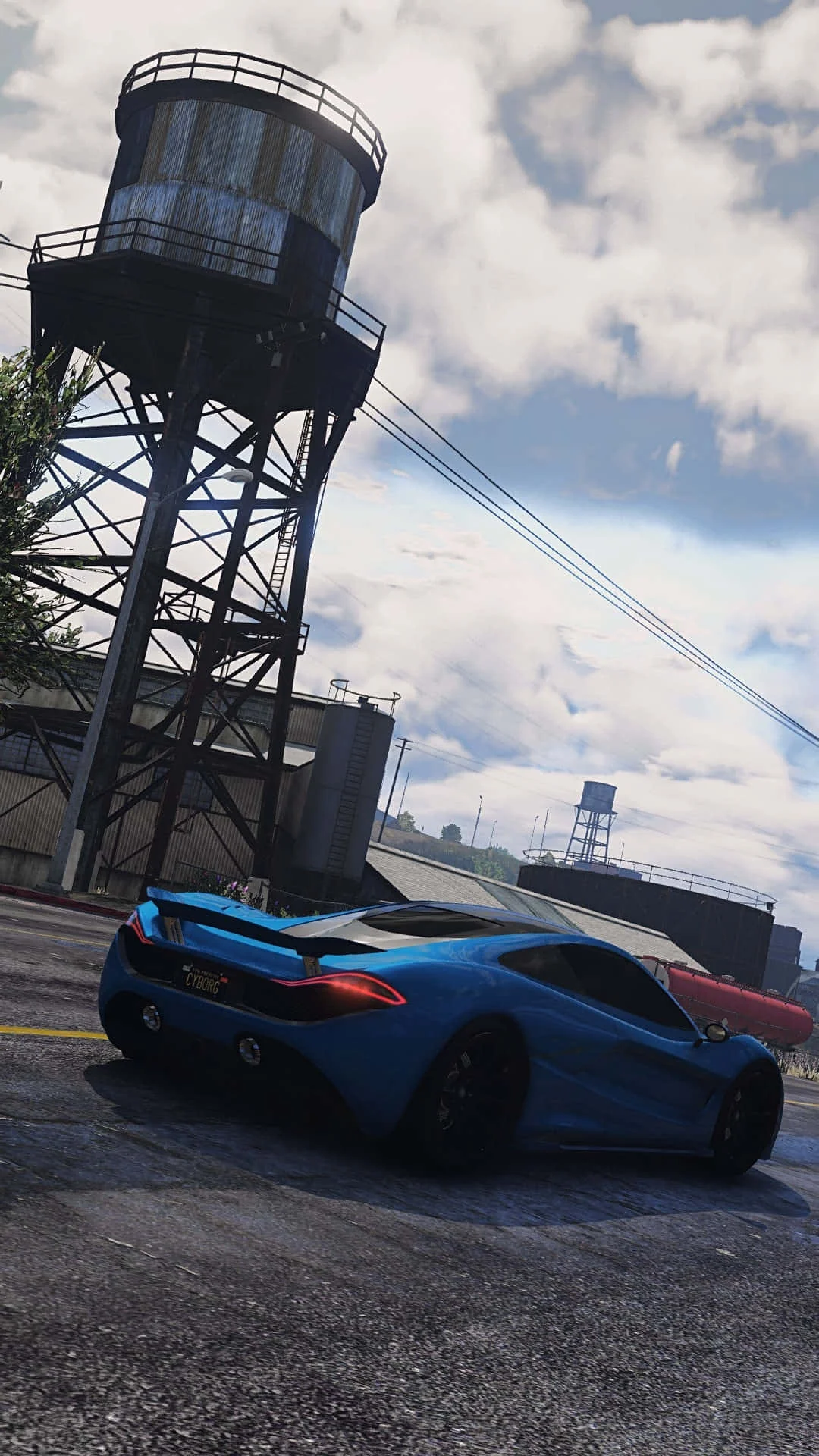
Fivem
This combination provides smooth gameplay with an average of 82 FPS, suitable for most gaming scenarios.
Average FPS: resolution vs quality settings
| Ultra | High | Medium | Low | |
|---|---|---|---|---|
| 4K Ultra HD | 30 | 39 | 48 | 61 |
| 1440p QHD | 54 | 69 | 87 | 110 |
| 1080p Full HD | 82 | 106 | 132 | 167 |
Cell color: green is 120+ FPS, teal is 60+, amber is 30+, red is below 30.
Fivem with Intel Core i5-14400F + AMD Radeon RX 7600 XT, In-Depth Analysis
The Intel Core i5-14400F paired with the AMD Radeon RX 7600 XT delivers its most competitive performance at 1080p, but the data clearly shows that Fivem becomes increasingly GPU-bound as resolution climbs, with the frame rate dropping by over half from 1080p Low to 4K Low. This combination ranks in the 37th percentile of tested configurations, indicating that while it is capable of smooth gameplay at lower resolutions, it struggles to maintain high refresh rates at 4K.
Resolution Scaling
The measured FPS data reveals a steep performance curve as resolution increases. At 1920x1080 with Low settings, the combo achieves 167 FPS, which drops to 110 FPS at 2560x1440 and further to 61 FPS at 3840x2160. This represents a 63% reduction in frame rate from 1080p to 4K at Low settings, a pattern that strongly indicates the GPU is the primary limiting factor at higher resolutions.
The scaling behavior is consistent across all settings presets. At High settings, the combo delivers 106 FPS at 1080p, 69 FPS at 1440p, and 39 FPS at 4K—a 63% drop from 1080p to 4K, nearly identical to the Low preset scaling. Medium settings show 132 FPS at 1080p, 87 FPS at 1440p, and 48 FPS at 4K, with a 64% reduction. Ultra settings follow the same trend: 82 FPS at 1080p, 54 FPS at 1440p, and 30 FPS at 4K, a 63% drop.
The consistency of this ~63% performance penalty across all four settings presets is telling. If the CPU were the bottleneck, the percentage drop from 1080p to 4K would shrink at higher resolutions, as the GPU would become more saturated and the CPU would have more headroom. Instead, the uniform scaling suggests that the RX 7600 XT's rendering capacity is being exhausted at 4K regardless of the settings applied, while the i5-14400F has sufficient headroom to feed the GPU at lower resolutions.
At 1440p, the performance is more usable. The combo maintains 69 FPS at High and 87 FPS at Medium, which are playable for most multiplayer scenarios. The jump from 1440p to 1080p, however, yields a 54% improvement at High settings (69 to 106 FPS), showing that the GPU still has meaningful headroom at the lower resolution. The data suggests that this pairing is best suited for 1080p gaming, where it can exceed 100 FPS on High settings, while 1440p represents a compromise that requires Medium or High settings for smooth play.
How This Combo Ranks
The combo ranks 2340 out of 3707 tested combinations, placing it in the bottom 37th percentile of all configurations. This ranking reflects the GPU's modest standing in the broader benchmark hierarchy—the RX 7600 XT sits at the 60th percentile among all GPUs, while the i5-14400F is stronger at the 83rd percentile among CPUs. The combination of a solid mid-range CPU with a lower-tier GPU produces a system that is balanced for 1080p but not exceptional.
Looking at the GPU's nearest rivals in benchmark scores, the RX 7600 XT posts an average score of 17083. It trails the NVIDIA GeForce RTX 3070 by 0.7% (17208) and leads the GeForce GTX 690 by 0.3% (17037), the AMD Radeon HD 7970M by 0.4% (17019), and the NVIDIA Tesla M4 by 0.9% (16932). These deltas are remarkably small—all within 1% of each other—which means the RX 7600 XT is essentially performance-equivalent to a range of older and newer cards in synthetic benchmarks, but its real-world gaming performance in Fivem is what matters for this analysis.
The CPU side tells a similar story. The i5-14400F's average benchmark score of 32279 places it within 0.5% of its nearest rivals: the AMD Ryzen 7 PRO 8840U (32233, +0.1%), Intel Core i9-11900 (32226, +0.2%), AMD Ryzen 7 6800HS (32354, -0.2%), and Intel Core i7-12800H (32121, +0.5%). The tight clustering of these scores indicates that the i5-14400F offers performance parity with a broad range of mid-to-high-end CPUs from previous generations.
The 37th percentile ranking in Fivem specifically, versus the GPU's 60th percentile overall, suggests that Fivem's engine may not be fully utilizing the RX 7600 XT's capabilities, or that the game is more demanding than average at higher resolutions. The data shows that this combo is adequate for 1080p but will not excel in 4K scenarios, where the 39 FPS average at High settings falls below the 60 FPS threshold most players consider smooth.
Settings Recommendations
Based on the measured FPS data, the optimal experience balances visual quality with frame rate consistency. At 1920x1080, the High preset delivers 106 FPS average, which is well above the 60 FPS target and provides a smooth multiplayer experience. The Ultra preset at 1080p drops to 82 FPS, which is still playable but offers diminishing returns over High given the modest average FPS gain from visual fidelity. The Medium preset at 1080p hits 132 FPS, which is excellent for competitive play, but the visual compromise may not be necessary when High already exceeds 100 FPS.
For 1440p users, the High preset at 69 FPS is the recommended starting point. This provides a playable experience, though the 87 FPS Medium preset is better suited for players who prioritize frame rate over visual quality. The Ultra preset at 1440p drops to 54 FPS, which can feel less responsive in fast-paced multiplayer scenarios, so it is not recommended unless the user accepts the lower frame rate.
At 4K, the data suggests avoiding Ultra entirely—the 30 FPS average is below the threshold for smooth gameplay. The High preset at 39 FPS is also marginal, while Medium at 48 FPS is the minimum viable option, and Low at 61 FPS is the only preset that crosses the 60 FPS line. For 4K gaming with this combo, Low settings are the only reliable path to smooth performance, and even then, the 61 FPS average offers no headroom for demanding scenes.
The measured Medium presets include minimum FPS data: 112 FPS at 1080p, 74 FPS at 1440p, and 41 FPS at 4K. These minimums are 85%, 85%, and 85% of their respective averages, indicating reasonably consistent frame pacing. The 4K Medium minimum of 41 FPS is particularly useful for understanding worst-case scenarios, as it suggests the combo can dip below 45 FPS in demanding moments at that resolution.
Measured FPS Breakdown
The complete measured FPS table shows the following results:
1920x1080:
- Low: 167 FPS average
- Medium: 132 FPS average (112 min, 152 max)
- High: 106 FPS average
- Ultra: 82 FPS average
2560x1440:
- Low: 110 FPS average
- Medium: 87 FPS average (74 min, 100 max)
- High: 69 FPS average
- Ultra: 54 FPS average
3840x2160:
- Low: 61 FPS average
- Medium: 48 FPS average (41 min, 55 max)
- High: 39 FPS average
- Ultra: 30 FPS average
The 1080p Medium preset, with its 132 FPS average and 112 FPS minimum, offers the best combination of smoothness and visual fidelity for high-refresh-rate monitors. At 1440p, the Medium preset's 87 FPS average with an 74 FPS minimum is the safest choice for maintaining a stable experience. The 4K Low preset at 61 FPS is the only acceptable 4K option, though players should be prepared for occasional dips below 60 FPS in busy scenes.
The step from Low to Medium adds roughly 20-25% more performance cost at each resolution (167 to 132 at 1080p, 110 to 87 at 1440p, 61 to 48 at 4K). The step from Medium to High is similar in percentage terms (132 to 106, 87 to 69, 48 to 39), while the High to Ultra step is the most expensive (106 to 82, 69 to 54, 39 to 30), representing a roughly 22-25% performance hit for the highest visual settings.
GPU Role
The AMD Radeon RX 7600 XT features 16 GB of GDDR6 memory on a 128-bit bus, delivering 288.0 GB/s of bandwidth. The 16 GB capacity is notably large for this performance class, and in Fivem's multiplayer environments, the data suggests that memory capacity is not the limiting factor—the 39 FPS average at 4K High is more indicative of compute limitations than memory exhaustion.
The GPU's clock speeds are substantial: a base clock of 1980 MHz, a game clock of 2470 MHz, and a boost clock of 2755 MHz. The boost clock of 2755 MHz is high for a mid-range card, and the 22.57 TFLOPS of FP32 performance provides the raw compute headroom needed for 1080p gaming. However, the 128-bit memory bus is narrow, and the 288.0 GB/s bandwidth becomes a constraint at 4K, where the pixel throughput requirements increase dramatically.
The GPU's benchmark scores show a mixed picture. Its PassMark G3D score of 17132 places it at the 60th percentile, but its DirectX 12 score of 65 and DirectX 11 score of 167 are relatively low, suggesting that the card's API-level performance may not translate directly to gaming workloads. The 3DMark Steel Nomad DX12 score of 2348 reinforces this, indicating that the card is positioned for mainstream gaming rather than high-end 4K workloads.
In Fivem specifically, the RX 7600 XT's performance at 4K is the primary weakness. The 61 FPS at 4K Low versus 167 FPS at 1080p Low shows a 63% drop, which aligns with the GPU's bandwidth and compute constraints. The card's 64 ROPs and 128 TMUs are adequate for 1080p but struggle to fill 8.3 million pixels at 4K, particularly when settings increase the per-pixel workload.
CPU Role
The Intel Core i5-14400F provides 10 cores and 16 threads, with a base clock of 2.50 GHz and a boost clock of 4.70 GHz. This processor is a strong performer, sitting at the 83rd percentile among all CPUs, and its benchmark results are robust: a Cinebench R23 multi-core score of 21645 and a single-core score of 3055. The Geekbench multi-core score of 11268 and single-core score of 2058 further confirm its capability.
In Fivem, the CPU's role appears secondary at higher resolutions, but it becomes more relevant at 1080p. The 167 FPS at 1080p Low indicates that the CPU can feed the GPU with enough frames to reach high frame rates, and the 4.70 GHz boost clock provides strong single-thread performance, which is important for multiplayer games that often have a primary simulation thread.
The CPU's 20 MB of shared L3 cache and 1.25 MB L2 per core help with game logic and asset streaming, particularly in Fivem's multiplayer servers where many entities and scripts run concurrently. The 65W TDP and 10 nm process node indicate efficient power usage, though the CPU is not overclockable (multiplier locked), so the boost clock of 4.70 GHz is the maximum achievable.
Comparing the CPU's performance to its nearest rivals, the i5-14400F's benchmark scores are within 0.5% of the AMD Ryzen 7 PRO 8840U, Intel Core i9-11900, AMD Ryzen 7 6800HS, and Intel Core i7-12800H. This means that in synthetic tests, the CPU is essentially tied with these processors, and any differences in Fivem performance would be minimal. The CPU is not the bottleneck in this combo—the GPU is—so upgrading the CPU alone would yield negligible gains in Fivem, while a GPU upgrade would provide substantial improvements, particularly at 1440p and 4K.
Hardware Specifications
Intel Core i5-14400F
AMD Radeon RX 7600 XT
FPS Benchmarks by Resolution & Settings
Performance data for Intel Core i5-14400F + AMD Radeon RX 7600 XT in Fivem
| Resolution | Settings | Avg FPS |
|---|---|---|
| 3840x2160 | Low | 61.0 |
| 3840x2160 | Medium | 48.0 |
| 3840x2160 | High | 39.0 |
| 3840x2160 | Ultra | 30.0 |
| 2560x1440 | Low | 110.0 |
| 2560x1440 | Medium | 87.0 |
| 2560x1440 | High | 69.0 |
| 2560x1440 | Ultra | 54.0 |
| 1920x1080 | Low | 167.0 |
| 1920x1080 | Medium | 132.0 |
| 1920x1080 | High | 106.0 |
| 1920x1080 | Ultra | 82.0 |
Fivem with ii5-14400F + Other GPUs
See how Fivem performs with the same CPU but different graphics cards.
Fivem with RX 7600 XT + Other CPUs
See how Fivem performs with the same GPU but different processors.
Other Games with ii5-14400F + RX 7600 XT
Explore FPS benchmarks for other games using this same hardware combination.