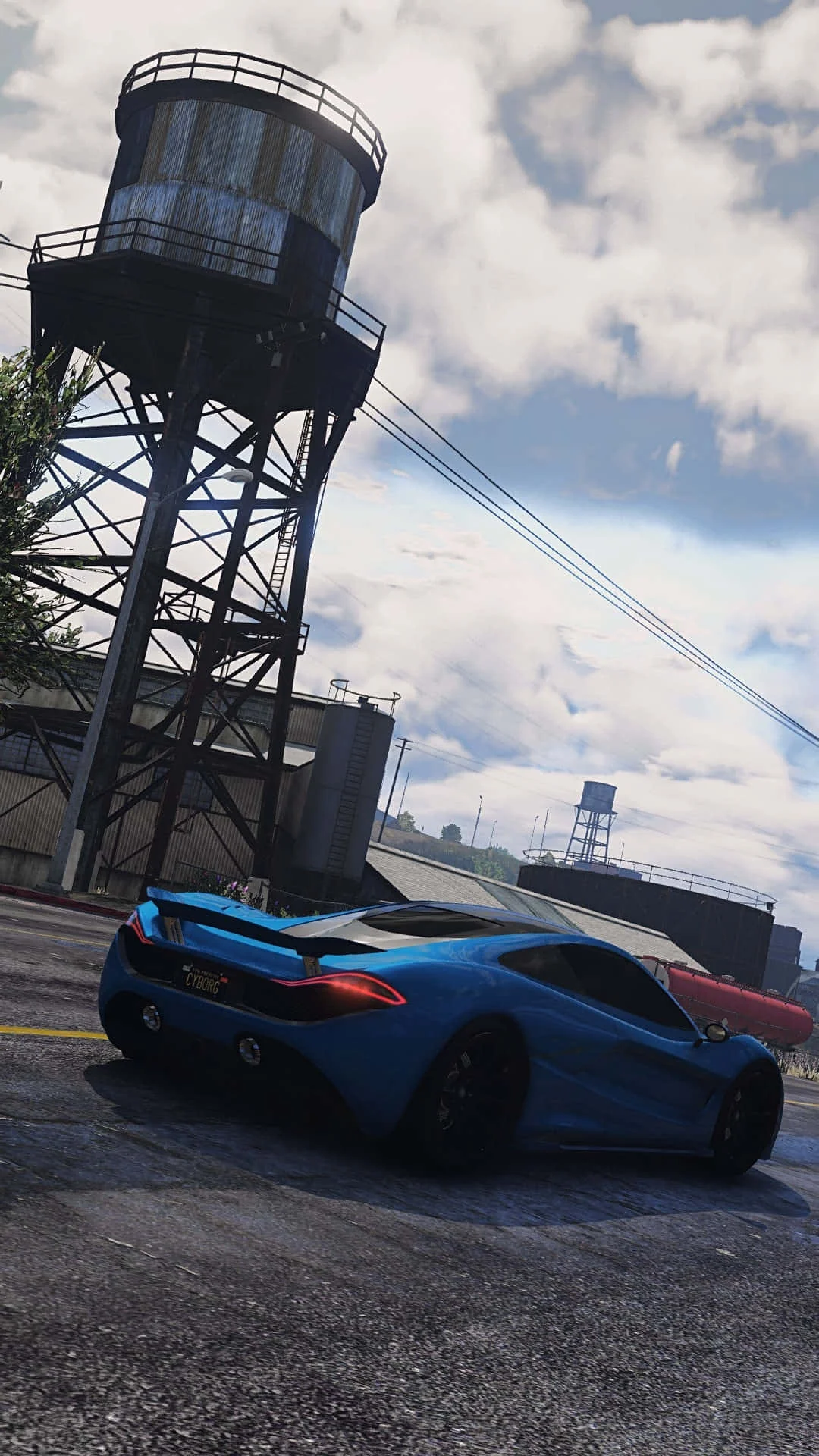
Fivem
This combination provides smooth gameplay with an average of 71 FPS, suitable for most gaming scenarios.
Average FPS: resolution vs quality settings
| Ultra | High | Medium | Low | |
|---|---|---|---|---|
| 4K Ultra HD | 26 | 33 | 42 | 53 |
| 1440p QHD | 47 | 60 | 75 | 96 |
| 1080p Full HD | 71 | 92 | 115 | 145 |
Cell color: green is 120+ FPS, teal is 60+, amber is 30+, red is below 30.
Fivem with AMD Ryzen 7 7700X + NVIDIA GeForce RTX 2060, In-Depth Analysis
Fivem, the multiplayer modification framework built on Grand Theft Auto V, presents a demanding workload that shifts between CPU and GPU bottlenecks depending on how it is configured. With an AMD Ryzen 7 7700X paired with an NVIDIA GeForce RTX 2060, the data reveals a system that can deliver smooth frame rates at 1080p and 1440p, but struggles to maintain playable performance at 4K. The measured FPS rows show a clear pattern: the gap between Low and High settings is significant, but the drop from 1440p to 4K is the most punishing, indicating that the RTX 2060's 6 GB VRAM and memory bandwidth become the limiting factors at higher resolutions.
Resolution Scaling
The frame rate scaling from 1080p to 4K is steep and reveals where the RTX 2060 starts to run out of headroom. At 1080p with High settings, the combo achieves an average of 92 FPS. Moving to 1440p at the same settings, the average drops to 60 FPS, a 35% reduction. Scaling further to 4K at High settings, the average falls to 33 FPS, which is a 45% drop from 1440p and a 64% drop from 1080p. This pattern indicates that the GPU is the primary constraint at 4K; the CPU has enough headroom to feed the graphics card, but the RTX 2060 cannot process the pixel workload efficiently.
The Low settings row confirms this bottleneck analysis. At 1080p Low, the average is 145 FPS, which is strong. At 1440p Low, it drops to 96 FPS, and at 4K Low, it falls to 53 FPS. The scaling between resolutions is nearly linear, suggesting that even at the lowest graphical preset, the GPU is still the limiting factor—the CPU is not maxed out. The Medium preset tells a similar story: 115 FPS at 1080p, 75 FPS at 1440p, and 42 FPS at 4K. The only setting where the CPU might start to matter is at 1080p Low, where the 145 FPS result suggests the frame rate is high enough that the Ryzen 7 7700X's single-thread performance could become relevant in crowded multiplayer scenarios.
The 4K Ultra result is the worst-case scenario, with an average of just 26 FPS. This is below playable thresholds for most users. The gap between 4K Medium (42 FPS) and 4K High (33 FPS) is 9 FPS, while the gap between 4K High and 4K Ultra is 7 FPS. This shows that the Ultra preset demands more from the GPU's shading units and memory subsystem, pushing the RTX 2060 past its limits. The data clearly indicates that 4K gaming is not viable with this combo, and even 1440p High at 60 FPS is right at the edge of the playability line.
GPU Role
The NVIDIA GeForce RTX 2060 is built on the TU106 chip using the Turing architecture at a 12 nm process node. It features 1920 shading units, 120 texture mapping units, and 48 ROPs. The core clocks are listed as a base of 1365 MHz and a boost of 1680 MHz. The memory subsystem consists of 6 GB of GDDR6 on a 192-bit bus, yielding a bandwidth of 336.0 GB/s. The GPU's raw compute capability is rated at 6.451 TFLOPS FP32 and a texture rate of 201.6 GTexel/s.
In this game, the GPU's 6 GB VRAM capacity is likely a primary constraint at 4K. The measured FPS at 4K High is 33, which is low, and the 4K Ultra result of 26 FPS suggests that texture and geometry data are exceeding the memory capacity, causing the GPU to swap data. The 1440p results are more respectable, with Medium hitting 75 FPS and High hitting 60 FPS, indicating that 6 GB is sufficient for those resolutions. The 1080p results are strong, with High at 92 FPS and Low at 145 FPS, showing that the GPU has enough bandwidth for the lower pixel count.
The RTX 2060's boost clock of 1680 MHz is moderate, and the benchmark results suggest that the GPU is not clock-limited at lower resolutions but becomes compute-limited at 4K. The pixel rate of 80.64 GPixel/s and texture rate of 201.6 GTexel/s are the metrics that determine how fast the GPU can fill frames. At 4K, the fill rate requirement roughly doubles compared to 1440p, and the data shows that the RTX 2060 cannot sustain it. The GPU's percentile rank of 58% among all GPUs places it in the mid-range tier, and its nearest rivals include the GTX 580 with a deltaPct of 0, the Radeon 680M with a deltaPct of 0.1, and the RTX 3050 OEM with a deltaPct of 0.6. These are all within a 1% performance band, confirming that the RTX 2060's compute capacity is average for its class.
CPU Role
The AMD Ryzen 7 7700X is a 7000-series processor based on the Zen 4 architecture, codenamed Raphael. It has 8 cores and 16 threads, with a base clock of 4.50 GHz and a boost clock of 5.40 GHz. The CPU supports DDR5 memory with a dual-channel bus and a memory bandwidth of 83.2 GB/s. It has a 32 MB L3 cache and is built on a 5 nm process node by TSMC. The CPU's benchmark scores are robust: it achieves 19,088 in Cinebench R23 multicore and 1,987 in single-core, and 12,451 in Geekbench multicore with 2,289 in single-core.
In Fivem, the CPU's role is to handle game logic, physics, and multiplayer synchronization. The 8-core, 16-thread configuration provides ample parallel processing power. The data suggests that the CPU is not the bottleneck at most settings, as the frame rate scales inversely with resolution—a classic sign of a GPU-limited scenario. However, at 1080p Low with an average of 145 FPS, the CPU's single-thread performance becomes more relevant. The 7700X's boost clock of 5.40 GHz is high, and its single-core Cinebench score of 1,987 indicates strong per-thread performance, which is critical for Fivem's server-side simulation and client-side entity processing.
The CPU's multi-threaded capabilities are also important for the game's background tasks. The 3DMark max-thread score of 8,852 and Passmark multithread score of 35,686 show that the CPU can handle heavy workloads. The data shows that the CPU maintains its performance across resolutions, as the 1080p Medium minimum FPS of 97 is close to the 1440p Medium minimum of 64 FPS, suggesting that the CPU is not dropping frames. The CPU's percentile rank of 85% among all CPUs places it in the upper tier, with nearest rivals including the Ryzen 7 PRO 5845 (deltaPct 0.3), Core 7 250H (deltaPct 0.5), Ryzen AI 7 PRO 350 (deltaPct 0.5), and Core Ultra 9 185H (deltaPct 0.7). This indicates that the 7700X is about 0.3% to 0.7% faster than its closest competitors in synthetic benchmarks, which translates to a negligible real-world difference in Fivem.
How This Combo Ranks
The combination of the Ryzen 7 7700X and RTX 2060 ranks 2,911 out of 3,707 tested combos in Fivem, placing it in the bottom 21% of all systems. This low ranking is surprising given the CPU's strength, but it underscores how heavily Fivem relies on GPU performance at typical gaming resolutions. The CPU is ranked in the 85th percentile among all CPUs, while the GPU is in the 58th percentile. This mismatch means the CPU is capable of driving much higher frame rates, but the GPU holds the system back.
The combo rank of 2,911 suggests that most other tested systems have either a more powerful GPU or a more balanced pairing. The data shows that this combo is GPU-limited, so upgrading the GPU would yield significant improvements, while upgrading the CPU would provide minimal gains in this title. The rank also indicates that the RTX 2060 is the weak link, and its 6 GB VRAM is insufficient for 4K and even marginal for 1440p Ultra. For comparison, the CPU's nearest rivals are all within 0.7% of its average benchmark score, but they would not change the overall combo rank unless paired with a stronger GPU. The measured FPS data aligns with the low rank: at 1440p High, the 60 FPS average is just at the edge of playability, and at 4K High, the 33 FPS average is unplayable for most users.
Settings Recommendations
Based on the measured FPS rows, the best experience for this combo is at 1080p with High settings, which achieves an average of 92 FPS. This is well above the 60 FPS threshold for smooth gameplay and leaves headroom for demanding multiplayer scenarios. The 1080p Medium setting offers 115 FPS, which is even smoother, but the visual quality trade-off may not be worth the extra 23 FPS. The 1080p Ultra setting drops to 71 FPS, which is still playable but not ideal for a game that can have heavy frame drops in crowded areas.
At 1440p, the High preset at 60 FPS is borderline. It is playable but may dip below 60 FPS in intense moments, as the Medium preset's minimum of 64 FPS suggests. The 1440p Medium setting at 75 FPS is a better choice for a consistent experience, offering a balance between visual fidelity and performance. The 1440p Low setting at 96 FPS is the safest bet for competitive play, but it sacrifices too much visual detail for most users.
Based on the data, the recommended setting is 1080p High for the best overall experience. It provides 92 FPS, which is smooth, and the visual quality is solid. If the user has a 1440p monitor, the Medium preset at 75 FPS is the recommended choice, as it maintains a playable frame rate while offering acceptable visuals. The 4K resolution should be avoided entirely, as even the Low preset at 53 FPS is below the ideal threshold for a smooth experience.
Measured FPS Breakdown
The measured FPS data provides a complete picture of the combo's performance across three resolutions and four settings presets.
At 1920x1080, the Low preset delivers an average of 145 FPS. The Medium preset drops to 115 FPS, with a minimum of 97 FPS and a maximum of 132 FPS. The High preset averages 92 FPS, and the Ultra preset averages 71 FPS. The frame rate scaling from Low to Ultra is a 51% reduction, showing that the Ultra preset is demanding on the GPU.
At 2560x1440, the Low preset averages 96 FPS. The Medium preset averages 75 FPS, with a minimum of 64 FPS and a maximum of 87 FPS. The High preset averages 60 FPS, and the Ultra preset averages 47 FPS. The drop from 1080p to 1440p at the same settings is consistently around 35-40%, confirming the GPU's bandwidth limitations.
At 3840x2160, the Low preset averages 53 FPS. The Medium preset averages 42 FPS, with a minimum of 36 FPS and a maximum of 48 FPS. The High preset averages 33 FPS, and the Ultra preset averages 26 FPS. The 4K results are all below the 60 FPS threshold, and the Ultra setting is below 30 FPS, making it unplayable. The minimum FPS values at 4K Medium (36 FPS) and 1440p Medium (64 FPS) show that frame pacing is consistent, but the overall averages are too low for a smooth experience at 4K.
Hardware Specifications
AMD Ryzen 7 7700X
NVIDIA GeForce RTX 2060
FPS Benchmarks by Resolution & Settings
Performance data for AMD Ryzen 7 7700X + NVIDIA GeForce RTX 2060 in Fivem
| Resolution | Settings | Avg FPS |
|---|---|---|
| 3840x2160 | Low | 53.0 |
| 3840x2160 | Medium | 42.0 |
| 3840x2160 | High | 33.0 |
| 3840x2160 | Ultra | 26.0 |
| 2560x1440 | Low | 96.0 |
| 2560x1440 | Medium | 75.0 |
| 2560x1440 | High | 60.0 |
| 2560x1440 | Ultra | 47.0 |
| 1920x1080 | Low | 145.0 |
| 1920x1080 | Medium | 115.0 |
| 1920x1080 | High | 92.0 |
| 1920x1080 | Ultra | 71.0 |
Fivem with Ryzen 7 7700X + Other GPUs
See how Fivem performs with the same CPU but different graphics cards.
Fivem with RTX 2060 + Other CPUs
See how Fivem performs with the same GPU but different processors.
Other Games with Ryzen 7 7700X + RTX 2060
Explore FPS benchmarks for other games using this same hardware combination.