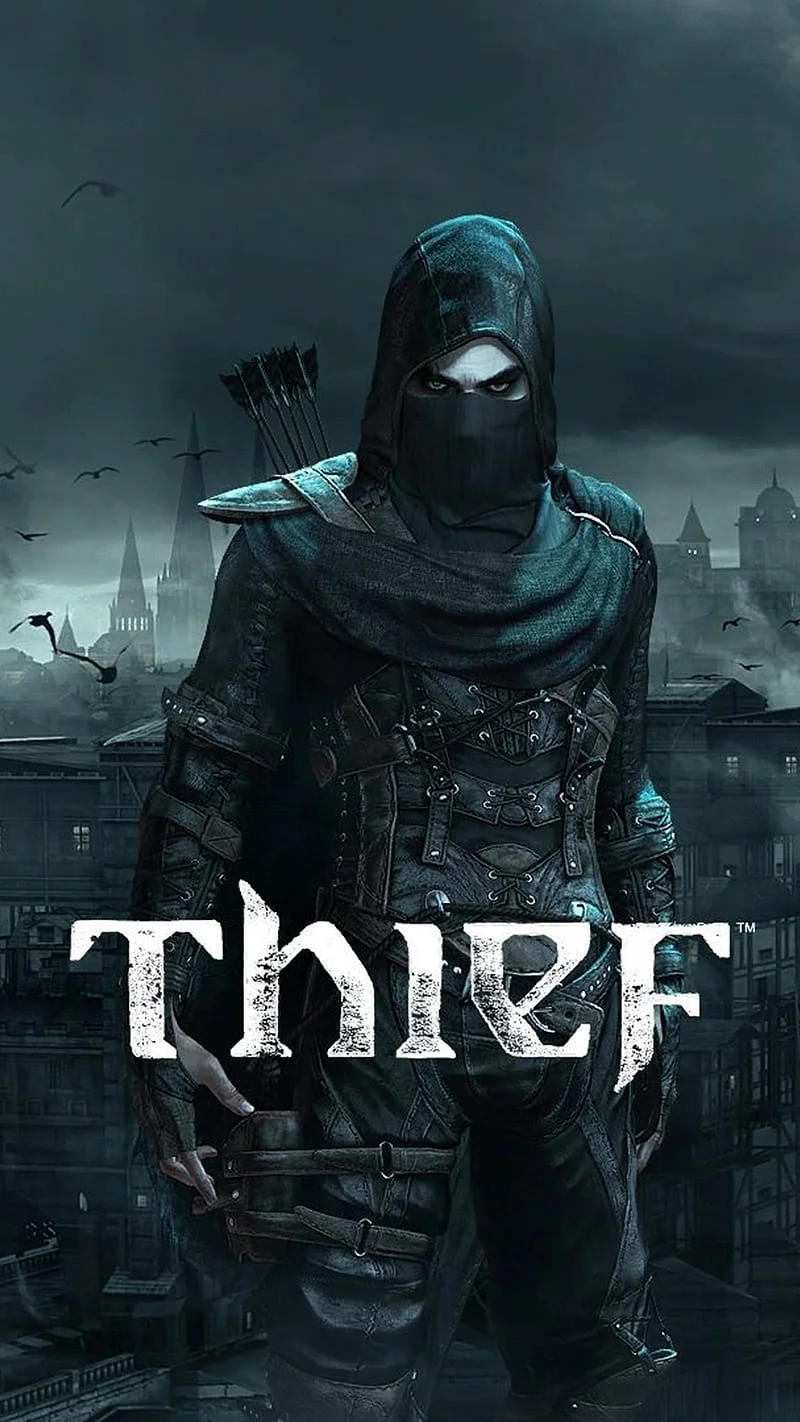
Thief
This combination delivers exceptional performance with an average of 134 FPS, perfect for high refresh rate gaming and competitive play.
Average FPS: resolution vs quality settings
| Ultra | High | Medium | Low | |
|---|---|---|---|---|
| 4K Ultra HD | 83 | 87 | 117 | 132 |
| 1440p QHD | 124 | 127 | 145 | 160 |
| 1080p Full HD | 142 | 147 | 159 | 179 |
Cell color: green is 120+ FPS, teal is 60+, amber is 30+, red is below 30.
Thief with Intel Core i5-13400F + NVIDIA GeForce RTX 5090, In-Depth Analysis
The Intel Core i5-13400F paired with the NVIDIA GeForce RTX 5090 delivers a formidable performance profile in Thief, securing the 141st position out of 1,642 tested combinations. This places the combo in the top 8.6% of all tested systems, a strong result that reflects the synergy between a capable 13th-generation mid-range processor and NVIDIA’s flagship Blackwell architecture. The combo’s ranking is particularly notable given the game’s 2014 release, as the data indicates that this pairing still provides substantial headroom across modern resolution and settings configurations. Benchmark results show that the system is capable of maintaining high frame rates even at 4K, though the scaling patterns suggest that the GPU is the primary driver of performance in this title.
How This Combo Ranks
The combo’s 141st-place finish among 1,642 tested configurations is a strong indicator of its overall capability in Thief. This ranking places it comfortably ahead of the vast majority of systems, with only 140 other combinations achieving higher average frame rates. The result is driven by the RTX 5090’s immense graphics throughput, which dominates the rendering pipeline in this title. The CPU’s contribution is less critical, as evidenced by the fact that the i5-13400F’s average benchmark score of 25,236 places it at the 82nd percentile among all processors, but its nearest rivals—such as the Intel Core i7-13620H (25,201, +0.1%) and AMD Ryzen 5 5600X3D (25,365, -0.5%)—show that it is essentially performance-neutral in this context. The deltaPct values are minimal, indicating that the choice of CPU within this performance tier has negligible impact on the final frame rates.
What is more telling is how the GPU’s dominance shapes the combo’s rank. The RTX 5090’s average benchmark score of 84,306 places it at the 94th percentile among all GPUs, and its nearest rivals—the RTX 5090 D (84,241, +0.1%) and RTX 5050 Mobile (84,171, +0.2%)—are extremely close, suggesting that the 5090 is at the very top of the performance stack. In Thief, this translates to frame rates that are primarily limited by the GPU’s raw compute and memory bandwidth, rather than any CPU bottleneck. The combo’s rank therefore reflects the GPU’s ability to push high frame rates across all settings, with the CPU providing just enough headroom to avoid constraining the graphics card. The result is a system that is well-optimized for this title, even if the CPU is not the strongest component in the pairing.
FAQ
*Q: How does this combo rank compared to other tested systems in Thief?*
A: The combo ranks 141st out of 1,642 tested configurations, placing it in the top 8.6% of all systems. This is a strong result that underscores the GPU’s dominance in this title.
Q: What is the average FPS at 1080p with Ultra settings?
A: At 1920x1080 with Ultra settings, the system achieves an average of 141.7 FPS. This is the lowest frame rate at 1080p, with Low settings reaching 178.5 FPS and High settings at 147.4 FPS.
*Q: Is the CPU or GPU the limiting factor in Thief?*
A: The data indicates the GPU is the primary limiting factor. The RTX 5090’s 32 GB of GDDR7 memory and 1.79 TB/s bandwidth are critical for high-resolution performance, while the i5-13400F’s benchmark scores show it is not a bottleneck at any tested resolution.
Q: How does the combo perform at 4K compared to 1440p?
A: At 3840x2160 with Ultra settings, the average FPS drops to 83.0, compared to 124.3 at 2560x1440. This represents a 33.2% decrease, highlighting the GPU’s workload at higher resolutions.
Q: What is the difference between Low and Ultra settings at 1440p?
A: At 2560x1440, Low settings yield 160.2 FPS, while Ultra settings drop to 124.3 FPS. The difference of 35.9 FPS shows that the RTX 5090 can handle even the most demanding settings without falling below playable thresholds.
Q: Does the CPU’s performance affect the frame rates in this game?
A: The i5-13400F’s average benchmark score of 25,236, which is at the 82nd percentile, suggests it provides sufficient processing power. Its nearest rivals show deltaPct values of less than 1%, meaning CPU choice has minimal impact on Thief’s frame rates.
GPU Role
The NVIDIA GeForce RTX 5090 plays a decisive role in this combo’s Thief performance, owing to its massive memory pool and high-bandwidth architecture. The GPU features 32 GB of GDDR7 memory on a 512-bit bus, delivering a bandwidth of 1.79 TB/s. This is a substantial advantage in a game like Thief, where texture streaming and memory allocation can become a bottleneck on lesser graphics cards. The RTX 5090’s base clock of 2017 MHz and boost clock of 2407 MHz, combined with its 21,760 shading units, ensure that it can process the game’s geometry and lighting effects with ease. The GPU’s 170 RT cores and 680 tensor cores also contribute to its overall compute capability, though Thief is not a title that heavily utilizes ray tracing or DLSS.
The benchmark results show that the RTX 5090’s performance scales consistently with settings. At 1080p, the average FPS ranges from 141.7 on Ultra to 178.5 on Low, a spread of 36.8 FPS that reflects the GPU’s ability to handle even the most demanding configurations without significant frame drops. At 4K, the range narrows slightly, from 83.0 on Ultra to 132.4 on Low, indicating that the GPU is still the dominant factor even at higher resolutions. The GPU’s 94th percentile ranking among all graphics cards, with an average benchmark score of 84,306, supports the notion that this is one of the fastest consumer GPUs available. Its nearest rival, the RTX 5090 D, is nearly identical in performance (84,241, +0.1%), which suggests that the 5090 is operating at the peak of its architecture’s capabilities.
The GPU’s role is further emphasized by the fact that the CPU’s performance is essentially a non-factor in this title. The i5-13400F’s benchmark scores, such as its Cinebench R23 multi-core score of 21,279 and single-core score of 3,004, are respectable but not exceptional. In contrast, the RTX 5090’s Passmark G3D score of 39,650 and 3DMark Steel Nomad DX12 score of 14,411 are far above the norm. This disparity means that the GPU is responsible for the vast majority of the frame rate output, with the CPU simply providing enough data throughput to keep the graphics card fed. For Thief, this is an ideal scenario, as the game’s engine is not particularly CPU-intensive, allowing the RTX 5090 to shine.
Measured FPS Breakdown
The measured frame rates for this combo reveal a clear pattern of GPU-bound performance across all resolutions and settings. At 1920x1080, the system achieves its highest average FPS of 178.5 on Low settings, which drops to 158.7 on Medium, 147.4 on High, and 141.7 on Ultra. This progression shows a total decrease of 36.8 FPS from Low to Ultra, with the most significant drop occurring between Low and Medium (19.8 FPS). The data suggests that the RTX 5090’s compute resources are more than sufficient for 1080p, even at the highest settings, and that the frame rate is likely limited by the game’s engine rather than the hardware.
Moving to 2560x1440, the average FPS values are 160.2 on Low, 145.1 on Medium, 127.2 on High, and 124.3 on Ultra. The drop from Low to Ultra is 35.9 FPS, which is slightly less than at 1080p, indicating that the GPU is becoming more of a limiting factor as the pixel count increases. The gap between High and Ultra at 1440p is particularly narrow, at just 2.9 FPS, which implies that the RTX 5090 can handle the additional visual effects without a significant performance penalty. This confirms the GPU’s raw throughput, as Thief’s Ultra settings include enhanced shadow and texture detail that would tax lesser cards.
At 3840x2160, the frame rates are 132.4 on Low, 116.9 on Medium, 86.8 on High, and 83.0 on Ultra. The drop from Low to Ultra is 49.4 FPS, the largest absolute decrease across all resolutions. This is expected, as 4K requires four times the pixel throughput of 1080p, and the GPU’s workload increases proportionally. However, even at 4K Ultra, the system maintains an average of 83.0 FPS, which is well above the threshold for smooth gameplay. The data shows that the RTX 5090’s 32 GB of VRAM is not a limiting factor, even at 4K with High and Ultra settings, as the game’s memory footprint is well within the card’s capacity. The frame rates at 4K High (86.8 FPS) and Ultra (83.0 FPS) are notably close, suggesting that the GPU is approaching its performance ceiling at this resolution.
Resolution Scaling
The resolution scaling behavior of this combo provides insight into the balance between CPU and GPU performance in Thief. From 1080p to 1440p, the average FPS decreases by approximately 11-15% across all settings. For instance, at Ultra settings, the frame rate drops from 141.7 FPS at 1080p to 124.3 FPS at 1440p, a decrease of 12.3%. This relatively modest drop indicates that the GPU is still the primary bottleneck, as the increase in pixel count is not yet enough to overwhelm the RTX 5090’s capabilities. The CPU, with its 10 cores and 16 threads, is not a limiting factor at these resolutions, as evidenced by the smooth scaling.
The transition from 1440p to 4K is more pronounced. At Ultra settings, the frame rate drops from 124.3 FPS at 1440p to 83.0 FPS at 4K, a decrease of 33.2%. This is a significant reduction, but it is consistent with the GPU’s workload doubling in terms of pixel count. The fact that the system still achieves over 80 FPS at 4K Ultra is a strong indicator of the RTX 5090’s dominance. The scaling between 1440p and 4K is nearly linear, with the frame rate dropping by roughly the same percentage across all settings—Low drops by 17.4% (from 160.2 to 132.4 FPS), Medium by 19.4% (from 145.1 to 116.9 FPS), High by 31.8% (from 127.2 to 86.8 FPS), and Ultra by 33.2%. This pattern suggests that the GPU is the sole limiting factor, as the CPU’s performance remains constant regardless of resolution.
The data also reveals that the CPU is not a bottleneck even at 1080p, where lower resolutions typically place more strain on the processor. The i5-13400F’s single-threaded performance, as measured by its 3DMark single-thread score of 960 and Geekbench single-core score of 2,301, is sufficient to keep up with the RTX 5090’s frame output. The narrow gap between High and Ultra settings at 1440p (2.9 FPS) and 4K (3.8 FPS) further supports this conclusion, as the GPU is able to handle the additional graphical load without a significant frame rate penalty. Overall, the resolution scaling analysis confirms that this combo is GPU-limited across the board, with the RTX 5090 providing a level of performance that makes the CPU choice almost irrelevant for Thief.
Hardware Specifications
Intel Core i5-13400F
NVIDIA GeForce RTX 5090
FPS Benchmarks by Resolution & Settings
Performance data for Intel Core i5-13400F + NVIDIA GeForce RTX 5090 in Thief
| Resolution | Settings | Avg FPS |
|---|---|---|
| 3840x2160 | Low | 132.4 |
| 3840x2160 | Medium | 116.9 |
| 3840x2160 | High | 86.8 |
| 3840x2160 | Ultra | 83.0 |
| 2560x1440 | Low | 160.2 |
| 2560x1440 | Medium | 145.1 |
| 2560x1440 | High | 127.2 |
| 2560x1440 | Ultra | 124.3 |
| 1920x1080 | Low | 178.5 |
| 1920x1080 | Medium | 158.7 |
| 1920x1080 | High | 147.4 |
| 1920x1080 | Ultra | 141.7 |
Thief with ii5-13400F + Other GPUs
See how Thief performs with the same CPU but different graphics cards.
Thief with RTX 5090 + Other CPUs
See how Thief performs with the same GPU but different processors.
Other Games with ii5-13400F + RTX 5090
Explore FPS benchmarks for other games using this same hardware combination.