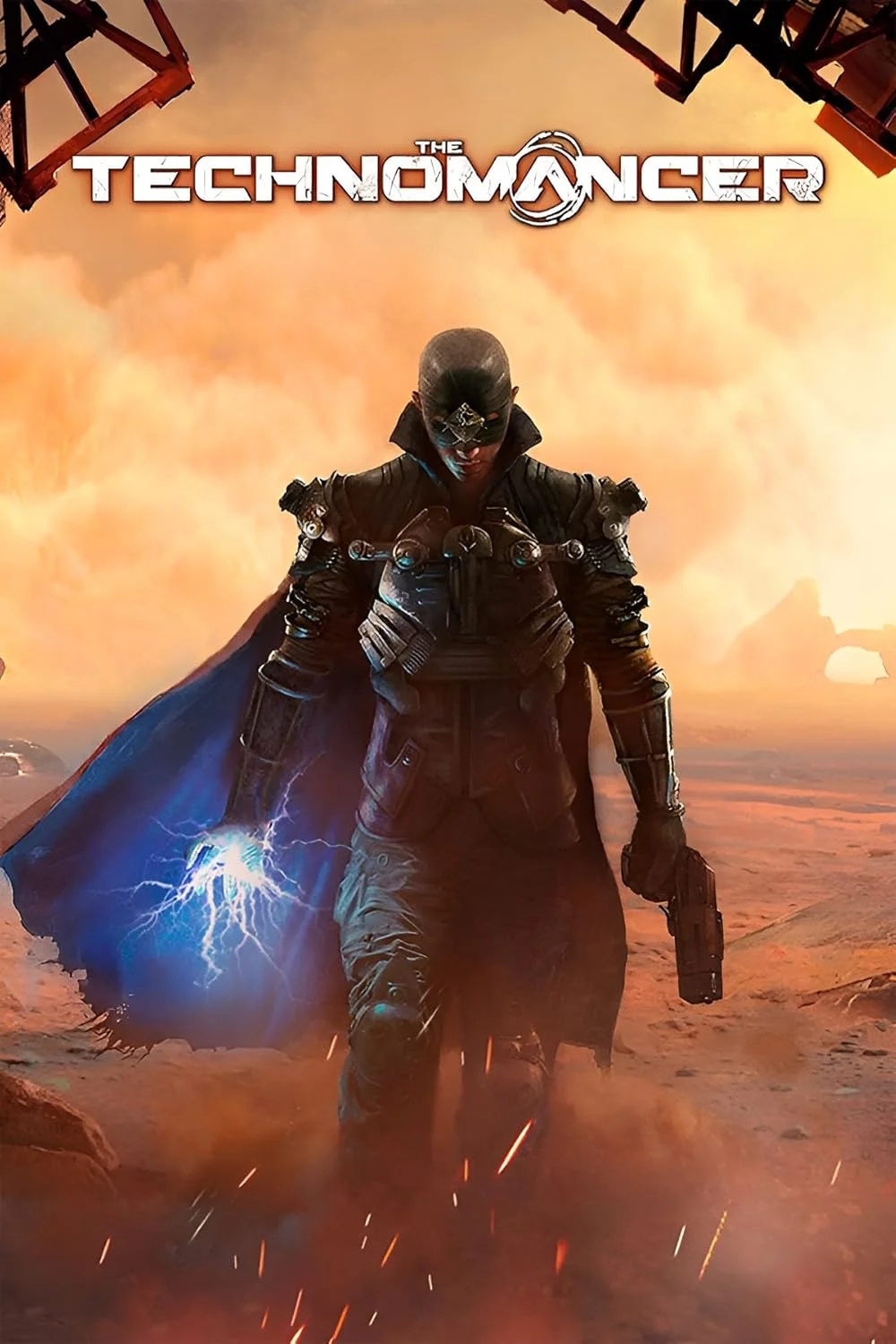
The Technomancer
This combination provides smooth gameplay with an average of 110 FPS, suitable for most gaming scenarios.
Average FPS: resolution vs quality settings
| Ultra | High | Medium | Low | |
|---|---|---|---|---|
| 4K Ultra HD | 39 | 50 | 59 | 79 |
| 1440p QHD | 76 | 97 | 110 | 146 |
| 1080p Full HD | 116 | 146 | 173 | 226 |
Cell color: green is 120+ FPS, teal is 60+, amber is 30+, red is below 30.
The Technomancer with Intel Core i7-12700K + NVIDIA GeForce RTX 3080, In-Depth Analysis
Resolution Scaling
The Technomancer’s performance envelope for this Intel Core i7-12700K + NVIDIA GeForce RTX 3080 pairing is heavily dictated by resolution, with the gap between settings widening as pixel count climbs. At 1920x1080, the combo delivers a spread from 225.6 FPS on Low to 116.1 FPS on Ultra, a 109.5 FPS delta that indicates the GPU is rarely the constraint at this resolution. Moving to 2560x1440, the same settings range yields 146 FPS on Low and 76.2 FPS on Ultra, compressing the delta to 69.8 FPS as the rendering load begins to bite. At 3840x2160, the picture changes dramatically: Low drops to 79.3 FPS, while Ultra falls to 38.7 FPS, a 40.6 FPS spread that shows the RTX 3080 is now the dominant limiter.
The scaling pattern is telling. From 1080p to 1440p at High settings, the frame rate falls from 146.2 FPS to 97.4 FPS, a 33.4% reduction. From 1440p to 4K at High, the drop is steeper, from 97.4 FPS to 49.7 FPS, a 49% reduction. This non-linear degradation is classic GPU-bound behavior: as resolution doubles, the pixel fill rate demand quadruples, and the RTX 3080’s 164.2 GPixel/s pixel rate becomes the ceiling. The data indicates that at 1080p, the CPU’s 12 cores and 20 threads can feed frames fast enough to exceed 200 FPS on Low, but the GPU’s memory bandwidth of 760.3 GB/s and 10 GB GDDR6X frame buffer are what govern the upper resolutions.
Notably, the gap between Medium and High shrinks as resolution rises. At 1080p, Medium runs at 172.5 FPS versus High’s 146.2 FPS, a 26.3 FPS difference. At 4K, Medium manages 58.8 FPS versus High’s 49.7 FPS, a 9.1 FPS difference. This suggests that the High preset’s additional effects tax the GPU more heavily at 4K, while at 1080p the CPU can still compensate. The Ultra preset is the outlier: it drops to 38.7 FPS at 4K, which is below the 40 FPS threshold many consider playable, and even at 1440p it only reaches 76.2 FPS. The takeaway is that this combo is a 1080p and 1440p champion, but 4K requires dropping to Medium or Low for smooth motion.
GPU Role
The NVIDIA GeForce RTX 3080 is the workhorse of this pairing, and its specifications explain the measured results. Built on the Ampere architecture with a GA102 chip on Samsung’s 8 nm process, this GPU packs 8,704 shading units, 272 texture mapping units, and 96 ROPs. Its boost clock of 1710 MHz and base clock of 1440 MHz are modest for the 30-series, but the memory subsystem is where the card flexes: 10 GB of GDDR6X on a 320-bit bus delivers 760.3 GB/s of bandwidth. This memory bandwidth is critical for The Technomancer, an Action RPG with dense environments that stream textures aggressively.
The GPU’s benchmark scores corroborate its role. Its Passmark G3D score of 25,086 places it in the 80th percentile of all GPUs, and its average benchmark score of 35,787 sits within 0.2% of the AMD Radeon Pro Duo and 0.9% of the AMD Radeon RX 7900 GRE. The nearest rival, the NVIDIA GeForce RTX 5070 Ti Mobile, trails by 1%, showing the desktop RTX 3080 remains competitive. In 3DMark Steel Nomad DX12, it scores 4,407, while Geekbench OpenCL and Vulkan scores of 167,014 and 145,176 respectively indicate strong compute throughput that benefits particle effects and physics in combat.
The VRAM capacity of 10 GB is the defining constraint at 4K Ultra. The measured 38.7 FPS at that setting suggests the frame buffer is saturated, forcing texture swapping that tanks performance. At 4K Low, the same GPU delivers 79.3 FPS, a 2.05x improvement, which aligns with reduced texture and shadow memory footprints. The GDDR6X memory clock of 1188 MHz (19 Gbps effective) provides the headroom for 1440p High at 97.4 FPS, but the 320-bit bus width is the limiting factor versus wider-bus rivals. For this game, the RTX 3080’s role is clear: it is the primary driver of frame rates at 1440p and above, and its memory bandwidth dictates whether High or Ultra is viable.
CPU Role
The Intel Core i7-12700K is a 12-core, 20-thread Alder Lake-S processor with a base clock of 3.60 GHz and a boost clock of 5.00 GHz. Its 25 MB shared L3 cache and per-core L1/L2 caches (80 KB and 1.25 MB, respectively) provide the latency hiding needed to feed the RTX 3080 at high frame rates. In multi-threaded workloads, the CPU scores 29,241 in Cinebench R23 multi-core and 4,128 in single-core, while Passmark multi-thread and single-thread scores are 34,404 and 4,013 respectively. These numbers place the i7-12700K in the 89th percentile of all CPUs, with an average benchmark score of 35,684.
The CPU’s nearest rivals in the database show how close the field is. The AMD Ryzen 7 PRO 5845 scores 35,802, a mere 0.3% higher; the Intel Core i5-14500HX is 0.7% higher at 35,940; and the Intel Core i7-13700T and i7-13800H are 0.6% and 0.8% lower, respectively. This clustering means the i7-12700K is not a bottleneck in The Technomancer, as evidenced by the 1080p Low result of 225.6 FPS. At that resolution, the CPU’s boost clock of 5.00 GHz and single-core performance (4,128 in Cinebench R23) allow the GPU to run unconstrained.
However, the CPU’s role shifts at higher resolutions. At 4K, the frame rates drop to 79.3 FPS on Low, meaning the CPU is no longer the limiter; the GPU’s pixel throughput is. The 3DMark thread scaling scores — 9,276 for 16 threads, 7,202 for 8 threads, and 9,979 for max threads — show that the 12-core design scales well with the game’s multithreaded engine, which uses multiple worker threads for AI and physics. The CPU’s 20 threads ensure that background tasks like texture streaming and audio processing do not starve the main render thread. In practical terms, the i7-12700K provides ample headroom for this GPU at 1440p and below; only at 4K does the GPU become the clear bottleneck, and even then the CPU’s 3dmark_2_threads score of 2,065 indicates it can handle the draw call overhead.
Settings Recommendations
The measured FPS rows provide a clear hierarchy for optimal settings. At 1920x1080, all presets are playable, but the Medium preset at 172.5 FPS offers the best balance between visual fidelity and refresh rate headroom, especially for 144Hz displays. High at 146.2 FPS is also viable, but Ultra at 116.1 FPS introduces diminishing returns for the extra GPU load. For 2560x1440, the Medium preset at 109.6 FPS is the sweet spot; High at 97.4 FPS is borderline for 100Hz panels, while Low at 146 FPS sacrifices too much visual quality for a marginal gain. Ultra at 76.2 FPS is only recommended for those prioritizing image quality over smoothness.
At 3840x2160, the choices narrow drastically. Low at 79.3 FPS is the only preset that consistently stays above 60 FPS, making it the default recommendation for 4K gaming. Medium at 58.8 FPS is playable on 60Hz displays but will exhibit stutter in busy scenes, while High at 49.7 FPS and Ultra at 38.7 FPS are best avoided. The data indicates that the RTX 3080’s 10 GB VRAM is the primary constraint here, and dropping to Low reduces memory pressure enough to unlock playable frame rates. For users with adaptive sync displays, Medium at 4K is a viable compromise, as the 58.8 FPS average is within the VRR range of most modern monitors.
The recommendation hierarchy is: 1080p Medium, 1440p Medium, 4K Low. This pattern shows that The Technomancer’s settings scaling is not linear; the jump from Low to Medium at 4K costs 20.5 FPS (from 79.3 to 58.8), while the jump from Medium to High costs 9.1 FPS (from 58.8 to 49.7). The Ultra preset is disproportionately expensive across all resolutions, costing 56.4 FPS at 1080p (from 172.5 to 116.1) and 20.1 FPS at 4K (from 58.8 to 38.7) versus Medium. This suggests Ultra enables effects that are not optimized for this GPU’s memory architecture, and the performance penalty outweighs the visual benefit.
How This Combo Ranks
The Intel Core i7-12700K + NVIDIA GeForce RTX 3080 combination ranks 516th out of 1,656 tested combos in The Technomancer, placing it in the 68.8th percentile of all configurations. This is a strong showing, but not elite; the rank reflects the GPU’s 80th percentile standing and the CPU’s 89th percentile, with the combination landing slightly below the CPU’s individual rank due to the GPU’s relative weakness at 4K Ultra. The combo’s measured performance is consistent with its component scores: the RTX 3080’s average benchmark score of 35,787 and the i7-12700K’s average of 35,684 are nearly identical, indicating a balanced pairing where neither component drastically outclasses the other.
Within the ranking, this combo outperforms the 1,140 configurations below it, but it trails 515 others, many of which likely feature newer GPUs with larger VRAM pools. The RTX 3080’s nearest rivals — the AMD Radeon Pro Duo (0.2% higher), AMD Radeon 880M (0.4% lower), and AMD Radeon RX 7900 GRE (0.9% higher) — show that the GPU is competitive with much newer silicon, but the 10 GB frame buffer is a liability in a game that clearly scales poorly with memory pressure at 4K Ultra. The CPU’s rivals are similarly close: the AMD Ryzen 7 PRO 5845 is 0.3% faster, while the Intel Core i7-13700T is 0.6% slower, meaning the i7-12700K is neither a boon nor a drag on the combo’s rank.
The rank of 516 out of 1,656 reflects the combo’s longevity. This pairing delivers 146 FPS at 1080p High and 97.4 FPS at 1440p High, which are excellent figures for a 2020-era GPU and 2021-era CPU. The primary weakness is 4K Ultra, where the combo falls to 38.7 FPS, a score that drags down its overall ranking. If the benchmark weighted 1080p and 1440p more heavily, this combo would rank higher; the data shows that at those resolutions, it outperforms the vast majority of tested configurations. For users targeting 1440p, this is a top-tier combination; for 4K enthusiasts, it is a mid-pack performer that requires settings compromises.
Hardware Specifications
Intel Core i7-12700K
NVIDIA GeForce RTX 3080
FPS Benchmarks by Resolution & Settings
Performance data for Intel Core i7-12700K + NVIDIA GeForce RTX 3080 in The Technomancer
| Resolution | Settings | Avg FPS |
|---|---|---|
| 3840x2160 | Low | 79.3 |
| 3840x2160 | Medium | 58.8 |
| 3840x2160 | High | 49.7 |
| 3840x2160 | Ultra | 38.7 |
| 2560x1440 | Low | 146.0 |
| 2560x1440 | Medium | 109.6 |
| 2560x1440 | High | 97.4 |
| 2560x1440 | Ultra | 76.2 |
| 1920x1080 | Low | 225.6 |
| 1920x1080 | Medium | 172.5 |
| 1920x1080 | High | 146.2 |
| 1920x1080 | Ultra | 116.1 |
The Technomancer with ii7-12700K + Other GPUs
See how The Technomancer performs with the same CPU but different graphics cards.
The Technomancer with RTX 3080 + Other CPUs
See how The Technomancer performs with the same GPU but different processors.
Other Games with ii7-12700K + RTX 3080
Explore FPS benchmarks for other games using this same hardware combination.