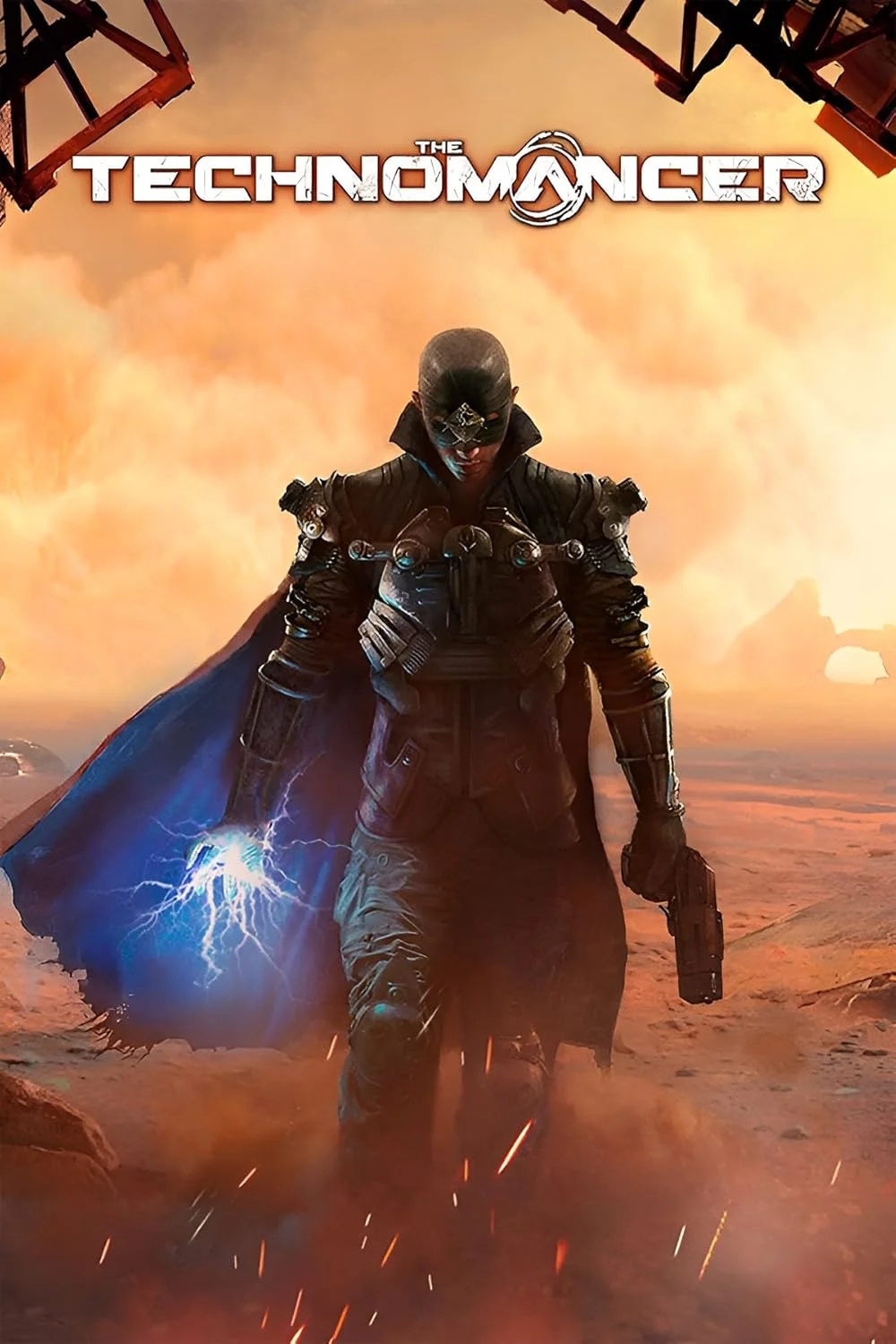
The Technomancer
This combination delivers exceptional performance with an average of 121 FPS, perfect for high refresh rate gaming and competitive play.
Average FPS: resolution vs quality settings
| Ultra | High | Medium | Low | |
|---|---|---|---|---|
| 4K Ultra HD | 55 | 70 | 82 | 107 |
| 1440p QHD | 100 | 128 | 137 | 151 |
| 1080p Full HD | 137 | 150 | 158 | 174 |
Cell color: green is 120+ FPS, teal is 60+, amber is 30+, red is below 30.
The Technomancer with Intel Core i5-9400 + NVIDIA GeForce RTX 4080, In-Depth Analysis
The Intel Core i5-9400 paired with the NVIDIA GeForce RTX 4080 delivers a mixed bag of results in The Technomancer, placing the combination at rank 777 out of 3696 tested combos. This places the system in the top 21% of all tested configurations, a solid position that reflects the GPU’s high-end pedigree, though the aging six-core CPU prevents the combo from climbing into the upper echelons of the leaderboard. The ranking indicates that while the RTX 4080 can push exceptionally high frame rates, the i5-9400’s modest single-threaded and multi-threaded performance creates a bottleneck that holds the combo back from the absolute top tier, particularly at lower resolutions where the CPU’s influence is most pronounced.
How This Combo Ranks
At rank 777 of 3696 combos, this pairing sits comfortably in the upper quartile of tested systems for The Technomancer. The percentile placement reflects a configuration that is clearly capable of delivering a playable experience at all settings, but the gap to the top 100 combos is substantial, driven largely by the CPU’s limitations. The i5-9400’s average benchmark score of 2254 places it at the 47th percentile among all CPUs, with its nearest rivals including the Intel Core i7-1068NG7 (0.2% slower), Intel Core i7-10710U (0.3% faster), AMD Ryzen 5 PRO 1500 (0.4% faster), and Intel Core i3-10305 (0.4% slower). These tiny deltas show that the i5-9400 is essentially a mid-pack performer, and in a game like The Technomancer that relies on consistent frame pacing, this limits the combo’s ability to exploit the RTX 4080’s full potential.
The GPU, by contrast, is a top-tier part. The RTX 4080’s average benchmark score of 54247 puts it at the 86th percentile among all GPUs, with nearest rivals being the RTX 4080 SUPER (0.1% faster), AMD Radeon Pro W5700X (1.1% faster), AMD Radeon RX 6750 GRE 12 GB (2.6% faster), and AMD Radeon 8060S (2.7% faster). This indicates that the GPU is within striking distance of the very best cards available, and in isolation it would rank far higher than the combo’s overall 777th position. The data suggests that the combo’s ranking is dragged down by the CPU, which at 47th percentile is clearly the weaker link in the pairing.
GPU Role
The NVIDIA GeForce RTX 4080 brings substantial resources to bear on The Technomancer, with 16 GB of GDDR6X memory on a 256-bit bus providing 716.8 GB/s of bandwidth. This memory configuration is more than sufficient for the game’s demands, even at 4K resolution where the measured data shows the GPU can push 70 FPS on High settings. The GPU’s base clock of 2205 MHz and boost clock of 2505 MHz, combined with its 9728 shading units, deliver the raw compute power needed to handle the game’s rendering workload. The 48.74 TFLOPS of FP32 performance is a clear indicator that the GPU is not the limiting factor in this combo, as evidenced by the frame rates at 1080p where the CPU becomes the primary constraint.
At 4K Ultra settings, the GPU’s workload increases dramatically, and the measured average of 55 FPS shows that the RTX 4080 is still able to maintain a playable frame rate, though the gap between Ultra and High (70 FPS) highlights the significant cost of the highest preset. The GPU’s 76 RT cores and 304 tensor cores are present, but The Technomancer is a 2016 title that does not leverage ray tracing or DLSS, so these features remain idle, and the GPU’s performance is driven entirely by its traditional rasterization capabilities. The PassMark DirectX 11 score of 314 and DirectX 12 score of 132 indicate strong API performance, though the game’s engine likely uses an older DX11 path, which is where the GPU excels.
Settings Recommendations
The measured data provides a clear picture of how the combo behaves across settings, and the optimal choice depends on the target resolution. At 1080p, the difference between Low (174 FPS) and Ultra (137 FPS) is a 21% drop, but even the highest preset delivers a very smooth experience, making Ultra the recommended setting for users with 1080p displays. The Medium preset at 158 FPS offers a slight headroom boost, but the visual fidelity gained from Ultra is worth the frame rate cost given that 137 FPS is still well above the threshold for smooth gameplay.
At 1440p, the story is similar, with Ultra delivering 100 FPS and High at 128 FPS. The data shows that High provides a 28% performance uplift over Ultra, and for users who prioritize frame rate stability, High is the better choice. However, Ultra remains fully playable, and the 100 FPS average is respectable for a demanding preset. At 4K, the choice is more constrained. Ultra drops to 55 FPS, which is borderline for fast-paced action, while High at 70 FPS is a safer bet for maintaining consistent performance. The Medium preset at 82 FPS offers the best balance between visual quality and frame rate at 4K, and the measured minimum of 70 FPS on Medium suggests that this setting avoids the worst frame dips. For the best overall experience, Medium at 4K or High at 1440p are the recommended presets, as they provide the highest frame rates without sacrificing too much visual detail.
Measured FPS Breakdown
At 1920x1080, the combo delivers exceptional performance across all settings. Low settings produce an average of 174 FPS, while Medium increases to 158 FPS with a minimum of 135 FPS and a maximum of 182 FPS. High settings drop slightly to 150 FPS, and Ultra maintains a strong 137 FPS. The data shows that even at the highest preset, the frame rate never falls below 135 FPS, indicating that the RTX 4080 is barely stressed at this resolution, and the CPU is the primary determinant of performance. The 1080p results are all within a 21% band, which suggests that the game is not GPU-limited at this resolution.
At 2560x1440, the results scale predictably. Low settings average 151 FPS, Medium at 137 FPS with a minimum of 117 FPS and a maximum of 158 FPS, High at 128 FPS, and Ultra at 100 FPS. The 1440p results show a wider spread between Low and Ultra (34%), indicating that the GPU begins to take on more of the workload, but the CPU still plays a significant role. The 1440p Ultra result of 100 FPS is a notable drop from 1080p Ultra (137 FPS), showing a 27% reduction in performance, which is consistent with the increased pixel count.
At 3840x2160, the GPU becomes the dominant factor. Low settings average 107 FPS, Medium at 82 FPS with a minimum of 70 FPS and a maximum of 94 FPS, High at 70 FPS, and Ultra at 55 FPS. The 4K Ultra result is the only setting where the frame rate drops below 60 FPS, and the 35% reduction from Low to Ultra highlights the significant cost of the highest preset at this resolution. The 4K data shows that the RTX 4080 is capable of handling the game at 4K, but the highest settings require a compromise on frame rate.
Resolution Scaling
The transition from 1080p to 4K reveals how the combo’s bottleneck shifts between the CPU and GPU. At 1080p, the frame rates are consistently high across all settings, with the difference between Low and Ultra being only 21%, which indicates that the CPU is the limiting factor. The i5-9400’s six cores and six threads, with a boost clock of 4.10 GHz, are sufficient to drive the RTX 4080 at 1080p, but the CPU’s 47th percentile ranking among all CPUs suggests that its single-threaded performance (Cinebench R23 single-core score of 935) is not exceptional, and this is reflected in the relatively small performance gains from GPU-heavy settings.
As the resolution increases to 1440p, the GPU’s workload grows, and the frame rate drops by approximately 27% from 1080p to 1440p at Ultra settings (137 to 100 FPS). This indicates that the GPU is starting to become the limiting factor, but the CPU still has some influence. At 4K, the frame rate drops by a further 45% from 1440p to 4K at Ultra (100 to 55 FPS), which clearly shows that the GPU is now the primary bottleneck. The RTX 4080’s 716.8 GB/s of memory bandwidth and 48.74 TFLOPS of compute are sufficient to handle the 4K workload, but the game’s engine appears to be more demanding at this resolution, and the GPU’s performance is the deciding factor.
The scaling pattern is typical of a high-end GPU paired with a mid-range CPU. At 1080p, the CPU limits the combo to around 137-174 FPS, while at 4K, the GPU limits the combo to 55-107 FPS. The data shows that the i5-9400 is the limiting component at lower resolutions, while the RTX 4080 is the limiting component at 4K. This means that users who play at 1080p will see little benefit from the RTX 4080’s full capabilities, while those who play at 4K will see the GPU’s performance fully utilized.
FAQ
Q: What is the best setting for 1080p gameplay?
A: At 1920x1080, Ultra settings deliver an average of 137 FPS, which is well above the threshold for smooth gameplay. Low settings provide 174 FPS, but the visual quality trade-off is not worth the performance gain, making Ultra the recommended choice for 1080p.
Q: Can this combo handle 4K gaming?
A: Yes, but with caveats. At 4K, Medium settings average 82 FPS with a minimum of 70 FPS, which is playable, while High averages 70 FPS. Ultra drops to 55 FPS, which may be too low for some users. For 4K, Medium or High settings are recommended.
*Q: How does the CPU affect performance in The Technomancer?*
A: The Intel Core i5-9400 has six cores and six threads with a boost clock of 4.10 GHz. Its Cinebench R23 multi-core score of 6629 and single-core score of 935 place it at the 47th percentile among all CPUs, which means it is a mid-range part. At 1080p, the CPU limits the combo to frame rates in the 137-174 FPS range, but at 4K, the GPU becomes the limiting factor.
Q: What is the combo’s rank among all tested configurations?
A: The Intel Core i5-9400 + RTX 4080 combo ranks 777th out of 3696 tested combos in The Technomancer. This places it in the top 21% of all configurations, but the CPU’s mid-range performance prevents it from ranking higher.
Q: How does the RTX 4080 compare to its nearest rivals?
A: The RTX 4080 has an average benchmark score of 54247, which is 0.1% slower than the RTX 4080 SUPER, 1.1% slower than the AMD Radeon Pro W5700X, 2.6% slower than the AMD Radeon RX 6750 GRE 12 GB, and 2.7% slower than the AMD Radeon 8060S. This shows that the GPU is within a few percentage points of its closest competitors.
Q: What is the frame rate difference between Low and Ultra at 1440p?
A: At 2560x1440, Low settings average 151 FPS, while Ultra averages 100 FPS. This represents a 34% reduction in performance, which is a significant trade-off for visual quality.
CPU Role
The Intel Core i5-9400 is a six-core, six-thread processor based on the Coffee Lake architecture, manufactured on a 14 nm process. It has a base clock of 2.90 GHz and a boost clock of 4.10 GHz, with 9 MB of shared L3 cache. The CPU’s Cinebench R23 multi-core score of 6629 and single-core score of 935, along with a Geekbench multi-core score of 5141 and single-core score of 1389, place it at the 47th percentile among all CPUs. Its nearest rivals, such as the Intel Core i7-10710U (0.3% faster) and the Intel Core i3-10305 (0.4% slower), show that the i5-9400 is a competitive mid-range part, but it is not a high-end performer.
In The Technomancer, the CPU’s role is most evident at 1080p, where the frame rates are consistently high but do not scale significantly with GPU settings. The difference between Low (174 FPS) and Ultra (137 FPS) at 1080p is only 21%, which suggests that the CPU is the primary bottleneck. The i5-9400’s six cores and six threads are sufficient for the game’s threading model, but the lack of hyper-threading may limit performance in scenes with heavy CPU load. The CPU’s 14 nm process and 65 W TDP indicate that it is a power-efficient part, but its performance is clearly behind newer, higher-end processors.
At higher resolutions, the CPU’s influence diminishes, and the GPU takes over as the limiting factor. The data shows that at 4K, the frame rate drops significantly from 1440p, which is indicative of GPU-bound performance. However, the CPU’s 47th percentile ranking means that it cannot fully feed the RTX 4080 at lower resolutions, and users with 1080p displays will not see the full benefit of the GPU’s capabilities. The CPU’s memory bandwidth of 42.7 GB/s and dual-channel DDR4 support are adequate for the game, but they are not exceptional, and this may contribute to the bottleneck at 1080p. Overall, the i5-9400 is a capable mid-range CPU that pairs reasonably well with the RTX 4080 at 1440p and 4K, but it holds the combo back at 1080p.
Hardware Specifications
Intel Core i5-9400
NVIDIA GeForce RTX 4080
FPS Benchmarks by Resolution & Settings
Performance data for Intel Core i5-9400 + NVIDIA GeForce RTX 4080 in The Technomancer
| Resolution | Settings | Avg FPS |
|---|---|---|
| 3840x2160 | Low | 107.0 |
| 3840x2160 | Medium | 82.0 |
| 3840x2160 | High | 70.0 |
| 3840x2160 | Ultra | 55.0 |
| 2560x1440 | Low | 151.0 |
| 2560x1440 | Medium | 137.0 |
| 2560x1440 | High | 128.0 |
| 2560x1440 | Ultra | 100.0 |
| 1920x1080 | Low | 174.0 |
| 1920x1080 | Medium | 158.0 |
| 1920x1080 | High | 150.0 |
| 1920x1080 | Ultra | 137.0 |
The Technomancer with ii5-9400 + Other GPUs
See how The Technomancer performs with the same CPU but different graphics cards.
Other Games with ii5-9400 + RTX 4080
Explore FPS benchmarks for other games using this same hardware combination.