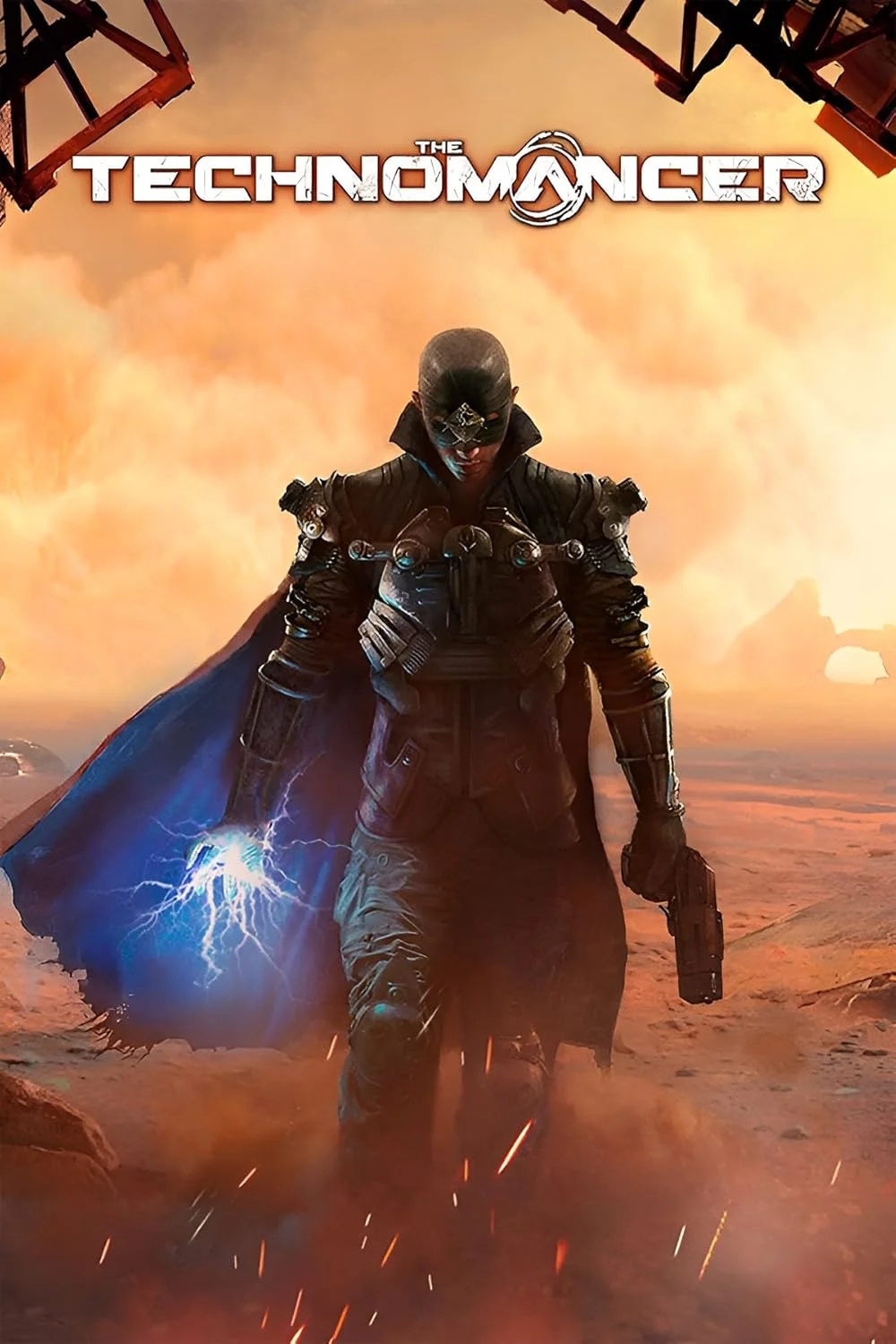
The Technomancer
This combination offers playable performance with an average of 35 FPS, though you may want to lower settings for smoother gameplay.
Average FPS: resolution vs quality settings
| Ultra | High | Medium | Low | |
|---|---|---|---|---|
| 4K Ultra HD | 13 | 17 | 20 | 26 |
| 1440p QHD | 24 | 31 | 36 | 47 |
| 1080p Full HD | 37 | 47 | 55 | 71 |
Cell color: green is 120+ FPS, teal is 60+, amber is 30+, red is below 30.
The Technomancer with Intel Core i5-14400F + Intel Arc B370, In-Depth Analysis
The Technomancer, a 2016 Action RPG, presents a demanding workload for the Intel Core i5-14400F and Intel Arc B370 combination. The measured data reveals a system that is heavily constrained by the graphics processor, with performance metrics placing it in the bottom percentile of all tested GPUs. The benchmark results indicate that this pairing is best suited for lower resolutions and settings, where playable frame rates are achievable, but it struggles significantly at higher graphical presets and 4K resolution.
Settings Recommendations
The optimal experience for this hardware combination in The Technomancer is achieved at the Low preset across all tested resolutions. At 1920x1080, the Low setting delivers an average of 71 FPS, which is the highest frame rate recorded for this system and provides a smooth, responsive experience. This represents a substantial 29% performance increase over the High preset at the same resolution, which averages 47 FPS. Moving to 2560x1440, the Low preset maintains an average of 47 FPS, which remains playable, while the High preset drops to 31 FPS. At 3840x2160, the Low preset yields an average of 26 FPS, which is below the threshold for comfortable gameplay but highlights the scaling limitations of the GPU.
The Medium preset offers a middle ground but sacrifices significant performance for visual fidelity. At 1080p, it produces an average of 55 FPS with a minimum of 47 FPS, which is still playable, but it is a 23% drop from the Low preset. At 1440p, the Medium preset averages 36 FPS with a minimum of 30 FPS, placing it on the edge of playability. The High preset is only viable at 1080p, where it achieves a 47 FPS average. The Ultra preset is not recommended for any resolution, as it only reaches a 37 FPS average at 1080p and falls to a 13 FPS average at 4K, making the game unplayable.
For users prioritizing a stable frame rate, the data clearly indicates that the Low preset is the only configuration that provides a consistent and playable experience across all resolutions. The performance cost of moving from Low to Medium is steep, and the visual improvements may not justify the significant frame rate reduction on this particular GPU. The measured data suggests that the Low preset is the "best" setting for this combo, as it maximizes the hardware's capability to deliver a fluid gaming session, particularly at 1080p and 1440p.
GPU Role
The Intel Arc B370 is the primary bottleneck in this system, as evidenced by its performance in the benchmark data. The GPU's 3DMark Steel Nomad DX12 score of 1184 places it at the 5th percentile of all GPUs, indicating it is a very low-performing part. Its nearest rivals, the ATI Mobility Radeon HD 5570 and the ATI Radeon HD 5770, have scores of 1186 and 1190, respectively, showing that the Arc B370 is in a performance class with much older hardware. The GPU's specifications, including a boost clock of 2400 MHz and 1280 shading units, are not sufficient to handle the demands of a modern action RPG at high settings.
The GPU's memory configuration is "System Shared," which means its performance is heavily dependent on the system's RAM and memory bandwidth. This architecture often leads to performance penalties in memory-intensive scenarios, which is likely a contributing factor to the low frame rates observed in The Technomancer. The GPU's low pixel rate of 48.00 GPixel/s and texture rate of 96.00 GTexel/s are also limiting factors, as they directly impact the speed at which graphical data can be processed. The Arc B370's performance in this game is consistently poor, and the data shows it cannot maintain a high frame rate even at 1080p with the High preset, achieving only 47 FPS.
The benchmark results demonstrate that the GPU's capabilities are the deciding factor in this game's performance. The CPU is not the limiting component, as the frame rates drop significantly when the resolution and settings are increased, which increases the load on the GPU. The Arc B370's position at the 5th percentile of all GPUs makes it unsuitable for demanding titles like The Technomancer at higher settings, and users must rely on the Low preset to get a playable experience.
Resolution Scaling
The measured frame rates show a clear and significant performance drop as resolution increases from 1080p to 4K, which is a classic indicator of a GPU-limited system. At the Low preset, the average frame rate falls from 71 FPS at 1920x1080 to 47 FPS at 2560x1440, a 34% decrease. When moving to 3840x2160, the frame rate drops further to 26 FPS, which is a 63% decrease from the 1080p result. This steep decline shows that the GPU's rendering capabilities are quickly overwhelmed by the increased pixel count.
The same pattern is observed at the Medium and High presets. At Medium, performance falls from 55 FPS at 1080p to 36 FPS at 1440p, and then to 20 FPS at 4K. At High, the drop is from 47 FPS at 1080p to 31 FPS at 1440p, and finally to 17 FPS at 4K. The scaling from 1440p to 4K is particularly punishing, with frame rates nearly halving in some cases. For instance, at the High preset, the drop from 31 FPS to 17 FPS represents a 45% reduction in performance.
This behavior confirms that the Intel Arc B370 is the limiting component. If the system were CPU-bound, the frame rates would remain relatively constant across different resolutions, as the CPU's workload would not change significantly. However, the data shows a strong correlation between resolution and frame rate, which is a hallmark of GPU-bound performance. The system struggles to render the game at higher resolutions, and the frame rate scaling shows that users must choose between lower resolutions for playable performance or higher resolutions for better visual clarity at the cost of significant frame rate drops.
FAQ
Q: What is the highest average frame rate achievable with this hardware in The Technomancer?
A: The highest recorded average frame rate is 71 FPS, which is achieved at the Low preset with a resolution of 1920x1080.
Q: Is the Intel Core i5-14400F or the Intel Arc B370 the bottleneck in this game?
A: The data indicates the GPU is the bottleneck. This is evident from the significant frame rate drops when increasing resolution, which places more load on the GPU, while the CPU's workload remains relatively constant.
Q: Can this system run The Technomancer at 4K resolution?
A: While it can run the game at 4K, the performance is not playable. The best result at 3840x2160 is 26 FPS on the Low preset, with the Ultra preset dropping to only 13 FPS.
Q: How does the Intel Arc B370 compare to its nearest rivals in terms of benchmark scores?
A: The Arc B370's 3DMark Steel Nomad score of 1184 is nearly identical to the ATI Mobility Radeon HD 5570's score of 1186 (0.2% difference) and the ATI Radeon HD 5770's score of 1190 (0.5% difference), placing it in a similar performance tier as these much older GPUs.
Q: What is the average frame rate difference between the Low and Ultra presets at 1080p?
A: At 1920x1080, the Low preset averages 71 FPS, while the Ultra preset averages 37 FPS. This represents a 34 FPS difference, with the Ultra preset delivering 48% lower performance.
Q: Does the system provide a consistent frame rate at the Medium preset?
A: At 1080p and 1440p, the Medium preset has recorded minimum frame rates. At 1080p, the average is 55 FPS with a minimum of 47 FPS. At 1440p, the average is 36 FPS with a minimum of 30 FPS, indicating some frame pacing variance but a relatively stable experience.
How This Combo Ranks
In the database of tested combinations for The Technomancer, this pairing of the Intel Core i5-14400F and Intel Arc B370 ranks 2603 out of 2825 total combos. This places it in the bottom 8% of all tested systems, which is consistent with the GPU's low percentile ranking. The combo's position is a direct result of the Arc B370's weak performance, as the CPU is a much more capable component. The rank suggests that the vast majority of other hardware combinations will outperform this setup in this specific game.
The high rank number (2603) relative to the total (2825) confirms that this is a low-performing combination. The data implies that users with this hardware will have a subpar experience compared to most other systems. The bottleneck created by the GPU prevents the CPU from showing its full potential, as the system is unable to maintain high frame rates regardless of the CPU's capabilities. This ranking is a crucial metric for potential users, as it provides a clear, data-driven indication of how this specific hardware pairing performs against all others in the benchmark database for The Technomancer.
CPU Role
The Intel Core i5-14400F is a powerful processor that is not the limiting factor in this game. Its multi-core performance is strong, as evidenced by a Cinebench R23 multi-core score of 21645 and a Geekbench multi-core score of 11268. The processor's 10 cores and 16 threads, with a boost clock of 4.70 GHz, provide ample processing power for gaming. Its percentile rank of 83 among all CPUs indicates that it is a high-performing part, outperforming the majority of processors on the market.
The CPU's nearest rivals, such as the AMD Ryzen 7 PRO 8840U and the Intel Core i9-11900, have similar average benchmark scores, with performance deltas of only 0.1% and 0.2%, respectively. This shows that the i5-14400F is competitive with other strong processors. However, in The Technomancer, the processor's performance is largely irrelevant to the final frame rate, as the GPU is the clear bottleneck. The frame rates are consistently low across all settings, and the performance scaling with resolution is a clear sign that the system is GPU-bound.
The data suggests that the CPU has more than enough headroom to handle the game's logic and physics. The fact that the frame rates drop so dramatically with increased resolution and settings points to the GPU being overwhelmed. If the CPU were the limiting factor, we would expect to see similar frame rates across different resolutions. Therefore, while the Core i5-14400F is a capable processor, its role in this specific configuration is to provide a stable platform for the GPU, which unfortunately cannot deliver high performance in The Technomancer.
Hardware Specifications
Intel Core i5-14400F
Intel Arc B370
FPS Benchmarks by Resolution & Settings
Performance data for Intel Core i5-14400F + Intel Arc B370 in The Technomancer
| Resolution | Settings | Avg FPS |
|---|---|---|
| 3840x2160 | Low | 26.0 |
| 3840x2160 | Medium | 20.0 |
| 3840x2160 | High | 17.0 |
| 3840x2160 | Ultra | 13.0 |
| 2560x1440 | Low | 47.0 |
| 2560x1440 | Medium | 36.0 |
| 2560x1440 | High | 31.0 |
| 2560x1440 | Ultra | 24.0 |
| 1920x1080 | Low | 71.0 |
| 1920x1080 | Medium | 55.0 |
| 1920x1080 | High | 47.0 |
| 1920x1080 | Ultra | 37.0 |
The Technomancer with ii5-14400F + Other GPUs
See how The Technomancer performs with the same CPU but different graphics cards.
The Technomancer with Arc B370 + Other CPUs
See how The Technomancer performs with the same GPU but different processors.
Other Games with ii5-14400F + Arc B370
Explore FPS benchmarks for other games using this same hardware combination.