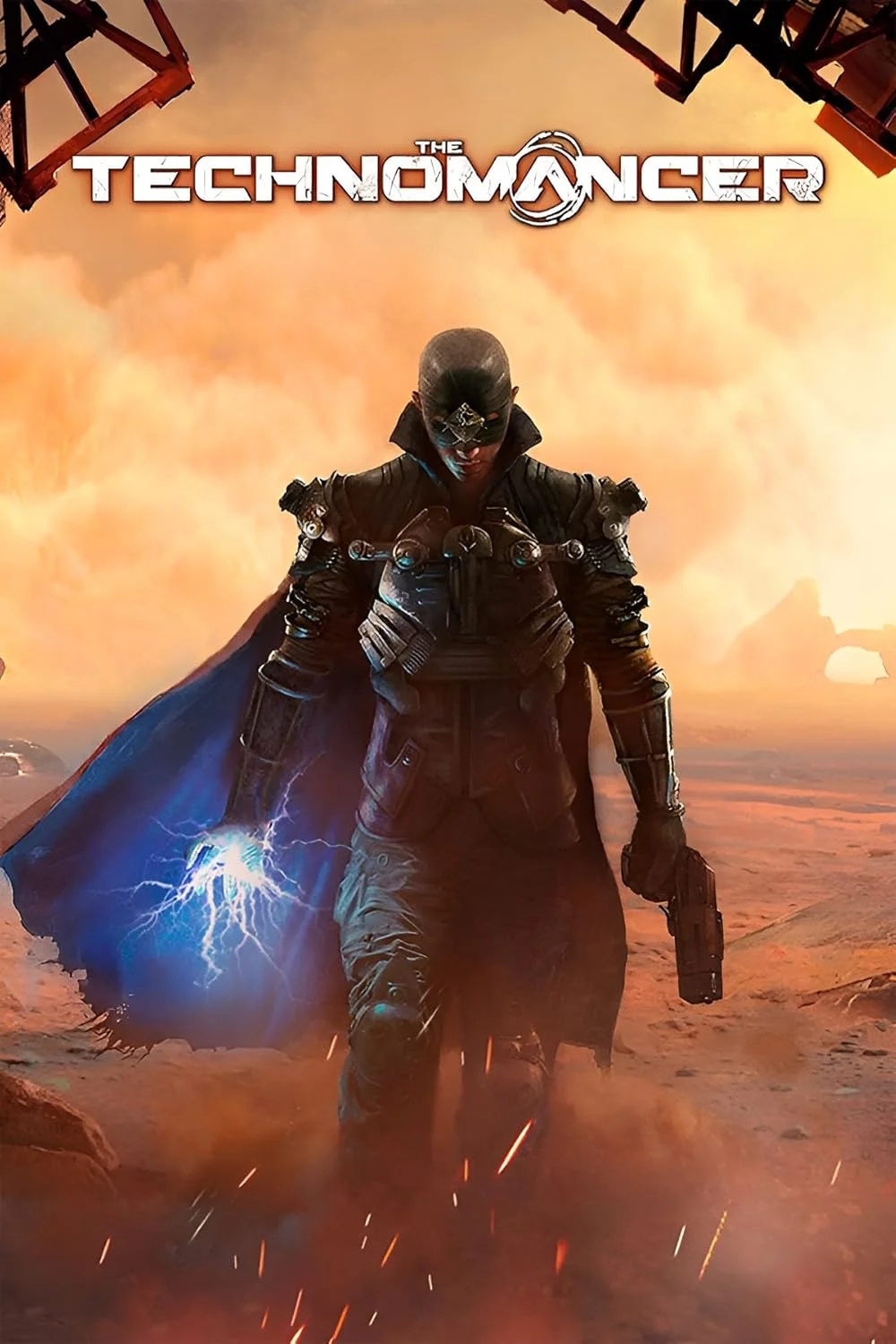
The Technomancer
This combination provides smooth gameplay with an average of 111 FPS, suitable for most gaming scenarios.
Average FPS: resolution vs quality settings
| Ultra | High | Medium | Low | |
|---|---|---|---|---|
| 4K Ultra HD | 41 | 53 | 61 | 78 |
| 1440p QHD | 73 | 98 | 112 | 148 |
| 1080p Full HD | 115 | 150 | 175 | 225 |
Cell color: green is 120+ FPS, teal is 60+, amber is 30+, red is below 30.
The Technomancer with Intel Core i5-12400 + NVIDIA GeForce RTX 3080, In-Depth Analysis
The Technomancer, a 2016 Action RPG, presents a demanding workload that scales dramatically with resolution and image quality settings. With the Intel Core i5-12400 and NVIDIA GeForce RTX 3080, the measured data reveals a system capable of high refresh rate gaming at 1080p but one that begins to buckle under the strain of 4K, particularly at the highest preset. The benchmark results show a clear narrative: this pairing is a high-performance 1440p machine, with 4K viability depending heavily on accepting lower quality settings.
Resolution Scaling
The transition from 1920x1080 to 3840x2160 has a profound impact on frame rates, clearly demonstrating where the system’s performance ceiling lies. At the High preset, the average frame rate falls from 150 FPS at 1080p to 98 FPS at 1440p, a substantial drop, before settling at 52.9 FPS at 4K. This represents a 64.7% reduction in frame rate from 1080p to 4K. The scaling pattern indicates that while the CPU is sufficient to drive very high frame rates at lower resolutions, the GPU becomes the primary limiting factor as pixel count increases.
The data suggests a strong GPU bottleneck at 4K. The gap between the Low and Ultra presets at 4K is 36.6 FPS (77.5 FPS vs 40.9 FPS), which is a massive performance spread. At 1080p, the same preset gap is 109.8 FPS (224.9 FPS vs 115.1 FPS). This compression of performance at higher resolutions is classic evidence of the GPU being saturated. The RTX 3080, with its 10 GB of GDDR6X memory and 760.3 GB/s of bandwidth, is being pushed to its limits, and the frame rate becomes more sensitive to the computational load of each setting.
Conversely, at 1080p, the scaling from Medium to Ultra reveals a smaller relative drop, from 174.5 FPS to 115.1 FPS. This suggests that at 1080p, the CPU has more headroom, and the bottleneck is more balanced. The i5-12400, with its 6 cores and 12 threads, is able to feed frames quickly enough that the GPU isn't the sole constraint. The 1440p results sit comfortably in the middle, offering a 98 FPS average at High, which is a strong target for a high-refresh-rate monitor. The overall trend is clear: 1080p is for maximum frame rates, 1440p is the sweet spot for high quality, and 4K requires significant settings compromises.
CPU Role
The Intel Core i5-12400 is a 6-core, 12-thread processor based on the Alder Lake architecture. Its base clock of 2.50 GHz and boost clock of 4.40 GHz, combined with an 18 MB L3 cache, provide a solid foundation for gaming. In synthetic benchmarks, the processor achieves a single-thread score of 910 in 3DMark and a multi-thread score of 5890, indicating strong per-core performance that is crucial for game logic and draw calls. Its Cinebench R23 scores of 2249 (single-core) and 15935 (multi-core) further cement its capability as a modern gaming CPU.
In the context of The Technomancer, the CPU's role becomes less critical as resolution increases. The data shows that at 1080p Low, the system achieves 224.9 FPS, a frame rate that is likely near the CPU's practical limit for this game. This high score suggests that the i5-12400 is not a significant bottleneck at lower resolutions. However, its performance is close to its nearest rivals, with a 0.1% deltaPct over the Intel Core i7-9700 and a -0.2% deltaPct against the Intel Core i7-8700. This indicates that in a CPU-limited scenario, this processor is on par with those older high-end chips.
At 4K, the CPU's influence wanes. The frame rate drop from 1080p to 4K is almost entirely attributable to the GPU's workload. The CPU is still providing the necessary instructions, but the GPU is taking longer to render each frame. The 3DMark 16-thread score of 5873 and max-thread score of 5890 are nearly identical, showing that the processor's performance scales well with its 12 threads, but this headroom is not a limiting factor in this game at higher resolutions. The benchmark results indicate that the i5-12400 is a capable partner for the RTX 3080, ensuring that it won't hold back performance except in the most extreme, CPU-bound scenarios at very high frame rates.
GPU Role
The NVIDIA GeForce RTX 3080 is the dominant component in this pairing, and its performance characteristics define the gaming experience. Built on the Ampere architecture with 8704 shading units and 272 texture mapping units, it is a high-end graphics card. Its memory configuration of 10 GB of GDDR6X on a 320-bit bus provides 760.3 GB/s of bandwidth, a crucial asset for high-resolution textures. The GPU's boost clock of 1710 MHz and FP32 performance of 29.77 TFLOPS allow it to handle complex shaders and effects.
The measured FPS data clearly illustrates the GPU's workload scaling. At 1080p High, the RTX 3080 delivers 150 FPS, but this is far from its maximum. At 1080p Low, it achieves 224.9 FPS, showing the raw potential of the silicon. However, The Technomancer's Ultra preset is exceptionally demanding. At 1080p Ultra, the frame rate drops to 115.1 FPS, and at 4K Ultra, it plummets to 40.9 FPS. This suggests the Ultra preset includes effects that are particularly taxing on the GPU's compute and memory subsystems.
The GPU's performance relative to its peers is strong. It holds an 80th percentile ranking among all GPUs, with an average benchmark score of 35787. Its nearest rival, the AMD Radeon RX 7900 GRE, is only 0.9% ahead, while the AMD Radeon Pro Duo is 0.2% ahead. This places the RTX 3080 at the top tier of graphics hardware. The 4K results, though lower than desired, are still playable at Medium settings (60.6 FPS) and High settings (52.9 FPS). The data shows that the GPU is the clear bottleneck at 4K, and its 10 GB VRAM, while large, is likely being fully utilized by the game's high-resolution textures and effects.
Settings Recommendations
Based on the measured average FPS, the optimal settings depend heavily on the target resolution and refresh rate. For 1080p gaming, the High preset at 150 FPS is an excellent choice, offering a smooth experience on a 144Hz monitor. For those with a 240Hz display, the Low preset at 224.9 FPS is the only way to fully utilize that refresh rate, though it comes with a significant visual compromise. The Ultra preset at 115.1 FPS is still very playable for most users, providing the best image quality without dropping below 100 FPS.
At 1440p, the data suggests the High preset is the best balance, delivering 98 FPS. This is a high-quality, high-refresh-rate experience. The Medium preset at 112.3 FPS is a viable alternative for those prioritizing frame rate over visual fidelity, while Ultra at 73.4 FPS is still fluid enough for many players. The Low preset at 147.9 FPS is unnecessary unless chasing the absolute maximum frame rate.
For 4K, the situation is more nuanced. The Ultra preset at 40.9 FPS is not recommended for a smooth experience. The High preset at 52.9 FPS is borderline, acceptable for slower-paced games but not ideal for action. The Medium preset at 60.6 FPS is the most balanced choice for 4K, offering a playable frame rate while maintaining decent visual quality. The Low preset at 77.5 FPS is the best option for a smooth 4K experience, but the graphical downgrade is substantial. In summary, the recommended settings are: 1080p High, 1440p High, and 4K Medium for the best overall experience.
How This Combo Ranks
In the database of tested hardware combinations for The Technomancer, the Intel Core i5-12400 and NVIDIA GeForce RTX 3080 pairing holds a rank of 499 out of 1656 total combos. This places it in the top 30% of all tested systems, which is a strong showing given the age of the game and the potential for newer, more powerful components to be included in the list. This rank is a holistic measure that includes all tested resolutions and settings, giving a general indication of the combo's overall capability.
This ranking reflects the RTX 3080's enduring power. While the CPU is competent, it is the GPU that carries the system to this position. The combo’s performance is consistent with its component-level benchmarks, where the GPU sits at the 80th percentile and the CPU at the 77th percentile. The rank of 499 suggests that while many configurations are faster, a significant majority of tested systems are slower. For a pairing of a mid-range 12th-gen Core i5 and a high-end 30-series GPU, this result is expected. The data confirms that this system is a powerful, high-tier option for playing The Technomancer, particularly at 1440p, and it remains competitive even at 4K with adjusted settings.
Hardware Specifications
Intel Core i5-12400
NVIDIA GeForce RTX 3080
FPS Benchmarks by Resolution & Settings
Performance data for Intel Core i5-12400 + NVIDIA GeForce RTX 3080 in The Technomancer
| Resolution | Settings | Avg FPS |
|---|---|---|
| 3840x2160 | Low | 77.5 |
| 3840x2160 | Medium | 60.6 |
| 3840x2160 | High | 52.9 |
| 3840x2160 | Ultra | 40.9 |
| 2560x1440 | Low | 147.9 |
| 2560x1440 | Medium | 112.3 |
| 2560x1440 | High | 98.0 |
| 2560x1440 | Ultra | 73.4 |
| 1920x1080 | Low | 224.9 |
| 1920x1080 | Medium | 174.5 |
| 1920x1080 | High | 150.0 |
| 1920x1080 | Ultra | 115.1 |
The Technomancer with ii5-12400 + Other GPUs
See how The Technomancer performs with the same CPU but different graphics cards.
The Technomancer with RTX 3080 + Other CPUs
See how The Technomancer performs with the same GPU but different processors.
Other Games with ii5-12400 + RTX 3080
Explore FPS benchmarks for other games using this same hardware combination.