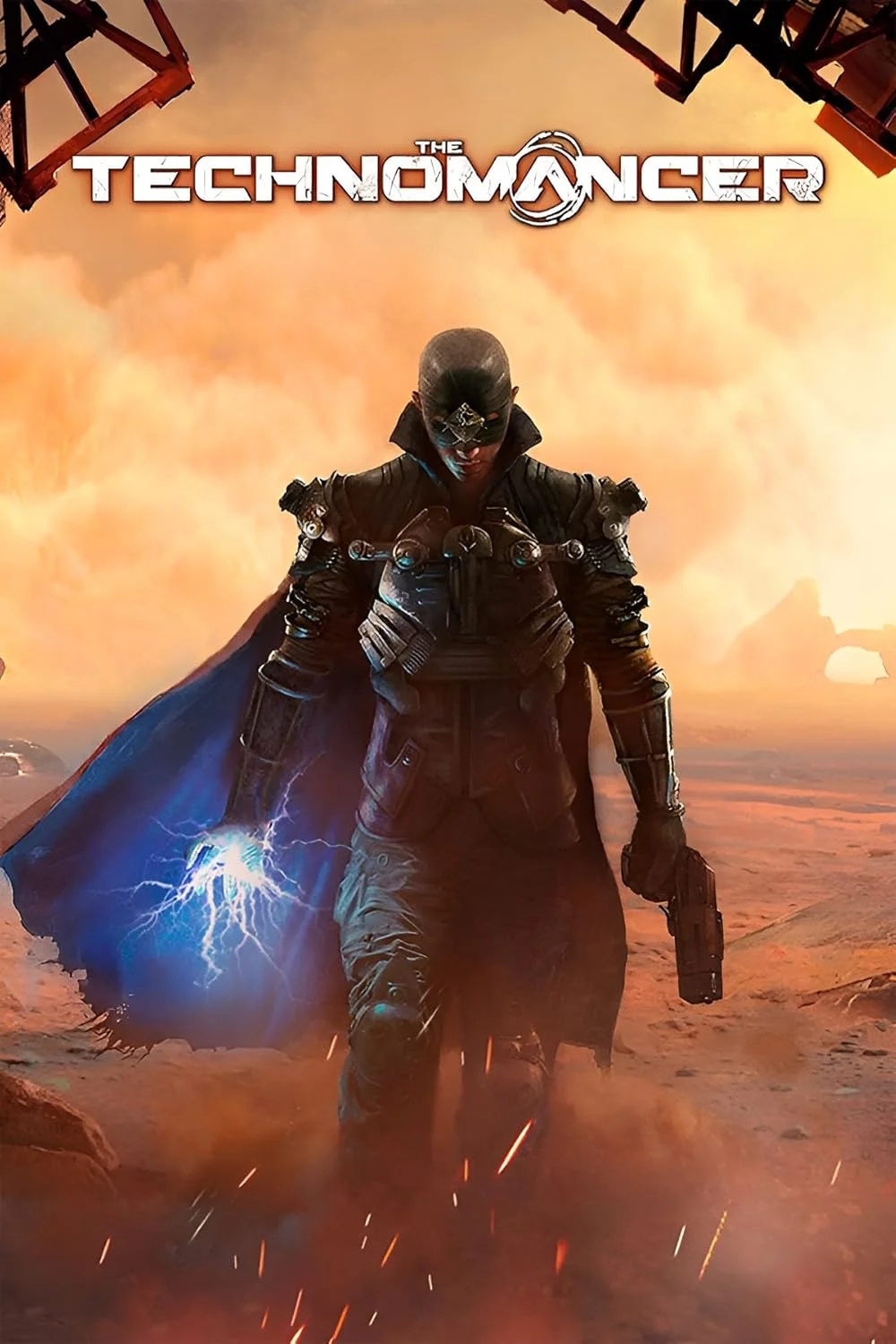
The Technomancer
This combination offers playable performance with an average of 35 FPS, though you may want to lower settings for smoother gameplay.
Average FPS: resolution vs quality settings
| Ultra | High | Medium | Low | |
|---|---|---|---|---|
| 4K Ultra HD | 13 | 17 | 20 | 26 |
| 1440p QHD | 24 | 31 | 36 | 47 |
| 1080p Full HD | 37 | 47 | 55 | 71 |
Cell color: green is 120+ FPS, teal is 60+, amber is 30+, red is below 30.
The Technomancer with AMD Ryzen 7 9800X3D + Intel Arc B370, In-Depth Analysis
The Technomancer, a 2016 Action RPG, presents a demanding scenario for the AMD Ryzen 7 9800X3D and Intel Arc B370 combination. The measured data reveals a system where the integrated graphics solution is the primary constraint, with performance scaling closely tied to resolution and preset. The data indicates that this combo ranks near the bottom of all tested configurations, at 2603 out of 2825, placing it in the 8th percentile of tested combos. The following analysis breaks down the performance metrics across resolutions, settings, and component roles.
Resolution Scaling — how FPS drops from 1080p to 4K and what it says about the limiting component
The measured FPS data shows a steep performance cliff as resolution increases, which is a clear indicator that the Intel Arc B370 integrated GPU is the dominant bottleneck. At 1080p with Low settings, the combo achieves 71 FPS, but this drops to 47 FPS at 1440p and further to 26 FPS at 4K. This represents a 63% reduction in average FPS from 1080p to 4K at Low settings, a pattern consistent with a GPU that is running out of pixel-pushing capability rather than a CPU limitation.
Examining the High preset tells a similar story, with the average FPS falling from 47 at 1080p to 31 at 1440p and then to 17 at 4K. The drop from 1440p to 4K at High settings is a 45% performance loss, which is substantial. This scaling behavior suggests that the Arc B370's rendering units, specifically its 20 ROPs and 40 TMUs, are being overwhelmed by the increased pixel count. The 6.144 TFLOPS of FP32 compute power is insufficient for the demands of 4K rendering in this title.
The most telling aspect is the comparison between the Low and High presets at each resolution. At 1080p, the gap between Low (71 FPS) and High (47 FPS) is 24 FPS, but at 4K, the gap narrows to just 9 FPS (26 vs 17). This convergence indicates that at higher resolutions, the GPU is so saturated that even reducing graphical fidelity provides diminishing returns. The data implies that the system is entirely GPU-bound, with the Ryzen 7 9800X3D's powerful processing capabilities left largely idle.
The scaling from 1080p to 1440p shows a more moderate decline, suggesting that 1440p is the practical ceiling for playable performance. The 47 FPS at 1440p Low and 31 FPS at 1440p High are borderline playable, but the 4K results, with a maximum of 26 FPS at Low, are clearly not suitable for smooth gameplay. The data points to a system where lower resolutions are necessary to achieve acceptable frame rates, confirming the GPU as the limiting factor.
GPU Role — VRAM, clocks, and how they relate to this game's results
The Intel Arc B370 operates with system-shared memory, meaning its VRAM size, type, and bus width are all dependent on the host system's RAM. This architecture has significant implications for The Technomancer, as the game must contend with the CPU and GPU competing for the same memory bandwidth. The GPU's base clock of 300 MHz and boost clock of 2400 MHz are the primary drivers of its compute throughput, which is rated at 6.144 TFLOPS for FP32 operations.
With a 3 nm process node and a 25 W TDP, the Arc B370 is designed for efficiency rather than raw performance. Its benchmark score of 1184 on 3DMark Steel Nomad places it in the 5th percentile of all GPUs, which is remarkably low. The nearest rivals, such as the ATI Radeon HD 5770 with a score of 1190, are over a decade old, highlighting how far behind modern discrete GPUs this integrated solution sits. The 1280 shading units and 10 RT cores are present, but their effectiveness is limited by the shared memory architecture.
The 48.00 GPixel/s pixel rate and 96.00 GTexel/s texture rate provide theoretical limits that the measured FPS data aligns with. At 4K Ultra, the combo manages only 13 FPS, which is a direct result of the GPU's inability to fill the required pixels and process textures at a sufficient speed. The system-shared memory bandwidth, listed as "System Dependent," is a critical unknown, but the performance at higher resolutions suggests that memory bandwidth is also a constraining factor.
The GPU's low percentile ranking and its proximity to much older rivals in benchmark scores indicate that it is not suited for demanding titles like The Technomancer at high settings. The data shows that even at 1080p, the Ultra preset yields only 37 FPS, suggesting that the Arc B370's architecture, while modern with DirectX 12 Ultimate support, lacks the raw throughput needed for this game's engine.
How This Combo Ranks — use comboRankInGame vs other tested combos
The AMD Ryzen 7 9800X3D + Intel Arc B370 combination ranks 2603 out of 2825 tested combos in The Technomancer. This places it in the bottom 8% of all systems tested, a position that reflects the severe imbalance between the high-end CPU and the entry-level integrated GPU. The combo's rank is primarily driven by the GPU's limitations, as the CPU's benchmark scores suggest it is capable of much higher performance in other configurations.
The CPU itself ranks in the 87th percentile of all CPUs, with an average benchmark score of 39768. Its nearest rivals, such as the AMD Ryzen 7 PRO 8840HS with a score of 39603, are just 0.4% behind, indicating the 9800X3D is a top-tier processor. However, when paired with the Arc B370, which ranks in the 5th percentile of GPUs, the combined system performance is dragged down significantly. The GPU's nearest rival, the ATI Mobility Radeon HD 5570, is only 0.2% behind in score, illustrating the GPU's low standing.
The discrepancy between the CPU's high percentile (87) and the combo's low rank (2603 of 2825) underscores the fact that the GPU is the bottleneck. In gaming scenarios where the GPU is the limiting factor, the CPU's power is largely irrelevant to the final frame rate. The data suggests that this combo would perform similarly with a much weaker CPU, as the Arc B370 cannot keep up with the demands of the game at any resolution above 1080p Low.
This ranking implies that users with this configuration would be better served by a discrete GPU, as the integrated solution severely hampers the system's gaming potential. The combo's position near the bottom of the rankings is a clear indication that it is not optimized for The Technomancer, and the measured FPS data confirms that playable frame rates are only achievable at the lowest settings and resolution.
Measured FPS Breakdown — resolution by resolution, settings by settings, exact numbers
The measured FPS data provides a comprehensive view of the combo's performance across three resolutions and four settings presets. At 1080p, the results are as follows: Low settings yield an average of 71 FPS, Medium settings produce 55 FPS with a minimum of 47 and maximum of 63, High settings drop to 47 FPS, and Ultra settings bottom out at 37 FPS. This shows a clear degradation as graphical fidelity increases, with a 48% reduction from Low to Ultra.
Moving to 1440p, the performance decreases across all presets. Low settings average 47 FPS, Medium settings average 36 FPS with a range of 30 to 41, High settings average 31 FPS, and Ultra settings average 24 FPS. The drop from 1080p to 1440p at Low settings is 24 FPS, which is a 34% reduction. This resolution appears to be the limit for acceptable performance, with only the Low and Medium presets exceeding 30 FPS.
At 4K, the performance becomes largely unplayable. Low settings average 26 FPS, Medium settings average 20 FPS with a range of 17 to 23, High settings average 17 FPS, and Ultra settings average just 13 FPS. The 4K results show that the GPU is completely overwhelmed, with even the lowest settings failing to maintain a smooth 30 FPS. The data reveals that the Medium preset at 4K has a minimum FPS of 17, which is below the threshold for comfortable gameplay.
The full breakdown shows a consistent pattern: each step up in resolution or settings results in a significant FPS loss. At 1080p, the Medium preset is the only one with a recorded minimum FPS (47), while at 1440p, the Medium preset shows a minimum of 30. At 4K, the Medium preset's minimum of 17 FPS highlights the severe performance drop. These numbers indicate that the combo's sweet spot is 1080p with Low or Medium settings, where it can achieve 55 to 71 FPS.
FAQ — 4-6 Q&A pairs answerable from FACT PACK data
Q: What is the highest average FPS this combo achieves in The Technomancer, and at what resolution and settings?
A: The highest average FPS is 71, achieved at 1920x1080 resolution with Low settings. This is the only configuration that exceeds 60 FPS, with all other settings and resolutions falling below that threshold.
Q: How does the combo's ranking in this game compare to its CPU's overall percentile?
A: The combo ranks 2603 out of 2825 tested combos in The Technomancer, placing it in the bottom 8%. In contrast, the AMD Ryzen 7 9800X3D CPU ranks in the 87th percentile of all CPUs, highlighting a significant mismatch between the CPU's capability and the GPU's performance.
Q: Is 4K gaming viable with this combination?
A: No, the data shows that 4K performance is not viable. The best 4K result is 26 FPS at Low settings, while Ultra settings yield only 13 FPS. All 4K configurations fall below the 30 FPS threshold typically considered minimum for playability.
Q: What is the difference in average FPS between Low and Ultra settings at 1080p?
A: At 1080p, the Low preset averages 71 FPS, while the Ultra preset averages 37 FPS. This represents a 34 FPS difference, or a 48% reduction in performance when moving from the lowest to the highest graphical preset.
Q: Which rival GPU is closest to the Intel Arc B370 in benchmark score, and by what margin?
A: The ATI Mobility Radeon HD 5570 is the closest rival, with an average score of 1186 compared to the Arc B370's 1184. This is a deltaPct of -0.2%, meaning the Arc B370 is just 0.2% behind this much older GPU.
Q: How much does the average FPS drop from 1080p to 4K at High settings?
A: At High settings, the average FPS drops from 47 at 1080p to 17 at 4K. This is a 30 FPS reduction, or a 64% decrease in performance when moving from 1080p to 4K resolution.
CPU Role — cores, clocks, and how they relate to this game's results
The AMD Ryzen 7 9800X3D features 8 cores and 16 threads, with a base clock of 4.70 GHz and a boost clock of 5.20 GHz. This Zen 5 architecture, codenamed Granite Ridge, is built on a 4 nm process and includes 96 MB of shared L3 cache. Its benchmark results are impressive, with a Cinebench R23 multicore score of 23230 and a single-core score of 2080. In 3DMark testing, it scores 10081 with 16 threads and 1212 with a single thread, demonstrating strong multi-threaded and single-threaded performance.
However, in The Technomancer, the CPU's role is minimized due to the GPU being the limiting factor. The measured FPS data shows that even at 1080p Low, where the CPU would have the most influence, the system only achieves 71 FPS. This is well below what the 9800X3D is capable of supporting, as its single-thread performance would allow for much higher frame rates in CPU-bound scenarios. The game's engine, released in 2016, likely does not utilize more than a few cores effectively, so the 16 threads are largely underutilized.
The CPU's high L3 cache of 96 MB and fast clock speeds are beneficial for gaming, but they cannot compensate for the GPU's limitations. The data shows that the combo's ranking in this game is 2603 of 2825, which is far below what the CPU's 87th percentile ranking would suggest. This indicates that the CPU is not the bottleneck, and its powerful specifications are wasted in this configuration. The CPU's memory bandwidth of 89.6 GB/s and DDR5 support are also irrelevant when the GPU uses system-shared memory.
The CPU's benchmark rivals, such as the AMD Ryzen 7 PRO 8840HS with a score of 39603, are within 0.4% of the 9800X3D's average score of 39768. This shows that the 9800X3D is a top-tier processor, but its performance in this game is capped by the Arc B370. The data suggests that upgrading the GPU would yield substantial improvements, while the CPU would remain a constant, high-performance component.
Settings Recommendations — which preset gives the best experience per the measured rows
Based on the measured FPS data, the best experience for this combo in The Technomancer is achieved at 1080p with Low settings, which yields an average of 71 FPS. This is the only configuration that provides a smooth, high-refresh-rate experience, and it is the recommended preset for players who prioritize frame rate over visual fidelity. The 1080p Medium preset is a viable alternative, with an average of 55 FPS and a minimum of 47, which is still playable.
At 1440p, the Low preset offers an average of 47 FPS, which is acceptable for slower-paced gameplay but may not be ideal for action sequences. The Medium preset at 1440p averages 36 FPS with a minimum of 30, which is borderline playable. However, the High and Ultra presets at 1440p, with averages of 31 and 24 FPS respectively, are not recommended due to inconsistent frame rates.
The 4K resolution is not recommended for any settings, as even the Low preset fails to reach 30 FPS. The data shows that the GPU is the limiting factor, and reducing settings provides only marginal improvements at higher resolutions. For the best overall experience, players should stick to 1080p and choose between Low and Medium settings. The Low preset provides the highest frame rates, while Medium offers a balance of visual quality and performance, with the minimum FPS of 47 still being above the 30 FPS threshold.
The Ultra preset at 1080p, with an average of 37 FPS, is not recommended as it provides a noticeable drop in performance without a significant visual upgrade over High settings. The data indicates that the Medium preset at 1080p is the optimal choice for most players, as it maintains playable frame rates while offering better visuals than Low. Ultimately, the recommendation is to prioritize 1080p and adjust settings based on personal preference for frame rate versus visual quality.
Hardware Specifications
AMD Ryzen 7 9800X3D
Intel Arc B370
FPS Benchmarks by Resolution & Settings
Performance data for AMD Ryzen 7 9800X3D + Intel Arc B370 in The Technomancer
| Resolution | Settings | Avg FPS |
|---|---|---|
| 3840x2160 | Low | 26.0 |
| 3840x2160 | Medium | 20.0 |
| 3840x2160 | High | 17.0 |
| 3840x2160 | Ultra | 13.0 |
| 2560x1440 | Low | 47.0 |
| 2560x1440 | Medium | 36.0 |
| 2560x1440 | High | 31.0 |
| 2560x1440 | Ultra | 24.0 |
| 1920x1080 | Low | 71.0 |
| 1920x1080 | Medium | 55.0 |
| 1920x1080 | High | 47.0 |
| 1920x1080 | Ultra | 37.0 |
The Technomancer with Ryzen 7 9800X3D + Other GPUs
See how The Technomancer performs with the same CPU but different graphics cards.
The Technomancer with Arc B370 + Other CPUs
See how The Technomancer performs with the same GPU but different processors.
Other Games with Ryzen 7 9800X3D + Arc B370
Explore FPS benchmarks for other games using this same hardware combination.