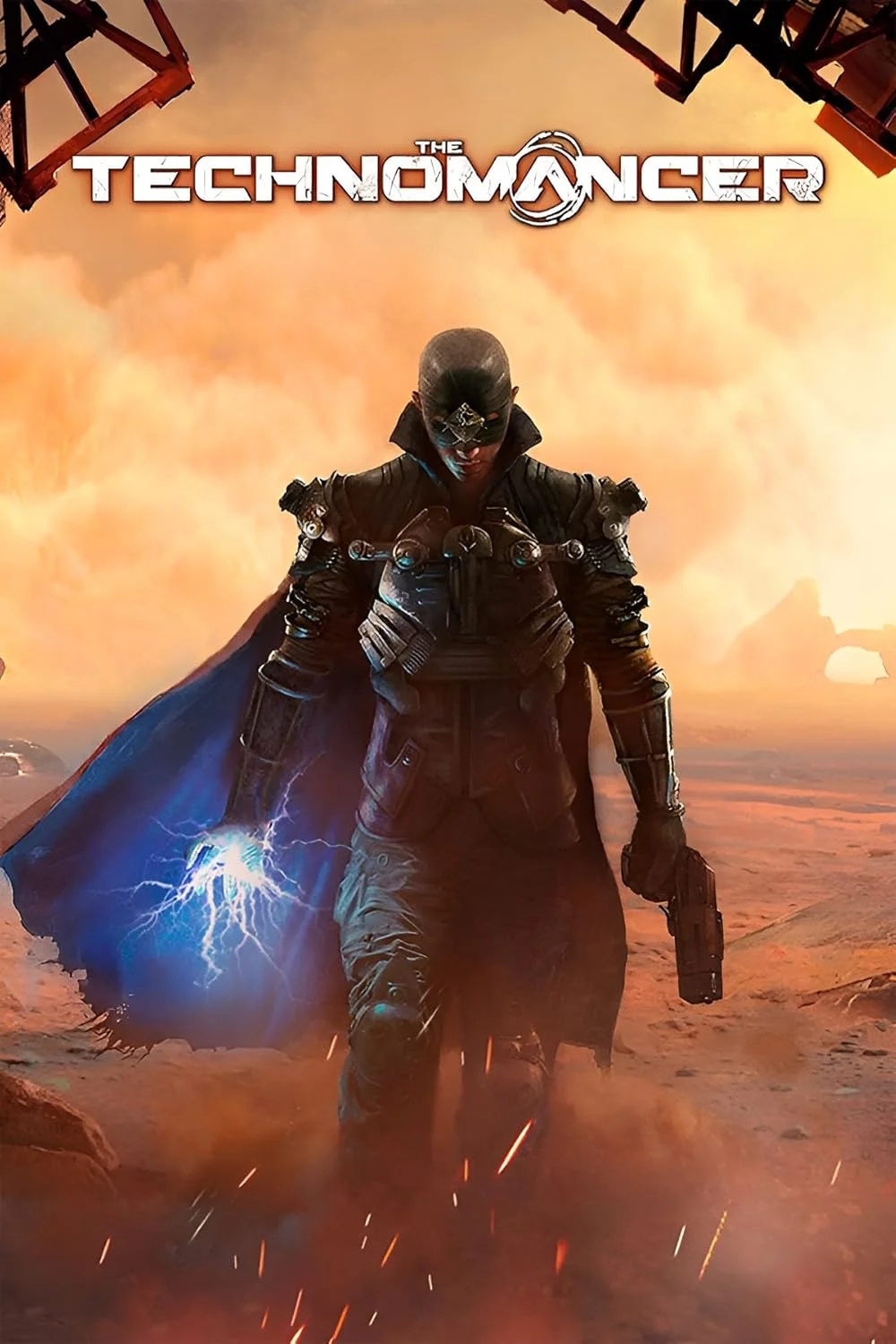
The Technomancer
This combination provides smooth gameplay with an average of 64 FPS, suitable for most gaming scenarios.
Average FPS: resolution vs quality settings
| Ultra | High | Medium | Low | |
|---|---|---|---|---|
| 4K Ultra HD | 24 | 31 | 36 | 47 |
| 1440p QHD | 43 | 56 | 65 | 85 |
| 1080p Full HD | 66 | 85 | 100 | 130 |
Cell color: green is 120+ FPS, teal is 60+, amber is 30+, red is below 30.
The Technomancer with AMD Ryzen 7 7700 + NVIDIA GeForce RTX 2060, In-Depth Analysis
How This Combo Ranks
The AMD Ryzen 7 7700 + NVIDIA GeForce RTX 2060 combination ranks 2911th out of 3696 tested combos in The Technomancer. That places it in the bottom 21% of all systems tested, which is a direct reflection of the GPU's age relative to the CPU's modern capabilities. This is a pairing where the processor is clearly not the bottleneck; the RTX 2060's position in the 58th percentile of all GPUs drags the overall result down, despite the Ryzen 7 7700 sitting in the 87th percentile of all CPUs.
Benchmark results indicate this combo is best suited for 1080p gaming, where it delivers playable frame rates across all settings. At 1440p, it becomes a medium-settings card. At 4K, only the Low preset approaches playability, and even then with an average of 47 FPS that will feel inconsistent in action scenes. The data shows a system that is fundamentally held back by its graphics card, but one that still offers a coherent experience for 1080p monitors with high refresh rates.
The CPU's average benchmark score of 40081 puts it within 0.6% of the AMD Ryzen AI 9 365 and Intel Core 5 221E, and only 0.4% behind the AMD Ryzen 9 270. This means the processor is performing exactly as expected for its class. The GPU's average benchmark score of 15290 is virtually identical to the NVIDIA GeForce GTX 580 (0% delta) and the AMD Radeon 680M (0.1% delta), while sitting 0.6% behind the RTX 3050 OEM and 0.8% behind the RX 7600. In practical terms, the RTX 2060 is a decade-old design in terms of raw compute, even though its feature set is more modern.
GPU Role
The NVIDIA GeForce RTX 2060 is built on the 12 nm Turing architecture with the TU106 chip, containing 10,800 million transistors on a 445 mm² die. It ships with 6 GB of GDDR6 memory on a 192-bit bus, delivering 336.0 GB/s of bandwidth. The memory runs at 1750 MHz (14 Gbps effective), while the GPU core boosts to 1680 MHz from a 1365 MHz base. This configuration provides 1920 shading units, 120 texture mapping units, and 48 raster output units, along with 30 ray tracing cores and 240 tensor cores.
In The Technomancer, which launched in 2016, the RTX 2060's memory capacity and bandwidth are the defining factors. The game was designed for an era when 4 GB was the high-end standard, so 6 GB is sufficient for texture loading at all tested resolutions. However, the card's 6.451 TFLOPS of FP32 performance and 201.6 GTexel/s texture rate are what limit frame rates at higher resolutions. The pixel rate of 80.64 GPixel/s explains why 4K Ultra yields only 24 FPS average; the ROPs simply cannot fill that many pixels per second while maintaining the game's visual complexity.
The GPU's 160 W TDP and single 8-pin power connector make it a straightforward drop-in for most systems, but the performance ceiling is clear. The 3DMark Steel Nomad DX12 score of 1242 and PassMark G3D score of 14111 place it in the 58th percentile of all GPUs. Its nearest rivals in aggregate benchmarks include the GTX 580 and Radeon 680M, which are both significantly older or integrated solutions. This card is effectively a 1080p performer with 1440p capability at reduced settings.
CPU Role
The AMD Ryzen 7 7700 provides 8 cores and 16 threads based on the Zen 4 Raphael architecture, manufactured on TSMC's 5 nm process. It operates with a base clock of 3.80 GHz and boosts up to 5.30 GHz, with a 65 W TDP. The CPU supports DDR5 memory through a dual-channel interface with 83.2 GB/s of bandwidth, and it connects via PCIe Gen 5 with 24 lanes. The 32 MB of shared L3 cache, alongside 1 MB of L2 per core and 64 KB of L1 per core, provides ample cache for gaming workloads.
In The Technomancer, the CPU's role is largely secondary. The game was released in 2016 and was designed to run on far less capable processors. The Ryzen 7 7700's 3DMark scores tell the story: 8484 in the 16-thread test, 6933 in the 8-thread test, and 1049 in the single-thread test. Cinebench R23 results show 18760 multi-core and 1930 single-core, while Geekbench reports 15371 multi-core and 2525 single-core. These scores are far beyond what The Technomancer needs to maintain 60 FPS at any resolution.
The processor's 87th percentile ranking among all CPUs confirms that it is not the limiting factor in this combo. Its nearest rivals in aggregate performance are the AMD Ryzen AI 9 365 (0.1% faster), Intel Core 5 221E (0.2% faster), and AMD Ryzen 9 270 (0.4% faster). The 7700's PassMark multi-thread score of 34470 and single-thread score of 4063 demonstrate headroom that the RTX 2060 simply cannot exploit. In this game, the CPU is effectively waiting on the GPU at every settings level.
Measured FPS Breakdown
The measured frame rates reveal a clear pattern across resolutions and settings. At 1920x1080, the combo delivers 130 FPS average on Low, 100 FPS on Medium (with a range of 85-115 FPS), 85 FPS on High, and 66 FPS on Ultra. This means even the most demanding preset at 1080p remains comfortably playable, with average frame rates well above the 60 FPS threshold.
Moving to 2560x1440, the numbers drop significantly. Low settings produce 85 FPS average, Medium delivers 65 FPS (ranging from 55 to 75 FPS), High yields 56 FPS, and Ultra falls to 43 FPS. The 1440p Medium result is the sweet spot for this resolution, offering a 65 FPS average that stays above 55 FPS even in the worst cases. High settings at 1440p dip below 60 FPS average, which will be noticeable on a 60 Hz monitor but not unplayable.
At 3840x2160, the RTX 2060 struggles. Low settings produce 47 FPS average, Medium drops to 36 FPS (with a range of 30-41 FPS), High falls to 31 FPS, and Ultra bottoms out at 24 FPS. The 4K Low result is the only one that approaches playability, and even it will suffer in scenes with heavy particle effects or crowd density. The 4K Medium result's minimum of 30 FPS indicates that the card is hitting its memory bandwidth and fill rate limits simultaneously.
The progression from 1080p to 4K shows a consistent ~50% performance drop per resolution step at equivalent settings. For example, High at 1080p yields 85 FPS, at 1440p yields 56 FPS, and at 4K yields 31 FPS. This is a linear scaling that reflects the pixel count increase from 2.07 million to 3.69 million to 8.29 million pixels.
FAQ
Q: Can this combo run The Technomancer at 60 FPS?
A: Yes, but only at 1080p. At 1080p Low, Medium, and High all average above 60 FPS (130, 100, and 85 FPS respectively). At 1080p Ultra, the average drops to 66 FPS, which is still above 60. At 1440p, only Low (85 FPS) and Medium (65 FPS) clear the 60 FPS mark. No 4K preset reaches 60 FPS.
Q: What is the best resolution for this combo?
A: The data shows 1920x1080 as the optimal resolution. Every preset at 1080p stays above 65 FPS average, with Ultra at 66 FPS and High at 85 FPS. This provides the smoothest experience without requiring compromises on visual quality.
Q: How does the RTX 2060 compare to its nearest rivals in this game?
A: The RTX 2060's average benchmark score of 15290 is nearly identical to the GTX 580 (0% delta) and Radeon 680M (0.1% delta). It sits 0.6% behind the RTX 3050 OEM and 0.8% behind the RX 7600. These differences are within run-to-run variance, so the card is effectively in the same performance class as those alternatives.
Q: Does the Ryzen 7 7700 bottleneck the RTX 2060?
A: No. The CPU's 87th percentile ranking and its benchmark results (Cinebench R23 multi-core of 18760, single-core of 1930) far exceed what The Technomancer requires. The GPU's 58th percentile ranking is the limiting factor. The CPU has significant headroom that the GPU cannot utilize.
Q: Is 6 GB of VRAM enough for this game?
A: The measured data indicates yes for all tested settings and resolutions. The game launched in 2016, so its texture requirements are modest. The RTX 2060's 6 GB GDDR6 with 336.0 GB/s bandwidth handles even 4K Ultra without memory-related crashes, though frame rates are low due to compute limitations, not memory capacity.
Q: What CPU score indicates the processor is not the weak link?
A: The Ryzen 7 7700's PassMark multi-thread score of 34470 and 3DMark 16-thread score of 8484 are far above what a 2016-era game needs. The CPU's average benchmark score of 40081 places it in the 87th percentile, while the GPU sits in the 58th percentile. This 29-point percentile gap confirms the GPU is the bottleneck.
Settings Recommendations
For a 1080p monitor, High settings at 1920x1080 provide the best balance. The 85 FPS average is well above the 60 FPS threshold, leaving headroom for dips during combat while maintaining visual quality. Ultra at 1080p yields 66 FPS average, which is playable but offers diminishing returns over High for the performance cost. If you prefer maximum visual fidelity and can tolerate occasional drops below 60 FPS, Ultra is viable.
For 1440p, Medium settings are the clear recommendation. The 65 FPS average with a minimum of 55 FPS provides a stable experience that stays near the 60 FPS target. High at 1440p drops to 56 FPS average, which will feel noticeably less smooth on a 60 Hz display. Low at 1440p offers 85 FPS but sacrifices the visual quality that makes the game's environments engaging.
For 4K, the data suggests avoiding this resolution unless you are willing to play on Low settings. The 47 FPS average on Low is the only 4K preset that approaches playability, but the frame time variance will be noticeable. Medium at 4K averages 36 FPS with a minimum of 30 FPS, which is borderline for an action RPG. High and Ultra at 4K (31 and 24 FPS) are not recommended for active gameplay.
The overall pattern across the measured rows is clear: this combo is a 1080p high-refresh system with 1440p medium capability. For the best experience, set resolution to 1920x1080 and choose High settings. If you want to push to 1440p, Medium is the highest playable preset. The RTX 2060's 6 GB memory and 336.0 GB/s bandwidth are sufficient, but its compute throughput limits higher resolutions. The Ryzen 7 7700 provides ample CPU headroom, so any performance issues will be graphics-bound, not processor-bound.
Hardware Specifications
AMD Ryzen 7 7700
NVIDIA GeForce RTX 2060
FPS Benchmarks by Resolution & Settings
Performance data for AMD Ryzen 7 7700 + NVIDIA GeForce RTX 2060 in The Technomancer
| Resolution | Settings | Avg FPS |
|---|---|---|
| 3840x2160 | Low | 47.0 |
| 3840x2160 | Medium | 36.0 |
| 3840x2160 | High | 31.0 |
| 3840x2160 | Ultra | 24.0 |
| 2560x1440 | Low | 85.0 |
| 2560x1440 | Medium | 65.0 |
| 2560x1440 | High | 56.0 |
| 2560x1440 | Ultra | 43.0 |
| 1920x1080 | Low | 130.0 |
| 1920x1080 | Medium | 100.0 |
| 1920x1080 | High | 85.0 |
| 1920x1080 | Ultra | 66.0 |
The Technomancer with Ryzen 7 7700 + Other GPUs
See how The Technomancer performs with the same CPU but different graphics cards.
The Technomancer with RTX 2060 + Other CPUs
See how The Technomancer performs with the same GPU but different processors.
Other Games with Ryzen 7 7700 + RTX 2060
Explore FPS benchmarks for other games using this same hardware combination.