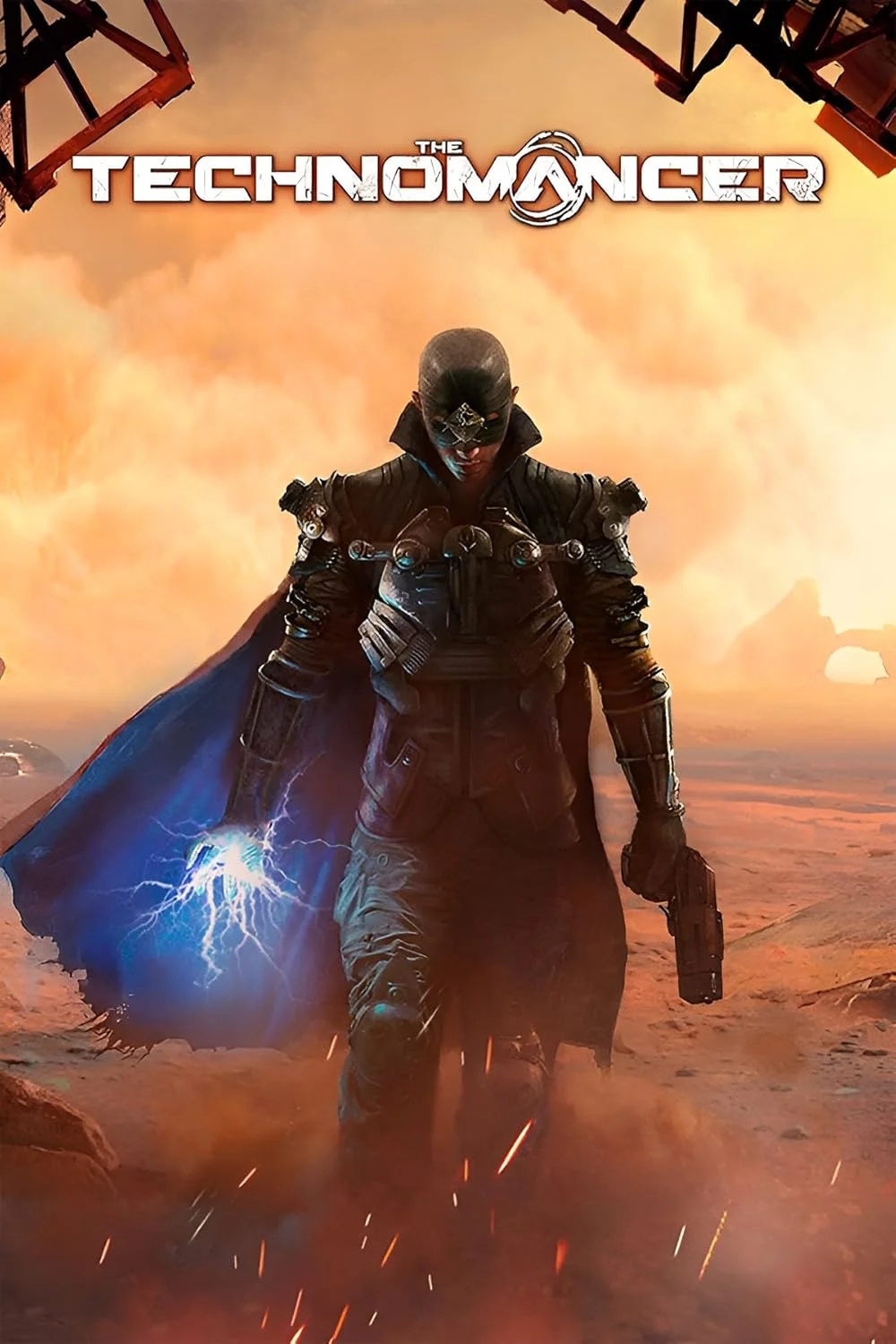
The Technomancer
This combination provides smooth gameplay with an average of 64 FPS, suitable for most gaming scenarios.
Average FPS: resolution vs quality settings
| Ultra | High | Medium | Low | |
|---|---|---|---|---|
| 4K Ultra HD | 25 | 30 | 37 | 44 |
| 1440p QHD | 43 | 57 | 68 | 84 |
| 1080p Full HD | 64 | 88 | 103 | 128 |
Cell color: green is 120+ FPS, teal is 60+, amber is 30+, red is below 30.
The Technomancer with AMD Ryzen 7 5800XT + NVIDIA GeForce RTX 2060, In-Depth Analysis
The Technomancer, an Action RPG from 2016, presents a fascinating case study in hardware scaling. The data for the AMD Ryzen 7 5800XT paired with the NVIDIA GeForce RTX 2060 reveals a system where the CPU's substantial headroom is frequently constrained by the GPU's capabilities, particularly as resolution and graphical fidelity increase. This analysis breaks down the measured performance to understand the dynamic between these two components in this specific title.
CPU Role — cores, clocks, and how they relate to this game's results
The AMD Ryzen 7 5800XT is a desktop processor built on the Zen 3 architecture, codenamed Vermeer. It comes equipped with 8 cores and 16 threads, a configuration that is well-suited for modern gaming workloads. Its base clock of 3.80 GHz can boost up to 4.80 GHz, and it features a 32 MB L3 cache. In the broader context of all CPUs, this processor scores in the 86th percentile, indicating it has significantly more processing power than most. Its average benchmark score of 29774 places it in a tight cluster with rivals like the AMD Ryzen 7 PRO 5755GE, which is a mere 0.1% faster, and the AMD Ryzen 7 6800HS, which is 0.3% slower.
Given this raw processing strength, the CPU is rarely the bottleneck in The Technomancer at lower settings. At 1080p with Low settings, the system achieves 128 FPS, which is a very high frame rate. The CPU's multi-threaded capabilities are evident in its Cinebench R23 multicore score of 23794, suggesting it can handle the game's simulation and AI workloads without breaking a sweat. Even at 1080p Ultra, where the graphical load is much higher, the system still manages 63.7 FPS. The data implies that the CPU has ample headroom to feed frames to the GPU, and the performance ceiling is being set by the graphics card, not the processor. The 8-core, 16-thread design ensures that even if the game were to utilize multiple threads heavily, the 5800XT has the resources to maintain stability.
GPU Role — VRAM, clocks, and how they relate to this game's results
The NVIDIA GeForce RTX 2060 is a Turing-architecture GPU with 6 GB of GDDR6 memory on a 192-bit bus, providing a bandwidth of 336.0 GB/s. Its base clock is 1365 MHz with a boost clock of 1680 MHz. This GPU sits in the 58th percentile of all GPUs, with an average benchmark score of 16074. This places it in direct competition with cards like the AMD Radeon RX 7600S, which is 0.5% faster, and the AMD Radeon Pro 5700, which is 1.7% faster.
The GPU's role becomes the dominant factor in performance as the resolution and settings are increased. The transition from Low to Ultra settings at any resolution shows a clear and significant drop in frame rate, which is a direct consequence of the GPU's workload. The 6 GB VRAM capacity might be a point of concern for newer titles, but for a game from 2016, the data shows it is sufficient to handle the textures and geometry at these settings. The performance scaling suggests that the RTX 2060 is a capable 1080p card for this title, but it begins to struggle at 4K, where its raw compute power and memory bandwidth are insufficient to maintain high frame rates, particularly at higher presets.
Settings Recommendations — which preset gives the best experience per the measured rows
Examining the measured FPS rows, the optimal balance of visual quality and performance is found at the High preset. At 1080p, High yields 87.7 FPS, which is an excellent, smooth experience. The jump from Medium (102.9 FPS) to High (87.7 FPS) costs 15.2 FPS but likely provides a substantial visual upgrade. Moving to Ultra (63.7 FPS) costs an additional 24 FPS for what is often a marginal increase in visual fidelity. The data suggests that High is the sweet spot.
At 1440p, the High preset provides 56.8 FPS, which is still playable but begins to dip below the 60 FPS threshold. For a more consistent 60+ FPS experience at this resolution, Medium at 68.2 FPS is the safer choice. For 4K gaming, no preset achieves a playable 60 FPS. Even the Low preset only manages 43.7 FPS. The High preset at 4K (29.7 FPS) is on the edge of playability for slower-paced games, but Ultra is not viable. Therefore, the recommendation is to use High for 1080p, Medium for 1440p, and if 4K is a must, Low is the only option that provides a somewhat acceptable frame rate.
FAQ
*Q: Can this system run The Technomancer at 4K resolution?*
A: Yes, it can run the game at 4K, but not at a high refresh rate. The measured data shows that at 4K with Low settings, the average FPS is 43.7. At High settings, it drops to 29.7 FPS, and at Ultra, it is 25.4 FPS, indicating a challenging workload for the GPU at this resolution.
Q: What is the best settings preset for a 1080p monitor with a 60Hz refresh rate?
A: The High preset is the best choice. It delivers an average of 87.7 FPS, which is well above the 60 FPS target, ensuring smooth gameplay. This is a better option than Medium (102.9 FPS) because it offers higher visual quality while still maintaining a significant performance buffer.
Q: Is the CPU or GPU the limiting factor in this game?
A: The data indicates the GPU is the limiting factor, especially at higher resolutions and settings. At 1080p Low, the system reaches 128 FPS, showing the CPU's ability to push frames. However, the FPS drops significantly as resolution and settings are raised (e.g., to 29.7 FPS at 4K High), which is characteristic of a GPU bottleneck.
Q: How does the RTX 2060 compare to its nearest rivals in this system's performance?
A: The RTX 2060's average benchmark score is 16074. Its nearest rival, the AMD Radeon RX 7600S, is 0.5% faster, while the AMD Radeon Pro 5700 is 1.7% slower. This places the RTX 2060 in a very tight performance band with these competing cards.
Q: What is the expected frame rate at 1440p with Medium settings?
A: The measured data shows an average of 68.2 FPS at 2560x1440 with Medium settings. This suggests a good balance for 1440p gaming, providing a frame rate that is above the 60 FPS standard for most displays.
Q: Is the Ryzen 7 5800XT a high-performing processor relative to others?
A: Yes, it ranks in the 86th percentile of all CPUs. Its average benchmark score of 29774 is very close to the AMD Ryzen 7 PRO 5755GE, which is 0.1% faster, and it is 0.3% faster than the AMD Ryzen 7 6800HS, showing it is competitive with other high-end processors.
Resolution Scaling — how FPS drops from 1080p to 4K and what it says about the limiting component
The performance scaling across resolutions provides a clear picture of the system's bottleneck. At High settings, the average FPS drops from 87.7 at 1080p to 56.8 at 1440p, a decrease of 30.9 FPS. Moving to 4K, the frame rate plummets to 29.7 FPS, a further drop of 27.1 FPS. This trend is consistent across all settings. At Low settings, the system goes from 128 FPS at 1080p to 83.7 FPS at 1440p, and finally to 43.7 FPS at 4K.
This scaling pattern is a textbook indicator of a GPU-limited scenario. As the resolution increases, the number of pixels the GPU must render grows exponentially. The CPU's workload does not scale in the same way; it is more dependent on the number of objects and the game's logic. Since the FPS drops so dramatically with resolution, it demonstrates that the RTX 2060 is being pushed to its absolute limit, while the Ryzen 7 5800XT has more than enough power to handle the data being sent to it. The fact that even at 4K Low, the GPU cannot achieve 60 FPS, confirms that the graphics card is the primary constraint in this configuration for higher-resolution gaming.
Measured FPS Breakdown — resolution by resolution, settings by settings, exact numbers
1920x1080
- Low: 128 FPS
- Medium: 102.9 FPS
- High: 87.7 FPS
- Ultra: 63.7 FPS
2560x1440
- Low: 83.7 FPS
- Medium: 68.2 FPS
- High: 56.8 FPS
- Ultra: 43.1 FPS
3840x2160
- Low: 43.7 FPS
- Medium: 36.9 FPS
- High: 29.7 FPS
- Ultra: 25.4 FPS
These numbers show a clear and consistent hierarchy. At 1080p, the system is capable of delivering a great experience across all presets, with even Ultra settings surpassing 60 FPS. At 1440p, the performance drops, and only Low and Medium presets maintain a frame rate above 60 FPS. At 4K, the system falls below the 60 FPS threshold for all settings, indicating that this resolution is not well-suited for high-fidelity gameplay with this GPU.
How This Combo Ranks — use comboRankInGame vs other tested combos
The combination of the AMD Ryzen 7 5800XT and NVIDIA GeForce RTX 2060 ranks 1351 out of 1656 tested combos for The Technomancer. This places it in the lower half of all tested systems, specifically around the 18th percentile (calculated from the rank). This ranking is somewhat surprising given the CPU's high percentile standing (86th).
This discrepancy reinforces the conclusion that the GPU is the limiting factor in this pairing. The Ryzen 7 5800XT is a powerful processor, but when paired with a mid-range GPU like the RTX 2060, the overall system performance is capped by the graphics card's capabilities. The rank suggests that many other tested combos, likely those with more powerful GPUs, achieve higher average frame rates in this game. Even though the CPU is a top-tier performer, the final in-game result is heavily influenced by the GPU. This particular combination is a balanced mainstream setup, but it does not compete with high-end systems that pair a comparable CPU with a more powerful GPU.
Hardware Specifications
AMD Ryzen 7 5800XT
NVIDIA GeForce RTX 2060
FPS Benchmarks by Resolution & Settings
Performance data for AMD Ryzen 7 5800XT + NVIDIA GeForce RTX 2060 in The Technomancer
| Resolution | Settings | Avg FPS |
|---|---|---|
| 3840x2160 | Low | 43.7 |
| 3840x2160 | Medium | 36.9 |
| 3840x2160 | High | 29.7 |
| 3840x2160 | Ultra | 25.4 |
| 2560x1440 | Low | 83.7 |
| 2560x1440 | Medium | 68.2 |
| 2560x1440 | High | 56.8 |
| 2560x1440 | Ultra | 43.1 |
| 1920x1080 | Low | 128.0 |
| 1920x1080 | Medium | 102.9 |
| 1920x1080 | High | 87.7 |
| 1920x1080 | Ultra | 63.7 |
The Technomancer with Ryzen 7 5800XT + Other GPUs
See how The Technomancer performs with the same CPU but different graphics cards.
The Technomancer with RTX 2060 + Other CPUs
See how The Technomancer performs with the same GPU but different processors.
Other Games with Ryzen 7 5800XT + RTX 2060
Explore FPS benchmarks for other games using this same hardware combination.