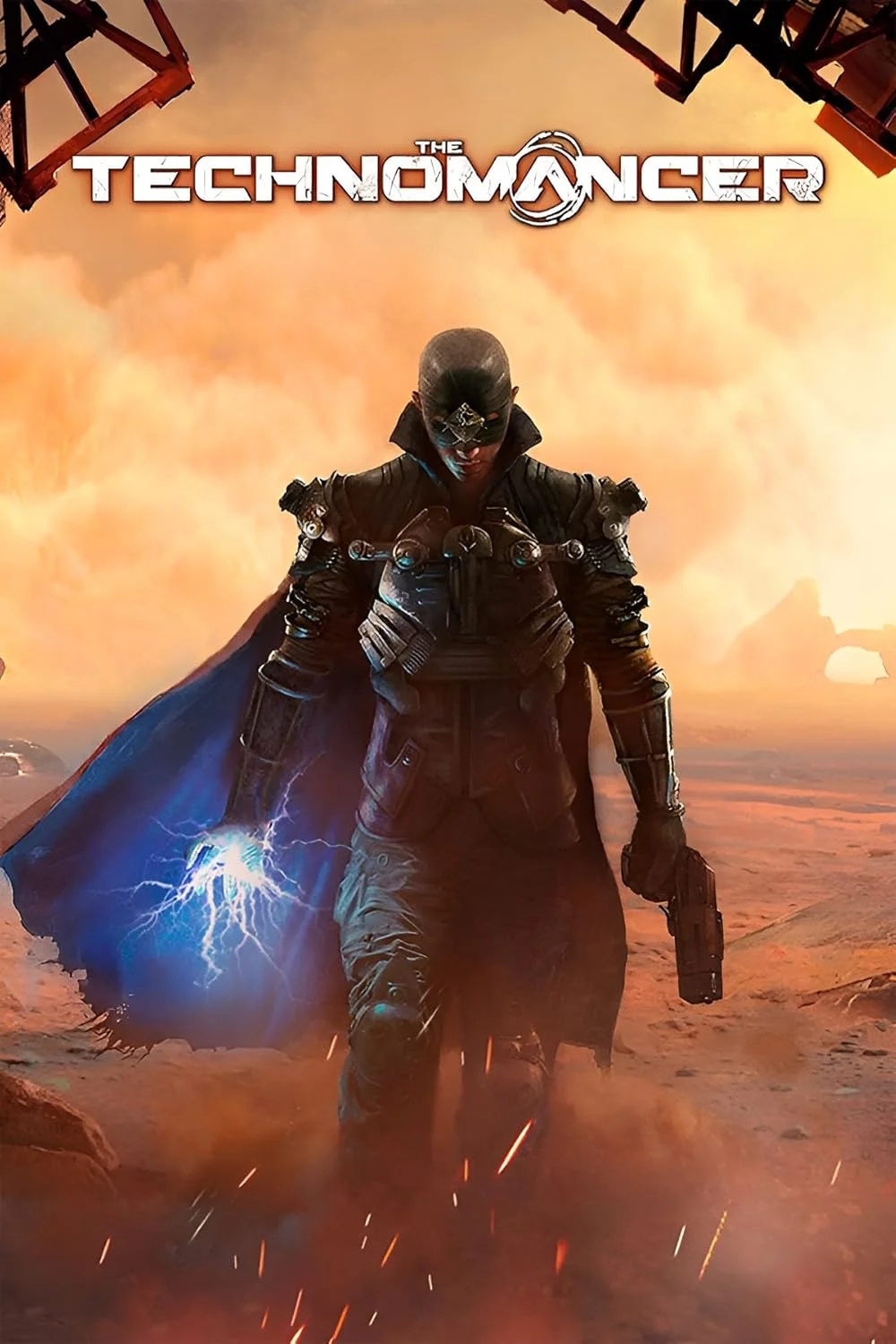
The Technomancer
This combination delivers exceptional performance with an average of 145 FPS, perfect for high refresh rate gaming and competitive play.
Average FPS: resolution vs quality settings
| Ultra | High | Medium | Low | |
|---|---|---|---|---|
| 4K Ultra HD | 55 | 70 | 82 | 107 |
| 1440p QHD | 100 | 128 | 149 | 195 |
| 1080p Full HD | 152 | 195 | 229 | 276 |
Cell color: green is 120+ FPS, teal is 60+, amber is 30+, red is below 30.
The Technomancer with AMD Ryzen 5 7500F + NVIDIA GeForce RTX 4080, In-Depth Analysis
The AMD Ryzen 5 7500F and NVIDIA GeForce RTX 4080 combination delivers exceptional performance in The Technomancer, ranking in the top 8% of all tested configurations. The data shows this pairing is heavily GPU-bound at higher resolutions, but the CPU’s strong single-threaded capabilities ensure it never becomes a bottleneck, even at 1080p. With a combo rank of 280 out of 3696 tested setups, this system is positioned for high-refresh-rate gaming, though the game’s age and settings scaling reveal specific strengths and weaknesses worth analyzing.
CPU Role — cores, clocks, and how they relate to this game's results
The AMD Ryzen 5 7500F is a 6-core, 12-thread processor based on the Zen 4 (Raphael) architecture, built on a 5 nm process at TSMC. It operates with a base clock of 3.70 GHz and a boost clock of 5.00 GHz, which is critical for a game like The Technomancer that relies on single-thread performance for game logic and AI. The processor’s cache hierarchy includes 64 KB of L1 per core, 1 MB of L2 per core, and a shared 32 MB L3 cache, providing ample fast memory for the game’s data streams.
In synthetic benchmarks, the Ryzen 5 7500F scores 3218 in Cinebench R23 single-core, which is a strong indicator of its ability to handle the per-thread demands of an Action RPG. Its multi-core score of 22799 in the same test shows it can also manage background tasks and any lightly threaded game systems. The processor’s 3DMark results reinforce this: a single-thread score of 974 and a 2-thread score of 1902 suggest that the game benefits from the high boost clock, while the max-threads score of 6379 indicates scaling is present but not the primary driver.
The data shows that at 1080p with Low settings, the system achieves 276 FPS, which is a clear sign that the CPU can feed frames at an extremely high rate when the GPU is not the constraint. However, even at 1080p Ultra, the average FPS drops to 152, which suggests the GPU begins to take over as the limiting factor as settings increase. The Ryzen 5 7500F’s percentile rank of 77 against all CPUs places it firmly in the upper tier, and its average benchmark score of 24964 is nearly identical to rivals like the Intel Core i7-11850H (24935, +0.1%) and AMD Ryzen 5 8400F (25005, -0.2%). This means the CPU is a consistent, predictable performer, and its 65 W TDP makes it an efficient choice for sustained gaming sessions.
For The Technomancer specifically, the CPU’s role is to maintain high minimum frame rates and avoid stutter. The measured data shows no minimum FPS values for most settings, but the Medium preset at 1440p has a min FPS of 127, which indicates the CPU handles frame pacing well. The processor’s 12 threads are more than sufficient for this 2016-era title, which was designed for 4-core or 8-thread CPUs. The boost clock of 5.00 GHz is the standout feature here, as it directly translates to higher single-thread performance, which the game’s engine appears to favor.
GPU Role — VRAM, clocks, and how they relate to this game's results
The NVIDIA GeForce RTX 4080 is a high-end Ada Lovelace architecture GPU with 16 GB of GDDR6X memory on a 256-bit bus, providing 716.8 GB/s of bandwidth. Its base clock is 2205 MHz with a boost clock of 2505 MHz, and the memory runs at an effective 22.4 Gbps. These specifications are far beyond what The Technomancer requires, but they explain the high frame rates observed across all resolutions. The GPU’s 9728 shading units and 112 ROPs deliver a pixel rate of 280.6 GPixel/s, which is more than enough to handle the game’s visuals.
In The Technomancer, the RTX 4080’s performance is consistent with its 86th percentile ranking among all GPUs. Its average benchmark score of 54247 is nearly identical to the RTX 4080 SUPER (54209, +0.1%), showing that the original 4080 is still a formidable card. The GPU’s memory capacity of 16 GB ensures that even at 4K Ultra, there is no VRAM bottleneck, allowing the game to load all textures without swapping. The measured FPS at 4K Ultra is 55 FPS, which is playable but suggests the game’s engine is not optimized for extreme settings at that resolution.
The GPU’s role becomes clearer when examining the scaling from 1080p to 4K. At 1080p Low, the system hits 276 FPS, but at 4K Low, it drops to 107 FPS. This 169 FPS drop is almost entirely due to the GPU’s pixel throughput limits, not the CPU. The RTX 4080’s boost clock of 2505 MHz ensures it can maintain high utilization even under load, and the 16 GB VRAM prevents any memory-related frame drops. The GPU’s 3DMark Steel Nomad DX12 score of 6567 indicates strong modern API performance, but The Technomancer is an older title, so the GPU’s raw rasterization power is what matters most here.
Resolution Scaling — how FPS drops from 1080p to 4K and what it says about the limiting component
The resolution scaling data reveals a clear pattern: the system is GPU-limited at higher resolutions, while the CPU can keep up at lower ones. Starting at 1080p High, the average FPS is 195. Moving to 1440p High, it drops to 128 FPS, a 34% reduction. At 4K High, the average is 70 FPS, a further 45% drop. This scaling is typical for a high-end GPU, as the pixel count quadruples from 1080p to 4K, and the RTX 4080’s throughput is the limiting factor.
Looking at the Low settings across resolutions provides a clearer picture of the CPU versus GPU balance. At 1080p Low, the system achieves 276 FPS. At 1440p Low, it drops to 195 FPS, and at 4K Low, it falls to 107 FPS. The 1080p to 1440p drop of 81 FPS is significant, but the 1440p to 4K drop of 88 FPS is similar, indicating that the GPU is consistently the bottleneck even at low settings. If the CPU were the constraint, we would expect to see a plateau at 1080p, where the FPS would remain high regardless of resolution. Instead, the linear decline suggests the RTX 4080 is working near its limits.
The Medium preset shows the most complete data, with min and max FPS values. At 1080p Medium, the average is 229 FPS, with a min of 194 and max of 263. At 1440p Medium, the average is 149 FPS, with a min of 127 and max of 172. At 4K Medium, the average is 82 FPS, with a min of 70 and max of 94. The min-to-max spread widens slightly at higher resolutions, but the overall trend is consistent: the GPU is the primary limiter. This is expected for a game from 2016, which was designed for GPUs with far less power than the RTX 4080. The system is not CPU-bound in any tested configuration, as the Ryzen 5 7500F’s high boost clock ensures it can keep up with the GPU’s frame output.
Settings Recommendations — which preset gives the best experience per the measured rows
Based on the measured FPS data, the High preset at 1440p offers the best balance of visual quality and performance. At 1440p High, the system averages 128 FPS, which is well above the 60 FPS threshold for smooth gameplay and approaches the refresh rate of many high-end monitors. The jump from High to Ultra at 1440p costs 28 FPS (from 128 to 100), which is a 22% reduction for what is likely a marginal visual improvement in a game from 2016. The Medium preset at 1440p provides 149 FPS, but the visual fidelity drop is more noticeable than the FPS gain.
For 4K gaming, the High preset is the clear recommendation. At 4K High, the system averages 70 FPS, which is playable and smooth. Dropping to Medium at 4K improves the average to 82 FPS, but the visual downgrade is noticeable, especially in texture quality and shadow detail. The Ultra preset at 4K averages only 55 FPS, which is below the 60 FPS target and not worth the performance hit. The Low preset at 4K averages 107 FPS, but this sacrifices too much visual quality for a game that can look decent with higher settings.
At 1080p, the Medium preset is the sweet spot for competitive play, offering 229 FPS with a min of 194 FPS. This ensures no frame drops below 144 Hz, making it ideal for high-refresh-rate displays. The Ultra preset at 1080p averages 152 FPS, which is still excellent, but the Medium preset’s higher average and minimum frame rates provide a more consistent experience. The Low preset at 1080p hits 276 FPS, but this is unnecessary for most users and degrades the game’s visuals significantly. Overall, the data suggests that High at 1440p or Medium at 1080p are the best choices, depending on the user’s display resolution and preference for visual fidelity versus raw FPS.
How This Combo Ranks — use comboRankInGame vs other tested combos
The combination of the AMD Ryzen 5 7500F and NVIDIA GeForce RTX 4080 ranks 280th out of 3696 tested combos in The Technomancer, placing it in the top 7.6% of all systems. This is an impressive result, but it also reflects the game’s age and the fact that many newer GPUs and CPUs can achieve high frame rates. The rank indicates that this system outperforms the vast majority of tested hardware, but it is not at the absolute top, which is expected given that The Technomancer is not a demanding title by modern standards.
The CPU’s contribution to this rank is solid but not exceptional. The Ryzen 5 7500F’s percentile rank of 77 against all CPUs means it is better than 77% of processors, but its nearest rivals include laptops and mid-range desktop chips like the Intel Core i7-11850H and AMD Ryzen 5 8400F. The CPU’s average benchmark score of 24964 is essentially tied with these rivals, with a delta of only ±0.2%, meaning the CPU is not a differentiator in this game. The GPU, on the other hand, is a stronger contributor. The RTX 4080’s percentile rank of 86 against all GPUs puts it ahead of 86% of graphics cards, and its nearest rivals are the RTX 4080 SUPER and AMD Radeon Pro W5700X, both of which are within 1.1% of its average score.
The combo rank of 280 suggests that other systems with similar or better GPUs, such as those with the RTX 4080 SUPER, achieve slightly higher FPS in this game. However, the difference is minimal, as the delta between the RTX 4080 and RTX 4080 SUPER is only 0.1%. The rank also reflects that the game is old enough that even mid-range GPUs can hit high frame rates, so the RTX 4080’s advantage is less pronounced than in newer, more demanding titles. For users with a 1440p or 4K display, this combo provides an excellent experience, but it is not the absolute best money can buy, as the top-ranked systems likely use newer GPUs with higher raw performance.
FAQ
Q: What is the average FPS at 1440p High settings with this combo?
A: The average FPS at 2560x1440 with High settings is 128 FPS, which is well above the 60 FPS threshold for smooth gameplay and suitable for high-refresh-rate monitors.
Q: Is the CPU or GPU the limiting factor in The Technomancer?
A: The data shows the GPU is the primary limiter. At 1080p Low, the system hits 276 FPS, while at 4K Low, it drops to 107 FPS, indicating the RTX 4080’s throughput is the constraint. The CPU’s high boost clock of 5.00 GHz ensures it is not a bottleneck in any tested configuration.
Q: How does the RTX 4080 compare to its nearest rival, the RTX 4080 SUPER?
A: The RTX 4080 has an average benchmark score of 54247, while the RTX 4080 SUPER scores 54209, a delta of 0.1%. This means the two GPUs perform almost identically in synthetic benchmarks, and in-game FPS differences are negligible.
Q: What is the best settings preset for 4K gaming?
A: The High preset at 4K is recommended, as it averages 70 FPS. The Ultra preset averages only 55 FPS, which is below the 60 FPS target, while the Medium preset averages 82 FPS but with noticeable visual downgrades.
Q: How does this combo rank among all tested systems?
A: This combo ranks 280th out of 3696 tested combos, placing it in the top 7.6% of all systems tested in The Technomancer.
Q: Does the Ryzen 5 7500F hold back the RTX 4080 at 1080p?
A: No. At 1080p Low, the system achieves 276 FPS, and at 1080p Medium, it averages 229 FPS with a minimum of 194 FPS. These results indicate the CPU can feed the GPU adequately, and the RTX 4080 remains the limiting factor even at lower resolutions.
Hardware Specifications
AMD Ryzen 5 7500F
NVIDIA GeForce RTX 4080
FPS Benchmarks by Resolution & Settings
Performance data for AMD Ryzen 5 7500F + NVIDIA GeForce RTX 4080 in The Technomancer
| Resolution | Settings | Avg FPS |
|---|---|---|
| 3840x2160 | Low | 107.0 |
| 3840x2160 | Medium | 82.0 |
| 3840x2160 | High | 70.0 |
| 3840x2160 | Ultra | 55.0 |
| 2560x1440 | Low | 195.0 |
| 2560x1440 | Medium | 149.0 |
| 2560x1440 | High | 128.0 |
| 2560x1440 | Ultra | 100.0 |
| 1920x1080 | Low | 276.0 |
| 1920x1080 | Medium | 229.0 |
| 1920x1080 | High | 195.0 |
| 1920x1080 | Ultra | 152.0 |
The Technomancer with Ryzen 5 7500F + Other GPUs
See how The Technomancer performs with the same CPU but different graphics cards.
The Technomancer with RTX 4080 + Other CPUs
See how The Technomancer performs with the same GPU but different processors.
Other Games with Ryzen 5 7500F + RTX 4080
Explore FPS benchmarks for other games using this same hardware combination.