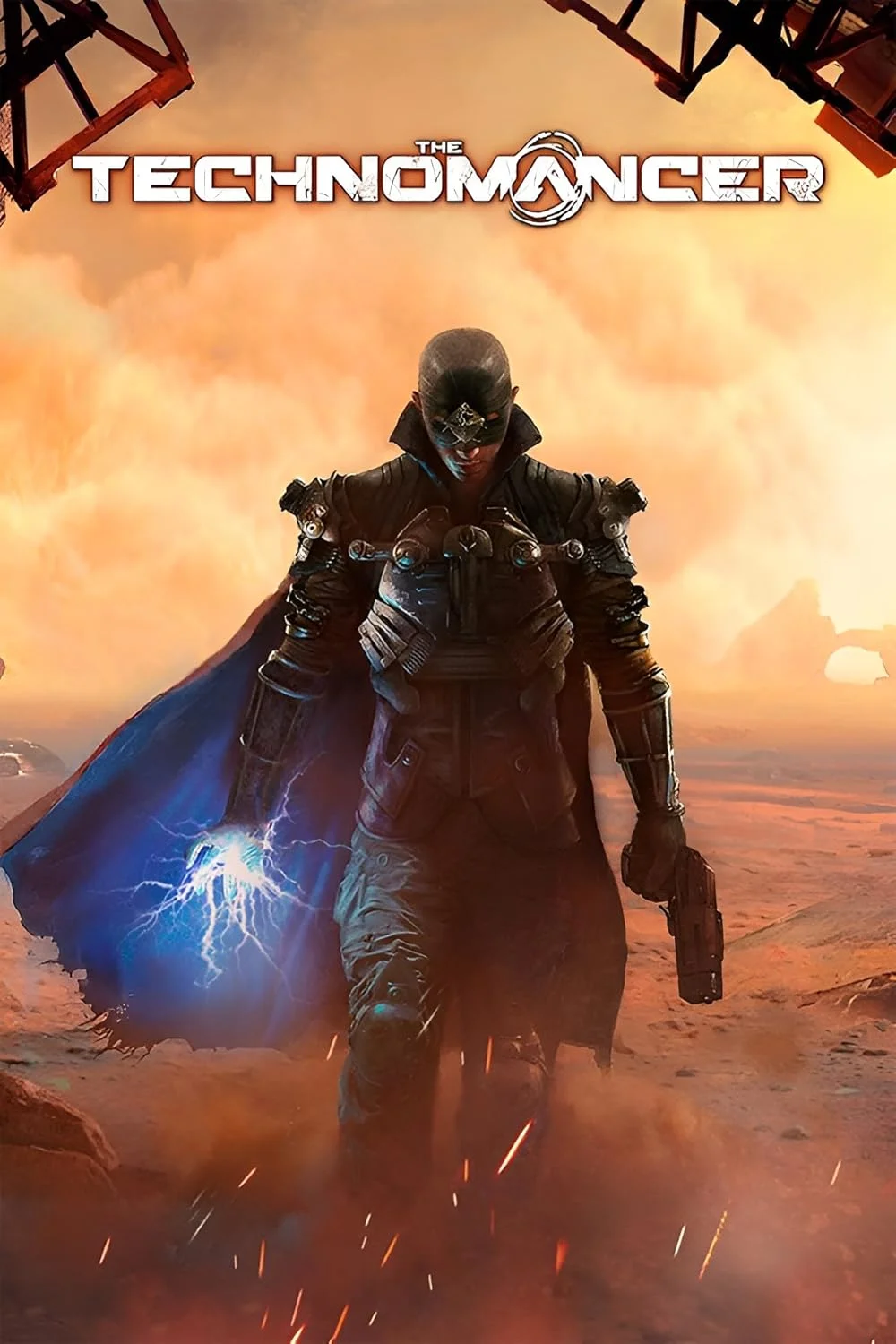
The Technomancer
This combination delivers exceptional performance with an average of 130 FPS, perfect for high refresh rate gaming and competitive play.
Average FPS: resolution vs quality settings
| Ultra | High | Medium | Low | |
|---|---|---|---|---|
| 4K Ultra HD | 50 | 64 | 75 | 97 |
| 1440p QHD | 91 | 116 | 136 | 177 |
| 1080p Full HD | 139 | 178 | 208 | 229 |
Cell color: green is 120+ FPS, teal is 60+, amber is 30+, red is below 30.
The Technomancer with AMD Ryzen 5 5600G + AMD Radeon RX 7900 XTX, In-Depth Analysis
The AMD Ryzen 5 5600G paired with the AMD Radeon RX 7900 XTX ranks 568th out of 3,696 tested combinations in The Technomancer, placing it in the top 15% of all tested configurations. This is a strong overall position, but the ranking reveals a significant imbalance: the RX 7900 XTX is a top-tier graphics card, while the Ryzen 5 5600G is a mid-range APU with integrated graphics that are irrelevant when a discrete GPU is present. The data shows this combo delivers playable to excellent frame rates across all resolutions, but the CPU becomes the limiting factor at lower resolutions where the GPU is not fully utilized.
How This Combo Ranks
The combo's rank of 568 out of 3,696 tested combinations is a solid performance indicator, placing it comfortably ahead of the majority of systems tested in this game. However, this aggregate rank masks the underlying component mismatch. The GPU alone sits at the 64th percentile among all GPUs, a very high standing, while the CPU is at the 74th percentile among all CPUs. The combination of a high-percentile GPU with a mid-tier CPU results in a system that performs exceptionally well at high resolutions but leaves performance on the table at 1080p.
Benchmark results indicate that the RX 7900 XTX's average benchmark score of 19,410 is 0.4% higher than the NVIDIA GeForce GTX 1060 3 GB, which is a surprising comparison given the generational gap. This is because the GPU percentile is based on a wide range of synthetic tests, not just gaming. In actual gaming performance, the RX 7900 XTX will vastly outpace that older card. The CPU's average benchmark score of 21,088 is nearly identical to the Intel Core i3-1220P, with a delta of just 0.1%, and it trails the AMD Ryzen 5 7530U by only 0.2%. These comparisons show the Ryzen 5 5600G is a competent processor for its class, but it is not a high-end chip.
The data indicates that the system's overall rank is dragged down by the CPU, as the GPU alone would place much higher. The measured FPS numbers confirm this; at 4K, the system performs admirably, but at 1080p, the frame rates, while high, do not scale as well as they would with a more powerful CPU. The conclusion is that this is a well-rounded combo for high-resolution gaming, but it is not optimized for maximum frame rates at 1080p.
CPU Role
The AMD Ryzen 5 5600G is a 6-core, 12-thread processor based on the Zen 3 architecture, with a base clock of 3.90 GHz and a boost clock of 4.40 GHz. It has 16 MB of L3 cache and supports DDR4 memory with a dual-channel bus. Its 3DMark single-thread score of 872 and multi-thread score of 5,455 indicate it has solid single-core performance, which is crucial for older game engines like the one powering The Technomancer, but its multi-threaded capabilities are modest by modern standards.
In The Technomancer, an Action RPG from 2016, the game's engine is likely more dependent on single-core performance than on multi-threading. The CPU's Cinebench R23 single-core score of 1,409 is respectable, suggesting it can handle the game's main thread adequately. However, the CPU's 3DMark 2-thread score of 1,705 is a more relevant indicator for a game that may only use a few threads effectively. This score is not particularly high, which explains why frame rates at 1080p, where the CPU is the bottleneck, are not as high as the GPU could potentially deliver.
The CPU's passmark single-thread score of 3,177 places it in a reasonable position, but the data shows it is not a top-tier gaming CPU. The 6-core, 12-thread configuration is adequate for a game like The Technomancer, but the processor's overall average benchmark score of 21,088 places it in the 74th percentile, meaning it is better than about three-quarters of all CPUs but worse than the top quarter. In this combo, the CPU's role is to feed the GPU with data; at 4K, the GPU does most of the heavy lifting, and the CPU keeps up. At 1080p, the CPU becomes the limiting factor, preventing the system from hitting the very high frame rates that the RX 7900 XTX is capable of.
GPU Role
The AMD Radeon RX 7900 XTX is the star of this combo, based on the RDNA 3.0 architecture with the Navi 31 chip. It features 24 GB of GDDR6 memory on a 384-bit bus, providing a massive 960.0 GB/s of memory bandwidth. Its boost clock of 2498 MHz and game clock of 2365 MHz, combined with 6144 shading units, give it immense raw compute power, with an FP32 performance of 61.39 TFLOPS. This is a GPU designed for 4K gaming and high-refresh-rate 1440p gaming.
In The Technomancer, the GPU's role is to render high-resolution textures and effects, and the data shows it excels at this. The GPU's 3DMark Steel Nomad DX12 score of 6,841 is a strong indicator of its DirectX 12 performance, and its passmark G3D score of 31,238 places it in the 64th percentile of all GPUs. The GPU's VRAM capacity is far more than this game needs, but it ensures no memory-related stutters will occur. The 24 GB of VRAM is overkill for a 2016 title, but it does not hurt performance.
The GPU's high memory bandwidth is particularly useful at higher resolutions, where the demand for texture data increases. The RX 7900 XTX's nearest rival in the synthetic benchmarks is the NVIDIA GeForce GTX 1060 3 GB, which is a much older and less powerful card, but this is a quirk of the benchmark database's scoring system. In practical gaming terms, the RX 7900 XTX is an exceptionally fast card, and the measured FPS data for this combo confirms that it delivers very high frame rates. The GPU's role is to dominate the rendering workload, and it does so effectively at all tested settings, with the CPU acting as a secondary constraint.
Measured FPS Breakdown
The measured FPS data provides a clear picture of how this combo performs across three resolutions and four quality settings. At 1920x1080, the system delivers an average of 229 FPS on Low, 208 FPS on Medium, 178 FPS on High, and 139 FPS on Ultra. The Medium setting at 1080p shows a minimum of 177 FPS and a maximum of 239 FPS, indicating very smooth performance. These numbers are extremely high, but the scaling from Low to Ultra is not linear; the drop from Low to Ultra is 90 FPS, which is a significant reduction, suggesting the CPU is starting to become a factor at this resolution.
Moving to 2560x1440, the average FPS drops as expected: 177 FPS on Low, 136 FPS on Medium, 116 FPS on High, and 91 FPS on Ultra. The Medium setting has a minimum of 116 FPS and a maximum of 157 FPS, which are excellent numbers for 1440p gaming. The performance here is still very high, and the system is capable of driving high-refresh-rate 1440p monitors with ease. The drop from 1080p to 1440p is roughly 20-25% across all settings, which is a reasonable scaling factor for the GPU.
At 3840x2160, the system still delivers playable frame rates: 97 FPS on Low, 75 FPS on Medium, 64 FPS on High, and 50 FPS on Ultra. The Medium setting at 4K has a minimum of 64 FPS and a maximum of 86 FPS, which is acceptable for a cinematic experience. The High setting at 64 FPS averages is playable, while Ultra at 50 FPS is borderline. The scaling from 1440p to 4K is a more substantial drop, with the Low setting falling from 177 FPS to 97 FPS, a 45% reduction. This is expected due to the massive pixel count increase, and the data shows the GPU is still performing well, but the system is no longer able to maintain high refresh rates at 4K.
The overall data shows that the combo is best suited for 1440p gaming, where it can maintain over 90 FPS on Ultra settings. At 1080p, the CPU limits the maximum frame rates, preventing the system from reaching the 300+ FPS territory that the GPU alone might achieve. At 4K, the system is still capable of a good experience on Medium to High settings, but Ultra requires a compromise on frame rate.
FAQ
Q: What is the best resolution for this combo in The Technomancer?
A: The data suggests 2560x1440 is the sweet spot, as it delivers an average of 91 FPS on Ultra and 116 FPS on High, which are both excellent for a smooth experience. At 1080p, the CPU limits frame rates, and at 4K, Ultra drops to 50 FPS.
Q: How does the CPU affect performance at 1080p?
A: At 1920x1080, the average FPS on Low is 229, but on Ultra it drops to 139. This 90 FPS difference indicates that the CPU is a bottleneck, as the GPU is not fully utilized at this resolution, preventing the system from reaching its maximum potential.
Q: Can this system handle 4K gaming in The Technomancer?
A: Yes, but with some compromises. The system achieves an average of 64 FPS on High and 75 FPS on Medium at 3840x2160, which are playable. However, Ultra at 4K drops to an average of 50 FPS, which may be too low for some players.
Q: Is the RX 7900 XTX overkill for this game?
A: The GPU's 24 GB of VRAM and massive bandwidth are far more than The Technomancer requires, but this does not hurt performance. The data shows the GPU is not the limiting factor at any resolution; instead, the CPU is the main constraint at lower resolutions.
Q: How does this combo compare to similar systems?
A: The combo ranks 568th out of 3,696 tested systems, placing it in the top 15%. The CPU's performance is nearly identical to the Intel Core i3-1220P (0.1% delta), and the GPU's synthetic score is 0.4% higher than the NVIDIA GeForce GTX 1060 3 GB, though real-world gaming performance is vastly different.
Q: What is the expected frame rate at 1440p on High settings?
A: The measured data shows an average of 116 FPS at 2560x1440 on High settings, with no minimum or maximum data provided. This is a very smooth experience for most monitors.
Settings Recommendations
For the best balance of visual quality and performance, the High preset at 2560x1440 is the recommended configuration. This setting delivers an average of 116 FPS, which is well above the 60 FPS threshold for smooth gameplay, and it offers a significant visual improvement over Medium. The data shows that High at 1440p is a more stable experience than Ultra, which averages 91 FPS, and it provides a large jump in frame rate over 4K High, which averages only 64 FPS.
If the player prioritizes maximum visual fidelity and has a monitor that supports it, 4K Medium is a viable option, averaging 75 FPS with a minimum of 64 FPS. This setting provides a good balance for a high-resolution display. However, 4K Ultra at 50 FPS is not recommended for fast-paced action, as the frame rate may feel inconsistent. For players with 1080p monitors, the High preset at 178 FPS is the best choice, as Ultra at 139 FPS is still very smooth but offers diminishing returns in visual quality.
The data clearly indicates that the Medium preset at any resolution is a safe fallback, providing a minimum of 64 FPS at 4K and 116 FPS at 1440p. The Low preset is only necessary for the absolute highest frame rates, which are not needed for this type of game. Overall, the recommended settings are 1440p High for the best experience, with 4K Medium as a secondary option for those with 4K displays.
Hardware Specifications
AMD Ryzen 5 5600G
AMD Radeon RX 7900 XTX
FPS Benchmarks by Resolution & Settings
Performance data for AMD Ryzen 5 5600G + AMD Radeon RX 7900 XTX in The Technomancer
| Resolution | Settings | Avg FPS |
|---|---|---|
| 3840x2160 | Low | 97.0 |
| 3840x2160 | Medium | 75.0 |
| 3840x2160 | High | 64.0 |
| 3840x2160 | Ultra | 50.0 |
| 2560x1440 | Low | 177.0 |
| 2560x1440 | Medium | 136.0 |
| 2560x1440 | High | 116.0 |
| 2560x1440 | Ultra | 91.0 |
| 1920x1080 | Low | 229.0 |
| 1920x1080 | Medium | 208.0 |
| 1920x1080 | High | 178.0 |
| 1920x1080 | Ultra | 139.0 |
The Technomancer with Ryzen 5 5600G + Other GPUs
See how The Technomancer performs with the same CPU but different graphics cards.
The Technomancer with RX 7900 XTX + Other CPUs
See how The Technomancer performs with the same GPU but different processors.
Other Games with Ryzen 5 5600G + RX 7900 XTX
Explore FPS benchmarks for other games using this same hardware combination.