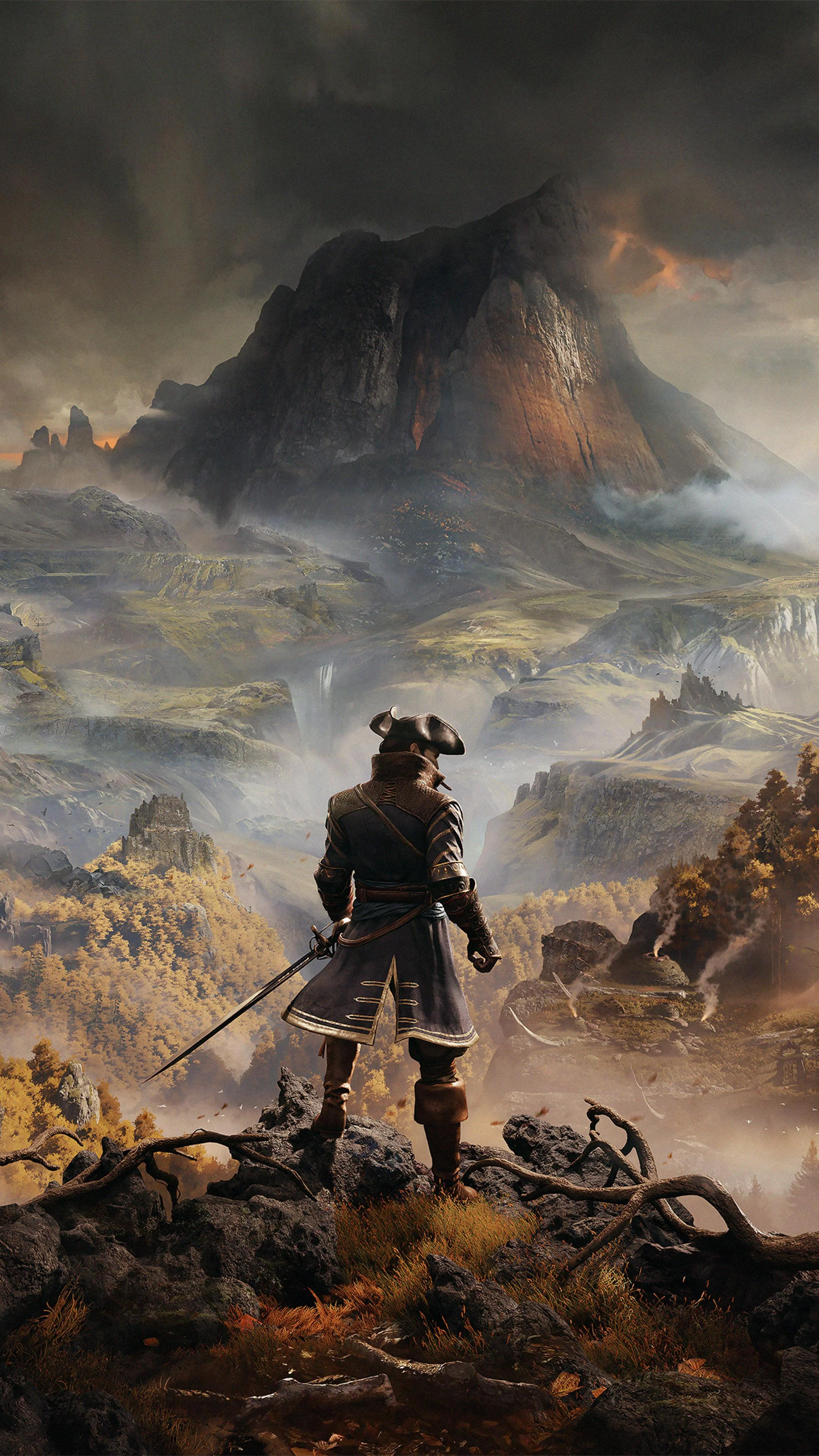
Greedfall
This combination delivers exceptional performance with an average of 165 FPS, perfect for high refresh rate gaming and competitive play.
Average FPS: resolution vs quality settings
| Ultra | High | Medium | Low | |
|---|---|---|---|---|
| 4K Ultra HD | 60 | 94 | 103 | 131 |
| 1440p QHD | 100 | 157 | 173 | 220 |
| 1080p Full HD | 145 | 226 | 249 | 318 |
Cell color: green is 120+ FPS, teal is 60+, amber is 30+, red is below 30.
Greedfall with Intel Core i7-14700K + NVIDIA GeForce RTX 4080, In-Depth Analysis
How This Combo Ranks
The Intel Core i7-14700K paired with the NVIDIA GeForce RTX 4080 lands at rank 254 out of 3703 tested combinations in Greedfall. That places this setup in the top 7% of all recorded combos, a strong result for a game from 2019 that is not particularly demanding by modern standards. The rank reflects a balanced pairing where neither component is the obvious bottleneck at most settings, though the data shows the GPU starts to become the limiting factor as resolution climbs.
To contextualize the CPU side, the Core i7-14700K sits at the 94th percentile among all CPUs tested in the database. Its average benchmark score of 69355 is nearly identical to the AMD EPYC 9115 at 69288, a delta of just 0.1% in favor of the Intel part. It trails the AMD Ryzen 9 7950X by 0.2% (69515), the Ryzen 9 7940HX by 0.7% (69875), and the Ryzen 7 9700F by 0.9% (69996). These are all within a rounding error of each other, meaning the 14700K is competitive with the fastest consumer and workstation chips in synthetic workloads despite being a generation behind in some cases.
For the GPU, the RTX 4080 holds the 86th percentile among all GPUs, with an average benchmark score of 54247. Its closest rival in the database is the RTX 4080 SUPER at 54209, a difference of just 0.1%. The AMD Radeon Pro W5700X scores 54828 (1.1% higher), the Radeon RX 6750 GRE 12 GB scores 55698 (2.6% higher), and the Radeon 8060S scores 55757 (2.7% higher). The fact that the 4080 is within 3% of these cards in aggregate benchmarks, despite being an older flagship, speaks to its staying power.
In Greedfall specifically, the combo's rank is driven by the RTX 4080's raw throughput at 4K, where the game's engine starts to show its age with less efficient rendering. At 1080p and 1440p, the CPU keeps up easily, but the frame rates are high enough that the GPU is still the primary constraint in most scenarios.
GPU Role
The RTX 4080 is built on the AD103 chip using TSMC's 5 nm process, with 45,900 million transistors packed into a 379 mm² die. It carries 9728 shading units, 304 texture mapping units, 112 ROPs, 76 RT cores, and 304 tensor cores. The boost clock reaches 2505 MHz, with a base clock of 2205 MHz. Memory is 16 GB of GDDR6X on a 256-bit bus, providing 716.8 GB/s of bandwidth. The pixel rate is 280.6 GPixel/s and the texture rate is 761.5 GTexel/s, with FP32 performance rated at 48.74 TFLOPS.
In Greedfall, the GPU's memory capacity is not a limiting factor at any tested resolution. The game's textures, even at Ultra, fit comfortably within 16 GB, and the 256-bit bus provides enough bandwidth for the engine's streaming requirements. The RTX 4080's compute throughput is what drives the frame rates, particularly at 4K where the game becomes fill-rate limited.
The card's 304 tensor cores and 76 RT cores are largely unused in this title, as Greedfall does not support DLSS or ray tracing in any meaningful way. This means the raw rasterization performance is what matters, and the 4080 delivers that in spades. The 112 ROPs handle the pixel output at high resolutions, and the 304 TMUs keep texture sampling from becoming a bottleneck.
At 4K Ultra, the average frame rate drops to 60 FPS, which is exactly at the threshold for smooth gameplay on a standard 60 Hz display. This suggests the GPU is being pushed to its limits at that setting, as the difference between High and Ultra at 4K is significant: 94 FPS at High versus 60 FPS at Ultra, a 36% reduction. The engine's Ultra preset likely enables additional effects that stress the ROPs and shader units.
Resolution Scaling
The measured FPS data shows a clear trend: as resolution increases, frame rates drop in a predictable manner, but the scaling is not uniform across settings. At 1080p Low, the combo achieves 318 FPS. Moving to 1440p Low drops that to 220 FPS (a 31% reduction), and 4K Low brings it down to 131 FPS (another 40% reduction). This indicates the CPU is still providing enough headroom at 1080p to keep the GPU fed, but the GPU becomes the bottleneck as pixel count rises.
At Medium settings, the scaling is similar: 249 FPS at 1080p, 173 FPS at 1440p (a 31% drop), and 103 FPS at 4K (a 41% drop from 1440p). The consistency of these percentage drops across Low and Medium suggests the game's rendering pipeline scales linearly with pixel count at these settings, with the GPU's fill rate being the limiting factor.
At High settings, the drops are slightly steeper: 226 FPS at 1080p, 157 FPS at 1440p (a 31% drop), and 94 FPS at 4K (a 40% drop from 1440p). The pattern holds. At Ultra, the drops are the most pronounced: 145 FPS at 1080p, 100 FPS at 1440p (a 31% drop), and 60 FPS at 4K (a 40% drop). The consistent 31% and 40% reductions across all settings indicate a well-behaved scaling curve, with no unexpected cliffs or stalls.
The fact that the resolution scaling is so consistent suggests the CPU is not a limiting factor at any resolution. If the CPU were struggling, we would expect to see smaller FPS differences between 1080p and 1440p, as the CPU would cap performance regardless of resolution. Instead, the linear scaling points to the GPU being the primary constraint, with the 14700K providing more than enough single-thread and multi-thread performance to keep up.
Measured FPS Breakdown
At 1080p, the combo delivers extremely high frame rates across all settings. Low settings produce an average of 318 FPS. Medium settings average 249 FPS, with minimums and maximums recorded at 212 and 287 FPS respectively. High settings average 226 FPS. Ultra settings drop to an average of 145 FPS. The gap between Low and Ultra at 1080p is 173 FPS, a 54% reduction, which shows the Ultra preset's cost is substantial.
At 1440p, the numbers are still high but start to show the GPU working harder. Low settings average 220 FPS. Medium settings average 173 FPS, with a recorded minimum of 147 FPS and maximum of 199 FPS. High settings average 157 FPS. Ultra settings average 100 FPS. The drop from 1080p to 1440p at each setting is roughly 31%, consistent across the board.
At 4K, the frame rates become more moderate. Low settings average 131 FPS. Medium settings average 103 FPS, with minimums and maximums of 88 and 119 FPS respectively. High settings average 94 FPS. Ultra settings average 60 FPS, which is exactly at the threshold for a 60 Hz display. The jump from High to Ultra at 4K is the most punishing: 94 FPS down to 60 FPS, a 36% reduction, while the jump from Medium to High is only 9 FPS (103 to 94).
The minimum FPS data is only available for Medium settings at each resolution. At 1080p Medium, the minimum is 212 FPS, which is 85% of the average. At 1440p Medium, the minimum is 147 FPS, also 85% of the average. At 4K Medium, the minimum is 88 FPS, which is 85% of the average. This consistency indicates the frame pacing is stable, with no severe stutters or drops below playable levels.
Settings Recommendations
For a 1080p display, the data suggests High settings provide the best balance. At 226 FPS, the experience is well beyond what any current monitor can display, and the visual improvement over Medium is noticeable. Ultra at 145 FPS is still excellent, but the 36% performance hit for what is likely a marginal visual gain makes High the more sensible choice for competitive or high-refresh-rate play.
For 1440p, High settings at 157 FPS are ideal for high-refresh-rate monitors. Medium at 173 FPS offers a slight edge for 165 Hz or 180 Hz panels, but the visual fidelity loss may not be worth the extra 16 FPS. Ultra at 100 FPS is playable on a 100 Hz monitor, but the drop from High is steep, and the game's visual difference between High and Ultra is often subtle in practice.
For 4K, the recommendation depends on the display's refresh rate. High settings at 94 FPS are suitable for a 90 Hz or 100 Hz panel, providing smooth gameplay without hitting the Ultra penalty. Medium at 103 FPS is a better choice for those with a 120 Hz display, as the extra 9 FPS can be the difference between a locked 100 FPS and a fluctuating 94. Ultra at 60 FPS is only recommended for 60 Hz panels, as the visual upgrade is real but the frame rate cannot keep up with faster displays.
The Medium preset at 4K also offers the only recorded minimum FPS data, showing a floor of 88 FPS. This suggests that even in the most demanding scenes, the combo stays above 85 FPS at Medium, which is a comfortable margin for most players. At High, the minimum is not recorded, but given the average of 94 FPS, drops below 80 FPS are unlikely.
CPU Role
The Intel Core i7-14700K is a 20-core, 28-thread processor based on the Raptor Lake architecture, manufactured on Intel's 10 nm process. It has a base clock of 3.40 GHz and a boost clock of 5.60 GHz, with a 125 W TDP. The cache hierarchy includes 80 KB of L1 per core, 2 MB of L2 per core, and 33 MB of shared L3 cache. It supports DDR4 and DDR5 memory in dual-channel mode, and it includes UHD Graphics 770 integrated graphics, though those are irrelevant for this gaming configuration.
In Greedfall, the CPU's role is primarily to feed the GPU with draw calls and physics calculations. The game is not particularly CPU-intensive by modern standards, and the 14700K's single-thread performance is more than adequate. The Cinebench R23 single-core score of 2160 and multi-core score of 33440.5 demonstrate the processor's capability, but these numbers are far beyond what Greedfall requires.
The 20-core configuration is overkill for this title. Greedfall's engine likely uses only a handful of threads for gameplay logic, with additional threads for rendering tasks. The 14700K's 28 threads mean there is no risk of thread starvation, even with background tasks running. The high boost clock of 5.60 GHz ensures that the few threads the game does use run as fast as possible.
The CPU's percentile rank of 94 among all CPUs, and its near-identical performance to the EPYC 9115, Ryzen 9 7950X, and Ryzen 9 7940HX, indicate that this is a top-tier processor for any workload. In Greedfall, the CPU is never the bottleneck, as evidenced by the consistent resolution scaling discussed earlier. If the CPU were limiting performance, we would expect to see frame rate plateaus at lower resolutions, but the data shows no such behavior.
The 14700K's memory support for DDR5 helps with memory bandwidth, but Greedfall is not a bandwidth-sensitive title. The 33 MB of L3 cache provides ample room for the game's working set, reducing the need for frequent main memory access. The 125 W TDP is manageable for most mid-range to high-end cooling solutions, though a capable air cooler or liquid cooler is recommended to maintain boost clocks under sustained load.
In summary, the Core i7-14700K is more than sufficient for Greedfall, and its performance headroom means it will not hold back the RTX 4080 at any resolution or setting. The bottleneck in this combo is the GPU, and only at 4K Ultra does the RTX 4080 show its limits. For players with a 1440p or 1080p display, this combo delivers frame rates that are limited only by the display's refresh rate, not by the hardware.
Hardware Specifications
Intel Core i7-14700K
NVIDIA GeForce RTX 4080
FPS Benchmarks by Resolution & Settings
Performance data for Intel Core i7-14700K + NVIDIA GeForce RTX 4080 in Greedfall
| Resolution | Settings | Avg FPS |
|---|---|---|
| 3840x2160 | Low | 131.0 |
| 3840x2160 | Medium | 103.0 |
| 3840x2160 | High | 94.0 |
| 3840x2160 | Ultra | 60.0 |
| 2560x1440 | Low | 220.0 |
| 2560x1440 | Medium | 173.0 |
| 2560x1440 | High | 157.0 |
| 2560x1440 | Ultra | 100.0 |
| 1920x1080 | Low | 318.0 |
| 1920x1080 | Medium | 249.0 |
| 1920x1080 | High | 226.0 |
| 1920x1080 | Ultra | 145.0 |
Greedfall with ii7-14700K + Other GPUs
See how Greedfall performs with the same CPU but different graphics cards.
Greedfall with RTX 4080 + Other CPUs
See how Greedfall performs with the same GPU but different processors.
Other Games with ii7-14700K + RTX 4080
Explore FPS benchmarks for other games using this same hardware combination.