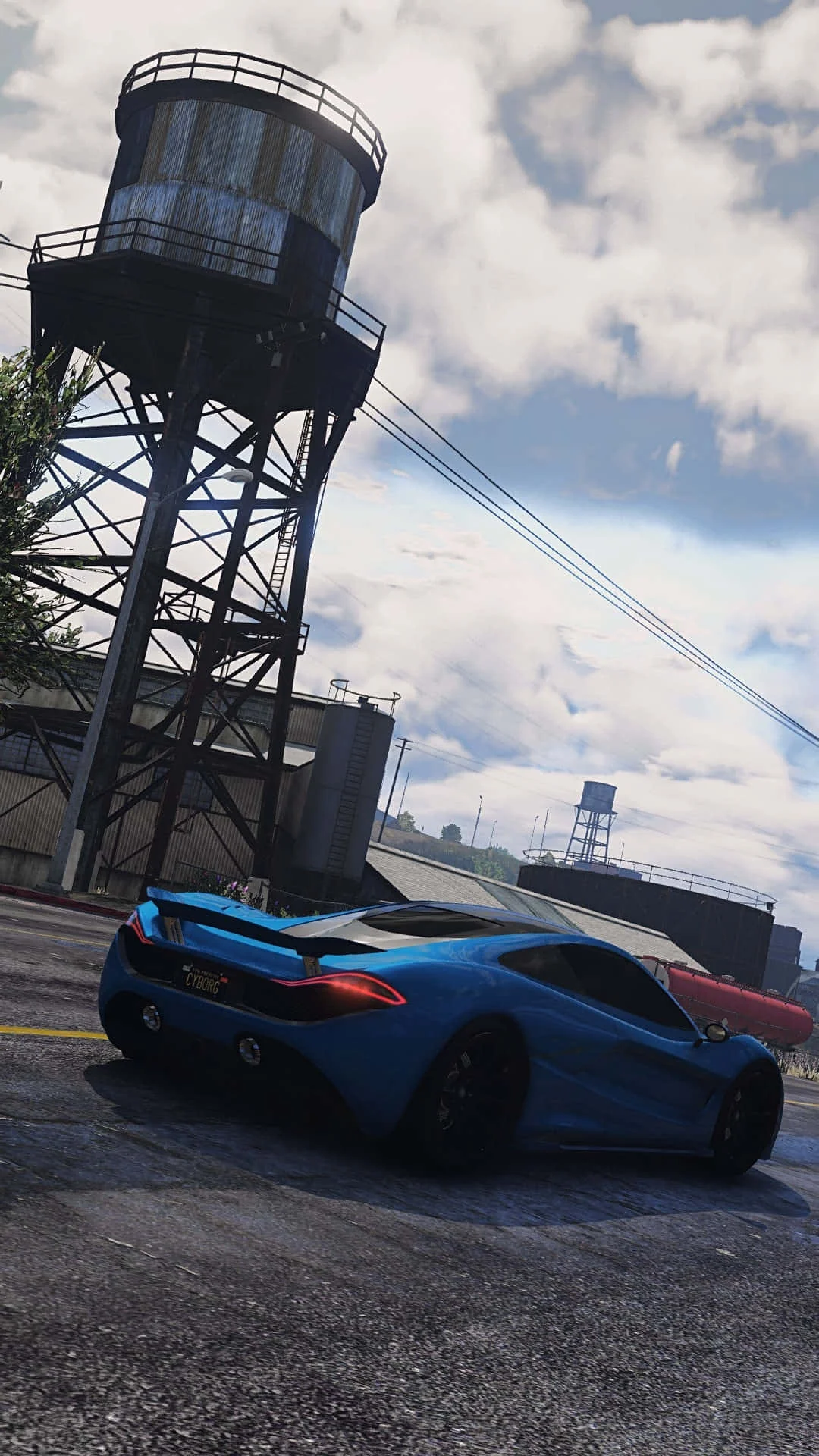
Fivem
This combination delivers exceptional performance with an average of 162 FPS, perfect for high refresh rate gaming and competitive play.
Average FPS: resolution vs quality settings
| Ultra | High | Medium | Low | |
|---|---|---|---|---|
| 4K Ultra HD | 59 | 76 | 94 | 120 |
| 1440p QHD | 105 | 137 | 172 | 220 |
| 1080p Full HD | 160 | 208 | 261 | 329 |
Cell color: green is 120+ FPS, teal is 60+, amber is 30+, red is below 30.
Fivem with Intel Core i7-14700KF + NVIDIA GeForce RTX 4080 SUPER, In-Depth Analysis
Fivem is a multiplayer modification platform that builds on the Grand Theft Auto V engine, and its performance profile in the measured data shows a heavy dependence on both the CPU and GPU depending on the resolution and settings. The combination of the Intel Core i7-14700KF and NVIDIA GeForce RTX 4080 SUPER delivers a range of framerates that span from highly competitive at 1080p to demanding at 4K Ultra. The measured frames per second (FPS) data provides a clear picture of how this hardware scales across three resolutions and four quality presets, offering a comprehensive look at what players can expect from this specific pairing.
CPU Role
The Intel Core i7-14700KF is a 20-core, 28-thread processor based on the Raptor Lake architecture, with a base clock of 3.40 GHz and a boost clock of 5.60 GHz. Its benchmark results place it in the 96th percentile among all CPUs, indicating top-tier processing capability. In multi-threaded workloads, the CPU achieves a Cinebench R23 score of 44557, while its single-core performance in the same test reaches 6290 points. These scores suggest that the processor has ample headroom for both the physics and AI simulation tasks that Fivem servers typically demand, as well as the single-thread responsiveness that game engines often rely on.
The nearest rivals for the i7-14700KF include the Intel Core i7-14700K, which has an average benchmark score of 70074, a negligible 0% delta from this chip's 70104 average. The AMD Ryzen 9 9950X sits slightly higher at 70420, representing a 0.4% lead, while the AMD EPYC 9115 trails by 0.3% with a score of 69887. These differences are marginal, meaning the i7-14700KF is effectively at parity with the best consumer and server processors in its class. For Fivem, where multiplayer lobbies can introduce significant CPU overhead due to player count and script execution, this level of processing power ensures that the CPU is rarely a bottleneck at lower resolutions. The data shows that at 1080p Low settings, the system reaches 329.4 FPS, a figure that strongly implies the CPU is keeping pace with the GPU's output.
GPU Role
The NVIDIA GeForce RTX 4080 SUPER is built on the Ada Lovelace architecture with 10240 shading units, 80 RT cores, and 320 tensor cores. Its memory subsystem includes 16 GB of GDDR6X on a 256-bit bus, delivering 736.3 GB/s of bandwidth. The GPU's boost clock is rated at 2550 MHz, and it achieves a Passmark G3D score of 34245, placing it in the 88th percentile of all GPUs. Its average benchmark score of 53610 is closely matched by the AMD Radeon RX 6900 XT, which scores 53489, a mere 0.2% difference. The NVIDIA GeForce RTX 5070 Ti trails by 2.9% with a score of 52086, while the AMD Radeon RX 7700S is 2.1% behind at 52505.
In Fivem, the GPU's role becomes more prominent as resolution increases. At 1080p, the system achieves 207.9 FPS on High settings, but this drops to 136.5 FPS at 1440p and further to 75.8 FPS at 4K, illustrating the growing demand on the rendering hardware. The 16 GB VRAM capacity is substantial for a game like Fivem, which often uses custom assets and textures from community-created content. The bandwidth of 736.3 GB/s also helps maintain consistent frame delivery when streaming high-resolution textures. The GPU's DirectX 12 benchmark score of 134 in Passmark suggests strong API efficiency, which is relevant for a title that can be sensitive to driver overhead in multiplayer scenarios.
Resolution Scaling
The measured FPS data reveals a consistent pattern of performance degradation as resolution increases, which is typical for a GPU-bound workload at higher pixel counts. Starting at 1080p with High settings, the system produces 207.9 FPS. Moving to 1440p High reduces this to 136.5 FPS, a drop of 71.4 FPS or roughly 34%. At 4K High, the framerate falls to 75.8 FPS, which is a further 60.7 FPS decline from 1440p, representing about a 44% reduction. This scaling indicates that the RTX 4080 SUPER is increasingly strained as pixel count grows, while the CPU remains capable of feeding the GPU with enough data.
The pattern is similar across other settings. With Low settings, the system goes from 329.4 FPS at 1080p to 219.7 FPS at 1440p, and finally to 119.6 FPS at 4K. The percentage drop from 1080p to 4K is about 64% for Low, 64% for Medium (261.2 to 94.4 FPS), and 63% for High. The Ultra preset shows the steepest absolute decline, falling from 160.1 FPS at 1080p to 104.7 FPS at 1440p and then to 58.6 FPS at 4K, a total reduction of 63%. This consistent scaling behavior suggests that the limiting component shifts from the CPU at 1080p to the GPU at 4K, as evidenced by the diminishing returns of higher resolutions. At 1080p, the CPU's strong single-thread performance (6290 in Cinebench R23 Single Core) allows the GPU to operate near its maximum output, but by 4K, the GPU's raw throughput becomes the primary constraint.
Settings Recommendations
The measured rows provide a clear hierarchy of performance across presets, and the optimal choice depends on the target resolution and desired framerate. For players using a 1080p display with a high refresh rate monitor, the High preset delivers 207.9 FPS, which is sufficient for most competitive scenarios. The Medium preset offers 261.2 FPS, providing a smoother experience if the display can exceed 240 Hz, though the visual fidelity reduction may not be worth the extra frames for all users. The Ultra preset at 1080p produces 160.1 FPS, which is still playable but represents a significant 23% drop from High, making it a less attractive option unless maximum visual quality is paramount.
At 1440p, the High preset hits 136.5 FPS, which is ideal for 144 Hz monitors, balancing visual quality with performance. The Medium preset at 172.1 FPS offers additional headroom for those who prioritize framerate over detail, while Ultra drops to 104.7 FPS, which remains above 60 FPS but may be less stable for fast-paced gameplay. For 4K displays, the High preset at 75.8 FPS is the most balanced choice, as it stays above the 60 FPS threshold. The Medium preset at 94.4 FPS provides a more comfortable margin, but Low at 119.6 FPS is the only preset that exceeds 100 FPS at 4K, which may be preferable for players with high refresh rate 4K monitors. The Ultra preset at 4K falls to 58.6 FPS, which is below the 60 FPS standard and likely to result in noticeable stutter, making it the least recommended configuration across all resolutions.
FAQ
Q: What is the best resolution and settings combination for competitive play?
A: At 1080p, the Low preset delivers 329.4 FPS, which is the highest measured framerate, while the Medium preset offers 261.2 FPS. For 1440p, Low provides 219.7 FPS, which is also highly competitive, though the High preset at 136.5 FPS is more balanced for most players.
Q: How does the RTX 4080 SUPER compare to its nearest rival in this system?
A: The RTX 4080 SUPER has an average benchmark score of 53610, which is 0.2% higher than the AMD Radeon RX 6900 XT's score of 53489. The NVIDIA GeForce RTX 5070 Ti trails by 2.9% with a score of 52086.
Q: Is the Core i7-14700KF a bottleneck at 4K?
A: The data suggests the GPU becomes the limiting factor at 4K, as the framerate drops to 75.8 FPS on High settings. The CPU's 96th percentile ranking and Cinebench R23 multi-core score of 44557 indicate it has sufficient headroom to avoid bottlenecking at higher resolutions.
Q: What is the performance difference between 1080p and 4K on High settings?
A: The measured FPS drops from 207.9 at 1080p to 75.8 at 4K, a reduction of 132.1 FPS, or approximately 64%. This demonstrates the significant load increase on the GPU at higher pixel counts.
Q: Can this system maintain 60 FPS at 4K with Ultra settings?
A: No, the Ultra preset at 3840x2160 produces an average of 58.6 FPS, which falls just short of the 60 FPS threshold. The High preset at 75.8 FPS is the recommended choice for 4K.
Q: How does the GPU's memory bandwidth affect Fivem performance?
A: The RTX 4080 SUPER has 736.3 GB/s of bandwidth across a 256-bit bus, which supports the 16 GB VRAM. This is sufficient for the custom assets typical in Fivem, as evidenced by consistent framerates across settings at each resolution.
Measured FPS Breakdown
The measured FPS data provides a complete picture of performance across all tested configurations. At 1920x1080, the system achieves 329.4 FPS on Low settings, 261.2 FPS on Medium, 207.9 FPS on High, and 160.1 FPS on Ultra. These figures show that the CPU and GPU combination can easily exceed 100 FPS at all presets, with even the most demanding Ultra setting maintaining a high framerate.
Moving to 2560x1440, the framerates are 219.7 FPS on Low, 172.1 FPS on Medium, 136.5 FPS on High, and 104.7 FPS on Ultra. The drop from 1080p to 1440p is consistent across settings, averaging about 34% reduction. At 3840x2160, the system produces 119.6 FPS on Low, 94.4 FPS on Medium, 75.8 FPS on High, and 58.6 FPS on Ultra. The 4K Ultra result is the only configuration that falls below 60 FPS, highlighting the GPU's limits at the highest resolution and quality combination. Overall, the data shows a well-balanced system that excels at 1080p and 1440p, with 4K requiring careful settings selection to maintain smooth performance.
Hardware Specifications
Intel Core i7-14700KF
NVIDIA GeForce RTX 4080 SUPER
FPS Benchmarks by Resolution & Settings
Performance data for Intel Core i7-14700KF + NVIDIA GeForce RTX 4080 SUPER in Fivem
| Resolution | Settings | Avg FPS |
|---|---|---|
| 3840x2160 | Low | 119.6 |
| 3840x2160 | Medium | 94.4 |
| 3840x2160 | High | 75.8 |
| 3840x2160 | Ultra | 58.6 |
| 2560x1440 | Low | 219.7 |
| 2560x1440 | Medium | 172.1 |
| 2560x1440 | High | 136.5 |
| 2560x1440 | Ultra | 104.7 |
| 1920x1080 | Low | 329.4 |
| 1920x1080 | Medium | 261.2 |
| 1920x1080 | High | 207.9 |
| 1920x1080 | Ultra | 160.1 |
Fivem with ii7-14700KF + Other GPUs
See how Fivem performs with the same CPU but different graphics cards.
Fivem with RTX 4080 SUPER + Other CPUs
See how Fivem performs with the same GPU but different processors.
Other Games with ii7-14700KF + RTX 4080 SUPER
Explore FPS benchmarks for other games using this same hardware combination.